What constitutes a ‘document’ and how does it function?
According to the Oxford English Dictionary, the etymological origin is the Latin ‘documentum’, meaning ‘lesson, proof, instance, specimen’. As a verb, it is ‘to prove or support (something) by documentary evidence’, and ‘to provide with documents’. The online version of the OED includes a draft addition, whereby a document (as a noun) is ‘a collection of data in digital form that is considered a single item and typically has a unique filename by which it can be stored, retrieved, or transmitted (as a file, a spreadsheet, or a graphic)’. The current use of the noun ‘document’ is defined as ‘something written, inscribed, etc., which furnishes evidence or information upon any subject, as a manuscript, title-deed, tomb-stone, coin, picture, etc.’ (emphasis added).
Both ‘something’ and that first ‘etc.’ leave ample room for discussion. A document doubts whether it functions as something unique, or as something reproducible. A passport is a document, but a flyer equally so. Moreover, there is a circular reasoning: to document is ‘to provide with documents’. Defining (the functioning of) a document most likely involves ideas of communication, information, evidence, inscriptions, and implies notions of objectivity and neutrality – but the document is neither reducible to one of them, nor is it equal to their sum. It is hard to pinpoint it, as it disperses into and is affected by other fields: it is intrinsically tied to the history of media and to important currents in literature, photography and art; it is linked to epistemic and power structures. However ubiquitous it is, as an often tangible thing in our environment, and as a concept, a document deranges.
the-documents.org continuously gathers documents and provides them with a short textual description, explanation,
or digression, written by multiple authors. In Paper Knowledge, Lisa Gitelman paraphrases ‘documentalist’ Suzanne Briet, stating that ‘an antelope running wild would not be a document, but an antelope taken into a zoo would be one, presumably because it would then be framed – or reframed – as an example, specimen, or instance’. The gathered files are all documents – if they weren’t before publication, they now are. That is what the-documents.org, irreversibly, does. It is a zoo turning an antelope into an ‘antelope’.
As you made your way through the collection,
the-documents.org tracked the entries you viewed.
It documented your path through the website.
As such, the time spent on the-documents.org turned
into this – a new document.
This document was compiled by ____ on 29.09.2025 17:20, printed on ____ and contains 18 documents on _ pages.
(https://the-documents.org/log/29-09-2025-6657/)
the-documents.org is a project created and edited by De Cleene De Cleene; design & development by atelier Haegeman Temmerman.
the-documents.org has been online since 23.05.2021.
- De Cleene De Cleene is Michiel De Cleene and Arnout De Cleene. Together they form a research group that focusses on novel ways of approaching the everyday, by artistic means and from a cultural and critical perspective.
www.decleenedecleene.be / info@decleenedecleene.be - This project was made possible with the support of the Flemish Government and KASK & Conservatorium, the school of arts of HOGENT and Howest. It is part of the research project Documenting Objects, financed by the HOGENT Arts Research Fund.
- Briet, S. Qu’est-ce que la documentation? Paris: Edit, 1951.
- Gitelman, L. Paper Knowledge. Toward a Media History of Documents.
Durham/ London: Duke University Press, 2014. - Oxford English Dictionary Online. Accessed on 13.05.2021.

The last couple of days have been dry. Rain is expected for the weekend. The office buckets are in place and are empty, except for some residue. Dirt, sand, a few hairs. Some particles must have come along with the drops when they made their way through the roof.

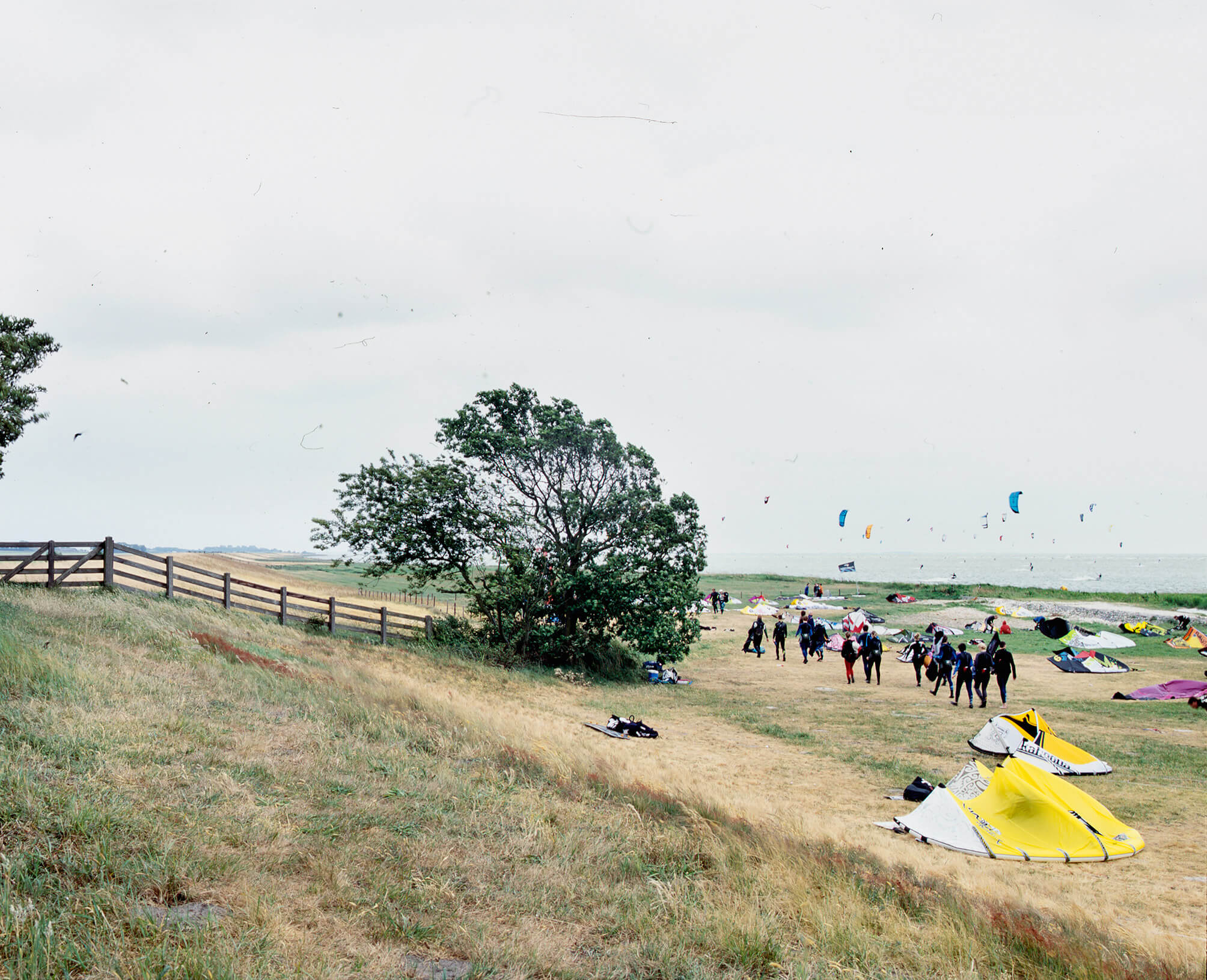
Ten years ago, in November, I drove up to Frisia – the northernmost province of The Netherlands. I was there to document the remains of air watchtowers: a network of 276 towers that were built in the fifties and sixties to warn the troops and population of possible aerial danger coming from the Soviet Union. It was very windy. The camera shook heavily. The poplars surrounding the concrete tower leaned heavily to one side.
I drove up to the seaside, a few kilometers farther. The wind was still strong when I reached the grassy dike that overlooked the kite-filled beach. I exposed the last piece of film left on the roll. Strong gusts of wind blew landwards.
Months later I didn’t bother to blow off the dust that had settled on the film before scanning it. A photograph without use, with low resolution, made for the sake of the archive’s completeness.
The dust on the film appears to be carried landwards, by the same gust of wind lifting the kites.
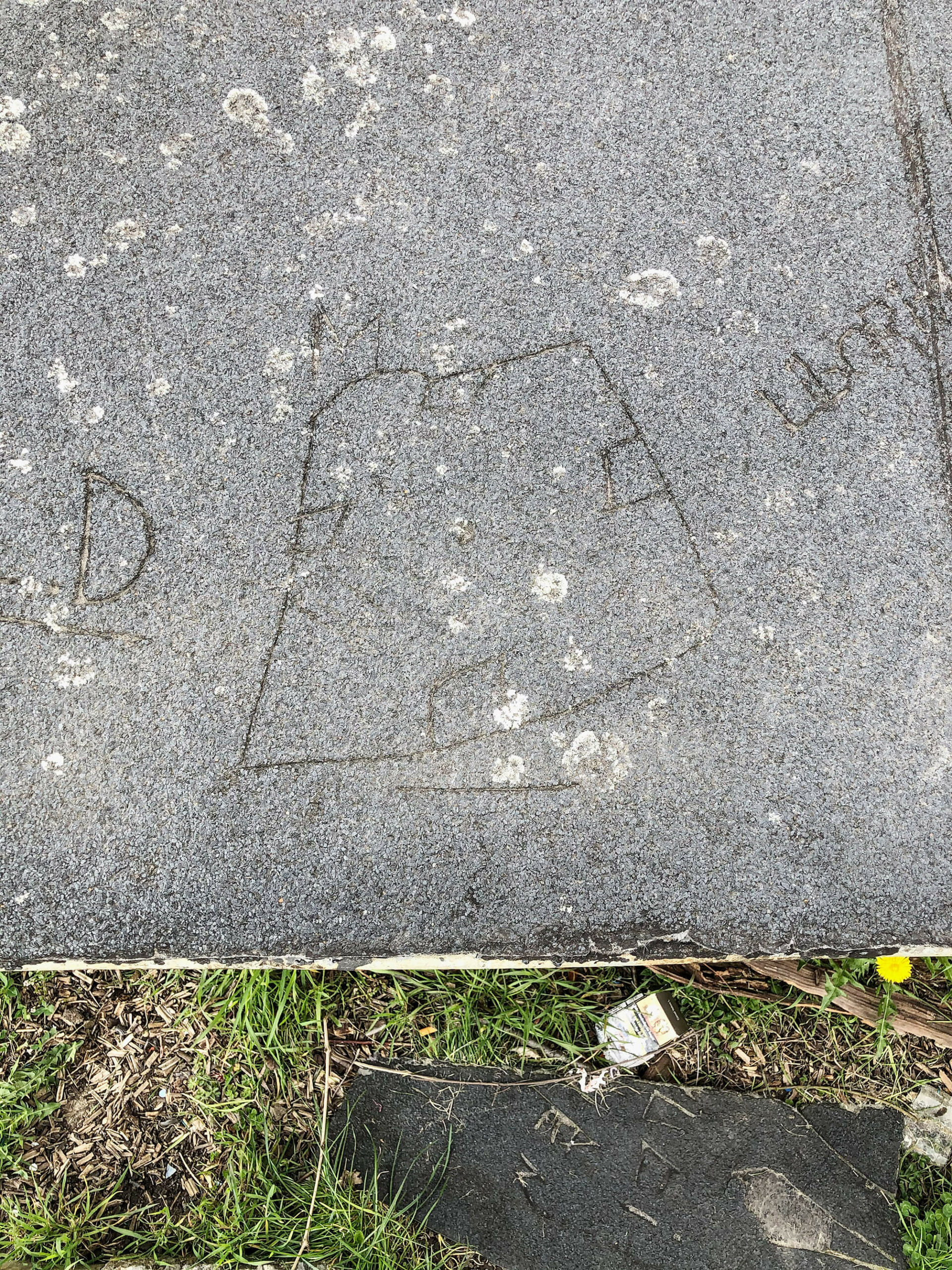
The torn off section of roofing on the grass has part of a text carved in it: ‘UDI’ and ‘EN’ are still legible. It must have come from another roof; the one shown in the photograph has no missing sections, nor visible repairs.
The roofing that is still on the garage shows a drawing of some kind. A floorplan for a squarish building with a supporting column along each side, or the layout for a tactical explanation, perhaps.
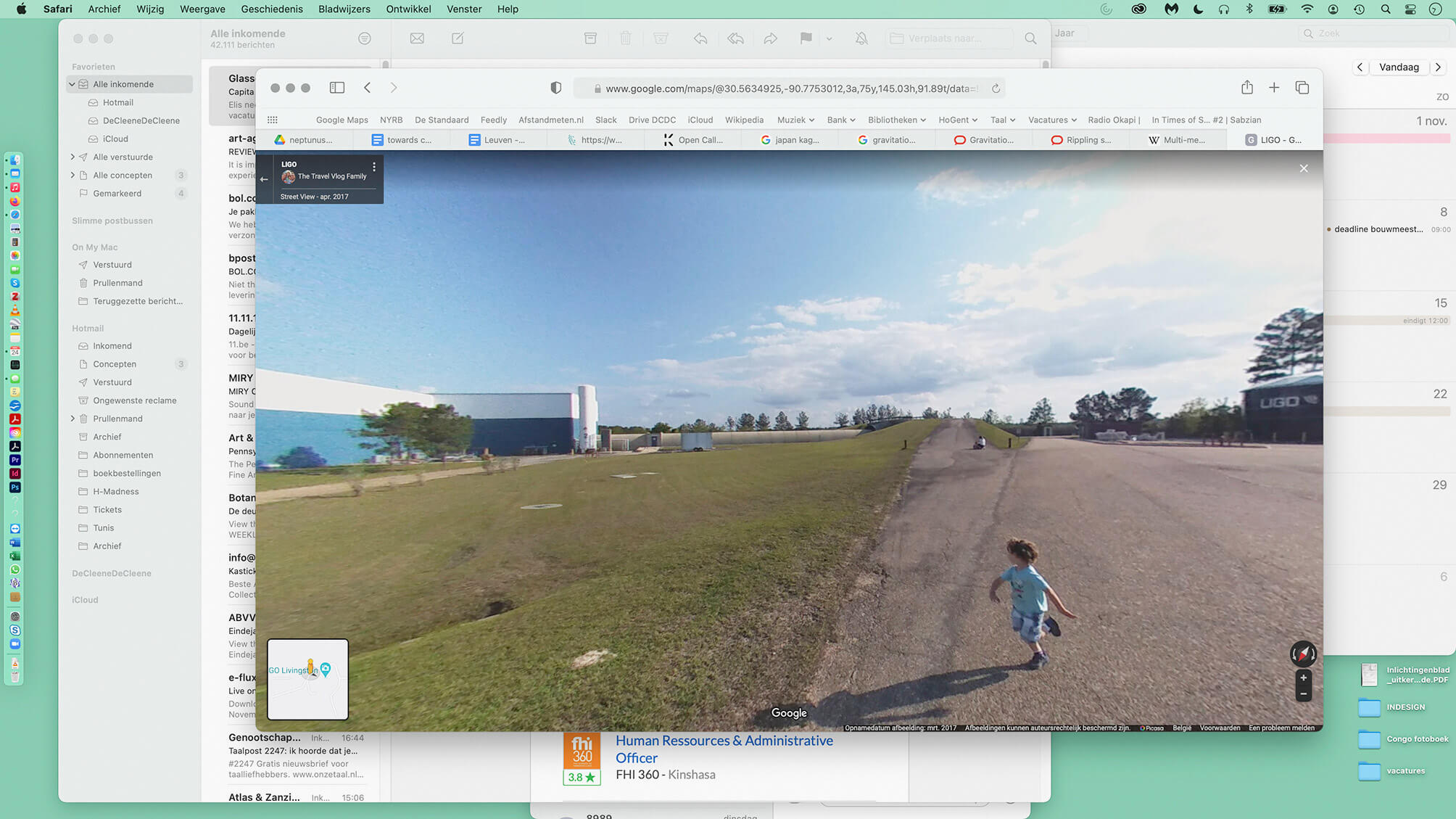
To detect gravitational waves, physicists built enormous research centers, amongst others at Livingston, Louisiana. The facility mainly consists of two tunnels in an L-shape. Mirrors inside provide data. Disturbances from gravitational waves are miniscule. To prevent interference from outside, such as vibrations caused by people passing in the neighbourhood, the mirrors have to be detached from the earth. They ‘float’, suspended by glass fibers in a pendulum-like construction. As I was watching my screen, a courier was on his way to deliver a book (Noel-Todd, J. The Penguin Book of the Prose Poem: From Baudelaire to Anne Carson. London: Penguin, 2019).
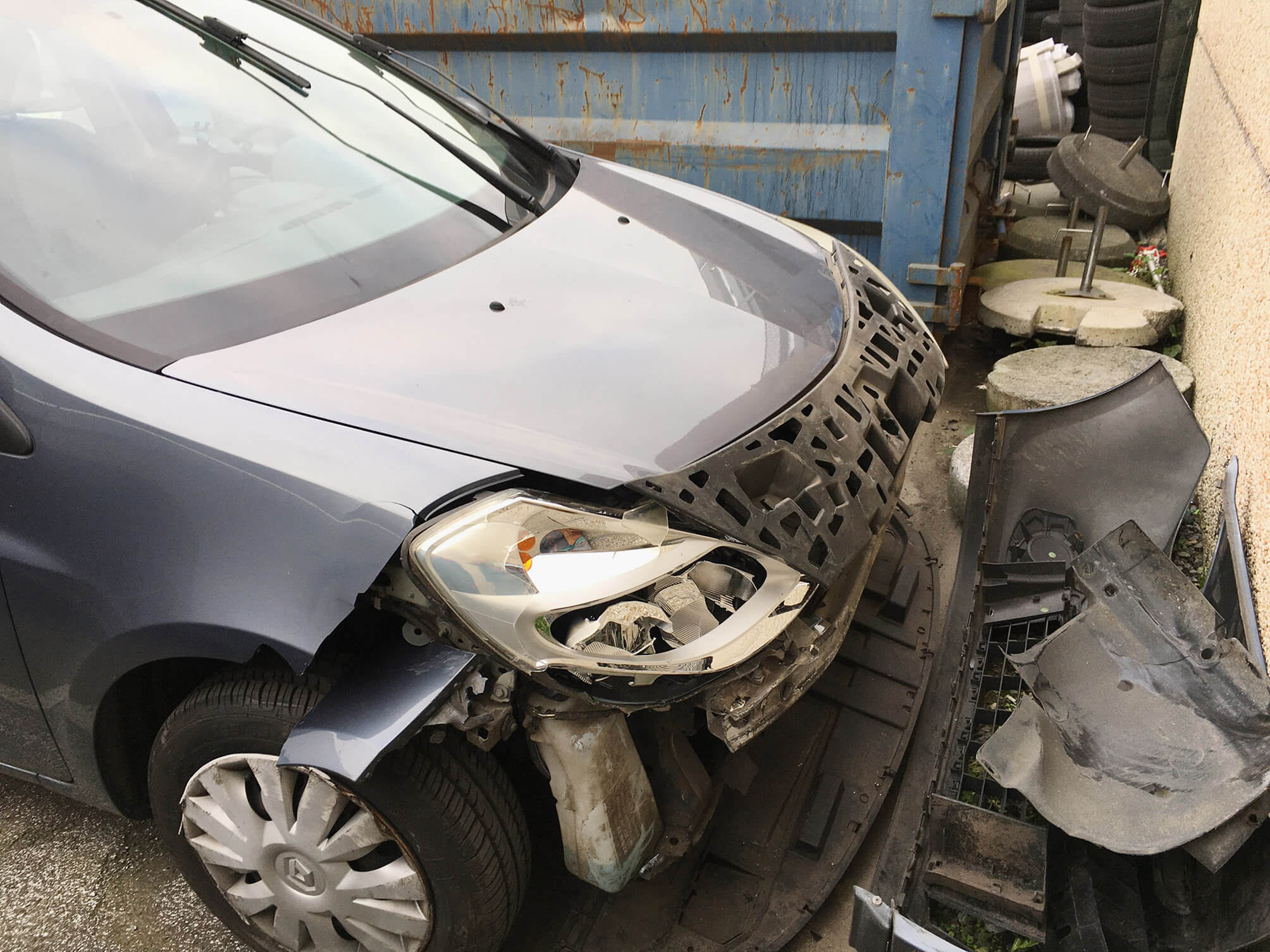
In June, 2014, a severe hailstorm hit Belgium. Warnings were broadcast. A football game between the national teams of Belgium and Tunisia was paused. The morning after, there were small dents in the hood and the roof of the car, each a square centimeter in size, some 10 centimeters separated from each other. The storm didn’t get a name.
Assessing the damage, the insurance company’s expert took the dents into account to establish the wreck’s worth.
When discussing the sensitivities around viewing British propaganda photographs from the 1950s with Mau Mau veterans in Kenya, it became clear that it was not the graphic photographs of atrocities that would trigger the veterans emotionally, but a series of straightforward portraits of men who had pledged allegiance to the British colonial administration. These portraits were catalogued along with the men’s names and another photograph of each one of them signing a declaration of collaboration. I was advised by the representative of the veterans’ association that it would be too dangerous to share these photographs with the veterans.
22 superimposed portraits from the file CO 1066/7: Kikuyu Loyalists at The National Archives (UK) depicting Kikuyu loyalists after signing a declaration of collaboration with the British on 27 January 1954.
From the series State of Emergency, Max Pinckers et al. (2024)
Max Pinckers (°1988, BE) and Victoria Gonzalez-Figueras (°1988, CA) are based in Brussels, Belgium. They have been working together for the past ten years on documentary photography projects. Victoria works in the cultural field as a researcher and producer. Max is a speculative documentarian, teacher and occasional writer on photography. They are married, in love, and have a son. Victoria has consistently assisted Max in his projects as a production manager, but they have recently been making new work together as co-authors. “Double Reward” is the first such project.
In spring 2024 the-documents.org and Trigger co-publish a series of online articles with a focus on the meeting ground between photography and the document.

Getty Images charges a fee for the use of a 1953 image depicting Mau Mau detainees building a wall. Working together with the Bristol Archives in the case of this collection, Getty claims to sell services such as “image search tools” and “research support”. These images are public domain and in fact available for free but as long as Getty does not charge the fee as a copyright claim, there is no legal obstacle to charging money for images to which they hold no copyright.
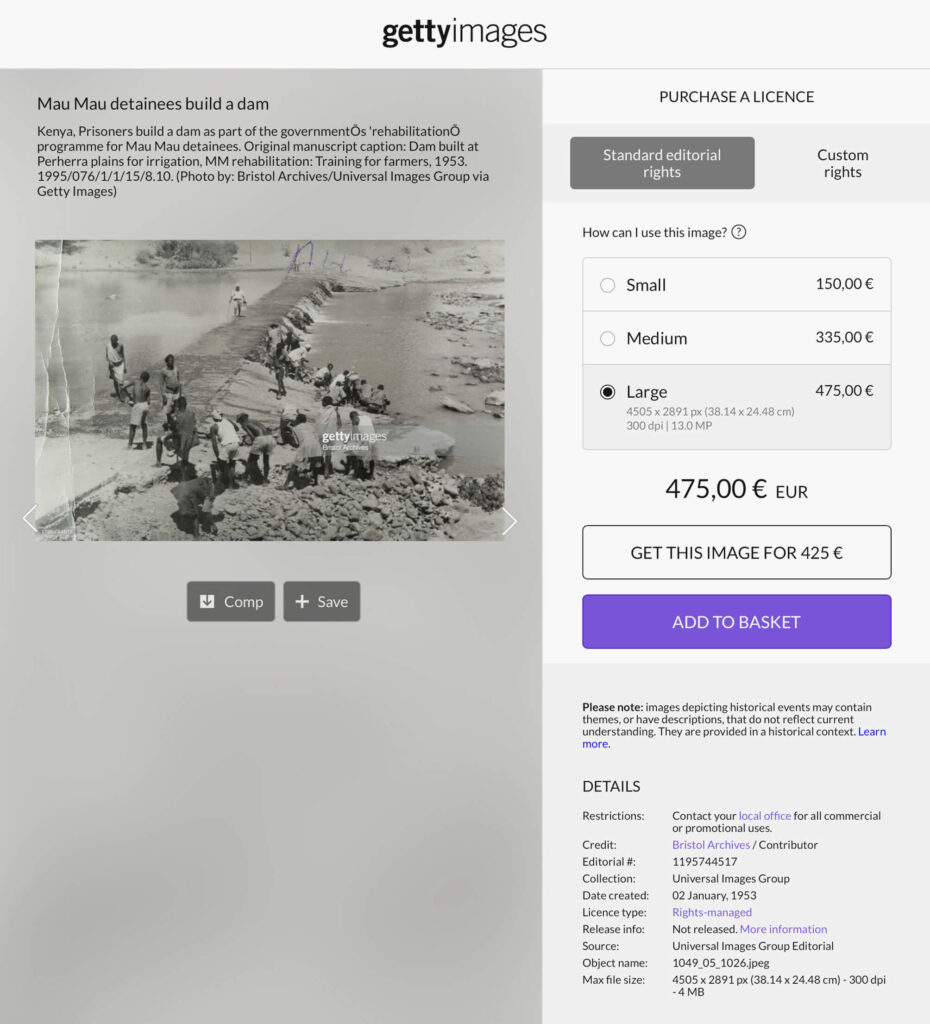
Mau Mau detainees build a dam, 1953, Elspeth Huxley (1995/076/1/1/15/8.10). British Empire & Commonwealth Collection, Bristol Archives, UK Public domain
Max Pinckers (°1988, BE) and Victoria Gonzalez-Figueras (°1988, CA) are based in Brussels, Belgium. They have been working together for the past ten years on documentary photography projects. Victoria works in the cultural field as a researcher and producer. Max is a speculative documentarian, teacher and occasional writer on photography. They are married, in love, and have a son. Victoria has consistently assisted Max in his projects as a production manager, but they have recently been making new work together as co-authors. “Double Reward” is the first such project.
In spring 2024 the-documents.org and Trigger co-publish a series of online articles with a focus on the meeting ground between photography and the document.


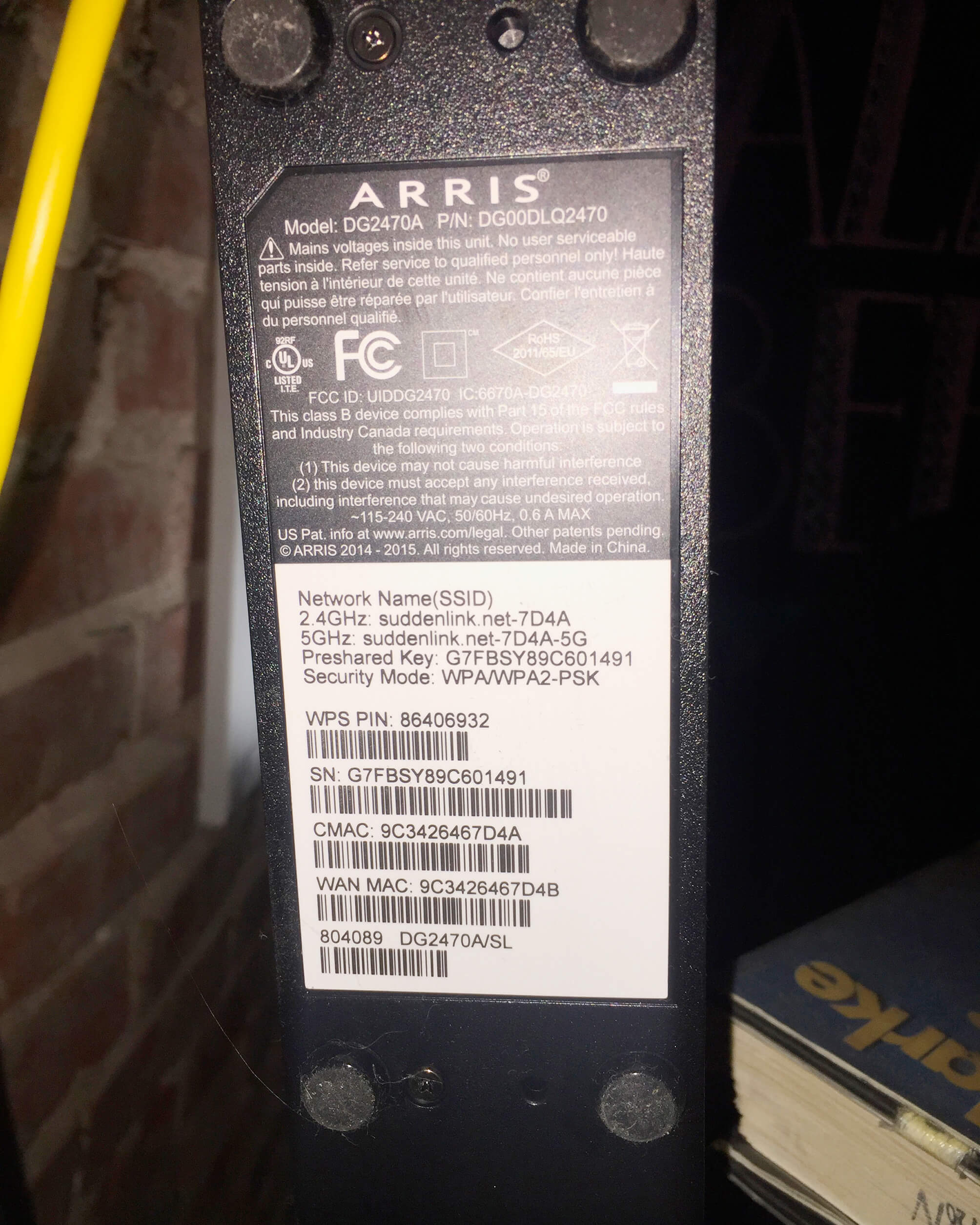
The bartender didn’t remember the passcode, so he pointed out where I could find it: on the bottom of the router box. Instead of trying to read the tiny numbers on the router label in the dark, while at the same time awkwardly typing it into my small, cumbersome smartphone keyboard, I decided to photograph the label. This allowed me to retreat back to my seat, zoom into the image and easily enter the code into my phone. The photograph immediately lost its value the moment this action was completed.
Max Pinckers (°1988, BE) and Victoria Gonzalez-Figueras (°1988, CA) are based in Brussels, Belgium. They have been working together for the past ten years on documentary photography projects. Victoria works in the cultural field as a researcher and producer. Max is a speculative documentarian, teacher and occasional writer on photography. They are married, in love, and have a son. Victoria has consistently assisted Max in his projects as a production manager, but they have recently been making new work together as co-authors. “Double Reward” is the first such project.
In spring 2024 the-documents.org and Trigger co-publish a series of online articles with a focus on the meeting ground between photography and the document.
‘No consent was given for the photograph to be taken. The capture of my body in this way is a form of torture.
The photograph is evidence of the entitled authority and fundamental corruptions of the male soldiers and the occupying military forces.’
Screenshot from film chapter In Her View which engages an archival document revealing the sexual exploitation of an anonymous woman by occupying Australian soldiers fighting for the Allied forces in Lebanon in 1941. The film moves through the archival evidence to sense, trace and position her encounter as a formation of poetic testimony. The image shows extracted noise, levels, focal length and balance from the archive image to generate a 3D model of its violent points of interaction, this is without showing the image itself. A technique developed with Anabel Garcia-Kurland on human/non-human modelling in the making of the film.
Frame of Accountability, 01:00:00, Helene Kazan, 2024.
Helene Kazan is an artist, writer and educator. Her work investigates ‘risk’ as a lived condition produced through the conjoined violent effects of capitalism and conflict. This is observed in the colonial roots of international law and its material formation of the lived-built environment. In response, she uses decolonial, feminist, poetic and critical-legal approaches in her work, which explores ways of dismantling the ongoing effects of neo-colonial violence towards wider frameworks of accountability and justice.
In spring 2024 the-documents.org and Trigger co-publish a series of online articles with a focus on the meeting ground between photography and the document.

‘These attempts to dismantle occur amidst timeless acts of protest and resistance.’
Screenshot from film chapter (Un)Touching Ground where archival images that document a history of protest and resistance movements in Lebanon are put through a process of data-moshing. The disruption of the image in this pixelated moment in the film, forms to highlight the mass of people that make up these movements for intersectional revolution.
Frame of Accountability, 01:00:00, Helene Kazan, 2024.
Helene Kazan is an artist, writer and educator. Her work investigates ‘risk’ as a lived condition produced through the conjoined violent effects of capitalism and conflict. This is observed in the colonial roots of international law and its material formation of the lived-built environment. In response, she uses decolonial, feminist, poetic and critical-legal approaches in her work, which explores ways of dismantling the ongoing effects of neo-colonial violence towards wider frameworks of accountability and justice.
In spring 2024 the-documents.org and Trigger co-publish a series of online articles with a focus on the meeting ground between photography and the document.

The company Demuynck from Heist (B) has put the 2011 brochure of Dutch bicycle manufacturer Sparta on yumpu.com as an ePaper. According to yumpu.com, this was reportedly done on 28 September 2013. The leaflet is titled ‘Collection Overview 2011’. On pages 68 and 69, the bike is called K10, the frame says K-TEN, while a version presumably a bit older is usually for sale second-hand as K-10. The K10 is a ‘practical, compact city bike’, it is available in one unisex frame size 50 and it has an integrated cable lock. There is a loop at the back of the large tube to which the rest of the frame is mounted. This might be the end of that lock. There are optional carriers, front and rear, and there is an optional lighting kit. The recommended retail price is 299 euros.
Lars Kwakkenbos lives and works in Brussels and Ghent (B). He teaches at KASK & Conservatorium in Ghent, where he is currently working on the research project ‘On Instructing Photography’ (2023-2024), together with Michiel and Arnout De Cleene.

John from Middelburg offers a K-10 without a loop at the back on marktplaats.nl. His K-10 does have a front light, which strangely never seems to be mounted in the front of the long tube of the frame. The asking price is 75 euros, bids may start from 50 euros.
Lars Kwakkenbos lives and works in Brussels and Ghent (B). He teaches at KASK & Conservatorium in Ghent, where he is currently working on the research project ‘On Instructing Photography’ (2023-2024), together with Michiel and Arnout De Cleene.

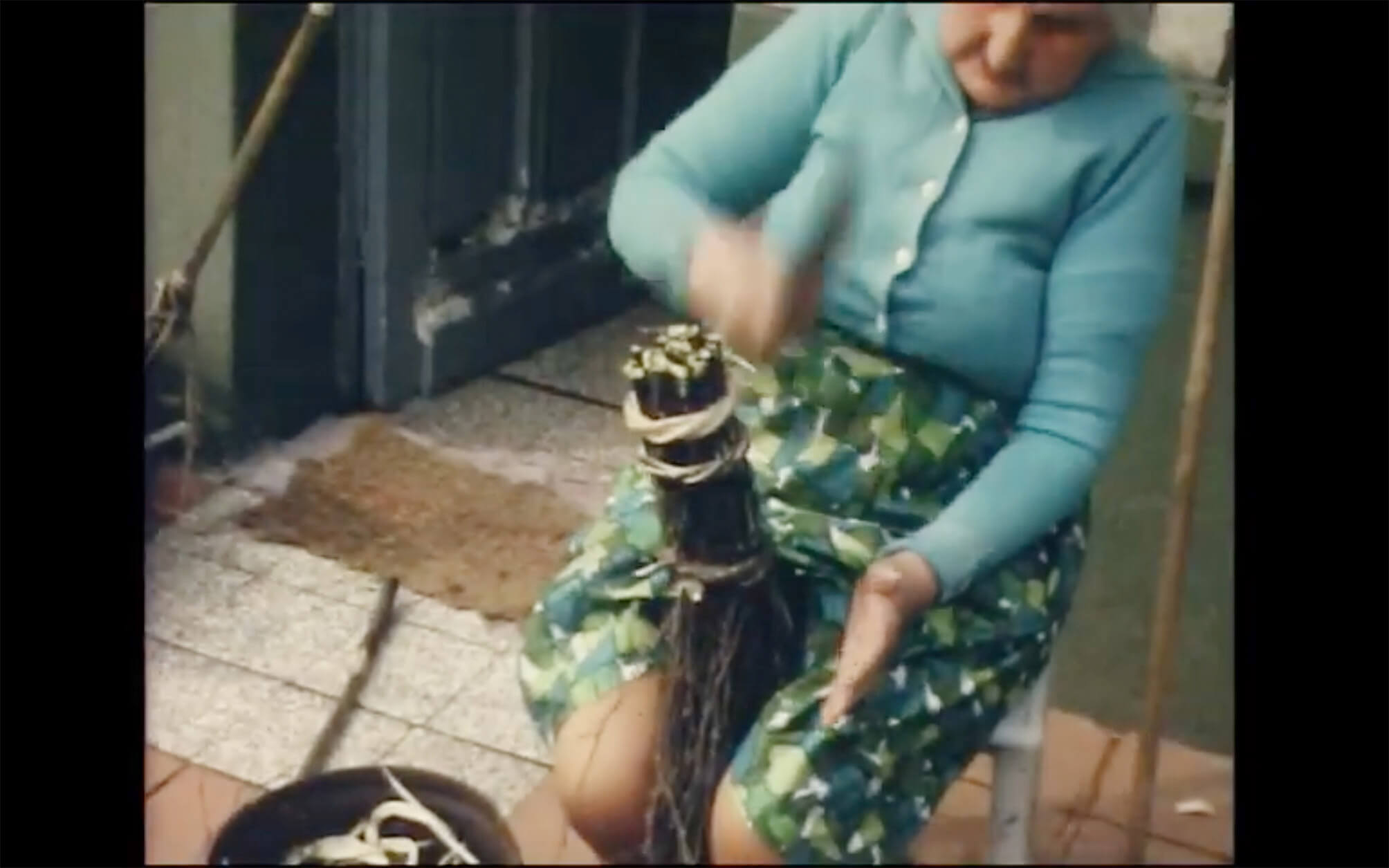
This video-still is taken from a documentary about ‘Le Coin du Balai – De Bezemhoek’, a Brussels neighborhood on the edge of the Sonian Wood. Historically, the inhabitants had the exclusive right to harvest young shoots of trees to make and sell brooms. In 1976, filmmaker Willy Biesemans captured the last broom-maker, still in possession of this vernacular knowledge.
Nowadays, the Sonian Wood is commonly understood as a place of natural beauty surrounding the city. The wood the forest produces is managed as a chain of production and sold in public auction to the best buyer. The bulk of the forest’s produce is exported abroad and eventually imported back as manufactured goods.
Clementine Vaultier’s interests, although trained as a ceramist, are in the warm surroundings of the fire rather than the production it engenders.
Biesemans, W. De Bezemhoek. 1976 (YouTube – De Bezemhoek)
‘Submission for an art project named the-documents.org’ is a collection of 9 images1 generated by DALL·E mini2, an open-source AI model, on the basis of the prompt ‘Submission for an art project named the-documents.org’.
DALL·E mini is a freely available AI tool that generates images based on a description of the desired image (a prompt) provided by a user.
Though DALL·E mini seems to be primarily used as a source of humour within the online community – being able to create a set of images from any specific or abstract prompt – it also gives rise to more serious questions on AI ethics and copyright. As the model is trained with unfiltered data from the internet, it may reinforce societal biases, generating images that contain stereotypes against minority groups. DALL·E mini and similar, more advanced tools, are also capable of creating art ‘in the style of’ when they have sufficient data to source from (e.g. using a prompt as “Van Gogh painting the Eiffel Tower”). This leads to the legal and ethical question whether an artist should have a say in the use of his/her artwork as AI input data, and whether the artist should be able to claim rights for AI generated images based on this data.

DALL·E mini was created by Boris Dayma et al. 2021-2022, https://huggingface.co/spaces/dalle-mini/dalle-mini, to be migrated to www.craiyon.com
Ward Verwaeren is a legal counsel in the tech industry, and former IP lawyer. He tries to know more about art than the average lawyer, and more about law than the average artist.
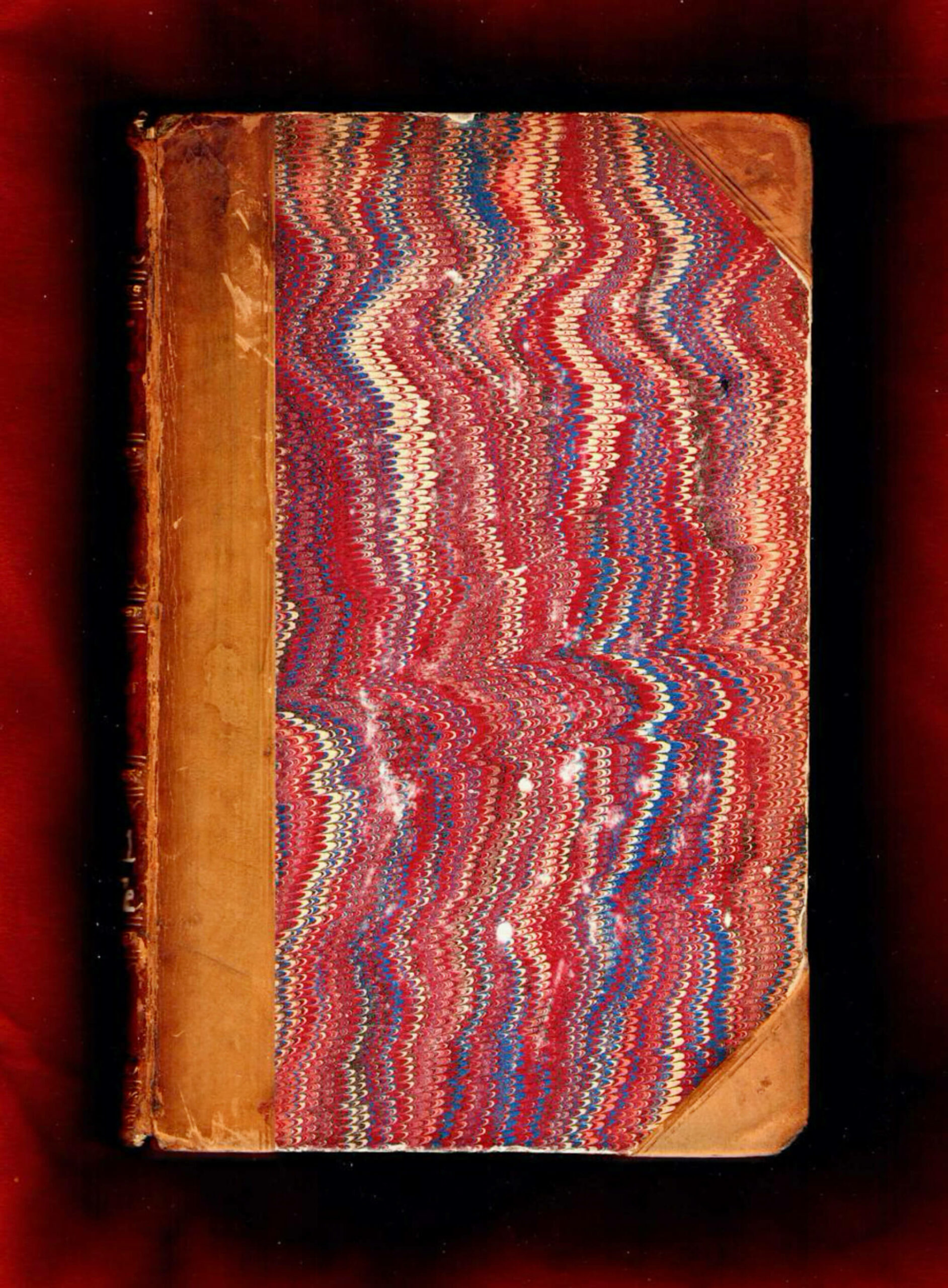
In Boarhunt, close to Winchester (UK), the fort houses the Royal Armouries’ artillery collection. It contains parts of the ‘Project Babylon’ space gun, the two part bronze Dardanelles Gun and a collection of French field guns, captured in Waterloo. On the lawn to the South of the fort two neat piles of fifteen1 36” shells flank a Mallet’s Mortar. Manufactured in 1857, the mortar remains unfired up to this day.2 In 1873, its inventor – the engineer and geophysicist Robert Mallet – publishes his translation of Luigi Palmieri’s Incendio Vesuviano. Before giving a lengthy account of his take on the present state of vulcanicity, he briefly introduces the famous Italian vulcanologist’s report: ‘The following Memoir of Signor Palmieri on the eruption of Vesuvius in April of this year (1872), brief as it is, embraces two distinct subjects, viz., his narrative as an eye-witness of the actual events of the eruption as they occurred upon the cone and slopes of the mountain, and his observations as to pulses emanating from its interior, as indicated by his Seismograph, and as to the electric conditions of the overhanging cloud of smoke (so called) and ashes, as indicated by his bifilar electrometer, both established at the Observatory.’
O
O OOO
OOO OOOOOOO
In the outskirts of East of London, along Repository road in Woolwich, the only other mortar of this type is installed. This particular one fired nineteen shells on three occasions. Each time resulting in a damaged mortar.
Screenshot taken from AbeBooks, where the first edition of The Eruption of Vesuvius in 1872 with Notes, and an Introductory Sketch on the Present State of Knowledge of Terrestrial Vulcanicity, the Cosmical Nature and Relations of Volcanoes and Earthquakes is listed for 1895,00 USD. https://www.abebooks.com/first-edition/Eruption-Vesuvius-1872.with-Notes-Introductory-Sketch/439314424/bd
Project Gutenberg’s The Eruption of Vesuvius in 1872, by Luigi Palmieri (translated by Mallet) can be found at: https://www.gutenberg.org/files/33483/33483-h/33483-h.htm
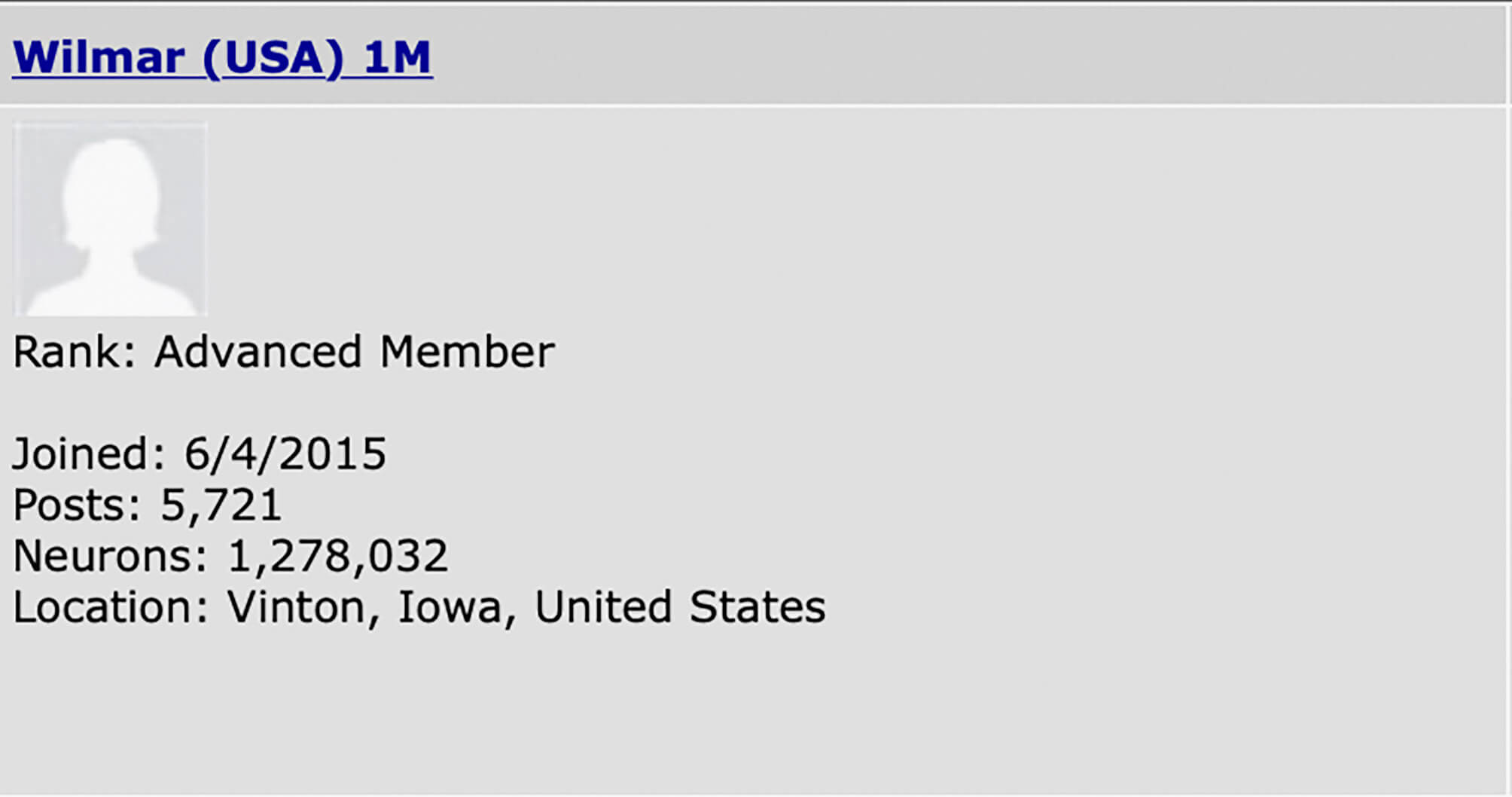
On Wednesday, May 9, 2018 at 2:23:14 PM Koh Elaine starts the thread original or original copy on the The Free Dictionary by Farlex’s forum.
‘Is “original copy” correct or should it be “original”? Thanks.’
The seventh reply to Elaine’s question is Wilmar’s on Thursday (his was preceded by towan52, georgew, NKM, Koh Elaine, Sarrriesfan, ChrisKC, Ashwin Joshi).
‘An original copy IS the original.
Folks usually call the document first created the original, but some will say original copy. If I run that original thru the copy machine, I end up with two copies (yes, I said copies) of the same thing – the original and the duplicate of it (in terms of content). This is how the term is commonly used.
If your writing or conversation depends heavily on understand the difference, I would recommend using the terms original and duplicates. There are many times when that is very important, in that the original must be retained by a particular party, and the duplicates are marked as such and distributed or stored as required depending on the document and the circumstance.
If you are just trying to make sure that you have enough copies to distribute to everyone at the company meeting this afternoon, use whatever terms trips your trigger. But, if you want to ensure that you keep custody of the original, so that you can make additional duplicates (copies) when additional people attend, then be more specific about the words you use.
OH, and, please, in the future, include some context with your question. Asking if “word” is correct doesn’t go very far in supplying a reasonably useful response.’
https://forum.thefreedictionary.com/postst182102_original-or-original-copy.aspx
(transcript CNN Saturday morning news, Aired September 21, 2002 – 07:32 ET)
THIS IS A RUSH TRANSCRIPT. THIS COPY MAY NOT BE IN ITS FINAL FORM AND MAY BE UPDATED.
MILES O’BRIEN, CNN AnchorNow this Astronomy Picture of the Day goes back as far as the popularization of the Internet. The discovery of what is now Netscape, if you will. Let’s take a look at the guys behind it. It’s an art gallery of astronomy, featuring explosive supernovas, deep black holes, flaring comets, and breathtaking earth views.
(BEGIN VIDEOTAPE)
O’BRIEN(voice-over) Every day since the web was in its infancy, two enthusiastic astronomers have posted a new image to Astronomy Picture of the Day.
ROBERT J. NEMIROFF, NASA Astrophysicist
I think that a lot of these would look great in a gallery. They’re very different, there’s a lot of different colors involved, there’s a lot of different contrasts, a lot of different textures. And, it has the added bonus of being scientifically interesting. It’s scientifically true.
O’BRIENRobert Nimiroff and Jerry Donnell (ph) choose the images based on their educational value, newsworthiness, or just plain beauty.
NEMIROFF
I mean, there’s a ‘wow’ factor here. I usually know within a second or two of seeing a picture whether it’s a sure thing for The Astronomy Picture of the Day, because I just say ‘Wow, what is going on there?’
O’BRIENEvery image is archived on the site. Underneath each picture is a brief explanation so that the site is not just eye candy but educational, as well. Including images that give us a new perspective.
NEMIROFF
Recently, people put together a bunch of pictures from the moon in this great panorama. You can look all the way around in the circle and see what the astronauts saw. The face on Mars, which the best explanation is, it’s just a rock formation, but there’s a lot of conspiracy people out there who think it’s more, and the picture of the earth at night. And, I think it’s one of our most popular images.
O’BRIENSome images come from telescopes around the world. Others from the Hubble Telescope, peering deep into space. Others, from amateur photographers, an artist’s renditions of black holes too distant for detail.
NEMIROFF
And you can just look at it and feel that you’re there.
O’BRIENMany people take the images from the site and post them as wallpaper on their computers, or, create a slideshow screensaver.
NEMIROFF
Our biggest demographic is the intelligent professional who works at some company and has a computer on the desk, has a web browser, and they check us out. We’ve got e-mail that we’re many people’s morning cup of coffee.
O’BRIENWhether you’re a space junkie or just enjoy looking up at the sky, Astronomy Picture of the Day is worth the visit.
https://apod.nasa.gov/apod/ap950616.html (original post: June 16, 1995)
http://transcripts.cnn.com/TRANSCRIPTS/0209/21/smn.06.html

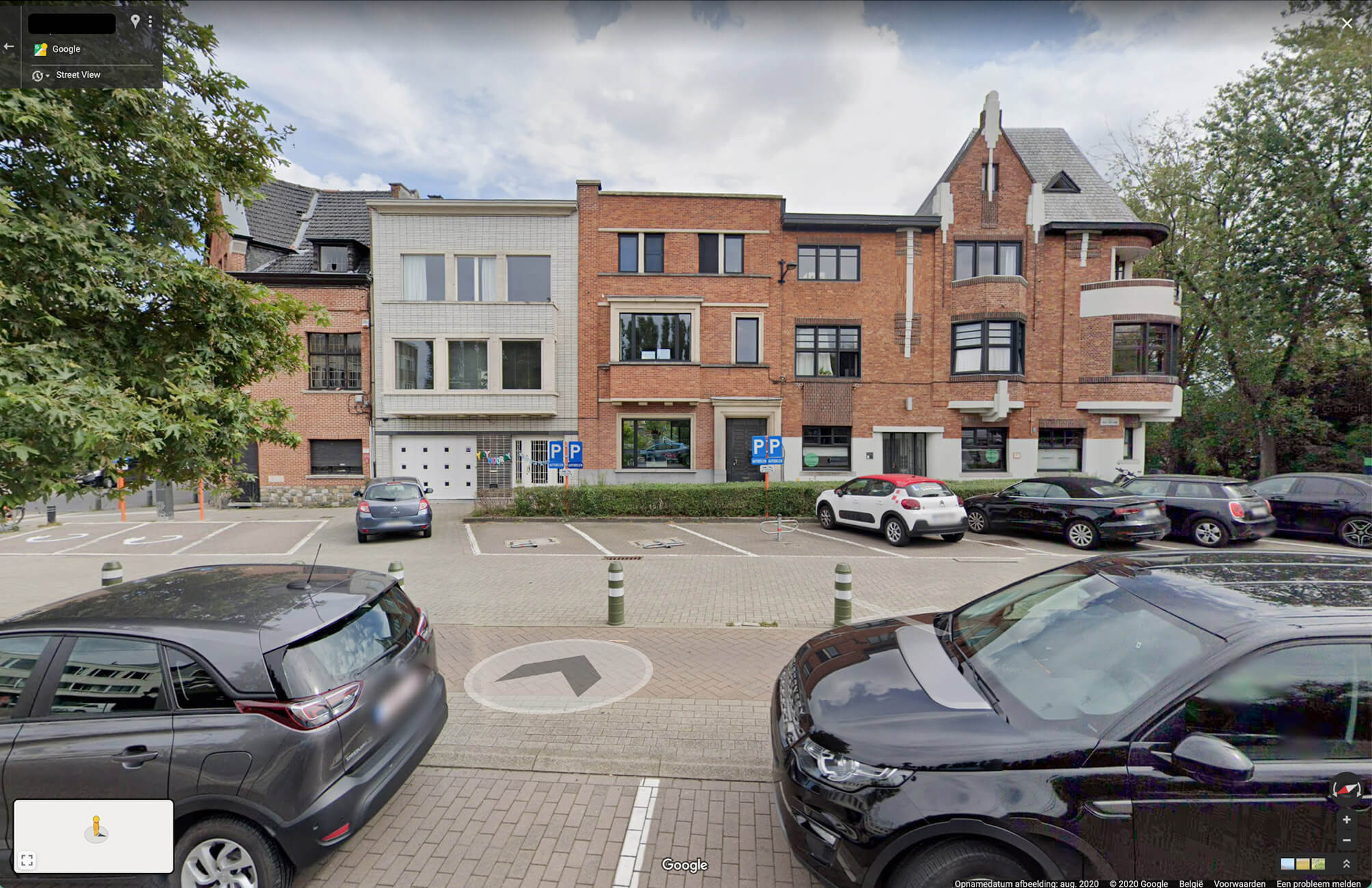
Depending on the perspective one chooses to look at the address, the house is adorned or not. The perspective from the main road is an image made in August 2020, the website (Google Maps) says. Our car is in front of the garage. It must be the end of August. We drive home from the hospital with the newborn, who doesn’t stop crying. Maybe I tightened the belts in the car seat too much. Arriving at our house, we see the slogans and decorations friends have hung at our front door. On the sill of the neighbour’s first floor window, there’s a brick that must have fallen from the second floor facade.