What constitutes a ‘document’ and how does it function?
According to the Oxford English Dictionary, the etymological origin is the Latin ‘documentum’, meaning ‘lesson, proof, instance, specimen’. As a verb, it is ‘to prove or support (something) by documentary evidence’, and ‘to provide with documents’. The online version of the OED includes a draft addition, whereby a document (as a noun) is ‘a collection of data in digital form that is considered a single item and typically has a unique filename by which it can be stored, retrieved, or transmitted (as a file, a spreadsheet, or a graphic)’. The current use of the noun ‘document’ is defined as ‘something written, inscribed, etc., which furnishes evidence or information upon any subject, as a manuscript, title-deed, tomb-stone, coin, picture, etc.’ (emphasis added).
Both ‘something’ and that first ‘etc.’ leave ample room for discussion. A document doubts whether it functions as something unique, or as something reproducible. A passport is a document, but a flyer equally so. Moreover, there is a circular reasoning: to document is ‘to provide with documents’. Defining (the functioning of) a document most likely involves ideas of communication, information, evidence, inscriptions, and implies notions of objectivity and neutrality – but the document is neither reducible to one of them, nor is it equal to their sum. It is hard to pinpoint it, as it disperses into and is affected by other fields: it is intrinsically tied to the history of media and to important currents in literature, photography and art; it is linked to epistemic and power structures. However ubiquitous it is, as an often tangible thing in our environment, and as a concept, a document deranges.
the-documents.org continuously gathers documents and provides them with a short textual description, explanation,
or digression, written by multiple authors. In Paper Knowledge, Lisa Gitelman paraphrases ‘documentalist’ Suzanne Briet, stating that ‘an antelope running wild would not be a document, but an antelope taken into a zoo would be one, presumably because it would then be framed – or reframed – as an example, specimen, or instance’. The gathered files are all documents – if they weren’t before publication, they now are. That is what the-documents.org, irreversibly, does. It is a zoo turning an antelope into an ‘antelope’.
As you made your way through the collection,
the-documents.org tracked the entries you viewed.
It documented your path through the website.
As such, the time spent on the-documents.org turned
into this – a new document.
This document was compiled by ____ on 24.09.2025 02:54, printed on ____ and contains 16 documents on _ pages.
(https://the-documents.org/log/24-09-2025-6653/)
the-documents.org is a project created and edited by De Cleene De Cleene; design & development by atelier Haegeman Temmerman.
the-documents.org has been online since 23.05.2021.
- De Cleene De Cleene is Michiel De Cleene and Arnout De Cleene. Together they form a research group that focusses on novel ways of approaching the everyday, by artistic means and from a cultural and critical perspective.
www.decleenedecleene.be / info@decleenedecleene.be - This project was made possible with the support of the Flemish Government and KASK & Conservatorium, the school of arts of HOGENT and Howest. It is part of the research project Documenting Objects, financed by the HOGENT Arts Research Fund.
- Briet, S. Qu’est-ce que la documentation? Paris: Edit, 1951.
- Gitelman, L. Paper Knowledge. Toward a Media History of Documents.
Durham/ London: Duke University Press, 2014. - Oxford English Dictionary Online. Accessed on 13.05.2021.

The last couple of days have been dry. Rain is expected for the weekend. The office buckets are in place and are empty, except for some residue. Dirt, sand, a few hairs. Some particles must have come along with the drops when they made their way through the roof.

In an attempt to make it his own, Gino – it might also be Dino – has taken a can of bright pink spray paint to his hard hat and – as the paint was drying – dragged his gloved finger from top to bottom. G – or D –, I, N, O. In the dust on a demolished floor tile, someone has written 12,10. Perhaps a measurement, a quantity, a position, a date, a reference.
Subtractive writing is not uncommon. With the tip of a passer-by’s index finger ‘WASH ME’ is subtracted from the dust on a dirty car. In freshly poured concrete, a name is embedded forever with a twig. In hot and soft roofing drawings and obscenities are scratched. Styrofoam lining a brand new elevator gets impressed with names, jokes and knuckles.
In the twenty-third canto of Ariosto’s Orlando Furioso (1516), Orlando comes across the name of his love and another man, carved in the bark of a tree. He doubts. But that night, a gossiping shepherd tells him he’s seen Angelica and Medoro together. Orlando returns to the forest, and in a four-day frenzy, he uproots every tree and pollutes the rivers forever.
CXXXI
For he turf, stone, and trunk, and shoot, and lop,
Cast without cease into the beauteous source;
Till, turbid from the bottom to the top,
Never again was clear the troubled course.
At length, for lack of breath, compelled to stop,
(When he is bathed in sweat, and wasted force,
Serves not his fury more) he falls, and lies
Upon the mead, and, gazing upward, sighs.1
Ariosto, L. Orlando Furioso. Translated by William Stewart Rose, Echo Library, 2006, p. 267.

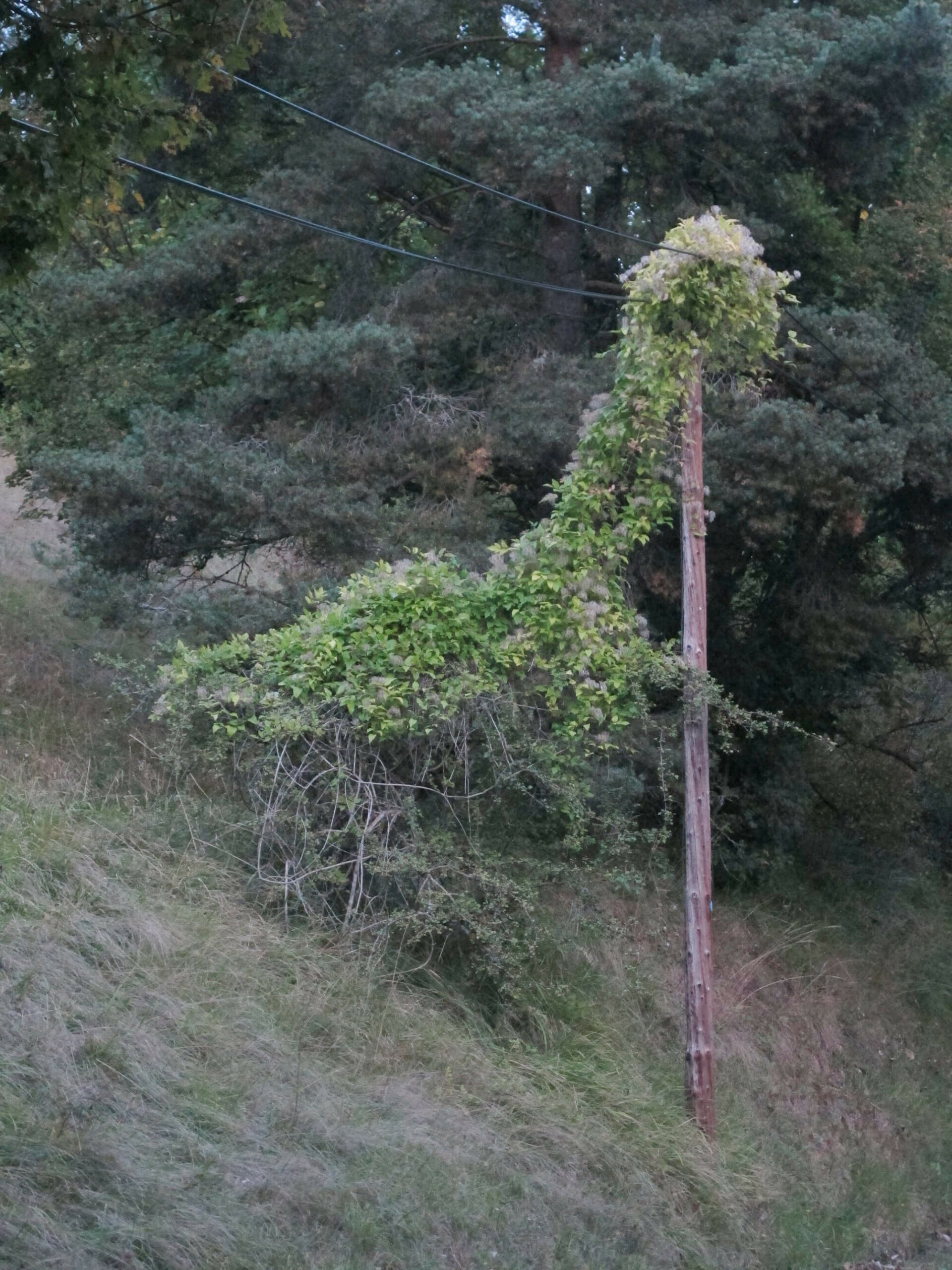
I recognized it in a flash, the late Jurassic-early Cretaceous herbivore looming dangerously over the road I was cycling on. I thought of Some Windy Trees.1
A utility pole (425638, 07/99, 07/2002, COBRA), electrical wires, a hawthorn (Crataegus) and an old man’s beard (Clematis vitalba). A symbiosis.
Delbrouck, V. Some Windy Trees. Loupoigne: Wilderness, 2013.
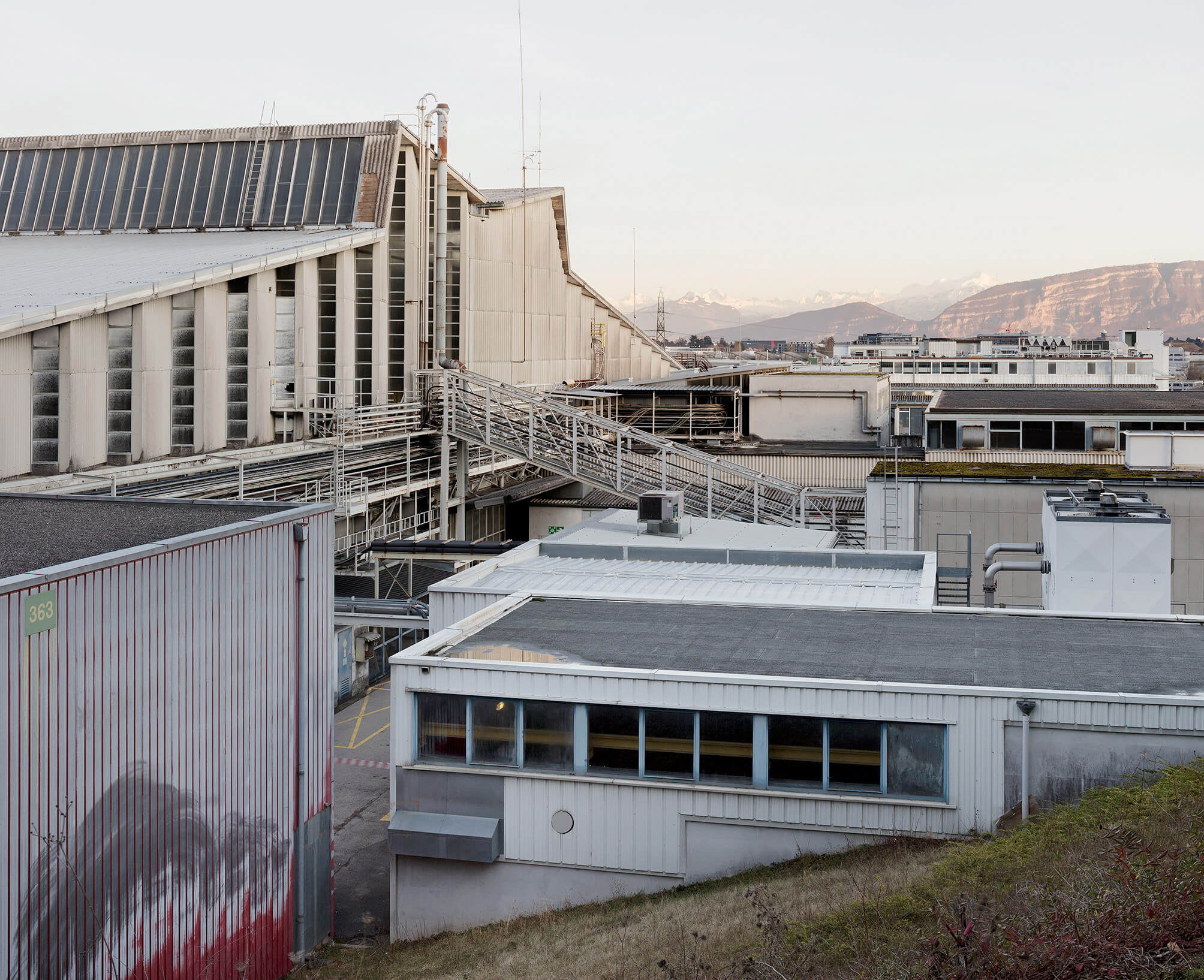
On the second to last day of a research visit at CERN, there was some spare time in the schedule. I took a long walk towards building 282 in search of some excavation samples: cylindrical pieces of rock that were preserved when the tunnel was dug, glued to a block of wood and frequently exhibited in museums over the last three decades as material evidence of the earthwork and as a witness to the depth. The route led me along the back of building 363 where the wind caused young trees – now gone – to scuff the facade over time.
First published in: De Cleene, M. Reference Guide. Amsterdam: Roma Publications, 2019, as W.569.EXC CERN, Towards Building 282, in search of excavation samples
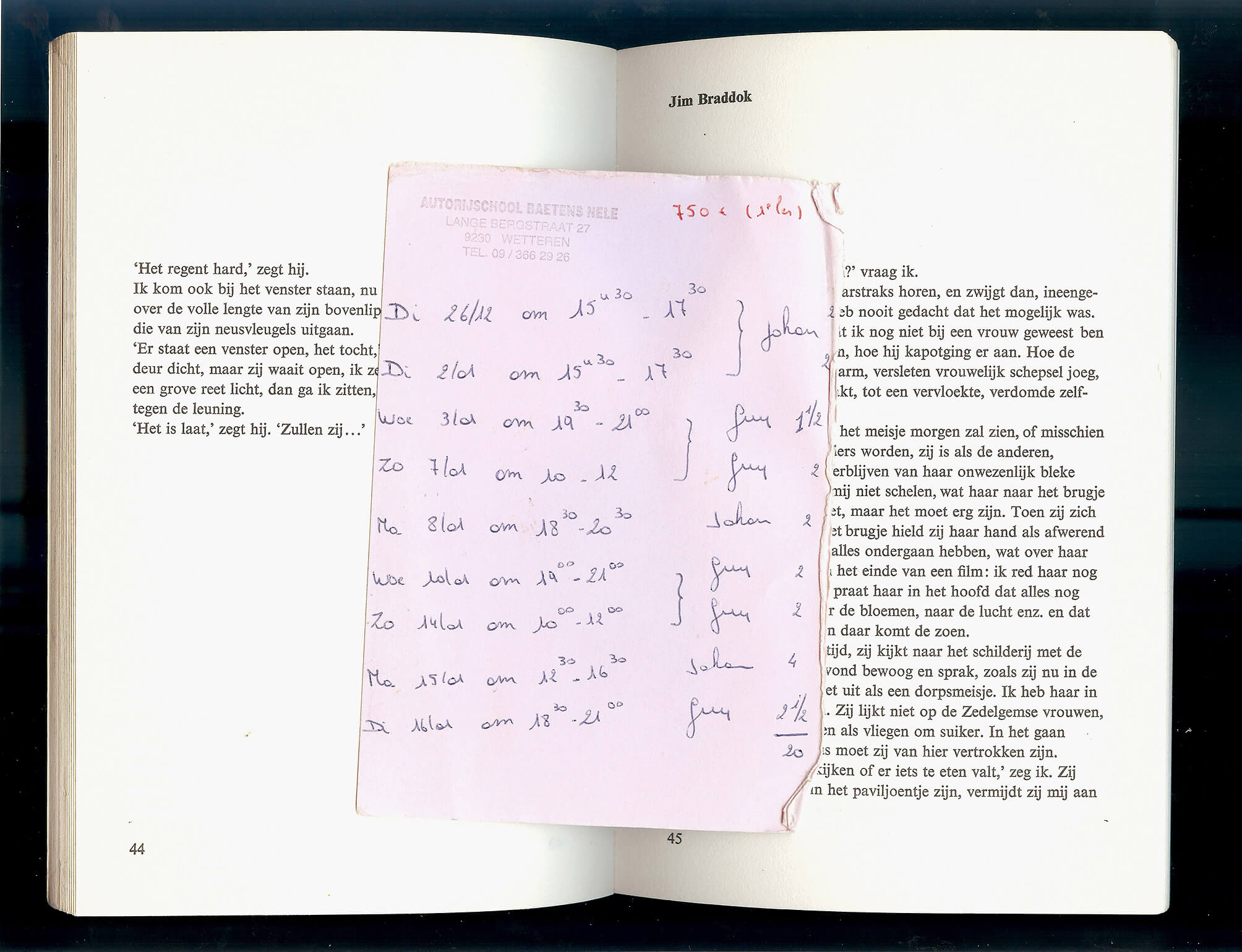
In his debut novel ‘De Metsiers’ Hugo Claus employs a multiple narrative perspective. In the copy I picked up in a thrift store, there’s a bookmarker between pages 44 and 45 where the perspective shifts from Ana to Jim Braddok. It’s pouring. The pink piece of paper lists 9 sessions at a driving school. There’s a total of 20 hours, taught alternately by Johan and Guy.
In 2000, 2006 and 2017 the twenty-sixth of December was a Tuesday. (Earlier years are improbable, since the Euro was not introduced yet.)
Claus, H. De Metsiers. Amsterdam: Uitgeverij De Bezige Bij, 1978.
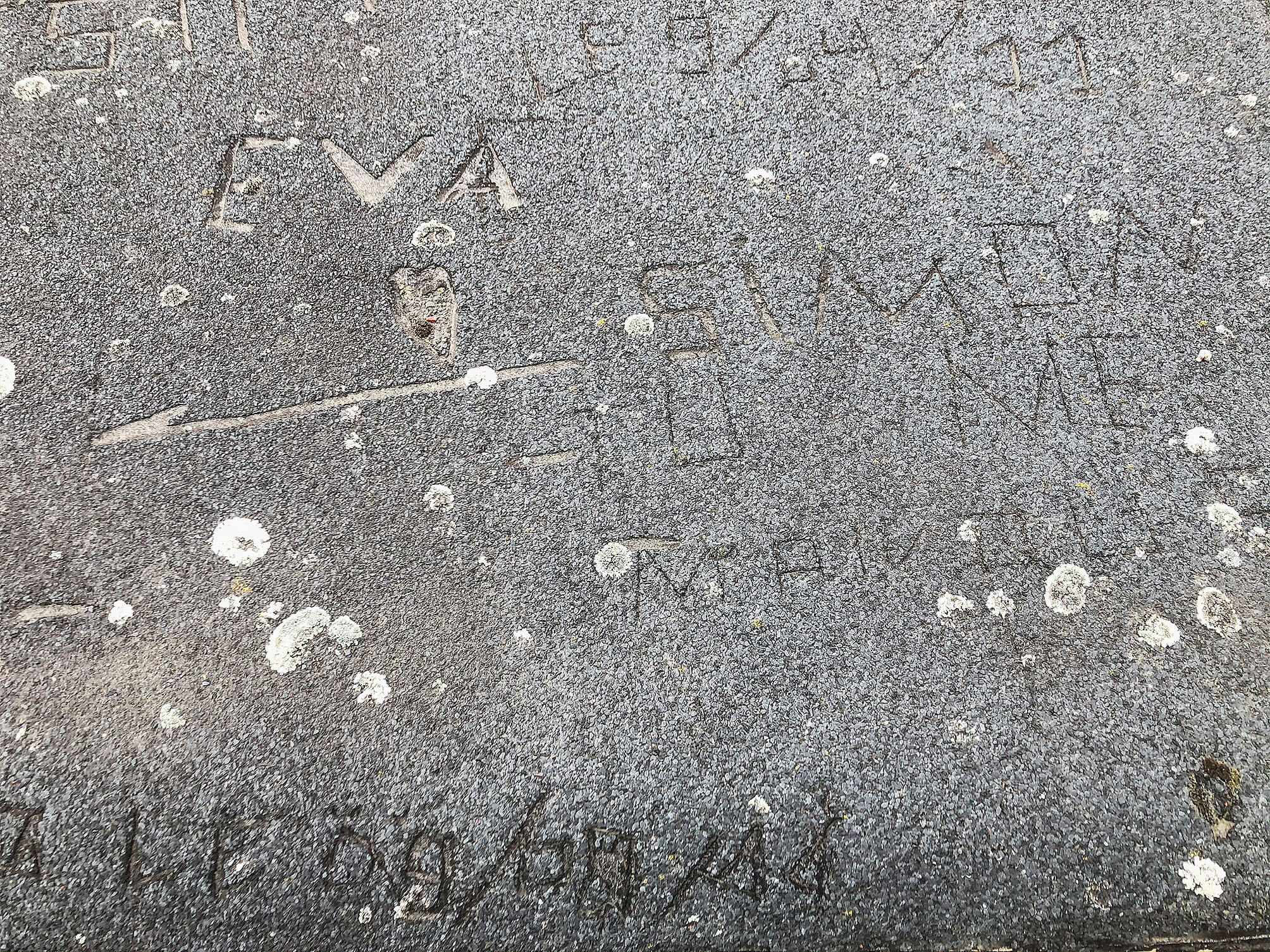
The two photographs arrived in Belgium inside a used hardback1 in spring 2016, though it is unclear how long before that time they were actually taken.2
Photograph #1 measures 151 x 100 mm and shows two young people who appear to be mountain climbing and captured while clearing a ridge. Behind the two subjects a bluish mountainous landscape is vaguely visible, suggesting a vantage point of some considerable elevation. The person on the left is wearing a white T-shirt and a bracelet, and has several earrings. The person on the right is carrying a backpack. What appears to be a black tank-top may in fact also be the straps of the pack. On their head they wear what appears to be a grey T-shirt or other garment, presumably to protect the subject from the sun; this person also has earrings and is wearing a necklace and sunglasses. The weather appears nice, both subjects are smiling and appear relaxed. The effort may well have been staged.
Photograph #2 measures (approximately) 43 x 62 mm with the left, bottom and right sides appearing to be cut, rather unevenly, with scissors. It has the typical appearance of an American high school yearbook photo and shows a young person wearing a shiny black blouse and a necklace. They have blue eyes and below-shoulder length auburn hair. The red lips appear painted. On the back of this photograph is written in a clearly legible hand:
Clay, I can’t
wait until next
year when we’re
in grade 12!3
Have a great
Summer and
call me [XXX XXXX]4
by the way, I haven’t
forgot about how big UR
The only assumptions to be made somewhat safely from these two items are that (a) the book has once belonged to ‘Clay’, and, (b) a relationship of a close, friendly, perhaps even intimate, nature has at one time existed between ‘Clay’ and the person in the second photograph (assuming also that (c) the note on the back of the second photograph was indeed written by the person in that photograph). The circumstances surrounding, and/or motivations (‘Clay’’s or any third parties’) behind the book’s ending up in a used-book shop5 must necessarily remain a matter of speculation. There are no reasons to assume that the book was gifted to ‘Clay’ by the note-writer (or by anyone else) as no dedication appears in it.6 It must also remain inconclusive whether there are either two or three different persons appearing across the two photographs, and whether any of these is in fact ‘Clay’.
Indeed, the number of questions raised by these items far exceeds the number of answers they provide. Even leaving aside the nature of the writings in the book, one cannot help but speculate as to:
— how much, if any, of the book ‘Clay’ ever read;7,8
— what happened to the CD originally included with the book;9
— why the unrelated inserted materials were not removed from the book before sale (as opposed to the CD);
— whether ‘Clay’ did in fact ring up the writer of the note over that summer;10 indeed whether the two ever did meet again, remain close during their ‘senior’ year, perhaps even stay in contact after graduating;
— the meaning of the rather cryptic final line of the note.
The book is a first edition, first printing hardback copy of Word Virus: the William S. Burroughs reader, edited by James Grauerholz and Ira Silverberg, with an introduction by Ann Douglas, published by Grove Press (New York) in 1998 (160mm x 235mm, 532pp.). On the used book aggregator webstore, the book was graded ‘Very Good’ (or, VG),* which proved a realistic assessment as it appeared (in fact, still does) largely unread with a dust jacket in equally good condition and no markings inside whatsoever. In fact, the book’s condition might well have warranted a ‘Fine’ (F) grading were it not for the only notable (yet not noted) defect, which was that the ‘Spoken Word CD’ that was originally included — as indicated by a 32mm diameter round sticker in the top right corner of the front of the dust jacket, and the glued-in envelope in the back of the book — was no longer present. This defect may well have accounted for the apparent disparity between the state and grading of the book and the low price of $4.53 (shipping not included) it was sold at, although the fact remains that this incomplete state ought to have been mentioned in the listing. Since the time of purchase, however, markings were added to the book, presumably with an additional adverse effect on its market value: appearing on the half-title page, they are in dark green crayon and of an abstract nature and were made by the current owner’s infant son.
* According to the terminology of the grading scale proposed in 1949 by AB Bookman’s Weekly and still widely, if not universally, in use in the online used book market today, albeit with some additions or modifications by individual platforms. See Wikipedia for a brief overview.
Elements of style and physical nature of the artifacts may be taken to indicate an origin roughly contemporaneous with the book.
‘[In the United States of America, the] twelfth grade is the twelfth school year after kindergarten. It is also the last year of compulsory secondary education, or high school. Students are often 17–19 years old. Twelfth graders are referred to as Seniors.’ (Wikipedia)
A 7-digit phone number, without country or area code, redacted here.
Located in the state of Nevada, no further identification of the particular shop was provided on the aggregator webstore, and it must be noted that the book was subsequently shipped from ‘Auburn’, presumably Auburn, CA.
Indeed in accordance with its ‘Very Good’ grading, which is generally understood to explicitly list any defects such as markings (including dedications) but also any missing materials.
Quality hardbacks being notably easier to read without damaging the book.
Speculations on this, and any potential subsequent extrapolations are, fortunately perhaps, further inhibited by the fact that the book presents a rather generous cross-section of writings spanning the entirety of William S. Burroughs’ famously prolific career. The inclusions span the period between 1929 and 1994. Although undertakings of this kind will inevitably meet with criticism, the consensus indeed seems to be that the editors have done an excellent job in selecting and presenting the material. Was ‘Clay’ mainly drawn by the hard-boiled straightforward prose style of the early novels; the highly experimental and provocative writings of the ‘middle period’ (traditionally labeled as rather ‘hermetic’ and ‘cold’, though they are quite often not without a haunting, perhaps even ‘poetic’ quality); or the later, one might say ‘integrated’ style which saw the earlier experiments wedded to a certain ‘return to narrative’ and, in old age, traces of a much more ‘humane’ author than ever before (if a point of critique may yet be formulated, one might indeed say that the writings from this later period (roughly 1978–1997) are somewhat favoured (quantitatively) in the Word Virus volume; as these have a (still: relatively) greater ‘readability’ than much of the older material that may indicate a decision of a commercial nature, yet there is also the fact that these texts were written in collaboration with one of the editors of Word Virus)?
Being in fact a promo sampler for the 4CD Giorno Poetry Systems compilation of William S. Burroughs material also released (by Mouth Almighty Records and Mercury Records) in 1998. See Discogs.
Nevada has three area codes (702, 725, and 775), yet quick Google searches of the 7-digit number combined with any one of those yield no easy identification. Considering the overall scarcity of information, however, it seems clear that anyone seeking to reconstruct the biographies of ‘Clay’ and/or the note-writer should take up this line of investigation.
David Depestel hesitates in trying to make something of himself; a character, a profession, a fixed mode of being, are for him concepts that already shadow forth the outlines of the skeleton, which is all that will be left of him in the end.
https://en.wikipedia.org/wiki/List_of_used_book_conditions
https://en.wikipedia.org/wiki/Twelfth_grade#United_States
https://www.discogs.com/release/673857-William-S-Burroughs-Selections-From-The-Best-Of-William-Burroughs-From-Giorno-Poetry-Systems
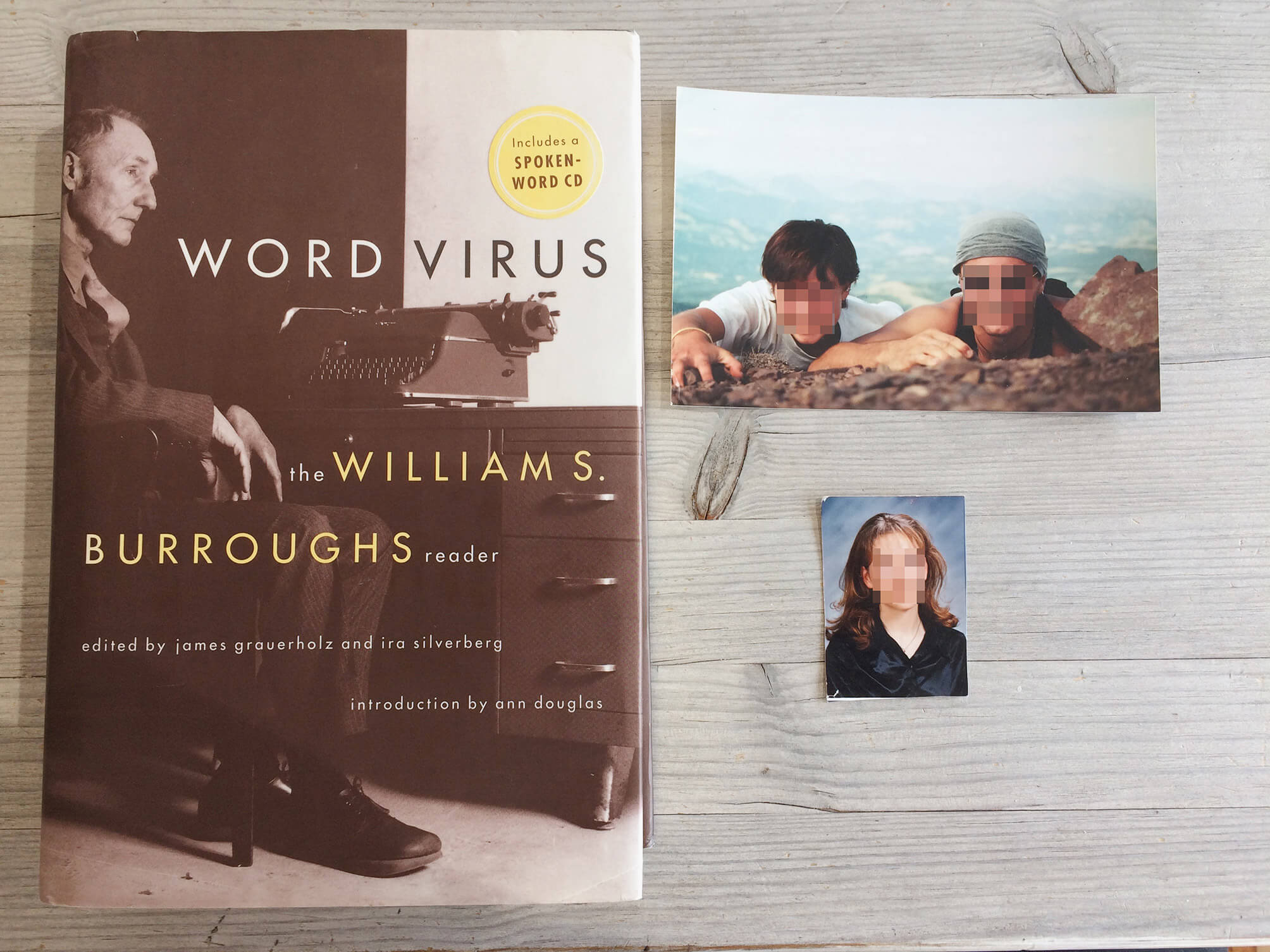

In what order and by whom the various texts and drawings were carved into the soft roofing is unclear. To the right of ‘EVA’, a heart symbol and an arrow (pointing to the left), the roofing reads ‘SIMON TU ME MANQUES’.
The short sentence usually – yet hastily – translates to ‘Simon, I miss you’. However, in French the ‘you’ (tu) is the subject and has an active role, whereas the ‘I’ (me) is the direct object. In short: by his not being there, Simon actively effectuates hurt to the one who carved this text.
The two photographs arrived in Belgium inside a used hardback1 in spring 2016, though it is unclear how long before that time they were actually taken.2
Photograph #1 measures 151 x 100 mm and shows two young people who appear to be mountain climbing and captured while clearing a ridge. Behind the two subjects a bluish mountainous landscape is vaguely visible, suggesting a vantage point of some considerable elevation. The person on the left is wearing a white T-shirt and a bracelet, and has several earrings. The person on the right is carrying a backpack. What appears to be a black tank-top may in fact also be the straps of the pack. On their head they wear what appears to be a grey T-shirt or other garment, presumably to protect the subject from the sun; this person also has earrings and is wearing a necklace and sunglasses. The weather appears nice, both subjects are smiling and appear relaxed. The effort may well have been staged.
Photograph #2 measures (approximately) 43 x 62 mm with the left, bottom and right sides appearing to be cut, rather unevenly, with scissors. It has the typical appearance of an American high school yearbook photo and shows a young person wearing a shiny black blouse and a necklace. They have blue eyes and below-shoulder length auburn hair. The red lips appear painted. On the back of this photograph is written in a clearly legible hand:
Clay, I can’t
wait until next
year when we’re
in grade 12!3
Have a great
Summer and
call me [XXX XXXX]4
by the way, I haven’t
forgot about how big UR
The only assumptions to be made somewhat safely from these two items are that (a) the book has once belonged to ‘Clay’, and, (b) a relationship of a close, friendly, perhaps even intimate, nature has at one time existed between ‘Clay’ and the person in the second photograph (assuming also that (c) the note on the back of the second photograph was indeed written by the person in that photograph). The circumstances surrounding, and/or motivations (‘Clay’’s or any third parties’) behind the book’s ending up in a used-book shop5 must necessarily remain a matter of speculation. There are no reasons to assume that the book was gifted to ‘Clay’ by the note-writer (or by anyone else) as no dedication appears in it.6 It must also remain inconclusive whether there are either two or three different persons appearing across the two photographs, and whether any of these is in fact ‘Clay’.
Indeed, the number of questions raised by these items far exceeds the number of answers they provide. Even leaving aside the nature of the writings in the book, one cannot help but speculate as to:
— how much, if any, of the book ‘Clay’ ever read;7,8
— what happened to the CD originally included with the book;9
— why the unrelated inserted materials were not removed from the book before sale (as opposed to the CD);
— whether ‘Clay’ did in fact ring up the writer of the note over that summer;10 indeed whether the two ever did meet again, remain close during their ‘senior’ year, perhaps even stay in contact after graduating;
— the meaning of the rather cryptic final line of the note.
The book is a first edition, first printing hardback copy of Word Virus: the William S. Burroughs reader, edited by James Grauerholz and Ira Silverberg, with an introduction by Ann Douglas, published by Grove Press (New York) in 1998 (160mm x 235mm, 532pp.). On the used book aggregator webstore, the book was graded ‘Very Good’ (or, VG),* which proved a realistic assessment as it appeared (in fact, still does) largely unread with a dust jacket in equally good condition and no markings inside whatsoever. In fact, the book’s condition might well have warranted a ‘Fine’ (F) grading were it not for the only notable (yet not noted) defect, which was that the ‘Spoken Word CD’ that was originally included — as indicated by a 32mm diameter round sticker in the top right corner of the front of the dust jacket, and the glued-in envelope in the back of the book — was no longer present. This defect may well have accounted for the apparent disparity between the state and grading of the book and the low price of $4.53 (shipping not included) it was sold at, although the fact remains that this incomplete state ought to have been mentioned in the listing. Since the time of purchase, however, markings were added to the book, presumably with an additional adverse effect on its market value: appearing on the half-title page, they are in dark green crayon and of an abstract nature and were made by the current owner’s infant son.
* According to the terminology of the grading scale proposed in 1949 by AB Bookman’s Weekly and still widely, if not universally, in use in the online used book market today, albeit with some additions or modifications by individual platforms. See Wikipedia for a brief overview.
Elements of style and physical nature of the artifacts may be taken to indicate an origin roughly contemporaneous with the book.
‘[In the United States of America, the] twelfth grade is the twelfth school year after kindergarten. It is also the last year of compulsory secondary education, or high school. Students are often 17–19 years old. Twelfth graders are referred to as Seniors.’ (Wikipedia)
A 7-digit phone number, without country or area code, redacted here.
Located in the state of Nevada, no further identification of the particular shop was provided on the aggregator webstore, and it must be noted that the book was subsequently shipped from ‘Auburn’, presumably Auburn, CA.
Indeed in accordance with its ‘Very Good’ grading, which is generally understood to explicitly list any defects such as markings (including dedications) but also any missing materials.
Quality hardbacks being notably easier to read without damaging the book.
Speculations on this, and any potential subsequent extrapolations are, fortunately perhaps, further inhibited by the fact that the book presents a rather generous cross-section of writings spanning the entirety of William S. Burroughs’ famously prolific career. The inclusions span the period between 1929 and 1994. Although undertakings of this kind will inevitably meet with criticism, the consensus indeed seems to be that the editors have done an excellent job in selecting and presenting the material. Was ‘Clay’ mainly drawn by the hard-boiled straightforward prose style of the early novels; the highly experimental and provocative writings of the ‘middle period’ (traditionally labeled as rather ‘hermetic’ and ‘cold’, though they are quite often not without a haunting, perhaps even ‘poetic’ quality); or the later, one might say ‘integrated’ style which saw the earlier experiments wedded to a certain ‘return to narrative’ and, in old age, traces of a much more ‘humane’ author than ever before (if a point of critique may yet be formulated, one might indeed say that the writings from this later period (roughly 1978–1997) are somewhat favoured (quantitatively) in the Word Virus volume; as these have a (still: relatively) greater ‘readability’ than much of the older material that may indicate a decision of a commercial nature, yet there is also the fact that these texts were written in collaboration with one of the editors of Word Virus)?
Being in fact a promo sampler for the 4CD Giorno Poetry Systems compilation of William S. Burroughs material also released (by Mouth Almighty Records and Mercury Records) in 1998. See Discogs.
Nevada has three area codes (702, 725, and 775), yet quick Google searches of the 7-digit number combined with any one of those yield no easy identification. Considering the overall scarcity of information, however, it seems clear that anyone seeking to reconstruct the biographies of ‘Clay’ and/or the note-writer should take up this line of investigation.
David Depestel hesitates in trying to make something of himself; a character, a profession, a fixed mode of being, are for him concepts that already shadow forth the outlines of the skeleton, which is all that will be left of him in the end.
https://en.wikipedia.org/wiki/List_of_used_book_conditions
https://en.wikipedia.org/wiki/Twelfth_grade#United_States
https://www.discogs.com/release/673857-William-S-Burroughs-Selections-From-The-Best-Of-William-Burroughs-From-Giorno-Poetry-Systems
A sheet of brushed aluminium serves as the base for a monochromatic print showing a circular floor plan and seven photographs. The nearby Prosopis cineraria, known as the ‘Tree of Life’, is a well-known tourist attraction in the Arabian Desert near Jebel Dukhan. The plaque shows how the recently constructed concrete structure, circling the four hundred year old tree, allows the visitors to see and photograph the landmark in new and – because of the tree’s decentralized position – surprising ways. In summer the temperature can rise well over 40°C. The different expansion rates of the aluminium and its imprint cause the latter to crack.

Sundown at the public observatory in Beisbroek. A choir of birds mixes with the continuous hiss of the freeway nearby. The camera captures the receding colours. The blinds are open; the half dome is closed.
A documentary approach: moving along a tension between proximity and distance. If the pendulum swings to either side, it becomes difficult to speak of the documentary. Proximity without distance, and distance without proximity, undermine it, precisely because any approach is then out of the question.
Excerpt from Towards Civil Dusk (De Cleene De Cleene, 2020)

On Wednesday, May 9, 2018 at 2:23:14 PM Koh Elaine starts the thread original or original copy on the The Free Dictionary by Farlex’s forum.
‘Is “original copy” correct or should it be “original”? Thanks.’
The seventh reply to Elaine’s question is Wilmar’s on Thursday (his was preceded by towan52, georgew, NKM, Koh Elaine, Sarrriesfan, ChrisKC, Ashwin Joshi).
‘An original copy IS the original.
Folks usually call the document first created the original, but some will say original copy. If I run that original thru the copy machine, I end up with two copies (yes, I said copies) of the same thing – the original and the duplicate of it (in terms of content). This is how the term is commonly used.
If your writing or conversation depends heavily on understand the difference, I would recommend using the terms original and duplicates. There are many times when that is very important, in that the original must be retained by a particular party, and the duplicates are marked as such and distributed or stored as required depending on the document and the circumstance.
If you are just trying to make sure that you have enough copies to distribute to everyone at the company meeting this afternoon, use whatever terms trips your trigger. But, if you want to ensure that you keep custody of the original, so that you can make additional duplicates (copies) when additional people attend, then be more specific about the words you use.
OH, and, please, in the future, include some context with your question. Asking if “word” is correct doesn’t go very far in supplying a reasonably useful response.’
https://forum.thefreedictionary.com/postst182102_original-or-original-copy.aspx

Our one year old’s favourite toy he’s not supposed to play with is the HP Officejet Pro L7590 All-in-one in my office. I have given up on forbidding him to play with it. We have a new game: he brings me one of his other toys, we put it on the flatbed, close the lid – as far as possible –, press the button ‘START COPY – COLOR’ and wait for the print to come out of the machine. When we place the original onto the copy, he laughs. So far we have copied his blue pacifier, his planet-earth-bouncy-ball and his rattling crocodile.

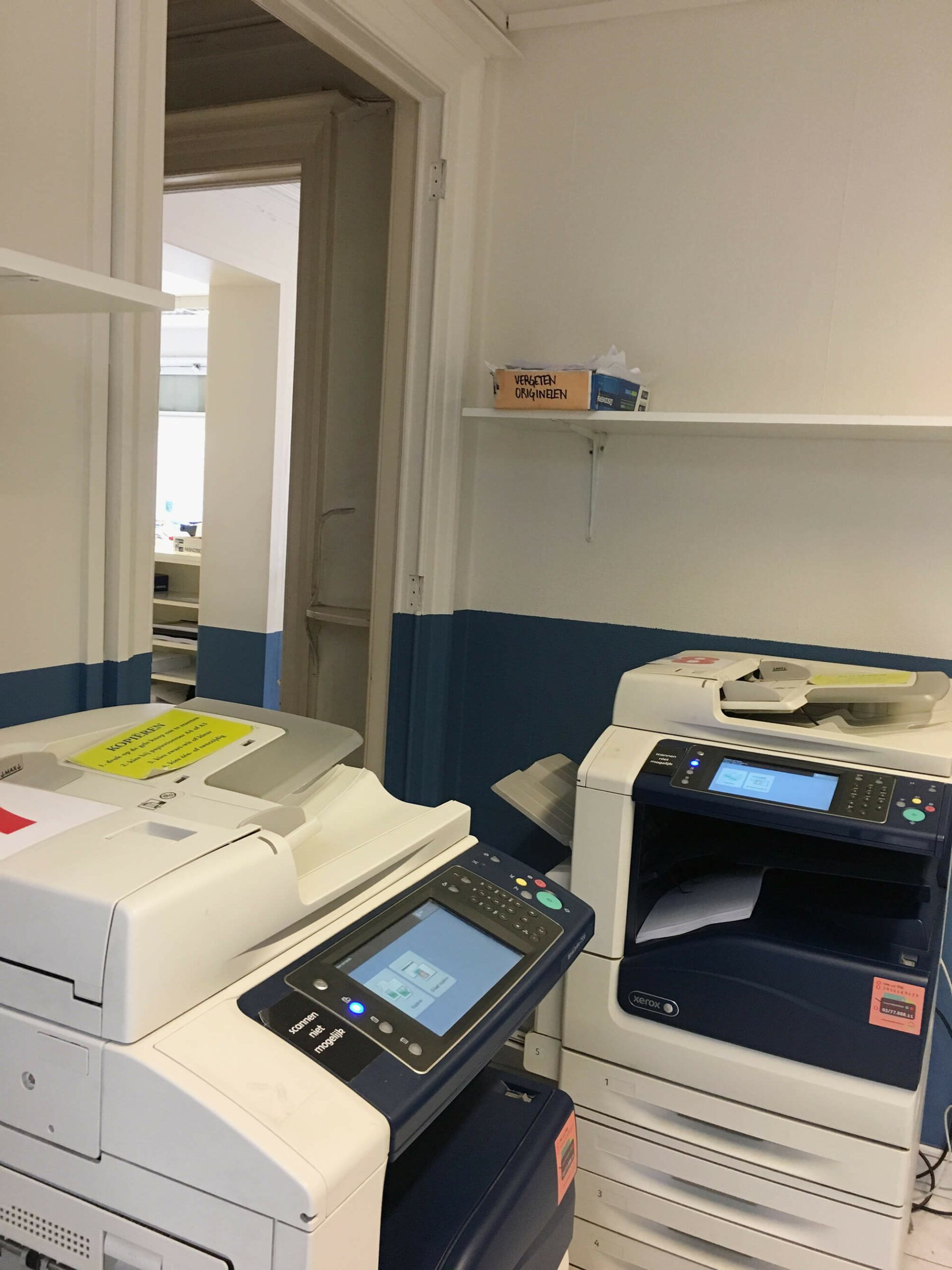
At the copyshop, on a shelf above photocopier 8, the lid of a box of paper serves as the container for ‘forgotten originals’.1
The book being copied: Didi-Huberman, G. La ressemblance par contact. Archéologie, anachronisme et modernité de l’empreinte. Paris: Les Editions de Minuit, 2008.
In the introduction to her book Qu’est-ce que la documentation?, French ‘documentalist’ Suzanne Briet asks what a document is. In a scrappy scan of her book I found online I am highlighting almost everything she writes. Is a star a document? Briet says it isn’t. But the catalogues and photographs of stars are. When I quickly opened the file with Apple’s ‘Preview’ application to check the above paraphrase, the highlighted sentences were illegible.
Briet is cited in Lisa Gitelman’s Paper Knowledge (2014).
Briet, S. Qu’est-ce que la documentation? Paris: Edit, 1951. Online: http://martinetl.free.fr/suzannebriet/questcequeladocumentation/briet.pdf
Depending on the language one chooses, the Wikipedia entry for ‘document’ shows a different picture. The French-language page shows what appears to be a Slovenian thesis written in 1984. The caption states it is a ‘book of Czechoslovak computer science author Květoslav Šoustal about computer networks’. The image was uploaded by Kelovy, a Slovakian mushroom-picker.
The anonymous hand rests on a lemon-yellow tablecloth, on which a yellow book and a blue binded file lie. The top left corner is the most intriguing, however: the tablecloth seems to be draped over a lemon, alongside a drinking glass. The cloth, however, does not get shaped by the lemon. Nor does the shadow-side of the lemon coincide with the shadow the other documents throw on the tablecloth. A closer look seems to indicate that the lemon is in fact an image of a lemon, printed on a plastic napkin.
The Russian wikipedia shows the image of a lease agreement. The German wikipedia for ‘document’ is text only.
https://fr.wikipedia.org/wiki/Document#/media/Fichier:KVETOSLAV_SOUSTAL_BOOK.JPG, created October 3, 2006 / original in original: paper, 1984

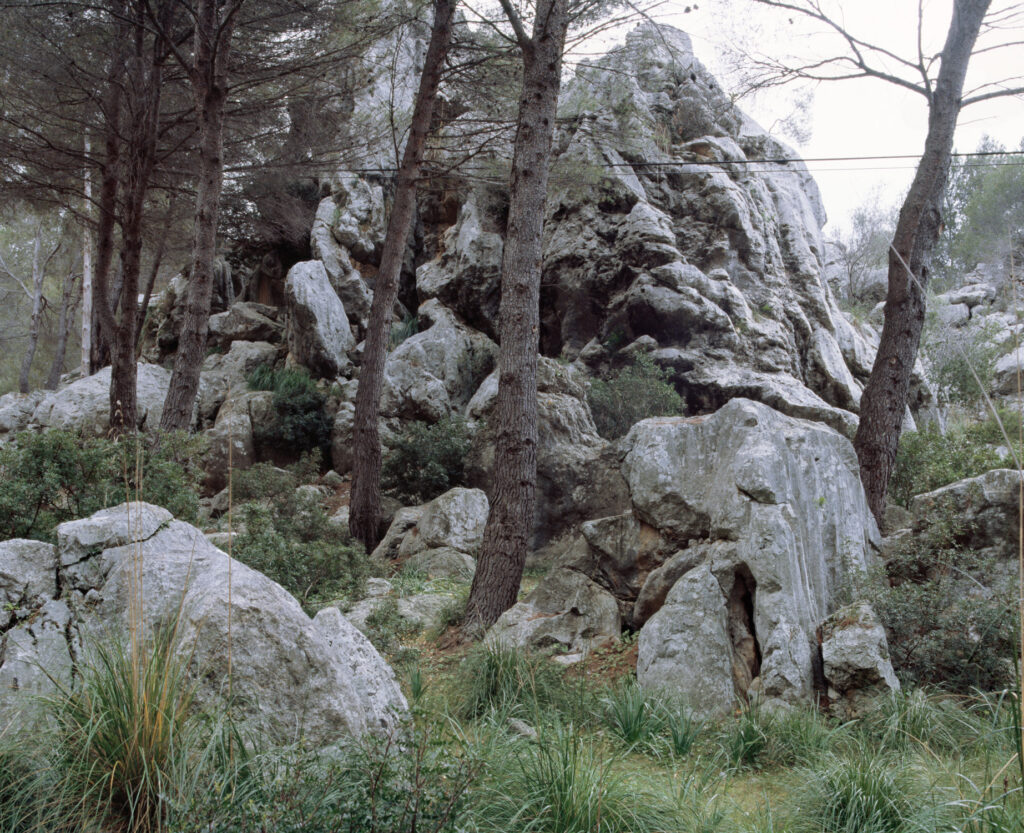
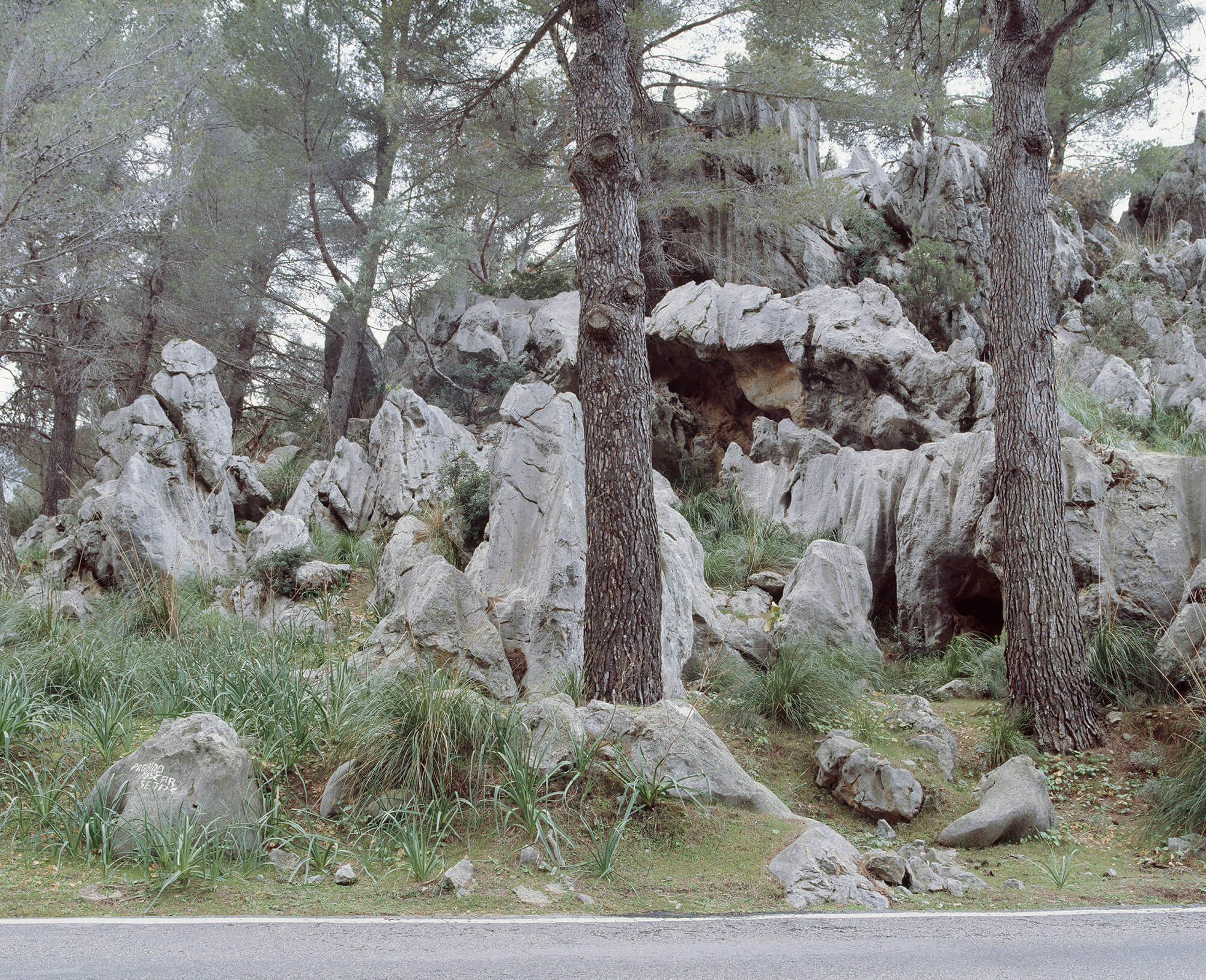
I must have driven past this rocky landscape about sixteen times, going back and forth between viewpoints and the house the parents of a friend let me stay in. On the last day, I left early for the airport, pulled into a lay-by, took my tripod and camera out of the trunk of the red Volkswagen Polo rental car and made two photographs.1 It was only when I got home, had the film developed, scanned it and was removing dust particles from the file, that I discovered the hand painted text on the rock: ‘PROIBIDO BUSCAR SETAS’.