What constitutes a ‘document’ and how does it function?
According to the Oxford English Dictionary, the etymological origin is the Latin ‘documentum’, meaning ‘lesson, proof, instance, specimen’. As a verb, it is ‘to prove or support (something) by documentary evidence’, and ‘to provide with documents’. The online version of the OED includes a draft addition, whereby a document (as a noun) is ‘a collection of data in digital form that is considered a single item and typically has a unique filename by which it can be stored, retrieved, or transmitted (as a file, a spreadsheet, or a graphic)’. The current use of the noun ‘document’ is defined as ‘something written, inscribed, etc., which furnishes evidence or information upon any subject, as a manuscript, title-deed, tomb-stone, coin, picture, etc.’ (emphasis added).
Both ‘something’ and that first ‘etc.’ leave ample room for discussion. A document doubts whether it functions as something unique, or as something reproducible. A passport is a document, but a flyer equally so. Moreover, there is a circular reasoning: to document is ‘to provide with documents’. Defining (the functioning of) a document most likely involves ideas of communication, information, evidence, inscriptions, and implies notions of objectivity and neutrality – but the document is neither reducible to one of them, nor is it equal to their sum. It is hard to pinpoint it, as it disperses into and is affected by other fields: it is intrinsically tied to the history of media and to important currents in literature, photography and art; it is linked to epistemic and power structures. However ubiquitous it is, as an often tangible thing in our environment, and as a concept, a document deranges.
the-documents.org continuously gathers documents and provides them with a short textual description, explanation,
or digression, written by multiple authors. In Paper Knowledge, Lisa Gitelman paraphrases ‘documentalist’ Suzanne Briet, stating that ‘an antelope running wild would not be a document, but an antelope taken into a zoo would be one, presumably because it would then be framed – or reframed – as an example, specimen, or instance’. The gathered files are all documents – if they weren’t before publication, they now are. That is what the-documents.org, irreversibly, does. It is a zoo turning an antelope into an ‘antelope’.
As you made your way through the collection,
the-documents.org tracked the entries you viewed.
It documented your path through the website.
As such, the time spent on the-documents.org turned
into this – a new document.
This document was compiled by ____ on 21.09.2025 09:39, printed on ____ and contains 23 documents on _ pages.
(https://the-documents.org/log/21-09-2025-6651/)
the-documents.org is a project created and edited by De Cleene De Cleene; design & development by atelier Haegeman Temmerman.
the-documents.org has been online since 23.05.2021.
- De Cleene De Cleene is Michiel De Cleene and Arnout De Cleene. Together they form a research group that focusses on novel ways of approaching the everyday, by artistic means and from a cultural and critical perspective.
www.decleenedecleene.be / info@decleenedecleene.be - This project was made possible with the support of the Flemish Government and KASK & Conservatorium, the school of arts of HOGENT and Howest. It is part of the research project Documenting Objects, financed by the HOGENT Arts Research Fund.
- Briet, S. Qu’est-ce que la documentation? Paris: Edit, 1951.
- Gitelman, L. Paper Knowledge. Toward a Media History of Documents.
Durham/ London: Duke University Press, 2014. - Oxford English Dictionary Online. Accessed on 13.05.2021.

The last couple of days have been dry. Rain is expected for the weekend. The office buckets are in place and are empty, except for some residue. Dirt, sand, a few hairs. Some particles must have come along with the drops when they made their way through the roof.

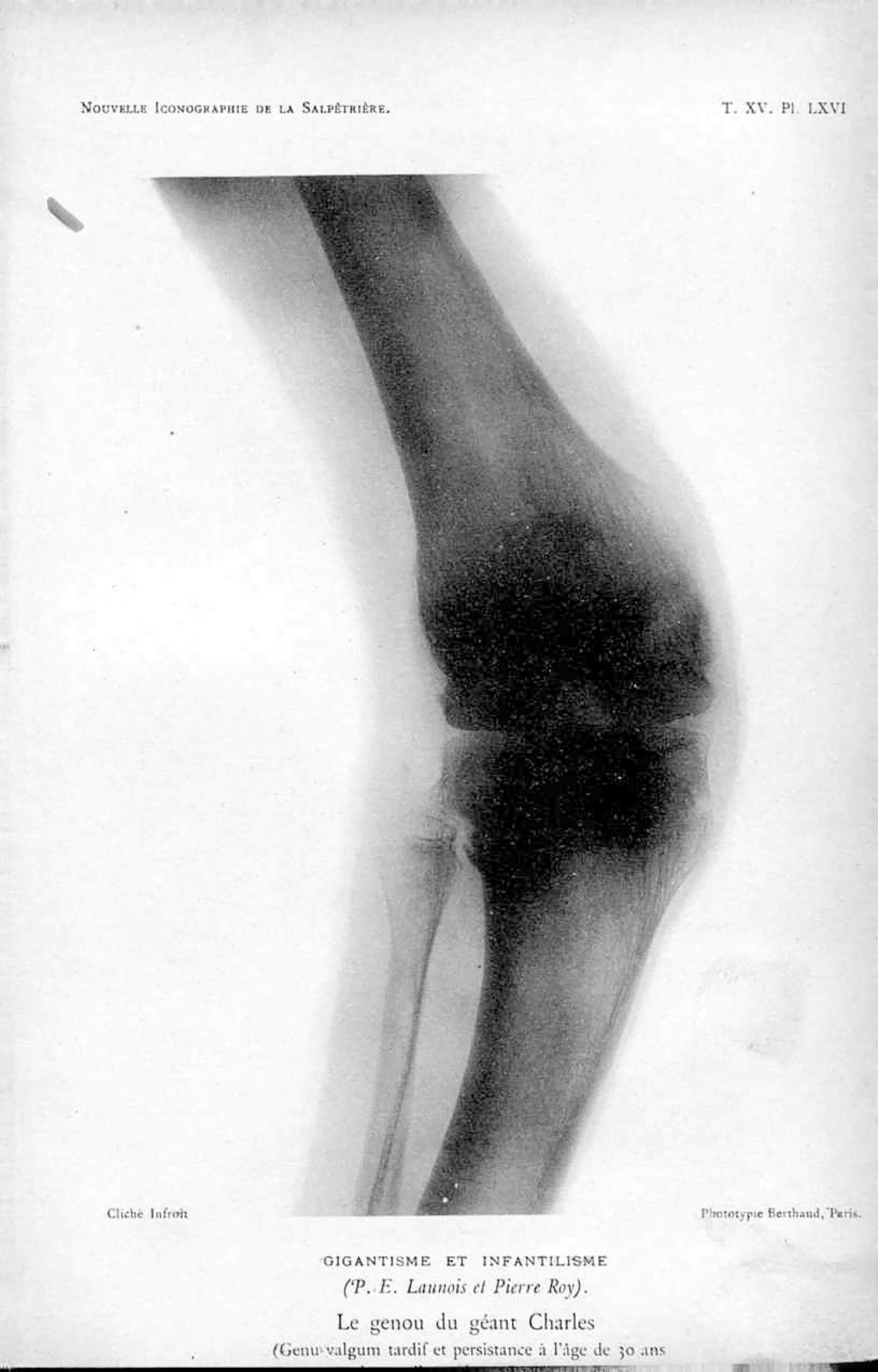
The scientific exactitude sought for in the Iconographie de la Salpêtrière and the Nouvelle Iconographie de la Salpêtrière, the (in)famous scientific publications stemming from Paris’ psychiatric hospital La Salpêtrière (1876-1918), lead to an abundance of photographic images in their pages. The photographs’ ideal: ‘Trace incontestable, incontestablement fidèle, durable, transmissible’.1 The ambition of exactitude results in cold, and often cruel depictions of patients. In the digitized version of the Sorbonne library’s copies, some photographs have left an imprint on the opposite page. The knee of Charles, ‘le géant’, adds an unwanted layer upon its measures on the opposite page, while the photograph of the knee itself loses ink.2
Didi-Huberman, G. Invention de l’hystérie. Paris: Macula, 2014, 72.
Launois, P.-E., Roy, P., ‘Gigantisme et infantilisme’, Nouvelle Iconographie de la Salpêtrière, Tome XV, 1902, 548, pl. LXVI, online: https://patrimoine.sorbonne-universite.fr/fonds/item/2613-nouvelle-iconographie-de-la-salpetriere-tome-15?offset=6

As we point the telescope to the sky – cloudy, and filled with chaotic bursts of rain – the dispersion of the city lights accentuates the swirling, frantic raindrops. The roof we are standing on is uneven. A puddle forms underneath the apparatus, around the right leg of the tripod and our feet. The sound of a car on a wet street, below. A kitchen light is flicked on. Temperature is low for a mid-September night, and getting lower by the minute. It seems impossible to tell the depth of field we are documenting, and at what distance from our position these fleeting constellations occur.
Excerpt from Towards Civil Dusk (De Cleene De Cleene, 2020)
Neptune in opposition [1-20] is part of ‘Documenting Objects’, a research project by Arnout De Cleene and Michiel De Cleene at KASK & Conservatorium, the school of arts of HOGENT and Howest. Their research is financed by the HOGENT Arts Research Fund. Previous research into this subject has amongst other things led to the documentary film Towards Civil Dusk and temporary public observatories at 019, Gent and Kunsthal Extra City, Antwerp.
Thanks to:
Angelo Van Daele
Arthur Haegeman
Chris De Pauw
Emi Kodama
Frédéric Thill
Gentil Van de Vijver
Guy Wauters
Hannah De Cleene
Jan Scheers
Jonas Temmerman
John Sussenbach
Kunsthal Extra City
Philippe Molet
019
Astropolis (Oostende)
Cercle Astronomique Mosan (Herbuchenne)
Koninklijk Observatorium Ukkel
Observatoire Astronomique Antoine Thomas S.J. (Namur)
Observatoire Astronomique Centre Ardenne (Grapfontaine)
Publieke Sterrenwacht van de Westkust (Koksijde)
Volkssterrenwacht Armand Pien (Gent)
Volkssterrenwacht AstroLAB IRIS (Zillebeke)
Volkssterrenwacht Beisbroek (Brugge)
Volkssterrenwacht Mira (Grimbergen)
Volkssterrenwacht Urania (Hove)

As the light of celestial objects travels through the Earth’s atmosphere, the various wavelengths that make up this light are refracted differently. This effect is called ‘dispersion’ and results in colour fringing on the edges of planetary discs: images with a sliver of blue at the top and a red one at the bottom appear.
When celestial objects are positioned close to the horizon (like Neptune when observed from Luxembourg) the images are severely affected: the path of the light through the atmosphere is longer, leading to greater dispersion.
For the same reason sunsets are red, Neptune turns from a monochromatic blue disc into a misaligned, multicoloured oval.


Directed by Xie Jin, Huang Baomei (1958) is a docudrama based on the real-life experiences of the national model worker of the same name, who also plays herself in the film. Reflecting the economic priorities of the day following the launch of the Great Leap Forward—a far-reaching and ultimately devastating campaign that sought to replace the prevailing Soviet-style expert-managerial system with workers’ self-organisation and mass mobilisation—the film focuses on the challenges faced by machine operators as they strive for a technical breakthrough while working with their aging machines.
Located at No. 2866, Yangshupu Road, Shanghai No. 17 Cotton Mill, which had its origins in the Japanese-owned Yuho Spinning Company, was one of Shanghai’s best known cotton mills. The launch of China’s economic reforms opened a new era for the mill, as reflected cinematically in No. 17 Cotton Mill Shanghai Blues (1984), a British documentary that attests to the vibrant workers’ music scene blossoming within the factory walls. In 1992, the state-owned enterprise was restructured as one of the first batch of joint-stock companies in the Reform era and renamed as Longtou Company after the brand name of a fabric manufactured by the mill. Following the relocation of the mill’s original machinery to Jiangsu in 2007, work commenced to redesign the entire complex and relaunch it as the Shanghai International Fashion Center. In Jia Zhangke’s I Wish I Knew (2010), an elderly Huang Baomei is seen walking amidst the ruins that are all that remain of the cotton mill as it awaits refurbishment.
Ho Rui An is an artist and writer working in the intersections of contemporary art, cinema, performance and theory. Through lectures, essays and films, his research examines the relations between labour, technology and capital across different systems of governance in a global age.
In spring 2024 the-documents.org and Trigger co-publish a series of online articles with a focus on the meeting ground between photography and the document.

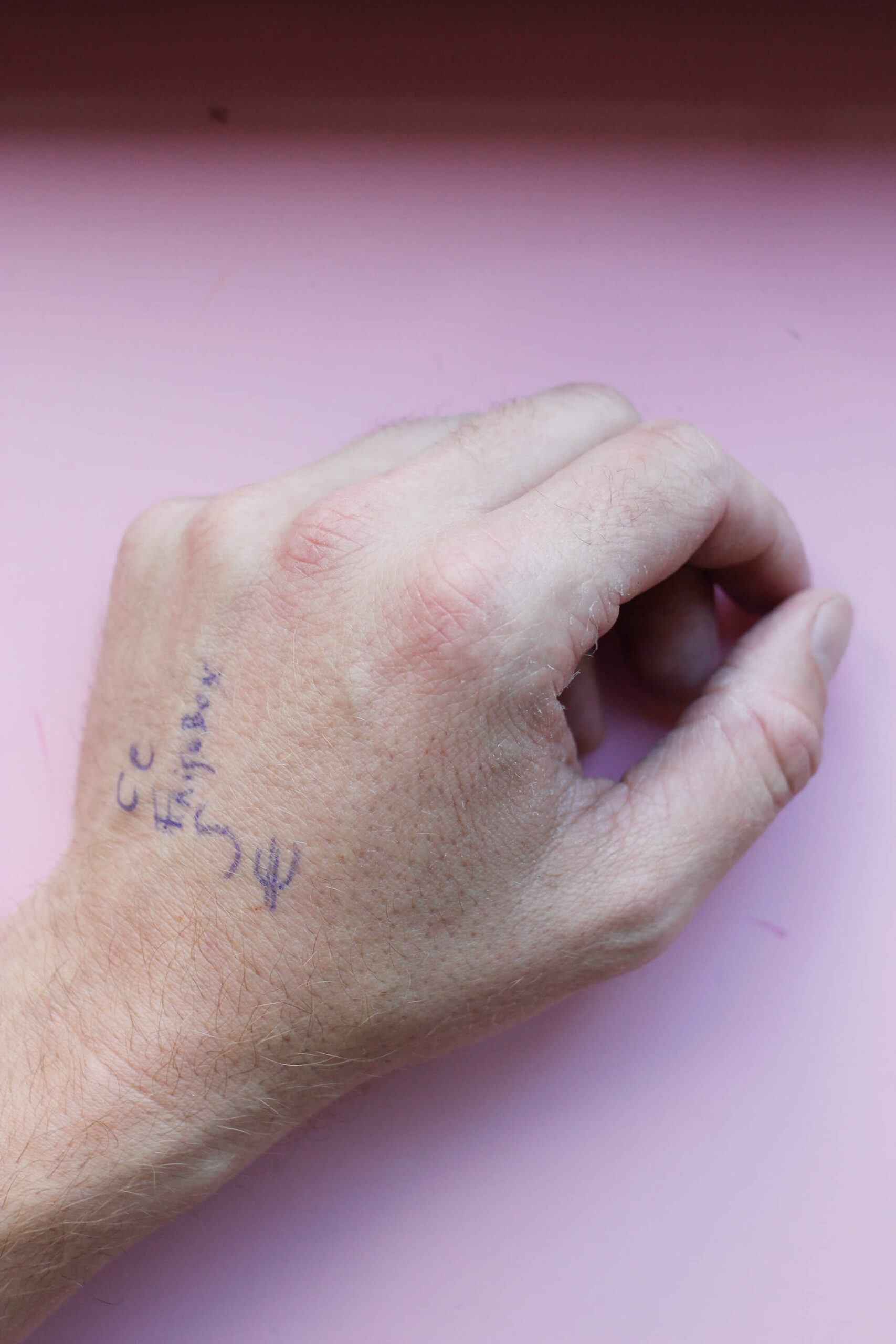
At the end of the day, riding home after work, I find a text on my hand:
C
D[…]ers
Desk
K
Communication book
‘Diapers’, I recall, and stop at the shop to buy them. Sweat, dust, and manic hand rubbing have rendered parts of the writing illegible. ‘C’ is for Carl, whose newborn I need to visit as soon as possible. Sometimes, I can’t remember what the initial stands for. I don’t have any friends with names beginning with a K (who have newborns I need to visit).
The right hand writes, the left hand serves as the canvas. The back of the right hand, folded around the pen, is blank and tells the always already written on back of the left hand, whose palm never holds a pen, what to register. Right: an author. Left: a poem, sunken into the pores.
Back home, I trace ‘Desk’ again, as not to forget to clean it tomorrow.

A classic of Republican-era cinema, the 1926 silent film A String of Pearls follows the trials and tribulations of a middle-class Shanghai couple after a pearl necklace borrowed by the husband to please his materialistic wife is stolen. In order to pay for a replacement, the protagonist resorts to embezzling public funds and consequently ends up in prison. After working as a weaver during his sentence, he becomes a worker at Zhenhua Cotton Mill following his release. In an obvious homage to the Lumières’ seminal film, a scene in the film shows workers, including children, entering the factory to begin a day’s work.
Even though the precise location of the factory gate in the film cannot be determined, it happens that the first enterprise that attracted the investment of Rong Ruixin—a relative of cotton magnates Rong Zongjing and Rong Desheng—was called Zhenhua Cotton Mill. Established in 1905, Zhenhua Cotton Mill was not fully mechanised, which would correspond with the appearance of a hand-operated loom in the film. Today, a residential community sits on the original site of the cotton mill.
Ho Rui An is an artist and writer working in the intersections of contemporary art, cinema, performance and theory. Through lectures, essays and films, his research examines the relations between labour, technology and capital across different systems of governance in a global age.
In spring 2024 the-documents.org and Trigger co-publish a series of online articles with a focus on the meeting ground between photography and the document.

The river swells and eventually overflows, causing the death of six people and extensive damage: washed away bridges, damaged homes, submerged factories, destroyed food stocks, heavily eroded roads and paths.
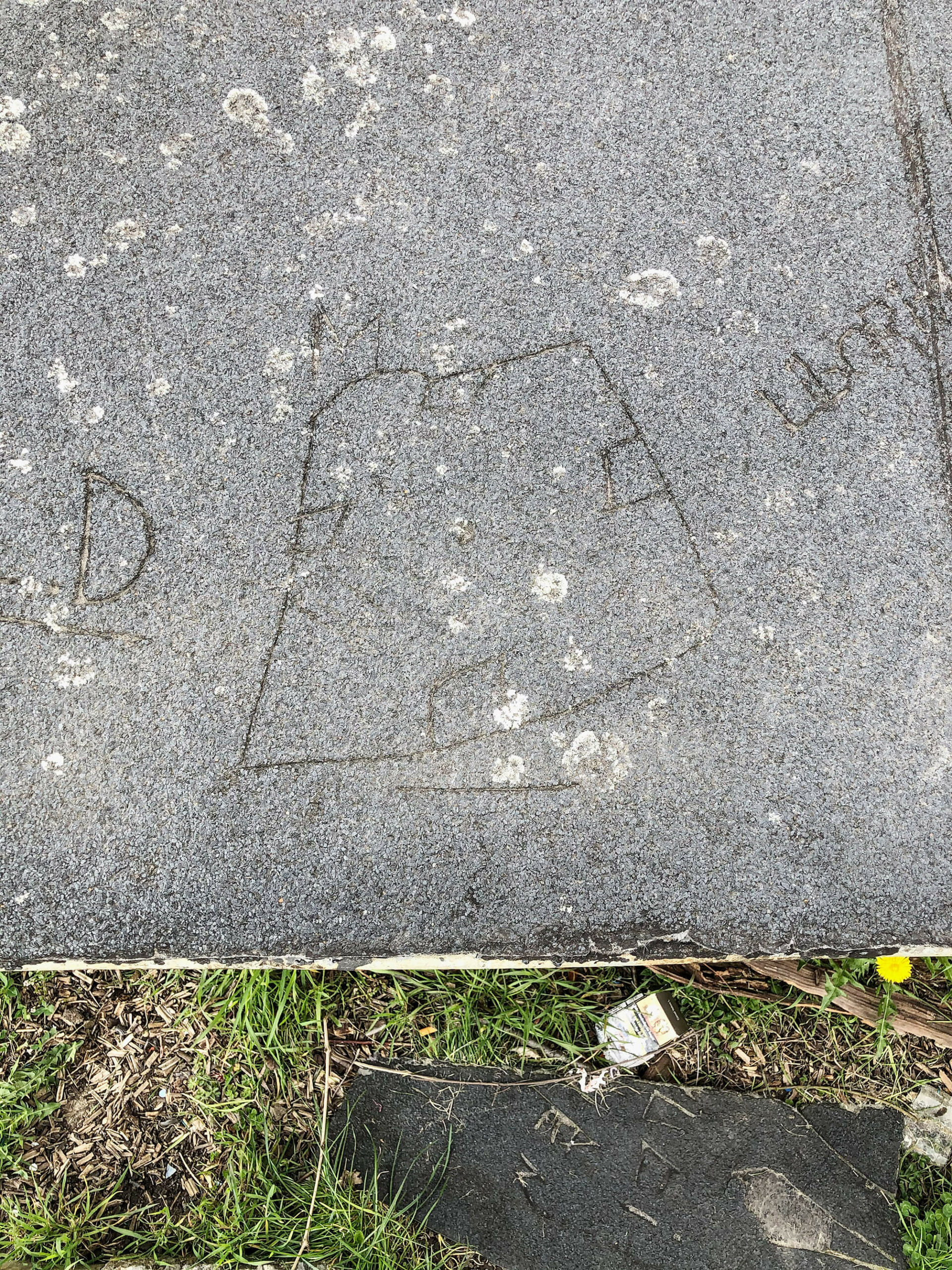
The torn off section of roofing on the grass has part of a text carved in it: ‘UDI’ and ‘EN’ are still legible. It must have come from another roof; the one shown in the photograph has no missing sections, nor visible repairs.
The roofing that is still on the garage shows a drawing of some kind. A floorplan for a squarish building with a supporting column along each side, or the layout for a tactical explanation, perhaps.
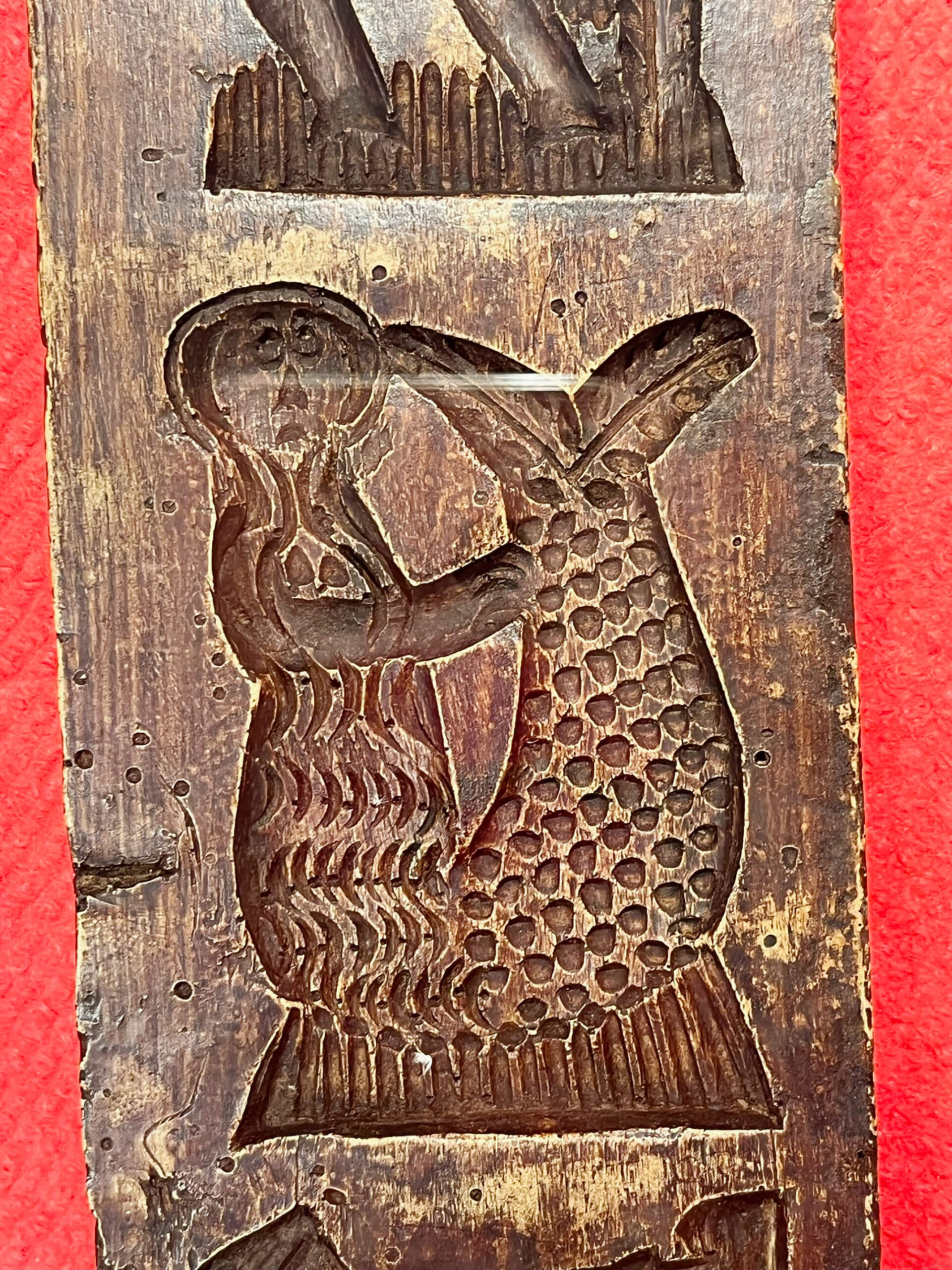
In Veurne, at the bakery museum, old speculaas moulds are presented in an almost religious fashion. Looking at these wooden blocks, they appear to be the negatives to Romanesque sculptures.
How does it feel to be conserved and showcased when your nature is to be a tool? What would it mean to re-use them, to fill those empty moulds, to shape something new without altering the matrix, to project what it would be like, to try out recipes and different baking, to learn from it and enjoy the results together? What scenes are even depicted? We lost part of their meaning, we could dig further, browse the books, ask our grandparents and collectively invent whatever narrative they might hold.
Clementine Vaultier’s interests, although trained as a ceramist, are in the warm surroundings of the fire rather than the production it engenders.
Freely adapted from interviews with residents of Sandersleben (Saxony-Anhalt). Three-act play. The first two acts take place in the present day; the third is set in the future.
From Act 1 ‘The Town of S’, Scene 2 ‘The Past’.
Characters: MR DUNST club member I, OLIVER club member II, ANJA young mother
Stills from text animation S. Anders Leben. Eine Handlung in Gesprächen/S. Anders Leben – Living Differently: An Act in Conversations
Stephanie Kiwitt (1972) is an artist based in Halle (Saale), Germany. Utilizing a large number of images, various perspectives and also textual elements, she is known for her insightful photography that explores spaces emblematic of contemporary phenomena. Over the past three years, she has focused on evolving habitats in rural areas, photographing traces of transformation and conducting interviews in Saxony-Anhalt, the region she moved to in 2020. From 2018 to 2020, Kiwitt was a guest lecturer at the LUCA School of Arts in Brussels.
In spring 2024 the-documents.org and Trigger co-publish a series of online articles with a focus on the meeting ground between photography and the document.

At the nuclear waste processing facility. While the photographer and the head of the communication department are making their way from the processing building to the temporary storage building, they walk past the central chimney.
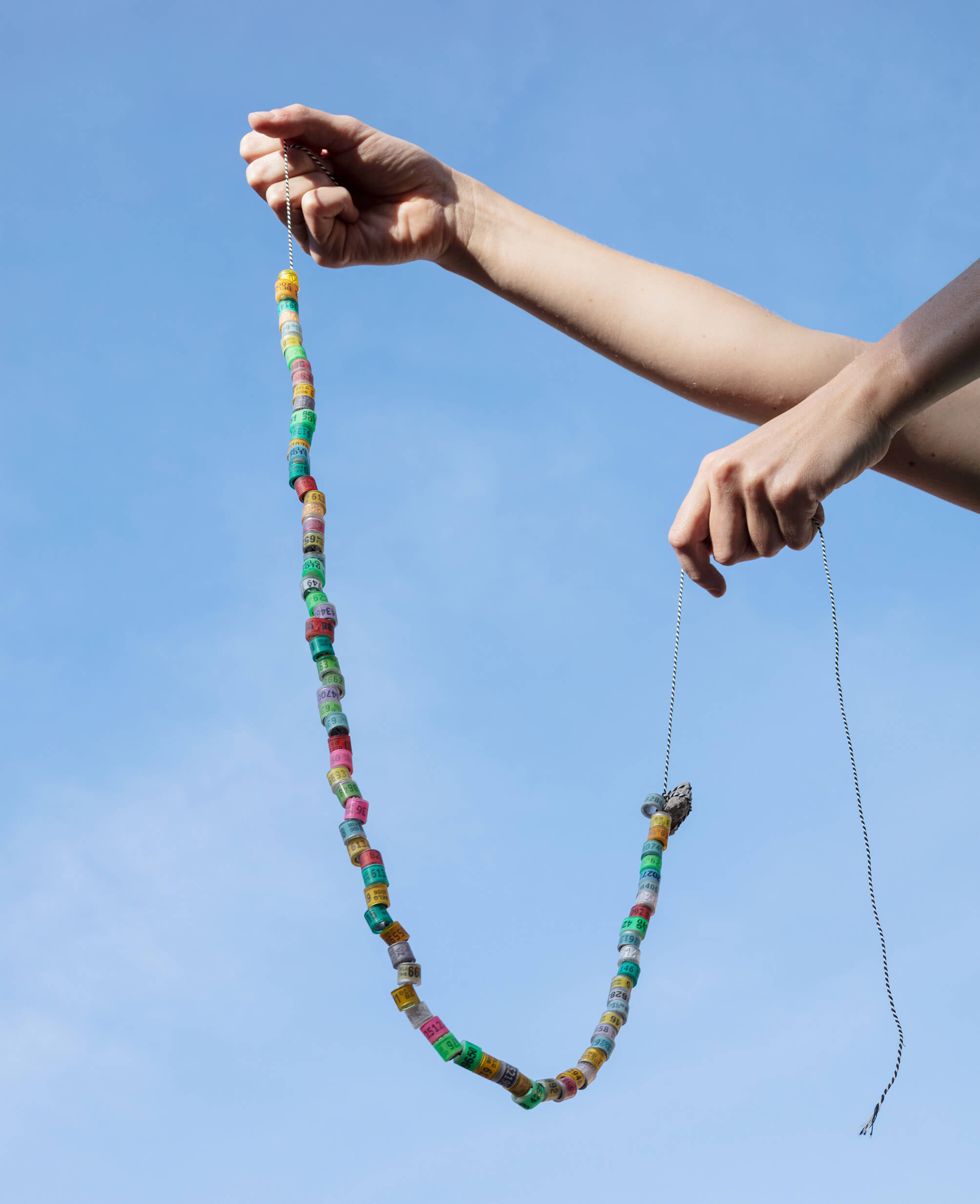
‘On the highest of the accessible levels of the chimney, operators were finding small steel rings. They gathered them, but soon noticed that new rings were added. At a certain point at a rate of one ring a day.
[…]
It took them some time to realize what they were, so they started collecting them by slipping them onto a piece of rope. By now the rings on the rope span about this distance [spreads his arms to indicate a distance of about 1.2m].
[…]
They turned out to be rings that came from pigeon’s legs.
[…]
On top of our chimney resides a peregrine falcon.
[…]
I was told pigeon fanciers have a tendency to give a peregrine falcon – or any other bird of prey in their area – a hand at disappearing, but this one took up residency in the internal perimeter, where – as you know – access is severely restricted.’
First published in: De Cleene, M. Reference Guide. Amsterdam: Roma Publications, 2019
‘You see?!’
[The man points at the waybill1 on the floor behind the glass door that closes off the abandoned and dismantled hall.]
‘It used to be here, I’m sure.’
[He looks around.]
‘I’m sure.’
[He turns towards me.]
‘Are you also here for the Leen Bakker?2 This used to be a Leen Bakker. I just looked it up on their website. They are open from 9 to 6 today.’
[He points at the waybill again.]
‘It was here. I remember well. It’s been years. But it’s here.’
[He walks away.]
‘I’ll look around.’
The waybill documents the transport of a 30m3 container filled with approximately 5000 kg of waste from this branch of Leen Bakker to a scrap processing company in nearby Ninove. They take care of scrap, both ferrous and non-ferrous metals. They also have a recognized depollution center for end-of-life vehicles.
A chain of furniture and interior stores with branches in the Netherlands, Belgium and the Caribbean part of the Kingdom of the Netherlands.

Fred from Zwolle offers two Sparta K-10s on Marktplaats.nl on 29 September 2022. The asking price for the two bikes is 250 euros, bids may start from 200 euros. The green bike has a front light that is powered by a rim dynamo, while in another photo we see a front light on the orange bike that is presumably battery-powered, as may be the case for the rear lights. The carrier mounted at the front of the green bike is clearly a luggage carrier, as is the one at the back. What the carrier mounted at the front of the orange bike is for, is unclear. The description of the bikes does mention the function of the loop protruding from the frame at the back of the Sparta K-10:
‘20-inch bikes that we have always used while camping. No gears but smooth and light pedalling. Ideal for running small errands close by or a quick errand in the toilet building. They are light and quite short making them easy to take on the train. Ideal as a short-distance bike between station and work. Both are, furthermore, in good condition. Each bike comes with a key for the integrated cable lock. Are listed as a ladies’ bike but I (male) get on just fine.’1
’20 inch fietsen die wij altijd tijdens het kamperen hebben gebruikt. Geen versnellingen maar soepel en licht trappend. Ideaal om kleine boodschappen dichtbij te doen of een snelle boodschap in het toilet gebouw. Ze zijn licht en vrij kort waardoor ze makkelijk mee te nemen zijn in de trein. Ideaal als korte afstandfiets tussen station en werk. Beiden zijn verder in goede staat. Van elke fiets beide sleutels aanwezig voorzien van een geïntegreerd kabelslot.Worden als damesfiets genoemd maar ik (man) kom er prima mee vooruit.’
Lars Kwakkenbos lives and works in Brussels and Ghent (B). He teaches at KASK & Conservatorium in Ghent, where he is currently working on the research project ‘On Instructing Photography’ (2023-2024), together with Michiel and Arnout De Cleene.

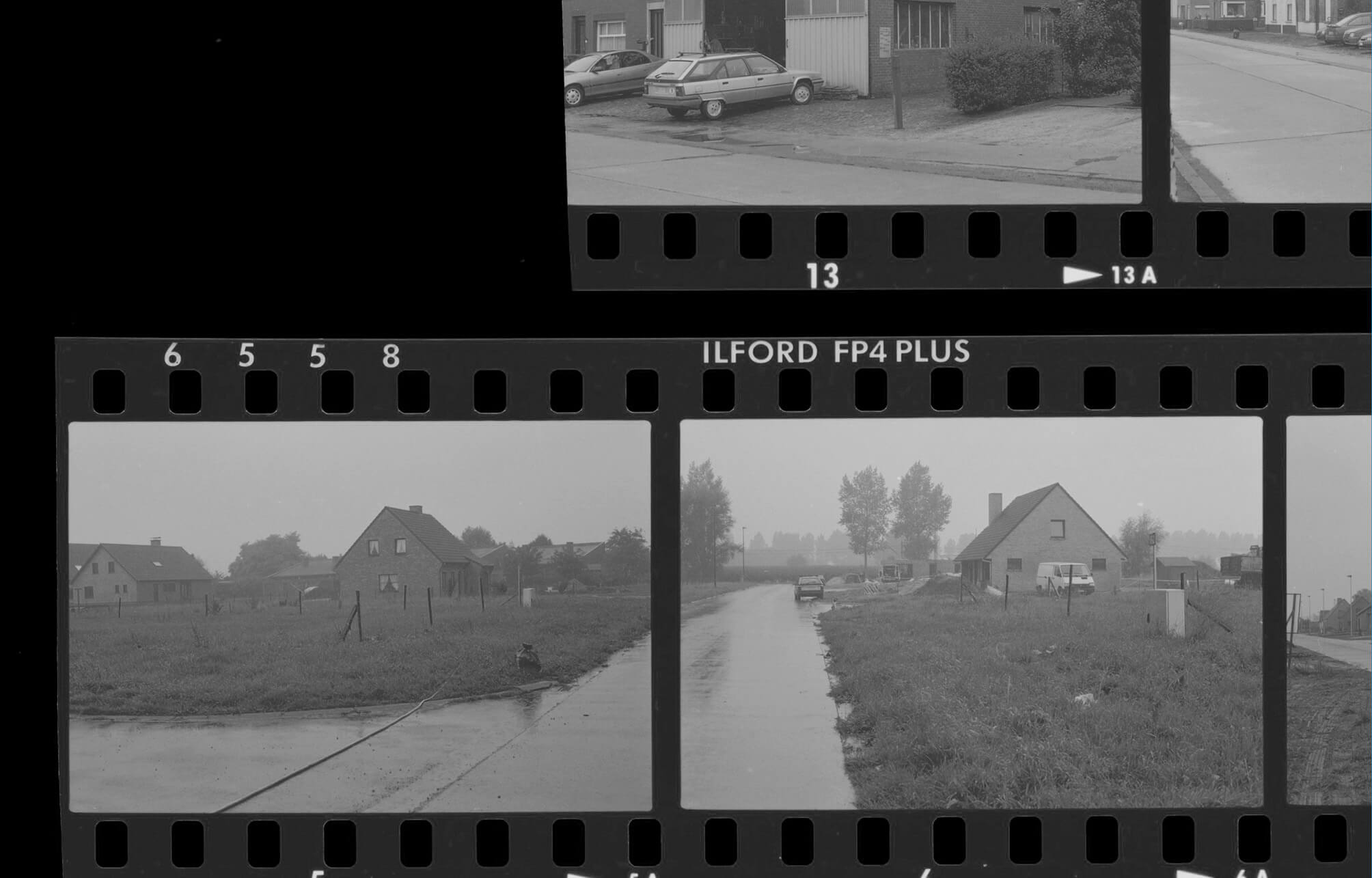
The architect’s photographic archive contains seven images that can be labelled as panoramic pictures. However, they only appear as such when the photographs are viewed in the archive, as strips of negatives. In order to see the panoramic construct, the viewer needs to be presented with two consecutive negatives.
There are two kinds of panorama in the archive: the kind that can only be attributed to a kind of laziness or a need for efficiency on behalf of the architect, and another that originates from frugality.
The former type of panorama is created when the architect is documenting the situation as it is: it is compulsory to document the context of the building or lot, as part of a building application. He simply pivots from left to right, capturing the first and second photograph consecutively. On the filmstrip a panorama appears.
The other kind of panoramic picture only appears at the end of the film role. The last negative on the film has been exposed (the twenty-fourth or thirty-sixth), after which he exerts force onto the lever to move the film forward anyway. Some films are known to have, by accident, a twenty-fifth or a thirty-seventh negative. The plastic between the sprocket holes tears and the film does not advance enough. The result differs fundamentally from the other kind of panorama: there is no separation, no void between the negatives. Rather, there is a slight overlap. A thin, vertical strip of film that has been exposed twice, suggesting contiguity that might not be there. The two exposures might be from altogether different sites, creating a new situation.
Based on De Cleene, M. & De Cleene, A. The Situation as it Is. A Photonovel in Three Movements. Gent: APE, 2022
A carving that looks like a stitched-up scar (a long, slightly curved line crossed at a right angle by eleven short straight lines) is inserted into a short statement about Celine and Logan. An initial of Celine’s last name is included. At first sight it looks like a ‘D’, but the line through the middle might just as well make it a ‘B’. Maybe it was Celine D who added the line in an attempt to convince those reading the roofing that it’s actually Celine B who blows Logan.

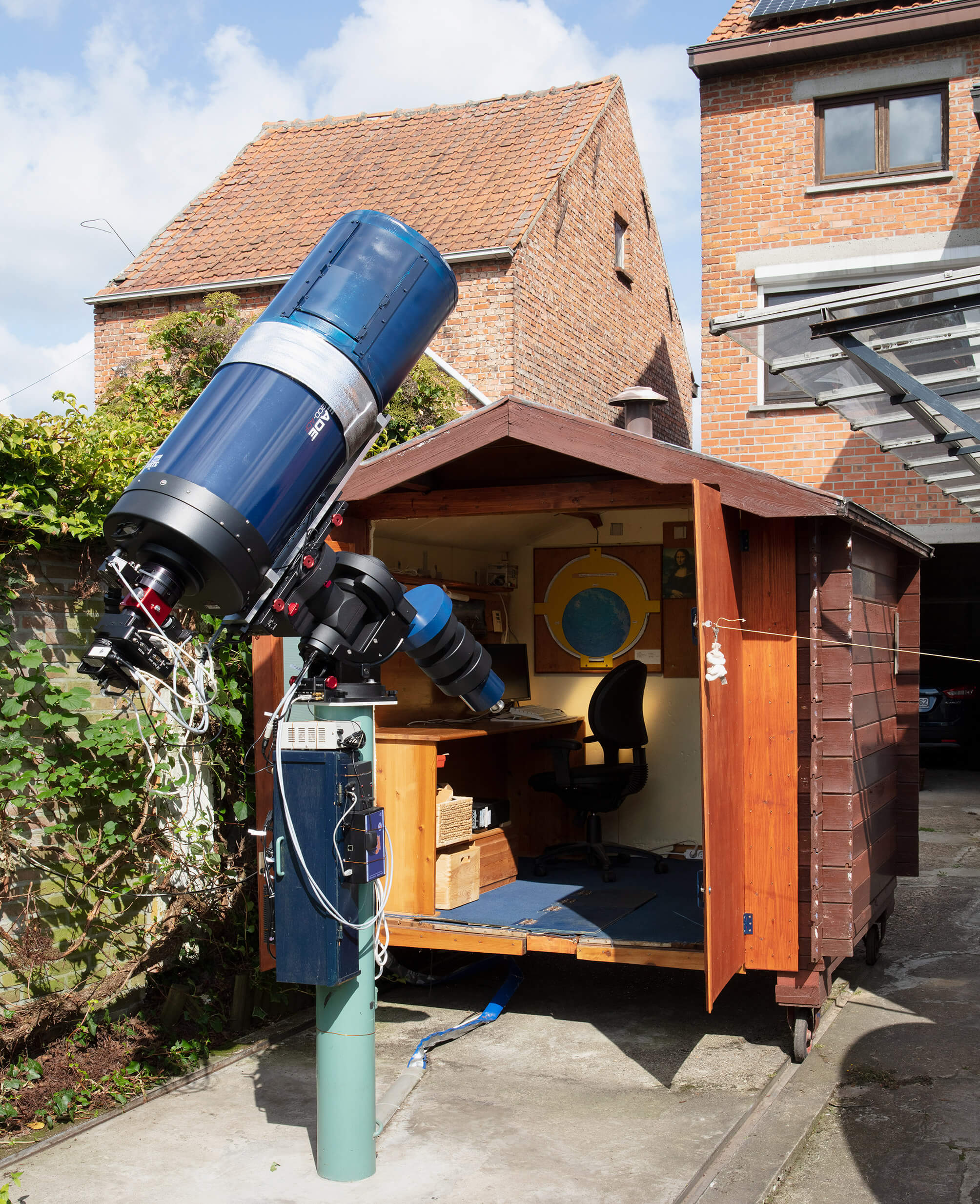
As an architectural structure, the pier is fundamental in observational astronomy: it can be found in the backyards of amateur observatories, as well as in professional ones. This column is a quintessential part of the physical interventions that are necessary to distinguish noise from valuable data. The pier disjoints the telescope from the observer, from the observatory and from the surroundings. Tremors of passing cars, the astronomer’s footsteps and coughs, the neighbour’s soundsystem: they could result in an agitated telescope. A falling mug would cause the instrument to shift lightyears away from its target.
In August 2019, I visited Chris De Pauw, an astrophotographer, at home. He showed me his private observatory. As we were both waiting for clouds to obscure the sun and get softer light for the photograph, he told me about the rolling shed, its advantages and the modifications he was planning on.
On closing the observatory – by rolling the shed over the instrument – he manoeuvred the instrument into its ‘park’-position: an azimuth of 160 degrees and an elevation of 8 degrees above the horizon. The shed’s doors and hinges barely cleared the telescope.

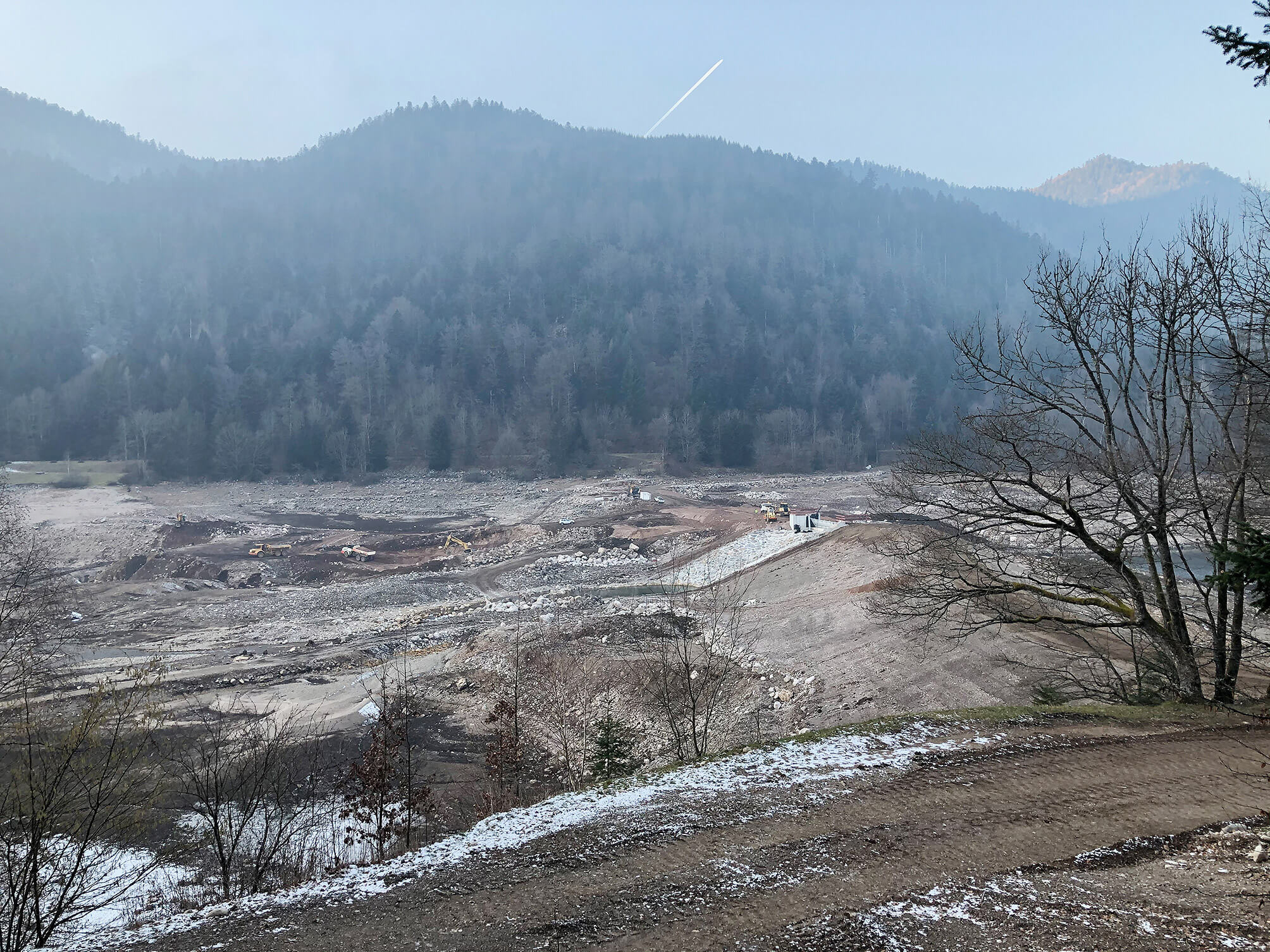
Where once there was twelve million cubic metres of water, excavators and trucks are moving dirt and rocks that have been hidden from sight for 56 years; piling them up into a temporary dam: a batardeau.

When the Sun, the Earth and one of the outer planets of the Solar System perfectly align, with the Earth positioned in the middle, the outer planet is said to be ‘in opposition’. It’s a moment of planetary approach and of optimal viewing conditions: the Earth and the outer planet are at their closest and brightest.
Neptune in opposition [1-20] is part of ‘Documenting Objects’, a research project by Arnout De Cleene and Michiel De Cleene at KASK & Conservatorium, the school of arts of HOGENT and Howest. Their research is financed by the HOGENT Arts Research Fund. Previous research into this subject has amongst other things led to the documentary film Towards Civil Dusk (2020) and temporary public observatories at 019, Gent and Kunsthal Extra City, Antwerp.

The architect’s photographic archive contains seven images that can be labelled as panoramic pictures. However, they only appear as such when the photographs are viewed in the archive, as strips of negatives. In order to see the panoramic construct, the viewer needs to be presented with two consecutive negatives.
There are two kinds of panorama in the archive: the kind that can only be attributed to a kind of laziness or a need for efficiency on behalf of the architect, and another that originates from frugality.
The former type of panorama is created when the architect is documenting the situation as it is: it is compulsory to document the context of the building or lot, as part of a building application. He simply pivots from left to right, capturing the first and second photograph consecutively. On the filmstrip a panorama appears.
The other kind of panoramic picture only appears at the end of the film role. The last negative on the film has been exposed (the twenty-fourth or thirty-sixth), after which he exerts force onto the lever to move the film forward anyway. Some films are known to have, by accident, a twenty-fifth or a thirty-seventh negative. The plastic between the sprocket holes tears and the film does not advance enough. The result differs fundamentally from the other kind of panorama: there is no separation, no void between the negatives. Rather, there is a slight overlap. A thin, vertical strip of film that has been exposed twice, suggesting contiguity that might not be there. The two exposures might be from altogether different sites, creating a new situation.
Based on De Cleene, M. & De Cleene, A. The Situation as it Is. A Photonovel in Three Movements. Gent: APE, 2022
Freely adapted from interviews with residents of Sandersleben (Saxony-Anhalt). Three-act play. The first two acts take place in the present day; the third is set in the future.
From Act 2 ‘The Inhabitants’, Scene 5, ‘Living Differently’.
Characters: MR DUNST club member I, MR WINDORF amateur astronomer
Stills from text animation S. Anders Leben. Eine Handlung in Gesprächen/S. Anders Leben – Living Differently: An Act in Conversations
Stephanie Kiwitt (1972) is an artist based in Halle (Saale), Germany. Utilizing a large number of images, various perspectives and also textual elements, she is known for her insightful photography that explores spaces emblematic of contemporary phenomena. Over the past three years, she has focused on evolving habitats in rural areas, photographing traces of transformation and conducting interviews in Saxony-Anhalt, the region she moved to in 2020. From 2018 to 2020, Kiwitt was a guest lecturer at the LUCA School of Arts in Brussels.
In spring 2024 the-documents.org and Trigger co-publish a series of online articles with a focus on the meeting ground between photography and the document.

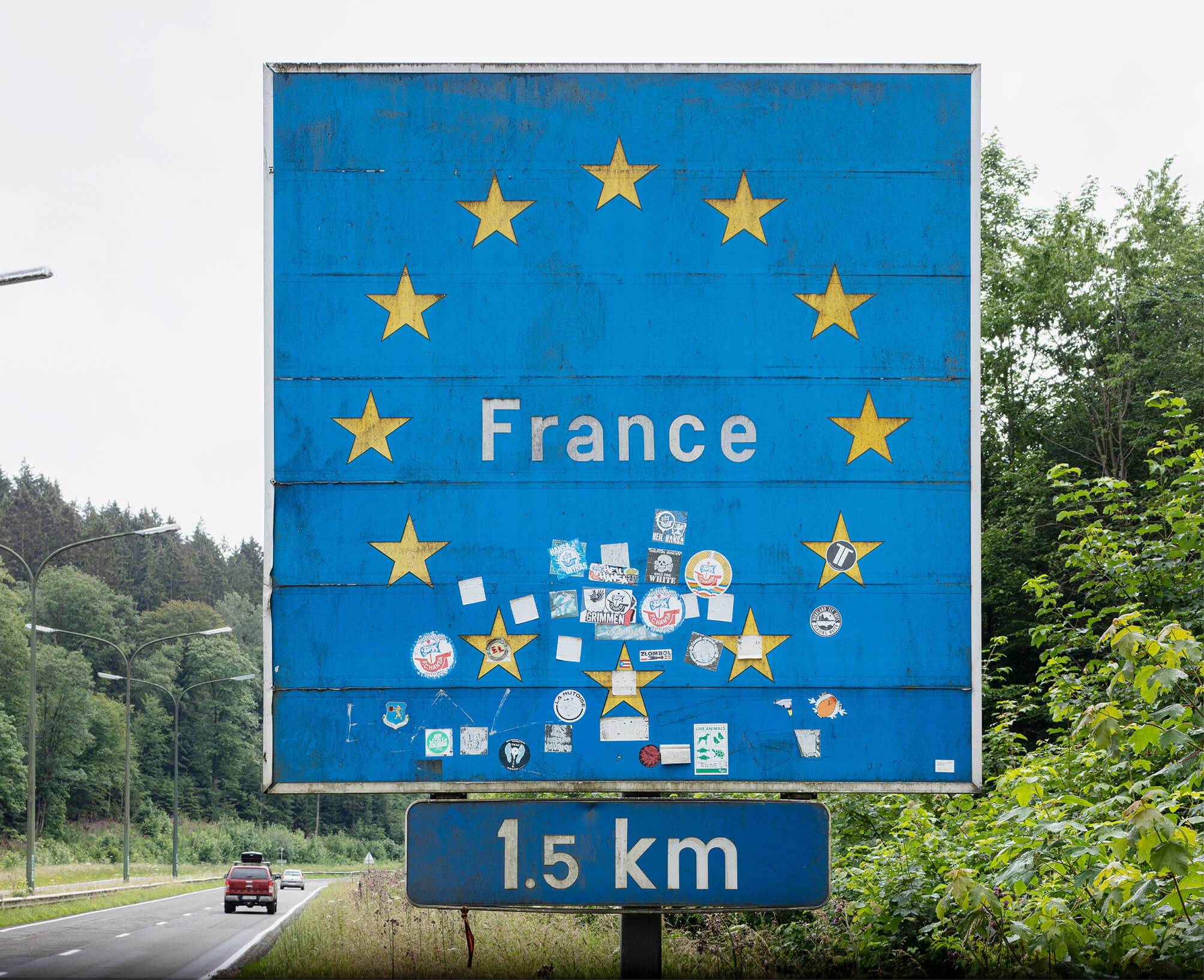
Belgium, approximately 1.5km from the French border, photograph made on 16.06.2018.
The European flag symbolises both the European Union and, more broadly, the identity and unity of Europe. It features a circle of 12 gold stars on a blue background. They stand for the ideals of unity, solidarity and harmony among the peoples of Europe. The number of stars has nothing to do with the number of member countries, though the circle is a symbol of unity.1
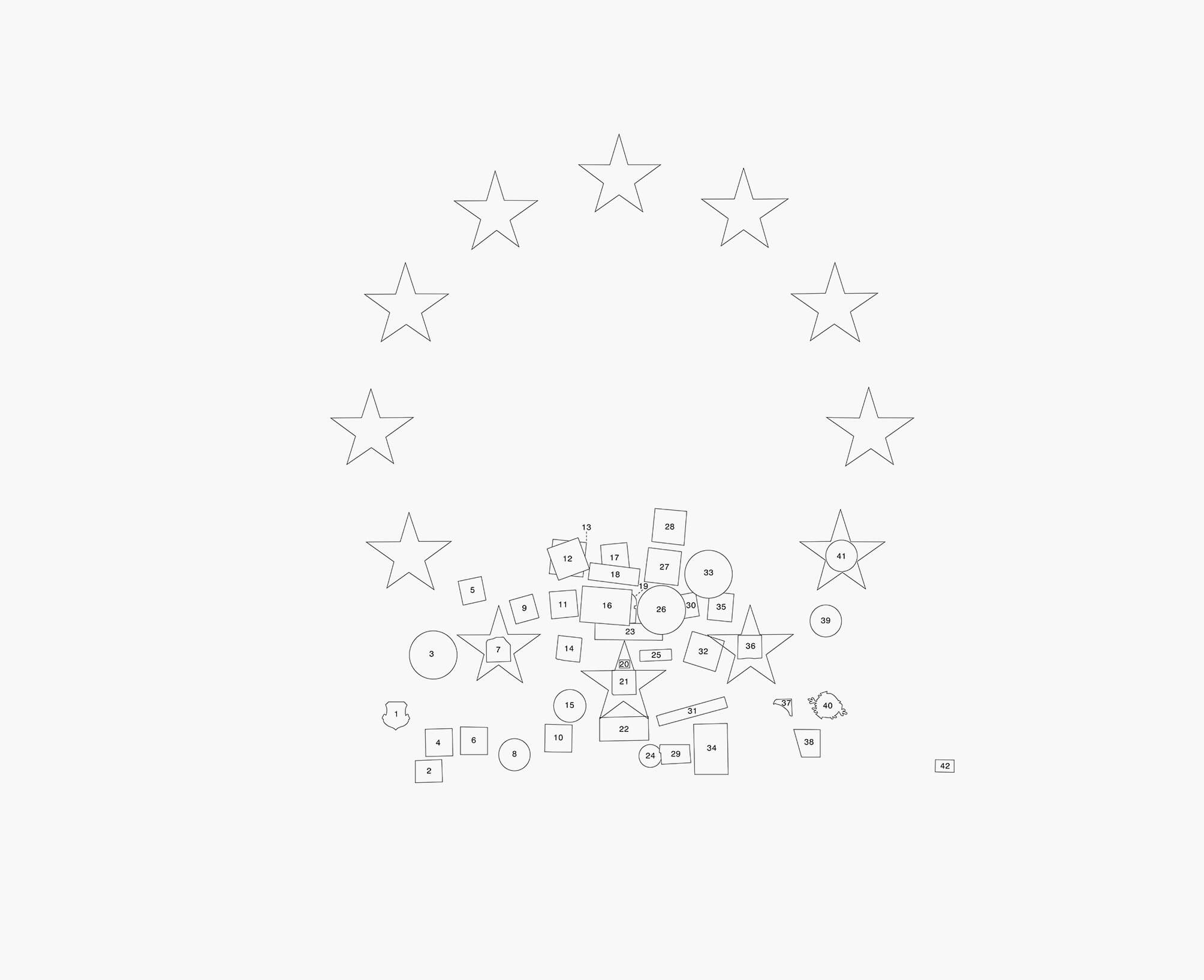
- Coat of arms of Gmina Puck, a rural district in Puck County, Pomeranian Voivodeship, in northern Poland.
- Illegible.
- F.C. Hansa, Mecklenburg, Pommern, FC Hansa Rostock is a German association football club based in the city of Rostock, Mecklenburg-Vorpommern. They have emerged as one of the most successful clubs from the former East Germany and have made several appearances in the top-flight Bundesliga. Hansa Rostock’s official anthem is “FC Hansa, wir lieben Dich total”. Hansa struggles with hooliganism, estimating up to 500 supporters to be leaning towards violence. The club’s logo consists of a red sailing ship with a blue sail showing the Rostock Griffin.
- Mon École Écologique.org is an organization for environmental conservation. On 07.01.2021 there was no website listed on this URL.
- Illegible.
- Illegible, apart from ’1962’ in the middle.
- Innocenti Bruderschaft, EL, 2018, a community of German Lambretta Innocenti riders and aficionados.
- Imag’Ink, Bretignolles Sur Mer, Tatoueur, 06 06 44 13 51, a French tattoo shop.
- Illegible.
- Hardly legible, the only word that can be made out is ‘Futbolom’: Russian for soccer.
- Kaluga on tour. Kaluga is a Russian city 150km southwest of Moscow. It is often called the cradle of space exploration thanks to the city’s most famous resident: Konstantin Tsiolkovsky.
- Hansa Ultras, F.C. Hansa. The Ultras are a group of F.C. Hansa fans (see: ‘3’).
- Illegible because ‘12’ was stuck over it.
- Illegible.
- La Hutoise is a regional student-association for higher education students from the Belgian town of Huy and its surroundings. Its aim is to bring together students from Huy in a spirit of camaraderie and to perpetuate student folklore. The logo consists of a two headed bird of prey with a cap on each head. The bird wears a scarf over one shoulder and holds a glass of beer in each paw.
- F.C. Hansa, Grimmen. The F.C. Hansa logo (see ‘3’ and ‘12’) is combined with the coat of arms of Grimmen: a griffin on a pile of 10 bricks. Grimmen is a German town in Nordvorpommern on the banks of the river Trebel.
- Illegible.
- Heil Hansa. To the left of this text the F.C. Hansa logo (see ‘3’, ‘12’ and ‘16’), on the right a logo consisting of a black bull with his tongue out and a golden crown on his head. This controversial sticker lead to several arrests in the run-up to the match between F.C. Hansa Rostock and Bayern München in February 2020. Supporters of F.C. Hansa had attached this sticker to public buildings on their way to the stadium.
- Illegible because ‘16’ was stuck over it.
- The Cuban flag.
- Illegible.
- Illegible.
- Kaluga (see ‘11’).
- De Veterinnen, a round, black sticker with a red print of a head wearing a round hat and a carnivalesque collar with a carrot for a nose. No further information found.
- Zlombol 11. Złombol is a yearly charity car rally racing event that starts in Katowice Poland. Contesters must drive a car that was built or designed during the communist era. The destination of the 2011 edition was Loch Ness.
- F.C. Hansa, Mecklenburg, Pommern, identical sticker to ‘3’, see also ‘12’, ‘16’, and ‘18’.
- Torpedo Moscow, only for white. Football club Torpedo Moscow is a Russian professional club based in Moscow, founded in 1930. Some fans of the club wave far-right symbols and banners, both during and outside of matches. Massive fan-protest ensued when the club tried to sign a black player in 2018. The player’s contract was cancelled.
- Heil Hansa. See ‘3’, ‘12’, ‘16’, ‘18’ and ‘26’.
- Illegible.
- Illegible.
- Illegible.
- Illegible.
- F.C. Hansa. Variation of ‘3’ and ‘26’ with a circle of yellow crops around the logo. See also ‘12’, ‘16’, ‘18’ and ‘28’.
- Live animals, contents: Rivne UA. These stickers are required by the International Air Transport Association for airline cargo pet travel. Rivne is a city in western Ukraine (UA) with an international airport. The sticker does not specify the transported animal but displays a dog, two birds, two fish and a turtle.
- Illegible.
- Illegible.
- Illegible.
- Illegible, apart from ‘lska’ on the bottom.
- Norrland Fly Guys, Reading Water. The sticker displays a minimal landscape with two pine trees, and a shed on a chunk of floating ice, a single four-point star shines in the sky. Norrland is the northernmost part of Sweden. No further information found. Whether the ‘fly guys’ own airplanes or are involved in fly fishing is unclear.
- This sticker displays – what appears to be – a smiling potato in front of an enlarged snow crystal. No further information found.
- Traumsucht is an artist collective from Berlin. Their website lists German rap-artists
- Illegible.
https://europa.eu/european-union/about-eu/symbols/flag_en
It’s time to have a nap. I tilt the window over its middle axis to let the butterfly out. A breeze ruffles the drapes. Now, it sits on the glass and throws an enormous shadow on the yellow cloth.

