What constitutes a ‘document’ and how does it function?
According to the Oxford English Dictionary, the etymological origin is the Latin ‘documentum’, meaning ‘lesson, proof, instance, specimen’. As a verb, it is ‘to prove or support (something) by documentary evidence’, and ‘to provide with documents’. The online version of the OED includes a draft addition, whereby a document (as a noun) is ‘a collection of data in digital form that is considered a single item and typically has a unique filename by which it can be stored, retrieved, or transmitted (as a file, a spreadsheet, or a graphic)’. The current use of the noun ‘document’ is defined as ‘something written, inscribed, etc., which furnishes evidence or information upon any subject, as a manuscript, title-deed, tomb-stone, coin, picture, etc.’ (emphasis added).
Both ‘something’ and that first ‘etc.’ leave ample room for discussion. A document doubts whether it functions as something unique, or as something reproducible. A passport is a document, but a flyer equally so. Moreover, there is a circular reasoning: to document is ‘to provide with documents’. Defining (the functioning of) a document most likely involves ideas of communication, information, evidence, inscriptions, and implies notions of objectivity and neutrality – but the document is neither reducible to one of them, nor is it equal to their sum. It is hard to pinpoint it, as it disperses into and is affected by other fields: it is intrinsically tied to the history of media and to important currents in literature, photography and art; it is linked to epistemic and power structures. However ubiquitous it is, as an often tangible thing in our environment, and as a concept, a document deranges.
the-documents.org continuously gathers documents and provides them with a short textual description, explanation,
or digression, written by multiple authors. In Paper Knowledge, Lisa Gitelman paraphrases ‘documentalist’ Suzanne Briet, stating that ‘an antelope running wild would not be a document, but an antelope taken into a zoo would be one, presumably because it would then be framed – or reframed – as an example, specimen, or instance’. The gathered files are all documents – if they weren’t before publication, they now are. That is what the-documents.org, irreversibly, does. It is a zoo turning an antelope into an ‘antelope’.
As you made your way through the collection,
the-documents.org tracked the entries you viewed.
It documented your path through the website.
As such, the time spent on the-documents.org turned
into this – a new document.
This document was compiled by ____ on 18.09.2025 13:32, printed on ____ and contains 19 documents on _ pages.
(https://the-documents.org/log/18-09-2025-6649/)
the-documents.org is a project created and edited by De Cleene De Cleene; design & development by atelier Haegeman Temmerman.
the-documents.org has been online since 23.05.2021.
- De Cleene De Cleene is Michiel De Cleene and Arnout De Cleene. Together they form a research group that focusses on novel ways of approaching the everyday, by artistic means and from a cultural and critical perspective.
www.decleenedecleene.be / info@decleenedecleene.be - This project was made possible with the support of the Flemish Government and KASK & Conservatorium, the school of arts of HOGENT and Howest. It is part of the research project Documenting Objects, financed by the HOGENT Arts Research Fund.
- Briet, S. Qu’est-ce que la documentation? Paris: Edit, 1951.
- Gitelman, L. Paper Knowledge. Toward a Media History of Documents.
Durham/ London: Duke University Press, 2014. - Oxford English Dictionary Online. Accessed on 13.05.2021.

The last couple of days have been dry. Rain is expected for the weekend. The office buckets are in place and are empty, except for some residue. Dirt, sand, a few hairs. Some particles must have come along with the drops when they made their way through the roof.

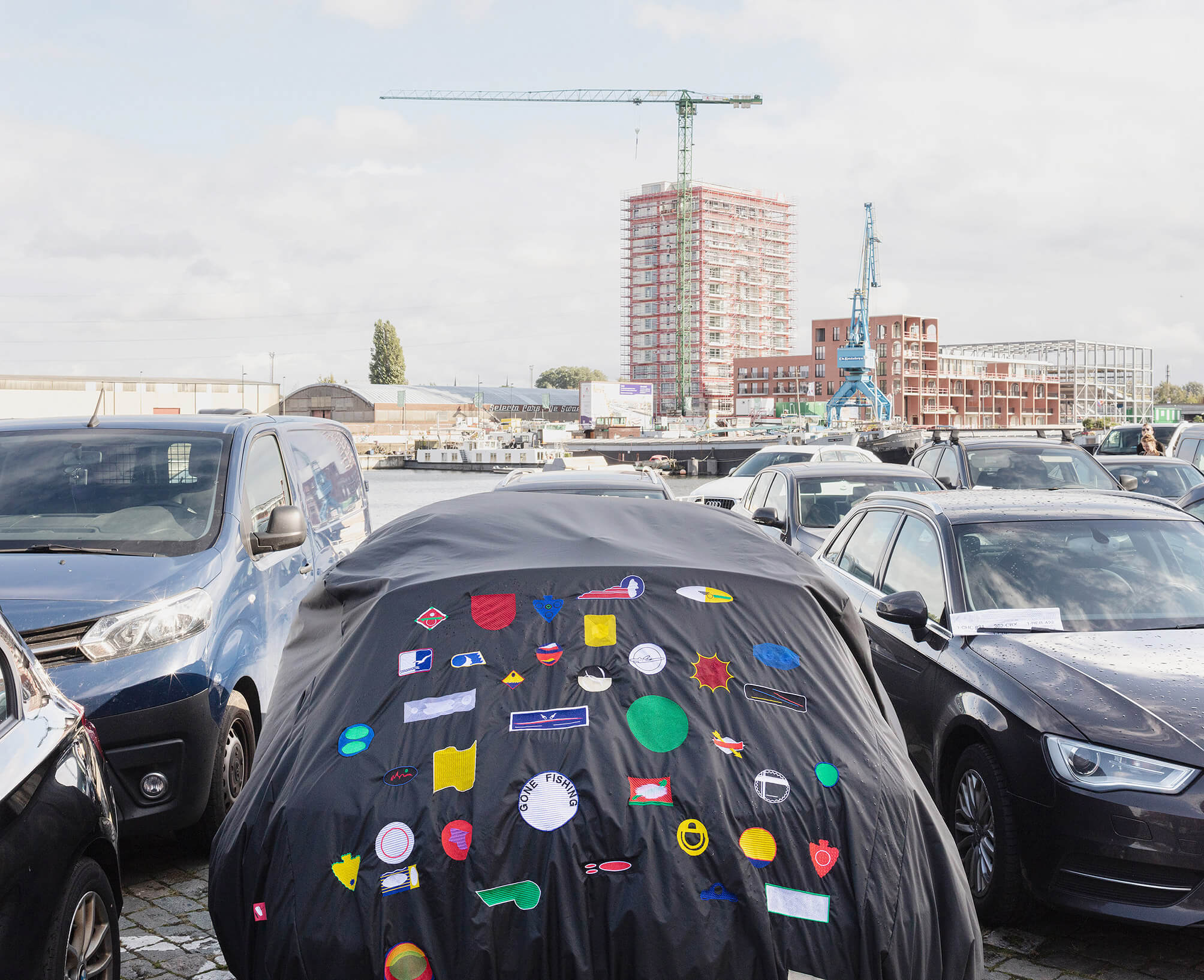
A year before the crash, Swiss artist Charlotte Stuby designed a tailor-made cover for the car. The dents caused by the unfortunate hailstorm weren’t visible. The work, called Gone Fishing, was on view during an open air exhibition on the theme of the parking lot. Heavy wind had caused the temporary traffic signs on the parking lot, left there by the city services, to tip over. One hit a car and caused a scratch. It was unclear if this would be something the insurance company would accept. We attached Stuby’s cover a second time. Parking fines flew irregularly across the lot.
In the world of National Geographic, white people overlooking a landscape are not uncommon. “The Red Shirt School of Photography” was a label used to describe National Geographic photographers who allegedly brought red clothing and props with them on assignment to put on their subjects in order to make better photographs when working with Kodachrome film, which is famous for its capability of rendering rich colors. Overlooking a landscape wearing red, the observer asserts dominance over the land. They glorify it, seeing a country that is beautiful, rich in resources, and therefore “worth taking”.
Max Pinckers (°1988, BE) and Victoria Gonzalez-Figueras (°1988, CA) are based in Brussels, Belgium. They have been working together for the past ten years on documentary photography projects. Victoria works in the cultural field as a researcher and producer. Max is a speculative documentarian, teacher and occasional writer on photography. They are married, in love, and have a son. Victoria has consistently assisted Max in his projects as a production manager, but they have recently been making new work together as co-authors. “Double Reward” is the first such project.
In spring 2024 the-documents.org and Trigger co-publish a series of online articles with a focus on the meeting ground between photography and the document.

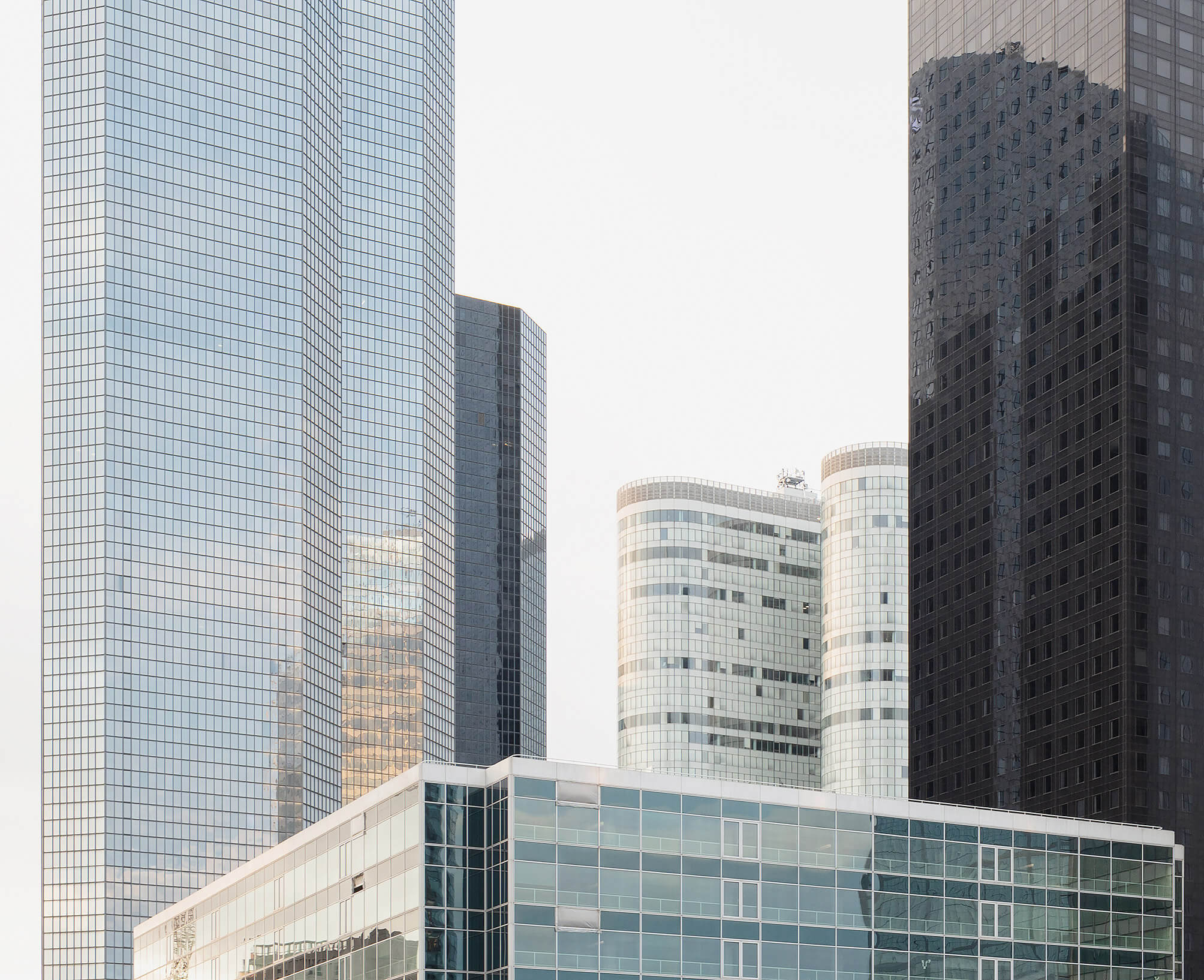
A year ago, mid-August, just before sunrise, the mostly unlit office buildings line the road that leads to the underground parking. I turn off the ignition. I’m in F36. The walls are painted pink. Looking for the exit, I take the escalator and get stuck in an empty shopping mall. The music is playing but all the shops are closed off with steel shutters. So are the exits. I’m out of place. In keeping early customers out, the mall is keeping haphazard visitors in. I’m back in the parking lot. The elevator is broken. I take the stairs and walk by a homeless man, sleeping. There’s shit on the floor. I open the door that leads out of the stairwell. It slams shut behind me. There’s no doorknob. I find myself on a dark floor between mall and parking lot. People are sleeping; some are awake. Heads turn toward me. I start walking slightly uphill towards where I think I might find an exit, or an entrance. The scale of the architecture has shifted from car (F36) and customer (the closed mall) to truck. I find myself amidst the supply-chain. It takes five minutes, maybe fifteen, maybe more to get out and see the office buildings towering over me in the first light of day.
‘You see?!’
[The man points at the waybill1 on the floor behind the glass door that closes off the abandoned and dismantled hall.]
‘It used to be here, I’m sure.’
[He looks around.]
‘I’m sure.’
[He turns towards me.]
‘Are you also here for the Leen Bakker?2 This used to be a Leen Bakker. I just looked it up on their website. They are open from 9 to 6 today.’
[He points at the waybill again.]
‘It was here. I remember well. It’s been years. But it’s here.’
[He walks away.]
‘I’ll look around.’
The waybill documents the transport of a 30m3 container filled with approximately 5000 kg of waste from this branch of Leen Bakker to a scrap processing company in nearby Ninove. They take care of scrap, both ferrous and non-ferrous metals. They also have a recognized depollution center for end-of-life vehicles.
A chain of furniture and interior stores with branches in the Netherlands, Belgium and the Caribbean part of the Kingdom of the Netherlands.

Directed by Xie Jin, Huang Baomei (1958) is a docudrama based on the real-life experiences of the national model worker of the same name, who also plays herself in the film. Reflecting the economic priorities of the day following the launch of the Great Leap Forward—a far-reaching and ultimately devastating campaign that sought to replace the prevailing Soviet-style expert-managerial system with workers’ self-organisation and mass mobilisation—the film focuses on the challenges faced by machine operators as they strive for a technical breakthrough while working with their aging machines.
Located at No. 2866, Yangshupu Road, Shanghai No. 17 Cotton Mill, which had its origins in the Japanese-owned Yuho Spinning Company, was one of Shanghai’s best known cotton mills. The launch of China’s economic reforms opened a new era for the mill, as reflected cinematically in No. 17 Cotton Mill Shanghai Blues (1984), a British documentary that attests to the vibrant workers’ music scene blossoming within the factory walls. In 1992, the state-owned enterprise was restructured as one of the first batch of joint-stock companies in the Reform era and renamed as Longtou Company after the brand name of a fabric manufactured by the mill. Following the relocation of the mill’s original machinery to Jiangsu in 2007, work commenced to redesign the entire complex and relaunch it as the Shanghai International Fashion Center. In Jia Zhangke’s I Wish I Knew (2010), an elderly Huang Baomei is seen walking amidst the ruins that are all that remain of the cotton mill as it awaits refurbishment.
Ho Rui An is an artist and writer working in the intersections of contemporary art, cinema, performance and theory. Through lectures, essays and films, his research examines the relations between labour, technology and capital across different systems of governance in a global age.
In spring 2024 the-documents.org and Trigger co-publish a series of online articles with a focus on the meeting ground between photography and the document.

Set in the fictitious Shanghai-based Dafeng Cotton Mill, Red Skirt Popular on the Street (1984) follows the story of an enterprising model worker as she navigates the challenges of young adult life, from workplace conflicts to choosing what clothes to wear on her days off. In the reflection of the emerging consumer consciousness of the Reform era, many of the film’s key moments happen not on the factory floor, but in the changing room where the workers seek to express themselves through their choice of dress. To this end, the film can be regarded as a document of the fashion trends being introduced into the country at the time, as best observed in the spellbinding array of colours on display as the workers leave the factory at the end of a day’s work.
The textile mill used as the setting for Dafeng Cotton Mill is Shanghai No. 1 Cotton Mill. Originally occupied by the no. 13 and 14 mills of the Japanese-owned Naigaiwata Company, the mill was formally established as the China Textile Construction Company Shanghai No. 1 Cotton Mill after the Second World War. It was located at the T-shaped intersection on Changshou Road, with the gate facing Jiaozhou Road. At that time, the area on the north side of Changshou Road extending from No. 1 Cotton Mill formed a continuous industrial zone encompassing many other factories and warehouses, all of which have since been converted into the private residences and creative parks.
Ho Rui An is an artist and writer working in the intersections of contemporary art, cinema, performance and theory. Through lectures, essays and films, his research examines the relations between labour, technology and capital across different systems of governance in a global age.
In spring 2024 the-documents.org and Trigger co-publish a series of online articles with a focus on the meeting ground between photography and the document.

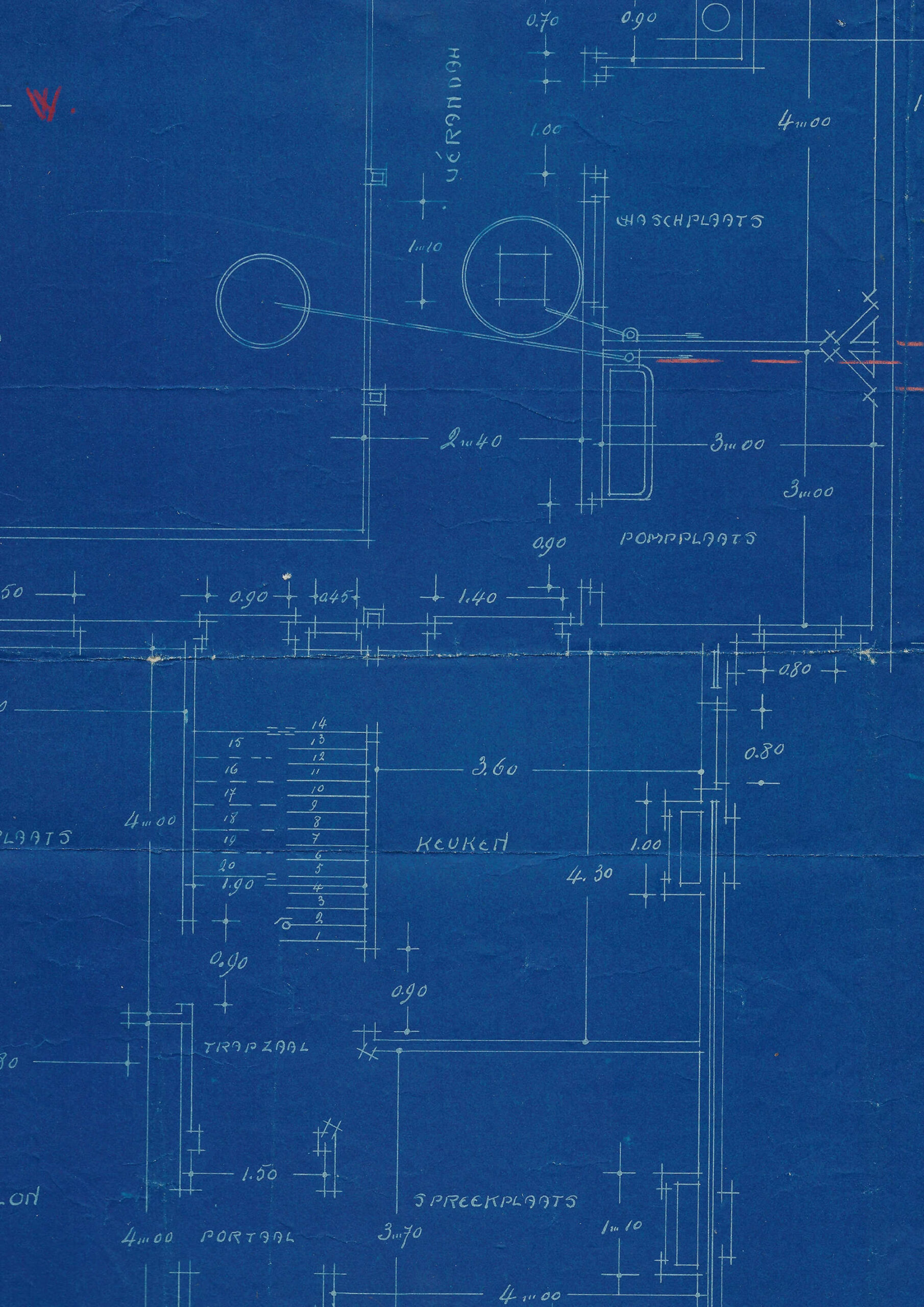
In the archive of the architect O. Clemminck, there is a piece of a plan of a building in a suburb in Gent. It presents the ground floor. There is a kitchen, a salon, an eating place, a meeting place. The missing part would have stated the exact address, the name, and maybe the profession of the owners. The plan of the first floor might have given an indication of the number of (anticipated) family members, based on the number and size of sleeping rooms.
At the southern edge of (the plan of) the lot, O. Clemminck has drawn a laundry room that gives out to a vérandah. The spelling of the Dutch word – nowadays written as veranda – is remarkable, as is its etymology, which is unclear and a matter of debate among scholars. The word might have Portuguese (varanda: railing) and Catalan roots (baranda: barrier), maybe also origins in the Lithuanian Žemaitan dialect (varanda: loop plaited from flexible wings) and might also be traced back to a Sanskrit root (varandaka: rampart separating two fighting elephants).
The vérandah O. Clemminck proposes is 2,40 meters by, at least, 2,80 meters.
It’s early spring. The pool is covered with a sheet of plastic. The deciduous trees are just leafing out. A tree stump serves as a placeholder for the diving board’s foot – it was customary to take it indoors for winter – and keeps people from kicking its threaded rods sticking up from the silex tiles that line the pool.
The upper right corner of the plastic frame is missing. It’s probably where the insect – now dead, dry and yellowish – got in. The frame was left behind in the laundry room overlooking the garden, the pool and the pool house. At the time it hadn’t been used for quite a while. Half empty, the water green.
In summer, when the wind dropped, horse-flies came. You could shake them off temporarily by swimming a few meters underwater.

In the archive of the architect O. Clemminck, there is a piece of a plan of a building in a suburb in Gent. It presents the ground floor. There is a kitchen, a salon, an eating place, a meeting place. The missing part would have stated the exact address, the name, and maybe the profession of the owners. The plan of the first floor might have given an indication of the number of (anticipated) family members, based on the number and size of sleeping rooms.
At the southern edge of (the plan of) the lot, O. Clemminck has drawn a laundry room that gives out to a vérandah. The spelling of the Dutch word – nowadays written as veranda – is remarkable, as is its etymology, which is unclear and a matter of debate among scholars. The word might have Portuguese (varanda: railing) and Catalan roots (baranda: barrier), maybe also origins in the Lithuanian Žemaitan dialect (varanda: loop plaited from flexible wings) and might also be traced back to a Sanskrit root (varandaka: rampart separating two fighting elephants).
The vérandah O. Clemminck proposes is 2,40 meters by, at least, 2,80 meters.
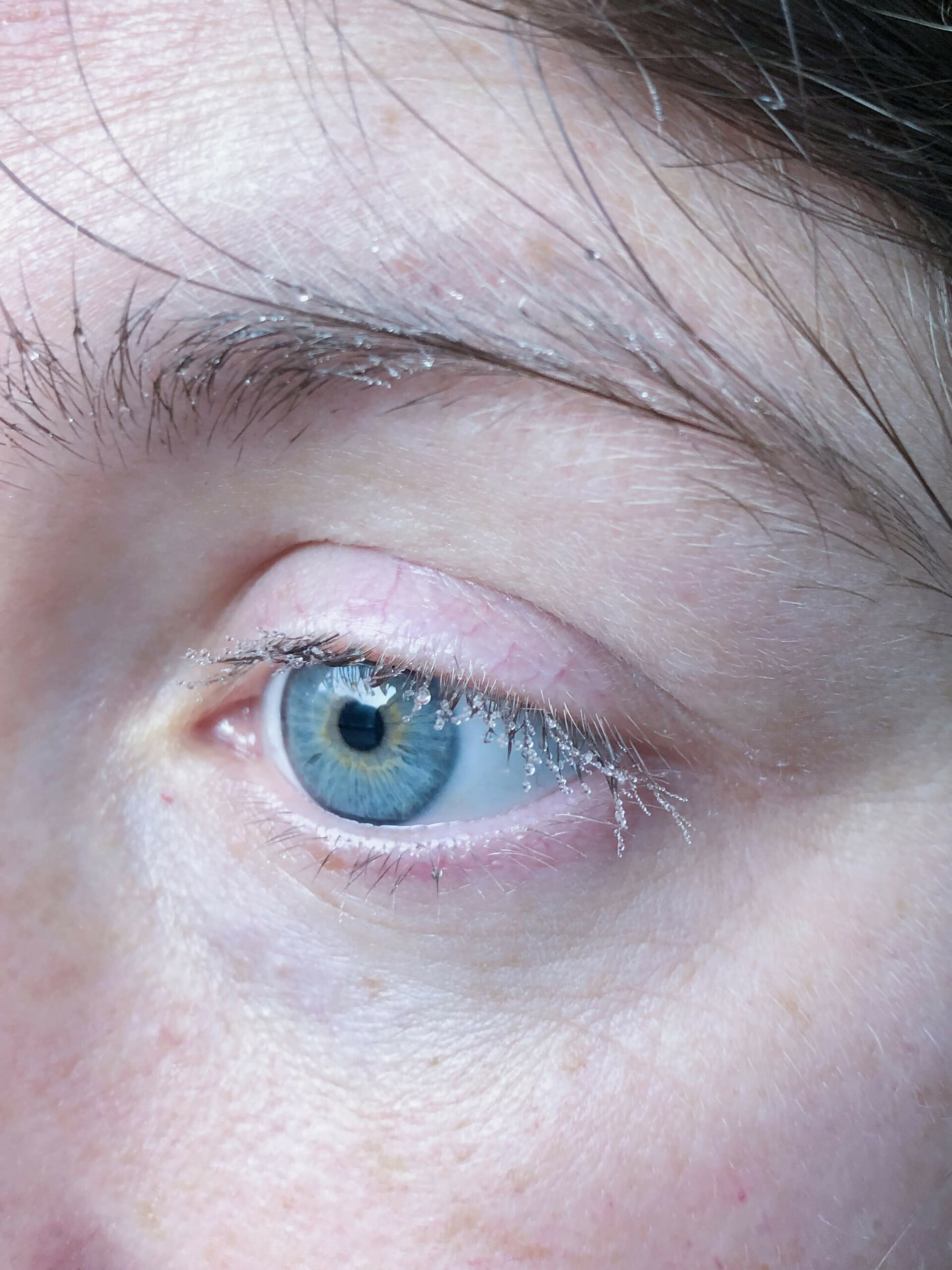
On January 23, 2020 a young couple walks around the drained reservoir of Kruth-Wildenstein.
It’s freezing. They’re expecting their first child within a month.
Freely adapted from interviews with residents of Sandersleben (Saxony-Anhalt). Three-act play. The first two acts take place in the present day; the third is set in the future.
From Act 1 ‘The Town of S’, Scene 2 ‘The Past’.
Characters: MR DUNST club member I, OLIVER club member II, ANJA young mother
Stills from text animation S. Anders Leben. Eine Handlung in Gesprächen/S. Anders Leben – Living Differently: An Act in Conversations
Stephanie Kiwitt (1972) is an artist based in Halle (Saale), Germany. Utilizing a large number of images, various perspectives and also textual elements, she is known for her insightful photography that explores spaces emblematic of contemporary phenomena. Over the past three years, she has focused on evolving habitats in rural areas, photographing traces of transformation and conducting interviews in Saxony-Anhalt, the region she moved to in 2020. From 2018 to 2020, Kiwitt was a guest lecturer at the LUCA School of Arts in Brussels.
In spring 2024 the-documents.org and Trigger co-publish a series of online articles with a focus on the meeting ground between photography and the document.

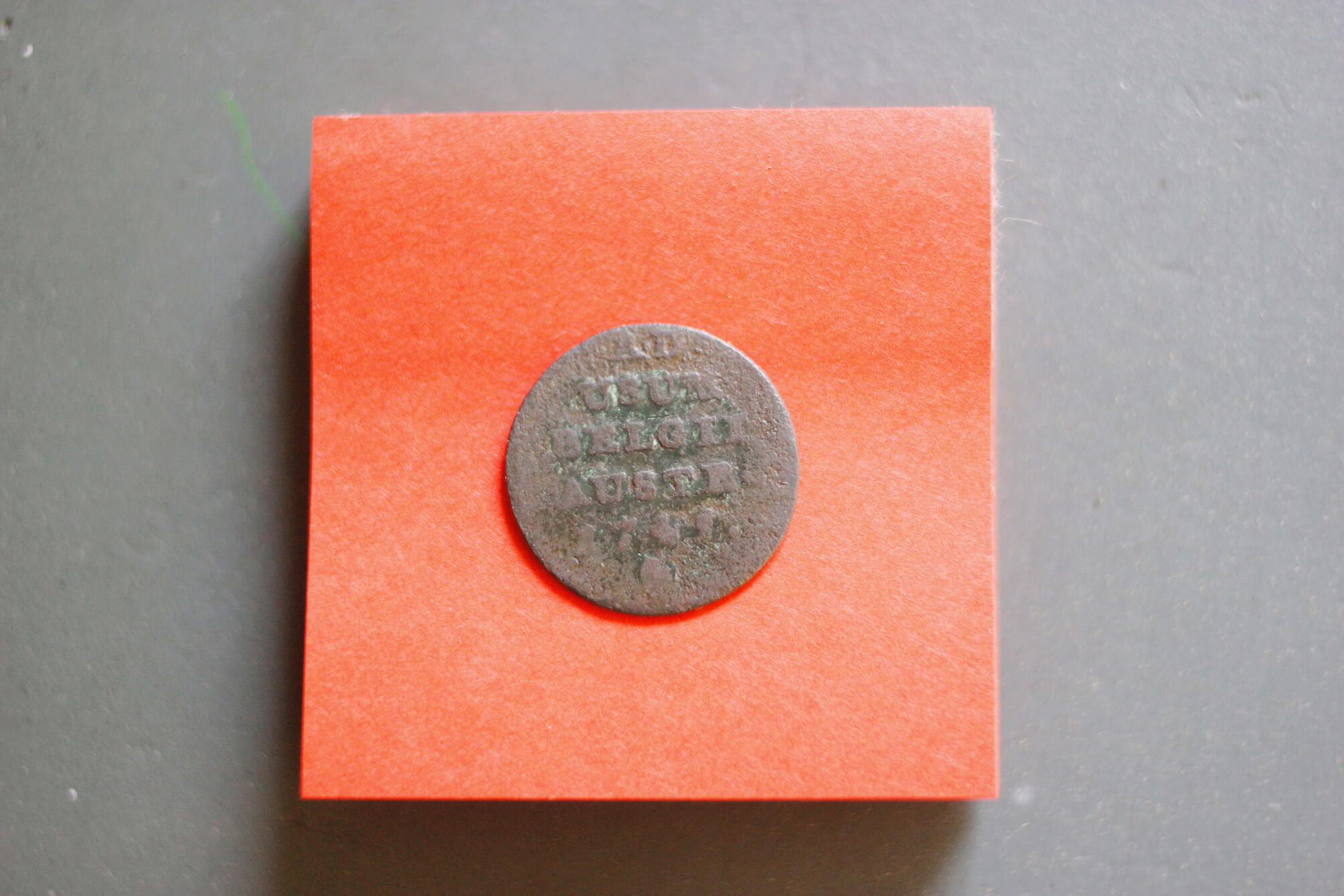
The oldest coin in the collection has darkened over time, but upon inspection, the text ‘AD USUM BELGII AUSTR’ (left) and the contours of a (female) head (right) can be discerned. A quick search learns it stems from the middle of the 18th century. The coin was made and used in the Austrian Netherlands, reigned by Maria Theresa, who is the one depicted. My mother recollects finding it in the backyard when she was a kid.
About 40 years later, the euro was introduced. The ringbinder with my mother’s coin collection was taken from the shelf. A dilemma came to the fore: we wondered if we should keep one of each existing Belgian coin and banknote and put them in the binder, alongside Maria Theresa, or if we should exchange them for the new European currency. The decision to keep a coin of five Belgian francs was not difficult to make, but as the amount raised, the answer was increasingly hard to give. This was an assessment of the old currency’s emotional and projected historical value, compared to its current financial worth. It was a decision based on investment principles.
To accentuate the value of the Maria Theresa kronenthaler of 1 liard, I put the coin on a pile of red post-it-notes when photographing it. Coins like these are sold on eBay for prices ranging from 0,70 euros to 16 euros.

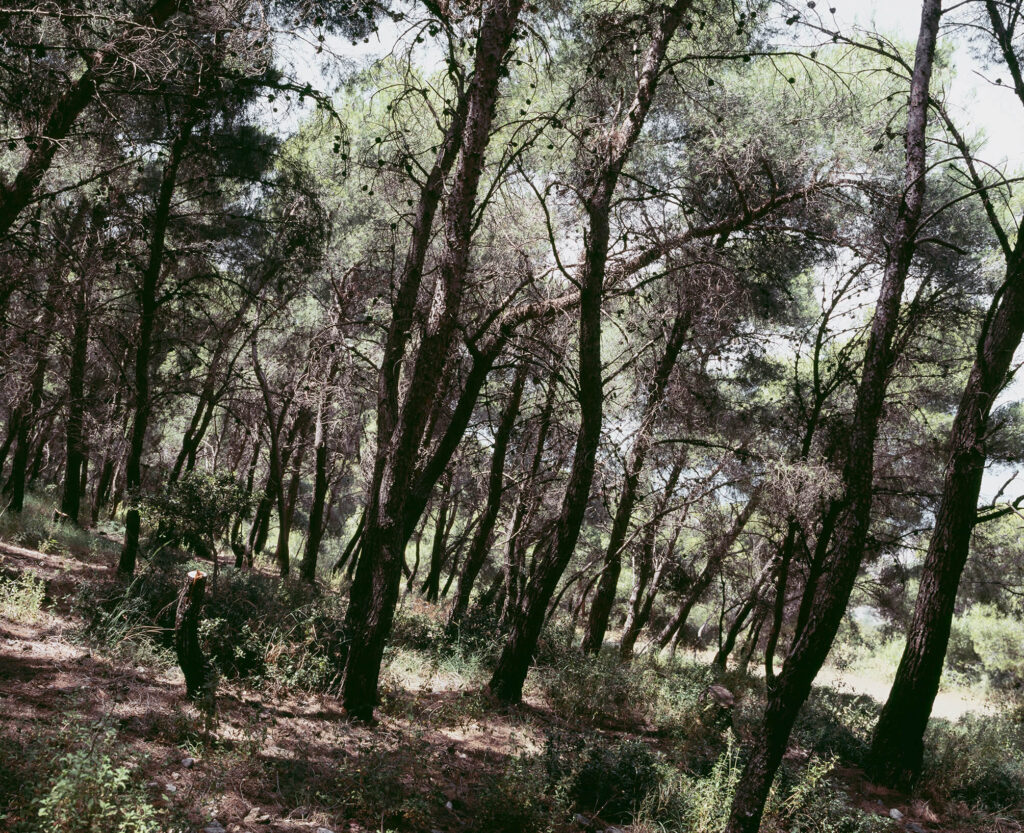
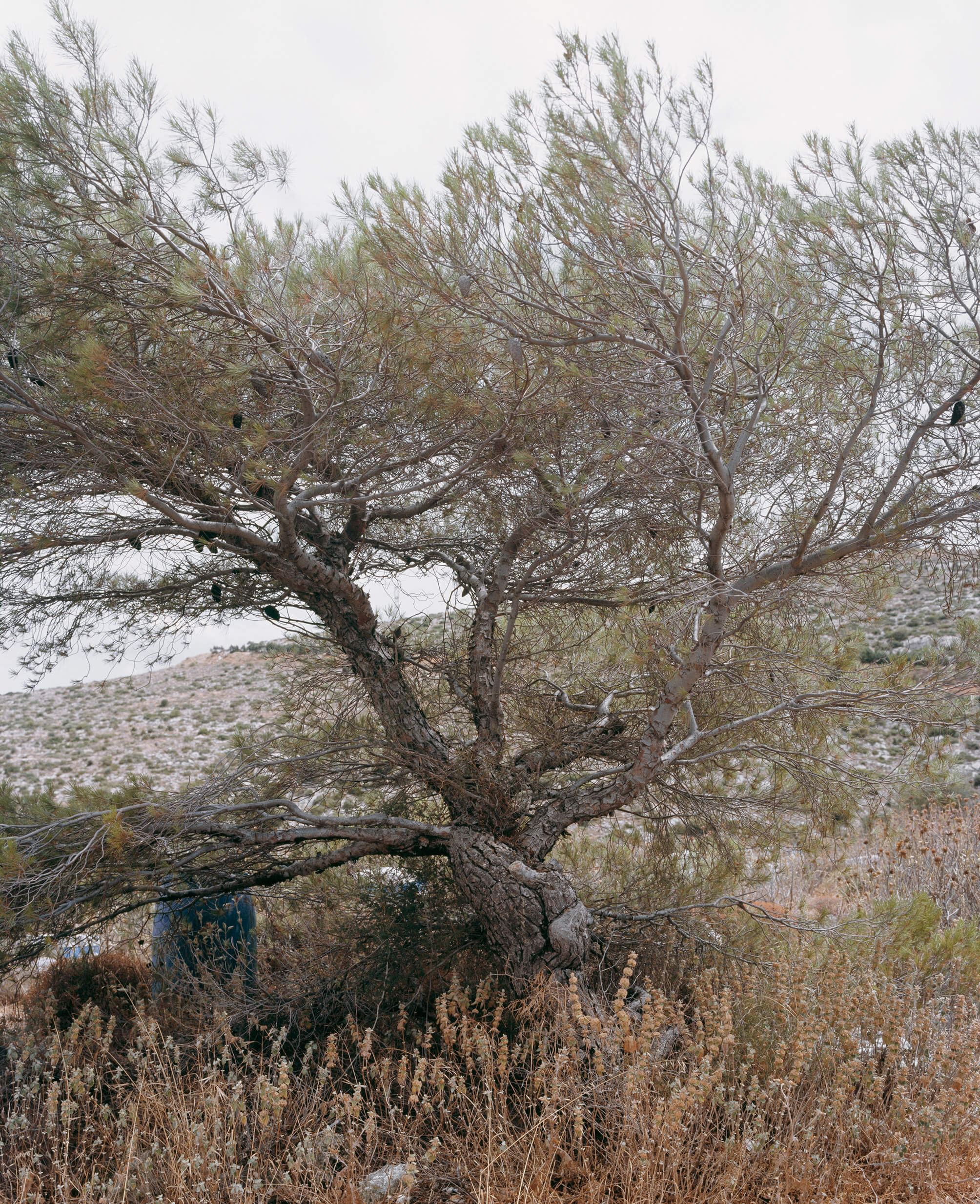
‘The saw cuts are sloppy and appear to be made in a haste.1 The cuts are situated at a height of approximately seventy centimetres from the ground. The hill’s protected woods have seen an increase in these scattered traces of illegal logging since a rise in tax on heating fuel in October 2012. Many Greeks set about logging illegally in protected woods, mostly in the colder North of the country, but also here in Egaleo, a western suburb of Athens.’
First published in: De Cleene, M. Reference Guide. Amsterdam: Roma Publications, 2019
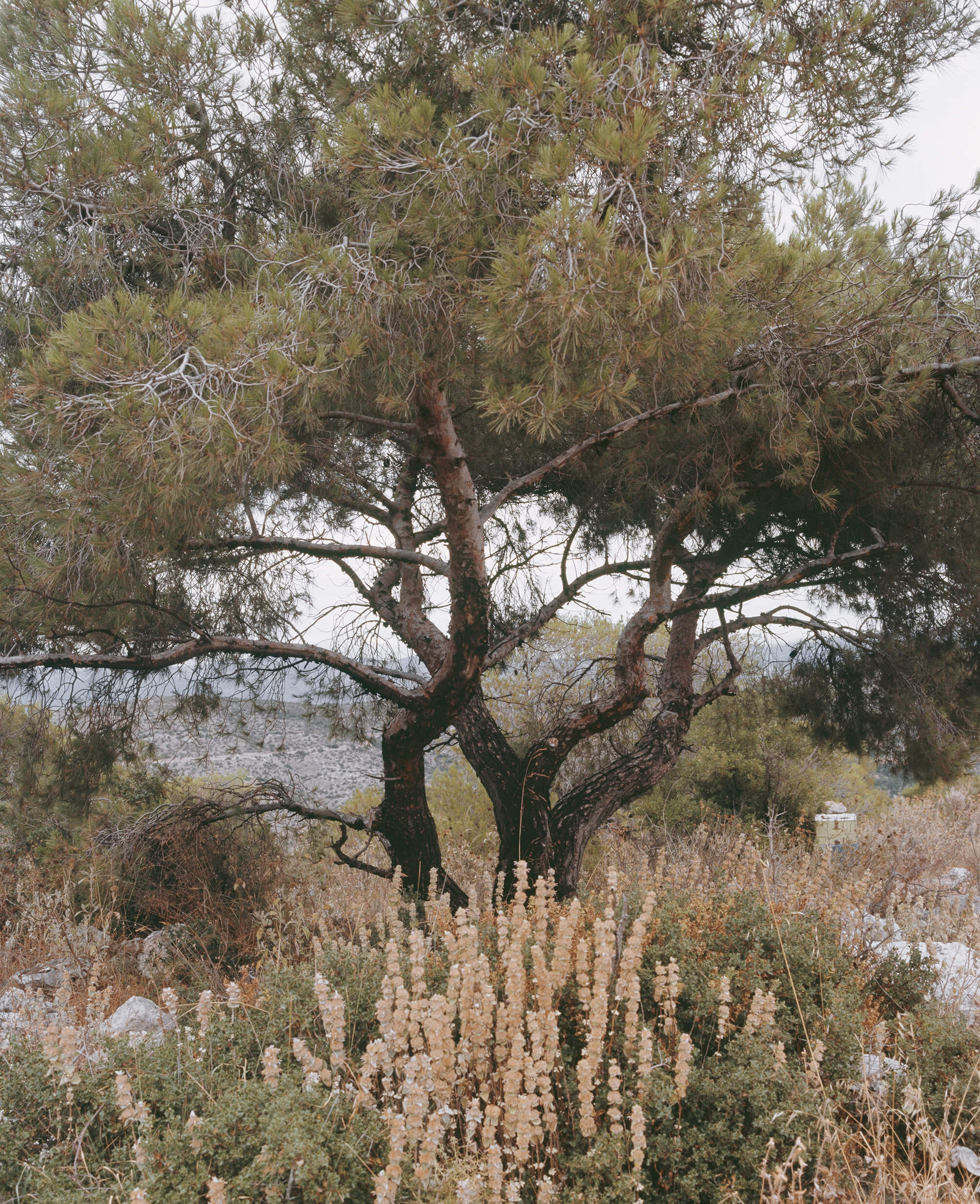
In the world of National Geographic, white people overlooking a landscape are not uncommon. “The Red Shirt School of Photography” was a label used to describe National Geographic photographers who allegedly brought red clothing and props with them on assignment to put on their subjects in order to make better photographs when working with Kodachrome film, which is famous for its capability of rendering rich colors. Overlooking a landscape wearing red, the observer asserts dominance over the land. They glorify it, seeing a country that is beautiful, rich in resources, and therefore “worth taking”.
Max Pinckers (°1988, BE) and Victoria Gonzalez-Figueras (°1988, CA) are based in Brussels, Belgium. They have been working together for the past ten years on documentary photography projects. Victoria works in the cultural field as a researcher and producer. Max is a speculative documentarian, teacher and occasional writer on photography. They are married, in love, and have a son. Victoria has consistently assisted Max in his projects as a production manager, but they have recently been making new work together as co-authors. “Double Reward” is the first such project.
In spring 2024 the-documents.org and Trigger co-publish a series of online articles with a focus on the meeting ground between photography and the document.
The planet Uranus should have followed a course as predicted by Newton’s laws. It didn’t. There were ‘residuals’, the 19th-century observers said: irregular data, which had to be interpreted as Uranus deviating from the projected trajectory. They could think of three possibilities. A) The planet Uranus was too far away from the Sun, which might render the Law of Gravitation invalid. B) The observations were incorrect. C) There was another planet, still further and yet unknown, with its own gravitational field and pull, causing Uranus to deviate from its course.
Following hypothesis C, astronomers predicted the position of a planet with a gravitational field, influencing Uranus, by means of mathematical calculations. Telescopes were directed to that calculated spot. There was a luminous point, with a touch of bright azure blue.

A seminar on spectroscopy: how, by splitting light into different, separate rays, it becomes possible to deduct the chemical composition of stars and planets far beyond our reach, as those elements have an effect on the light that reaches the spectroscope. Beautiful graphs presenting colour in schemes of black and white. From the moment the course gets into the physics of light, my mind wanders off. What approaches the observer turns blue, what elongates itself becomes red. The teacher’s leather shoes squeak as he goes back and forth between his self-made spectroscope and the desk. Redshift. Blueshift.
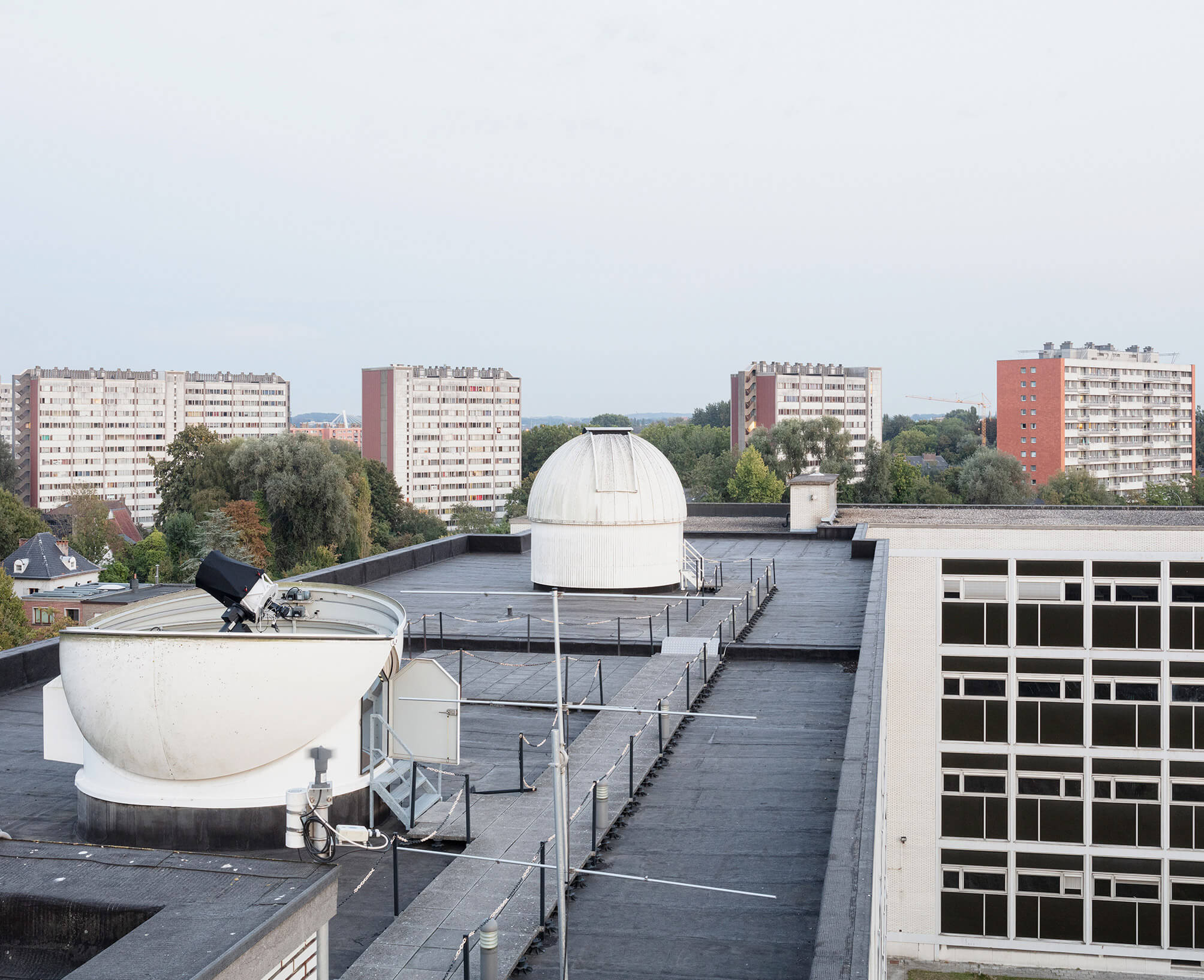
We meet him a couple of weeks later on the rooftop of a university building. He opens one of the half-domes. The sound of the mechanics is as obtuse as the shape it alters. A command on the computer based on coordinates: above our heads, the telescope slews slowly, only to halt at an apparently indistinct black region. From within the dome, we send ourselves an email with the photographs that we took of Neptune.
University classes will start in a couple of weeks. The city air is crisp. The roundabout below is strangely calm. On the horizon, the canopy of a southern forest delineates the sodium-lit sky.
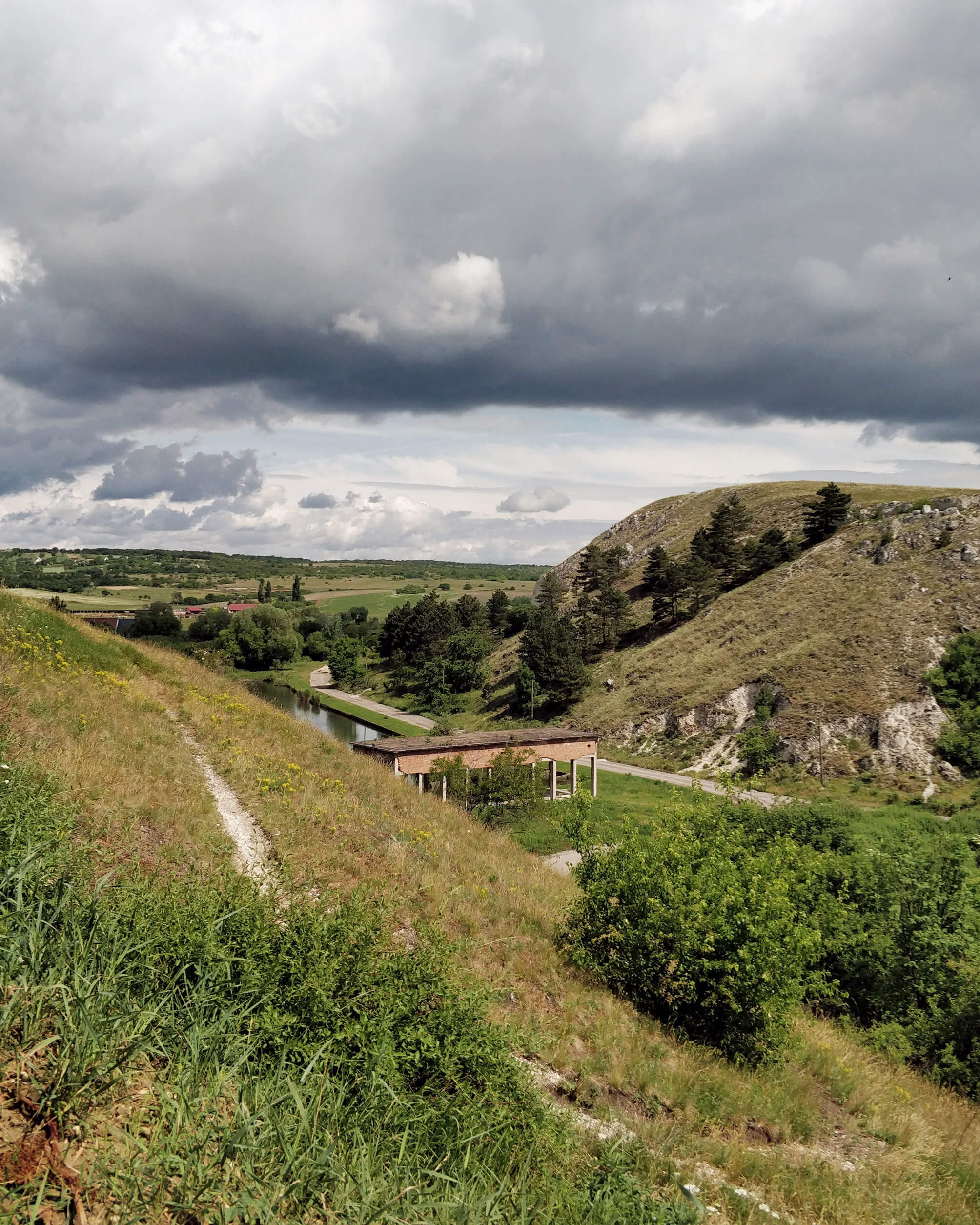
During the 1950s, as part of the communist reconstruction, a large coal/gas power plant was built close to the village of Inota, Hungary. This is the place where I grew up. It operated until about 1994. In the run-up to the final shutdown of the operation they gradually lowered its output. By this time the coal mines in the neighboring city had shut down as well due to the diminishing yield of the low-quality brown coal they had mined for the purpose of fueling the power plant. This resulted in mass unemployment and general decline in the area. The small lake in the photo is an artificial reservoir that collected all the water from the nearby streams. The substantial flow of one of those rivers powered about 11 water-driven flour mills; I know this on account of my grandmother, who would often pick up bags of flour for bread.
The ruin in the photograph once was a pumping facility that drove the water from the lake to the power plant about 3 kilometres away. In the years following the systemic change of Hungary and its celebrated evolution towards a western-type capitalism in ‘89-’90, the rules of ownership and the perception of public and private property were somewhat elusive. The lack of state control resulted in a transfer of public property to private hands on a monumental scale throughout the whole country, and – by extension – the Eastern Bloc. At the time some of the village dwellers of Inota, driven by the force of a major change and the prospect of a new, prosperous future of capitalist entrepreneurship, gathered to disassemble the water-pumping facility along the artificial lake. Slowly, day by day, under the mist of this elusive moment, they carried away carriageful after carriageful of bricks, disassembled from the facade of the building. It was perhaps a way of taking revenge, but certainly also claiming the moment’s opportunity. The bricks made their way into the walls of the new-built family homes of some of the villagers. The former water pumping facility became a sort of material reservoir for the construction of a new future. The transformation from a water reservoir to a material (and ideological) one and its subsequent exhaustion, left a ruin that has remained untouched for the last 30 years. The bricks that were difficult to reach were left in place, thus forming a curtain around the upper part of the building just above the pillars. Freed from all perimeter walls, the leftover structure appeared as a pavilion-like, open floor plan.
The cliffs at the sides of the valley on the photo served as the location for the film My Way Home (Így Jöttem, 1965) by the iconic Hungarian filmmaker Miklós Jancsó, about a 17-year-old boy who falls prisoner to the Russian army and forms a friendship with one of the foes. The film is said to display all the main themes of the director: the psychological presence of landscape, the randomness of violence and the arbitrary nature of power.
In the distance a formation of meadows can be seen in the photograph. Those meadows make up 16 acres of land that were given to my grandfather and subsequently inherited by my mother. It was a reparation for having been stripped of their wealth by the Soviet establishment in the 1950s. The worth of the land is a couple thousand euros as of today. It is part of the largest consistent nature reserve area of the EU.
While standing on the cliffs and looking south-eastward, the power plant can be seen. The orientation of the photograph is approximately north facing.
Turning southwards one can see the stone cellar, about a kilometre away, where my grandfather’s adolescent sister had spent more than a year, while two German SS officers occupied their family home. During the advancement of the Red Army, a Russian soldier, entering the cellar, attempted to take advantage of her. The soldier’s superior intervened and shot him in the head without hesitation. My parents store potatoes and apples in the cellar to keep them from rotting in the summer and freezing in the winter. It is easy to say when a potato or an apple comes from the cellar; it has an unmistakable, musty taste.
Márk Redele pursues projects that fundamentally relate to architecture and its practice but rarely look like architecture. www.markredele.com
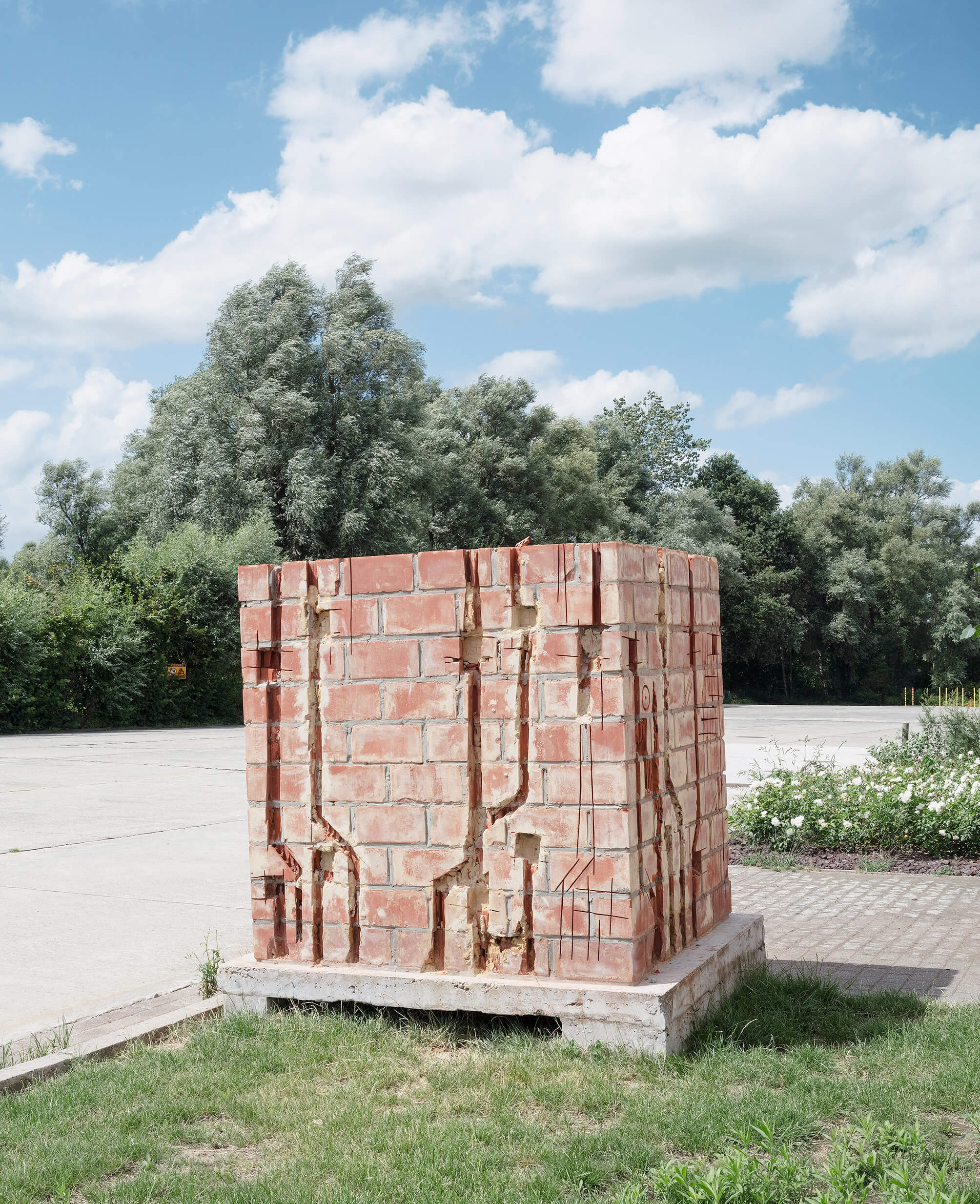
‘The masons in training pour a concrete slab and build four walls upon it in a stretcher bond. Then the block comes to our department and the students in the course Electrical installer (residential) can grind channels and drill cavities in it.’
[…]
‘It’s not always a success from the outset, but they learn quickly.’
[…]
‘Never grind horizontally, always vertically. Diagonally if there is no other way.’
[…]
‘Two fingers wide.’
[…]
‘After this it goes to the sanitary department. After the bell drilling, the demolition hammer follows and the masons make us a new block.’
Competentiecentrum VDAB, Wondelgem, July 2019.
First published in A+ Architecture in Belgium, A+ 279, Schools (August, September 2019), https://www.a-plus.be/nl/tijdschrift/schools