What constitutes a ‘document’ and how does it function?
According to the Oxford English Dictionary, the etymological origin is the Latin ‘documentum’, meaning ‘lesson, proof, instance, specimen’. As a verb, it is ‘to prove or support (something) by documentary evidence’, and ‘to provide with documents’. The online version of the OED includes a draft addition, whereby a document (as a noun) is ‘a collection of data in digital form that is considered a single item and typically has a unique filename by which it can be stored, retrieved, or transmitted (as a file, a spreadsheet, or a graphic)’. The current use of the noun ‘document’ is defined as ‘something written, inscribed, etc., which furnishes evidence or information upon any subject, as a manuscript, title-deed, tomb-stone, coin, picture, etc.’ (emphasis added).
Both ‘something’ and that first ‘etc.’ leave ample room for discussion. A document doubts whether it functions as something unique, or as something reproducible. A passport is a document, but a flyer equally so. Moreover, there is a circular reasoning: to document is ‘to provide with documents’. Defining (the functioning of) a document most likely involves ideas of communication, information, evidence, inscriptions, and implies notions of objectivity and neutrality – but the document is neither reducible to one of them, nor is it equal to their sum. It is hard to pinpoint it, as it disperses into and is affected by other fields: it is intrinsically tied to the history of media and to important currents in literature, photography and art; it is linked to epistemic and power structures. However ubiquitous it is, as an often tangible thing in our environment, and as a concept, a document deranges.
the-documents.org continuously gathers documents and provides them with a short textual description, explanation,
or digression, written by multiple authors. In Paper Knowledge, Lisa Gitelman paraphrases ‘documentalist’ Suzanne Briet, stating that ‘an antelope running wild would not be a document, but an antelope taken into a zoo would be one, presumably because it would then be framed – or reframed – as an example, specimen, or instance’. The gathered files are all documents – if they weren’t before publication, they now are. That is what the-documents.org, irreversibly, does. It is a zoo turning an antelope into an ‘antelope’.
As you made your way through the collection,
the-documents.org tracked the entries you viewed.
It documented your path through the website.
As such, the time spent on the-documents.org turned
into this – a new document.
This document was compiled by ____ on 15.09.2026 14:37, printed on ____ and contains 17 documents on _ pages.
(https://the-documents.org/log/15-09-2026-6843/)
the-documents.org is a project created and edited by De Cleene De Cleene; design & development by atelier Haegeman Temmerman.
the-documents.org has been online since 23.05.2021.
- De Cleene De Cleene is Michiel De Cleene and Arnout De Cleene. Together they form a research group that focusses on novel ways of approaching the everyday, by artistic means and from a cultural and critical perspective.
www.decleenedecleene.be / info@decleenedecleene.be - This project was made possible with the support of the Flemish Government and KASK & Conservatorium, the school of arts of HOGENT and Howest. It is part of the research project Documenting Objects, financed by the HOGENT Arts Research Fund.
- Briet, S. Qu’est-ce que la documentation? Paris: Edit, 1951.
- Gitelman, L. Paper Knowledge. Toward a Media History of Documents.
Durham/ London: Duke University Press, 2014. - Oxford English Dictionary Online. Accessed on 13.05.2021.

In Zaffelare, young men who were called for military service but could not be missed at home were advised by the local doctor to swallow a small ball of aluminium foil an hour before the examination. In the X-ray, a gastric ulcer appeared. They were rejected for service. It is uncertain whether the increased incidence of gastric ulcers among young men in Zaffelare was a cause for concern.

‘Exit at the dock and kill some rats. Go around the building to the left, killing the guard and his rats before flipping the switch. Another guard arrives kill him too, taking the medkits from both your victims. Enter the now open front door and kill the guard on the balcony and his friend who appears on the ground floor. Grab the shells from your second kill then shoot out the window and kill the Dobermans who jump through when you get too close.’
Tomb Raider II. The Complete Guide to the Dagger of Xian. Downloaded from http://www.the-spoiler.com on 4 August, 1999, at 15:03.

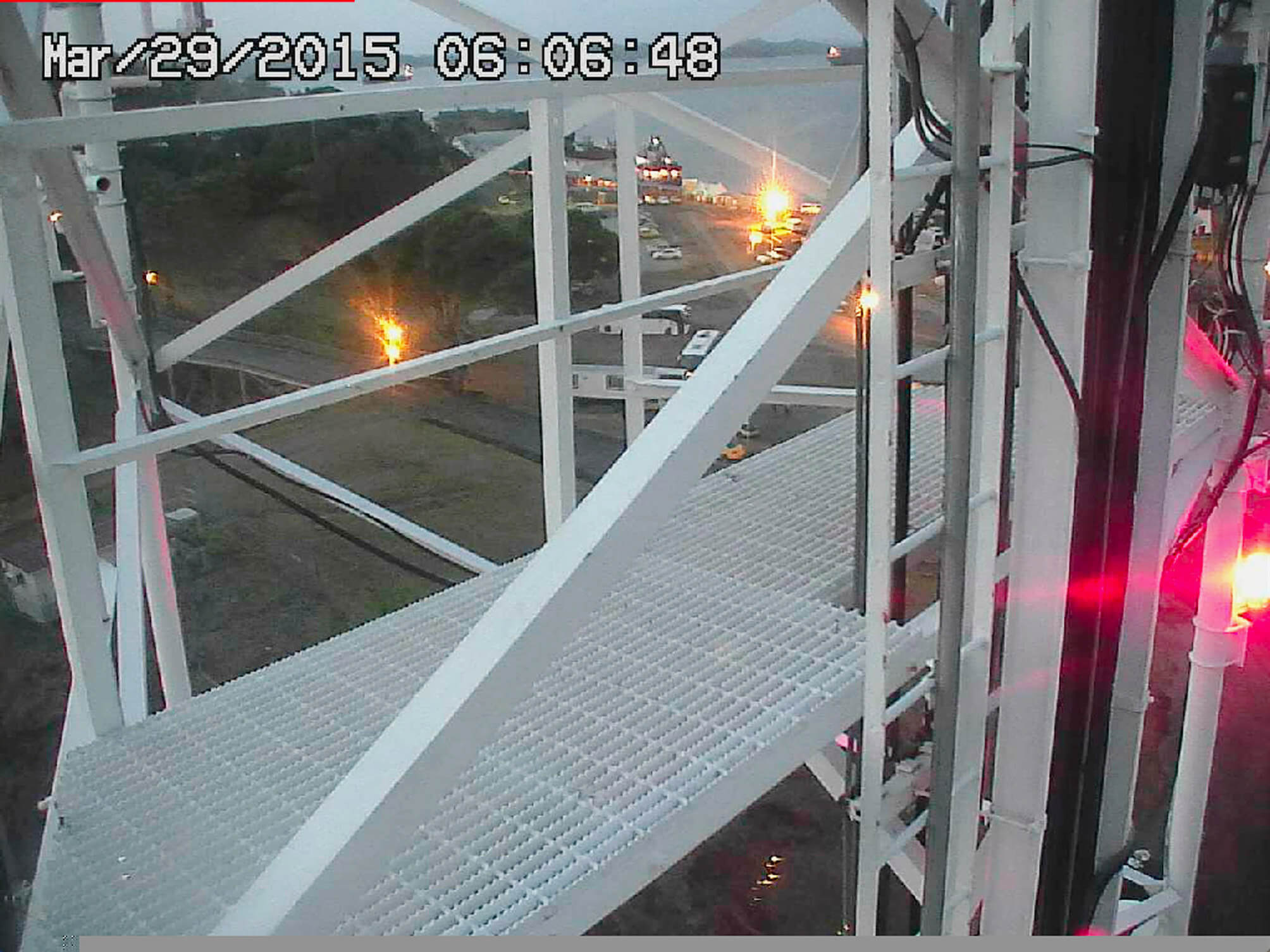
On March 23th 2015, a high pressure system above Panama Bay blew strong winds landwards. At the Gatun locks, one of the webcams overlooking the Canal neglected the traffic and briefly captured its own images. The ship’s presumed passage through the Gatun locks wasn’t recorded by this camera and the AIS-transponder did not save any data of the ship’s transit from the Pacific to the Atlantic side of the canal: the Authenticity managed to swap oceans undetected.
On February 16th 2016, the transponder still signals the ship near the port of Bahia Las Minas. The current is calm, the ship has been practically immobile for a year.
First published in: De Cleene, M. Reference Guide. Amsterdam: Roma Publications, 2019
Webcam Gatun Locks, Panama Canal, http://www.pancanal.com
On a morning sometime in January 2022 at the dinner table, after a cozy sleepover, she took a deep sigh full of relief and cracked a charismatic smile while looking at the festive breakfast that was in front of us, saying how she felt. Alone in a park I wrote in my notes: ‘Spoiled & Blessed’. Half a year later I was going through my purse, dehoarding some stuff I gathered in the past weeks. I stumbled upon an old receipt from the laundromat. It had a drawing on it that I drew some time ago, when we were having drinks to round up an exhausting project that took way too much time and energy. After putting the receipt back in my purse, I returned to my work to finish some stuff. Back at my computer I emailed myself: ‘don’t forget to plant sunflower seeds’.
Tjobo Kho is a graphic designer and publisher based in Amsterdam. Since 2017 part of the floating collective and publishing platform OUTLINE, and recently started his own publishing house no kiss?.

When discussing the sensitivities around viewing British propaganda photographs from the 1950s with Mau Mau veterans in Kenya, it became clear that it was not the graphic photographs of atrocities that would trigger the veterans emotionally, but a series of straightforward portraits of men who had pledged allegiance to the British colonial administration. These portraits were catalogued along with the men’s names and another photograph of each one of them signing a declaration of collaboration. I was advised by the representative of the veterans’ association that it would be too dangerous to share these photographs with the veterans.
22 superimposed portraits from the file CO 1066/7: Kikuyu Loyalists at The National Archives (UK) depicting Kikuyu loyalists after signing a declaration of collaboration with the British on 27 January 1954.
From the series State of Emergency, Max Pinckers et al. (2024)
Max Pinckers (°1988, BE) and Victoria Gonzalez-Figueras (°1988, CA) are based in Brussels, Belgium. They have been working together for the past ten years on documentary photography projects. Victoria works in the cultural field as a researcher and producer. Max is a speculative documentarian, teacher and occasional writer on photography. They are married, in love, and have a son. Victoria has consistently assisted Max in his projects as a production manager, but they have recently been making new work together as co-authors. “Double Reward” is the first such project.
In spring 2024 the-documents.org and Trigger co-publish a series of online articles with a focus on the meeting ground between photography and the document.

Cathedral glass, or Flemish glass, lets light through, but distorts visibility. It can show something or someone is present behind it, but not in detail. Often used in front doors, it marks the opaque edge between the private and the public sphere, laying bare their presence, without disclosing their contents.
A blue hand, or a spider (Cyriopagopus lividus), traces the cracks that testify to the fact that the jammed door had to be closed with force. The hinges need oiling. Cobalt blue tarantulas are said to be extremely defensive.


Because an acquaintance of the family was a missionary, the postage stamp collection had a large quantity of stamps from the Philippines. You had to boil water, hold the empty envelope above it, wait until the glue and the missionary’s saliva loosened and evaporated, and then gently peel off the stamp. Then, it was put on a piece of pink blotting paper. Once dry, the stamp was slid into a tailor-made booklet.
Between a Horta building’s facade and King Baudouin’s portrait, there are exotic fish, religious scenes, butterflies, and advertisements for NGOs.
Mango is the Philippines’ national fruit. Pope John Paul II visited it in 1995. There was a guerrilla unit in Northwest Pampanga during WWII.

At the State Archive in Kortrijk, I am leafing through a 1955 photo album of the construction of the provisional church in Lokeren by the famous furniture company Kunstwerkstede De Coene. Gigantic wooden, prefabricated beams structure the building. It is cold. An old man in a grey suit shuffles between the racks to look up the date of birth of his great great grandmother. Snow covers the unfinished provisional roof. A bus passes, I reckon, through the pouring rain.
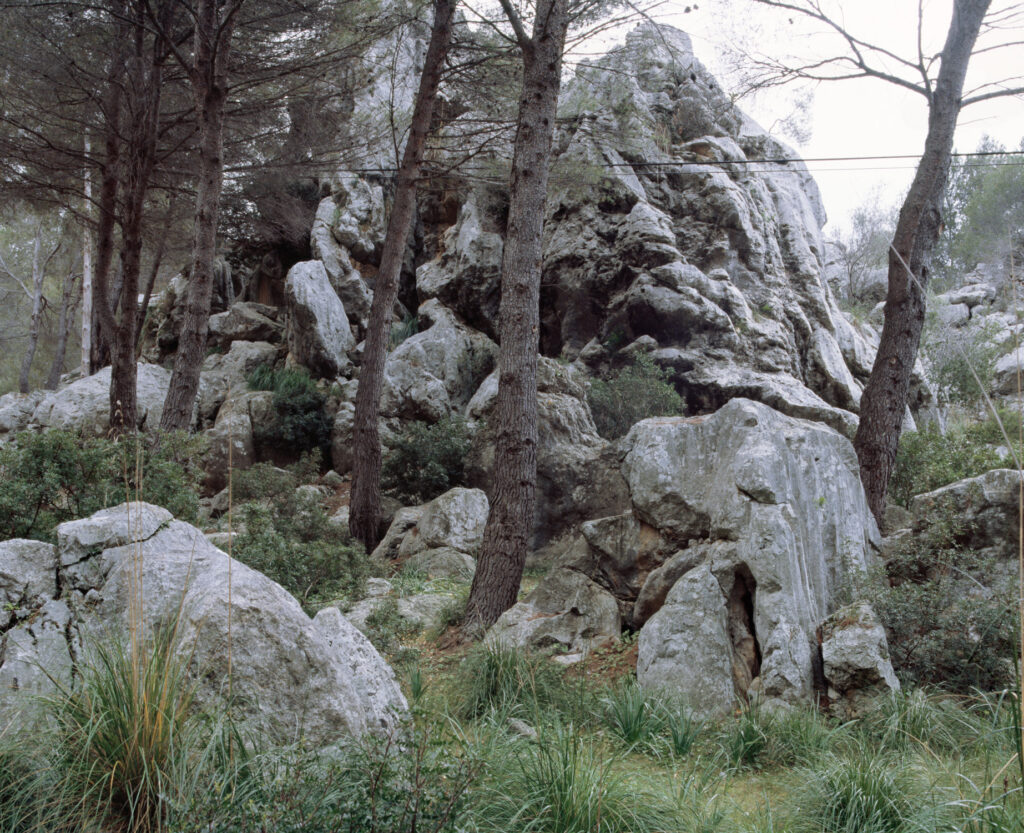
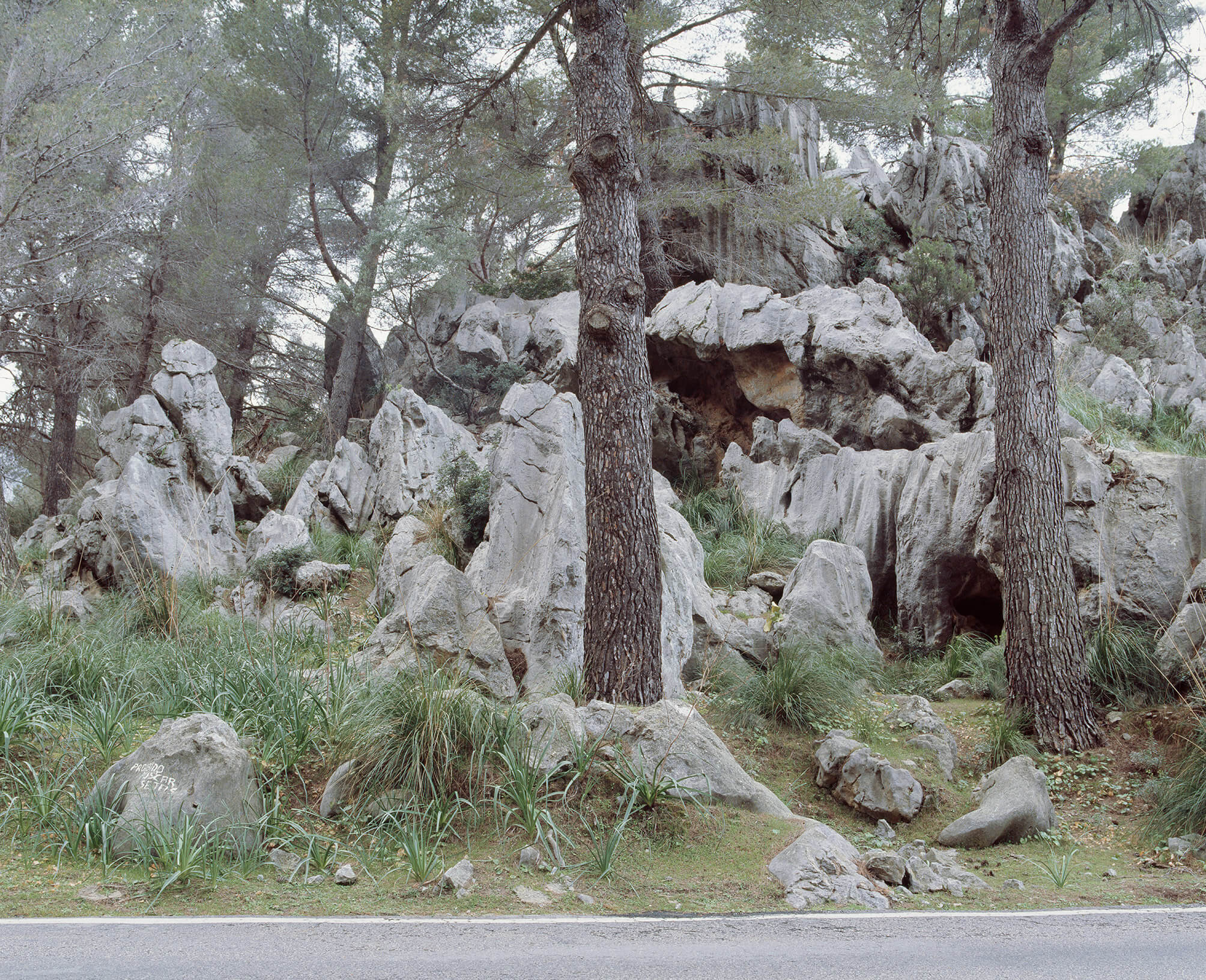
I must have driven past this rocky landscape about sixteen times, going back and forth between viewpoints and the house the parents of a friend let me stay in. On the last day, I left early for the airport, pulled into a lay-by, took my tripod and camera out of the trunk of the red Volkswagen Polo rental car and made two photographs.1 It was only when I got home, had the film developed, scanned it and was removing dust particles from the file, that I discovered the hand painted text on the rock: ‘PROIBIDO BUSCAR SETAS’.
‘Exit at the dock and kill some rats. Go around the building to the left, killing the guard and his rats before flipping the switch. Another guard arrives kill him too, taking the medkits from both your victims. Enter the now open front door and kill the guard on the balcony and his friend who appears on the ground floor. Grab the shells from your second kill then shoot out the window and kill the Dobermans who jump through when you get too close.’
Tomb Raider II. The Complete Guide to the Dagger of Xian. Downloaded from http://www.the-spoiler.com on 4 August, 1999, at 15:03.
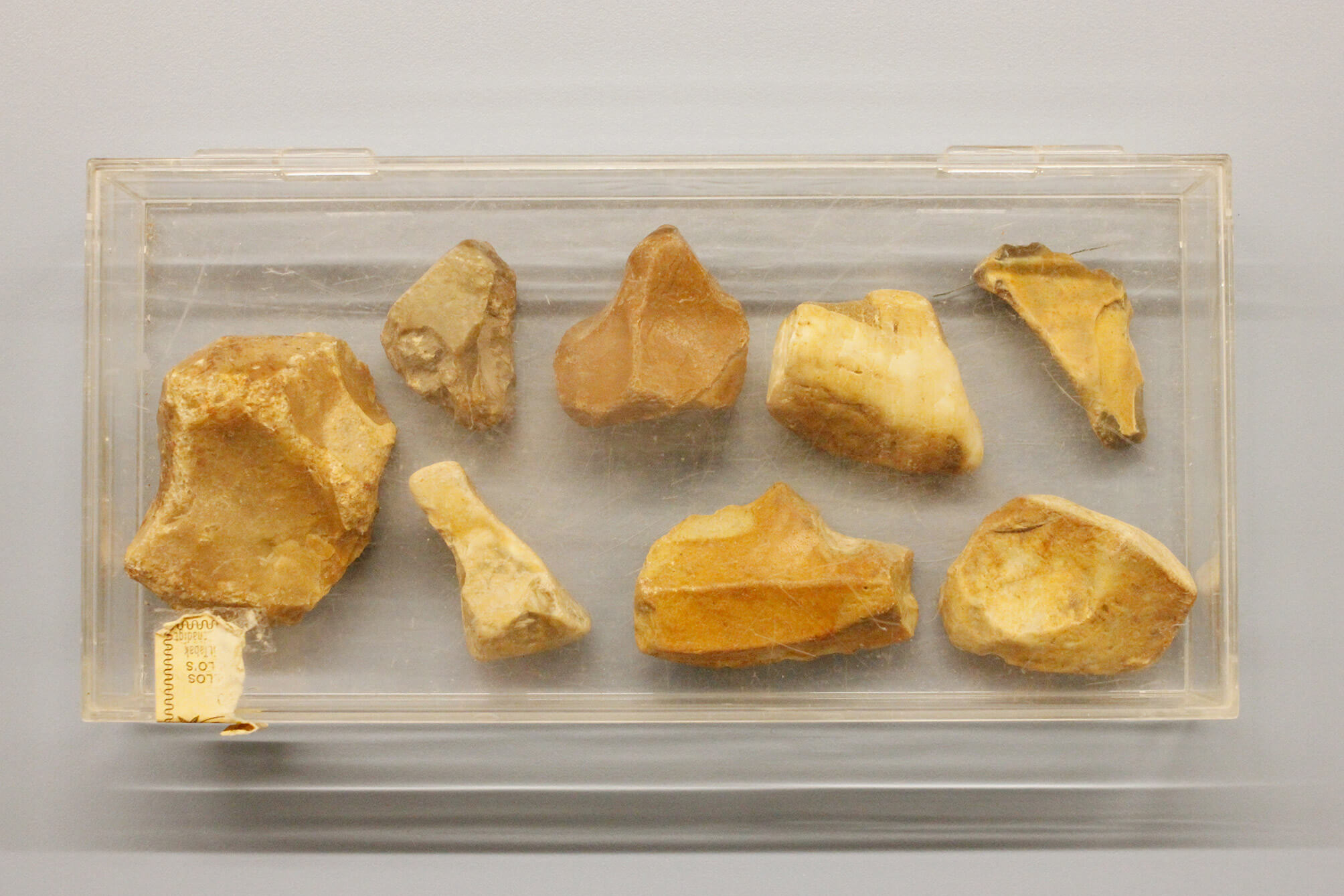
A cigar box, standing at the back of a shelf next to the heating installation, with in it silex-like stones with what seem to be traces of prehistoric usage.
In the garage, there were papers (the archive of O. Clemminck) and objects (stones, tiles) left to us by a man who had worked at the city archive. He was an acclaimed expert on our village’s history.1
A recent study by professor Philippe Crombé at Ghent University states that during the last Ice Age, in the region where I grew up, there was once a great lake, with, at the shores, proven presence of prehistoric man. As a kid, we dug up shells with a toothbrush, and set a perimeter with plastic tape. The former presence of a tavern where my parents now live, and the restaurant which still serves seafood at the other side of the road, prevented accurate dating.
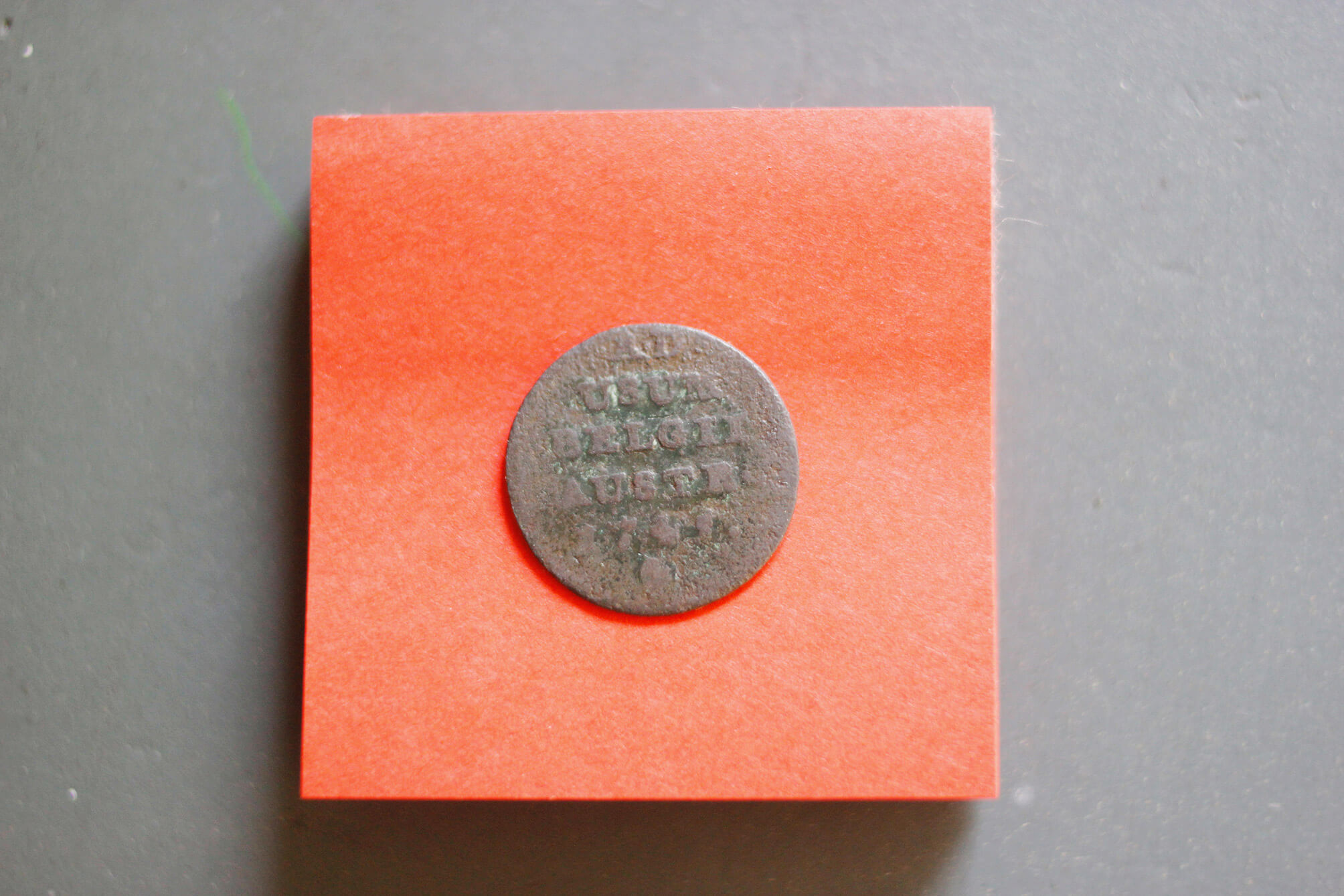
The oldest coin in the collection has darkened over time, but upon inspection, the text ‘AD USUM BELGII AUSTR’ (left) and the contours of a (female) head (right) can be discerned. A quick search learns it stems from the middle of the 18th century. The coin was made and used in the Austrian Netherlands, reigned by Maria Theresa, who is the one depicted. My mother recollects finding it in the backyard when she was a kid.
About 40 years later, the euro was introduced. The ringbinder with my mother’s coin collection was taken from the shelf. A dilemma came to the fore: we wondered if we should keep one of each existing Belgian coin and banknote and put them in the binder, alongside Maria Theresa, or if we should exchange them for the new European currency. The decision to keep a coin of five Belgian francs was not difficult to make, but as the amount raised, the answer was increasingly hard to give. This was an assessment of the old currency’s emotional and projected historical value, compared to its current financial worth. It was a decision based on investment principles.
To accentuate the value of the Maria Theresa kronenthaler of 1 liard, I put the coin on a pile of red post-it-notes when photographing it. Coins like these are sold on eBay for prices ranging from 0,70 euros to 16 euros.

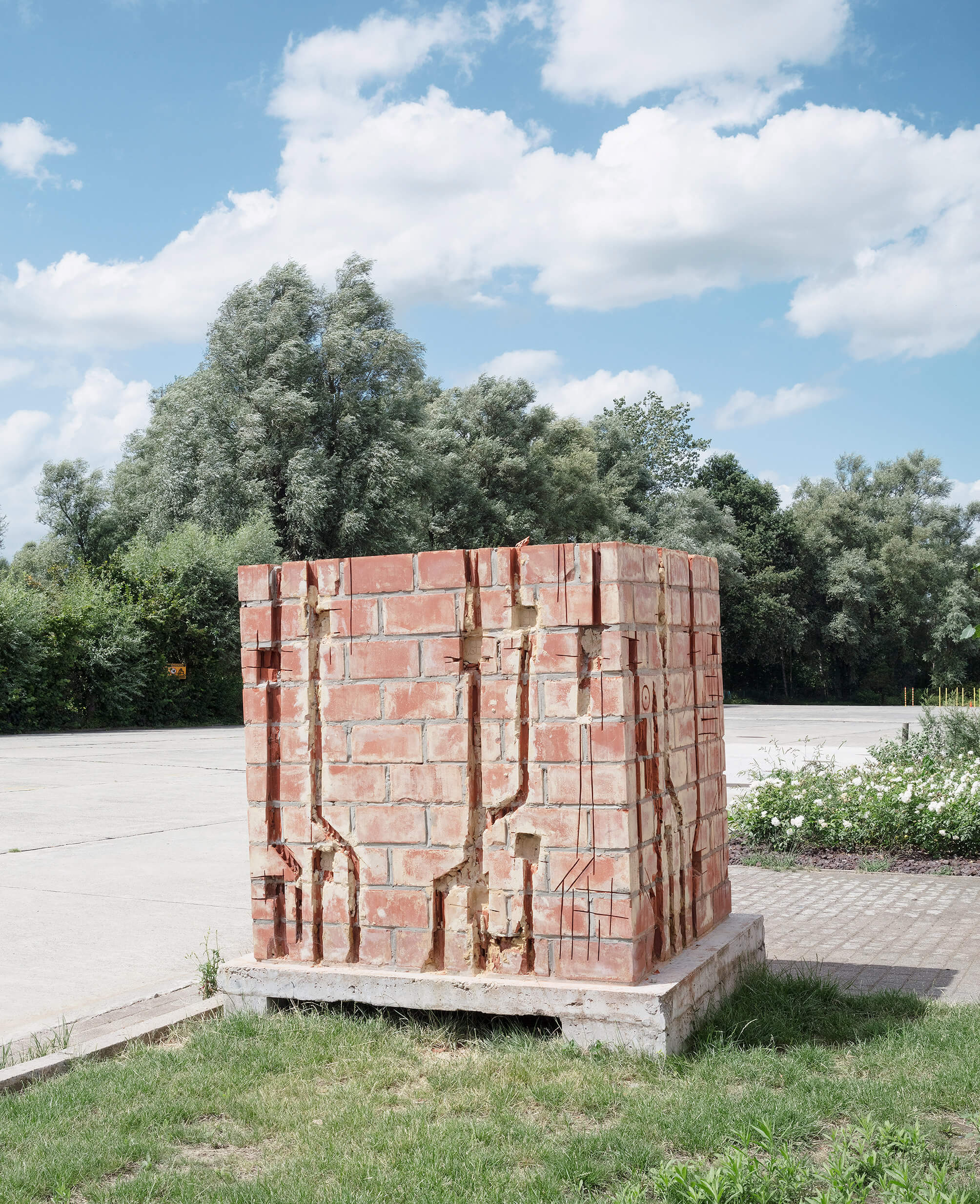
‘The masons in training pour a concrete slab and build four walls upon it in a stretcher bond. Then the block comes to our department and the students in the course Electrical installer (residential) can grind channels and drill cavities in it.’
[…]
‘It’s not always a success from the outset, but they learn quickly.’
[…]
‘Never grind horizontally, always vertically. Diagonally if there is no other way.’
[…]
‘Two fingers wide.’
[…]
‘After this it goes to the sanitary department. After the bell drilling, the demolition hammer follows and the masons make us a new block.’
Competentiecentrum VDAB, Wondelgem, July 2019.
First published in A+ Architecture in Belgium, A+ 279, Schools (August, September 2019), https://www.a-plus.be/nl/tijdschrift/schools
During a two hour tour, H.V. (head of the science collection) guided us from the library to the observatory and back. Along the way, he touched upon various rarities: one hundred ninety-five volumes of the Encyclopédie Méthodique (according to H.V. the most complete copy left in the world), the severed summit of Mont Blanc (‘Actually de Saussure brought back a triangular piece of rock from just below the snow line near the summit’), an original copy of the publication on the infamous Lügensteine (‘These date back to the time before the hoax was unveiled’)…
In guiding us from room to room, H.V. piled oddity upon curiosity. He showed a particular interest in all things fish-related.
First published in: De Cleene, M. Reference Guide. Amsterdam: Roma Publications, 2019

Theory becomes the apparatus. A metonymic relation. A trope of nearness. Miniscule gravitational disturbances become known as a kilometres-long, L-shaped facility. Particle physics: a circular tunnel beneath the Geneva hinterland.
Somewhere in the early 1970s, our grandfather, a carpenter by trade, buys a telescope1,2, installs it on the lawn, and points it over the hedge. ‘I remember seeing the craters on the moon. The rings of Saturn,’ he told us.
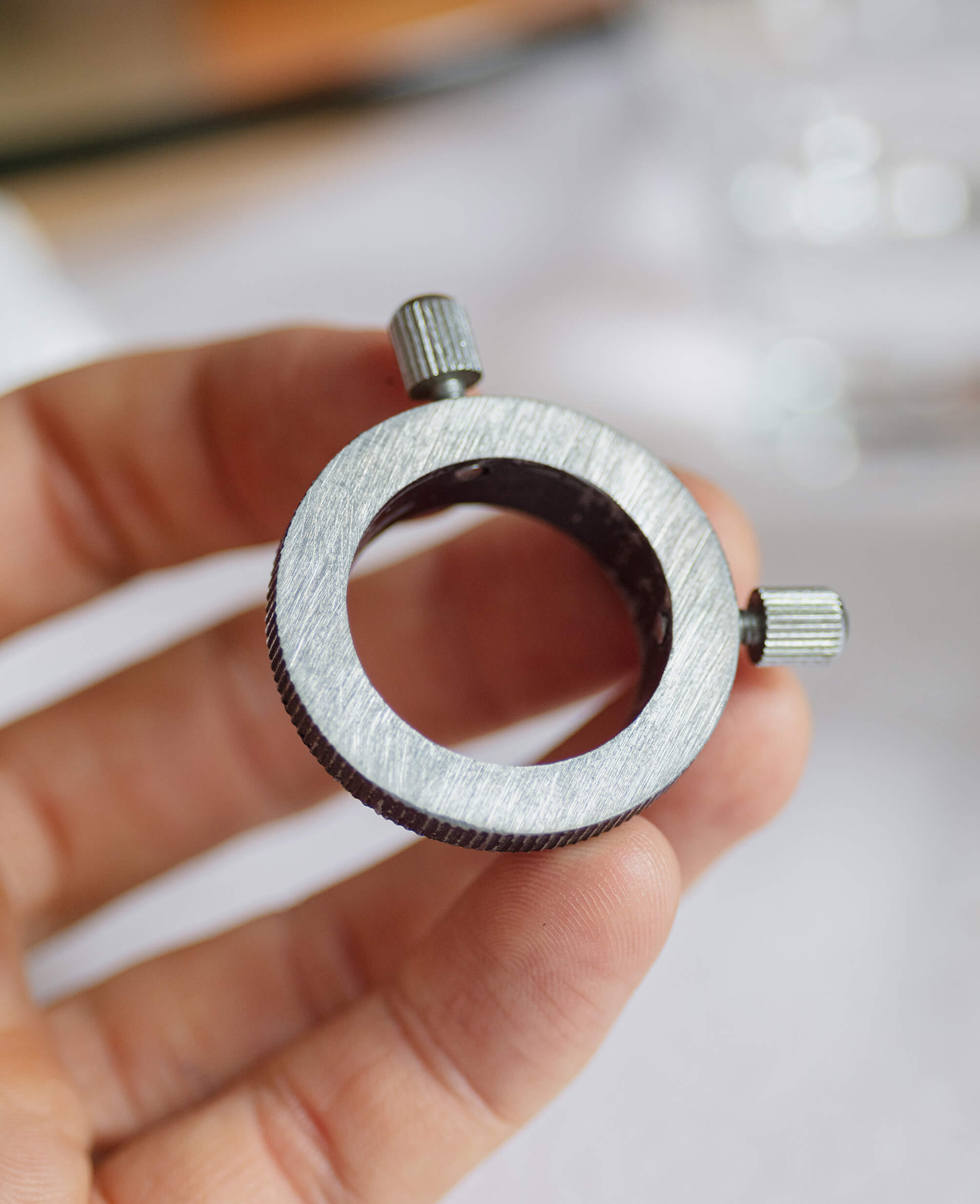
In the shabby plywood box I made to transport the telescope lies a metal ring I ground flat to be able to attach my camera and focus it on infinity.
The hedge, now three metres in height, shields the lower part of the sky from sight and needs pruning.
Tasco / Reg. No. 83140 / 140 Power / Reflection telescope / D=3” / F=700mm / Coated optics / Model No. 3TE-R / Japan
‘It never fails to draw you in closer – the moment when you raise a pair of binoculars to your eyes. In that instant, life is magnified clearly; as if just for you. The curious bird that becomes instantly identifiable. The night sky that never looked the same after that night. The actual sweat running down the brow of a sports hero. The sun scattering light across a clear stream as you trace for signs of a Rainbow trout. These are the moments of magic that Tasco delivers. Simple, pure and honest. And for another split-second, you’re struck by the quality of experience weighed against the value you’d previously placed on “just a pair of binoculars.” Welcome to a world where, “Seeing is Believing.”’ (Tasco Manifesto).

Besides the scale indicating the length in centimeters, and the marks made by using it, a folding ruler displays other marks. These are the marks found on the weber broutin www.weber-broutin.be folding ruler, from left to right:
- 2m (in a frame, between 1cm and 2cm); indicating the total length of the folding ruler.
- a hexagon, barely visible, punched into the wood (between 2cm and 3cm); unknown signification.
- LUXMA (in a frame, between 4cm and 5cm); the manufacturer of the folding ruler (different from the company who ordered the folding ruler, their (the company’s, i.c. weber-broutin’s) name is printed on the sides of the ruler, and is only readable when the ruler is folded together for at least 50% (=1m).
- III (in an oval, between 6cm and 7cm); indication of the preciseness of the scale in centimeters, with ‘I’ in roman numbers meaning the most precise, and ‘IV’ in roman numbers meaning the least precise. (It is therefore not entirely certain that the ‘III’ on weber-broutin’s folding ruler can actually be found between 6cm and 7cm.)
- D 99 (in an oval, probably between 7cm and 8cm, see argument mentioned above); unknown signification.
- 1.1.60 (in an oval, probably between 7cm and 8cm, beneath D 99), signification unknown.

Here, on his kitchen table, Marcel Poulet, an expert on the stoneware tradition in the center of France, is explaining his archeological work on ‘whale ovens’.
I started collecting images and plans of ovens, for the beauty of those abstract technical lines and for what we can learn from them. In gathering the material that makes up this Atlas, and in sharing interests and knowledge, I learned that many people know about ovens, either in their homes, gardens, ateliers, factories, streets… Everyone transforms things through heat. Even bodies need warmth and produce some themselves.
Clementine Vaultier’s interests, although trained as a ceramist, are in the warm surroundings of the fire rather than the production it engenders.
