What constitutes a ‘document’ and how does it function?
According to the Oxford English Dictionary, the etymological origin is the Latin ‘documentum’, meaning ‘lesson, proof, instance, specimen’. As a verb, it is ‘to prove or support (something) by documentary evidence’, and ‘to provide with documents’. The online version of the OED includes a draft addition, whereby a document (as a noun) is ‘a collection of data in digital form that is considered a single item and typically has a unique filename by which it can be stored, retrieved, or transmitted (as a file, a spreadsheet, or a graphic)’. The current use of the noun ‘document’ is defined as ‘something written, inscribed, etc., which furnishes evidence or information upon any subject, as a manuscript, title-deed, tomb-stone, coin, picture, etc.’ (emphasis added).
Both ‘something’ and that first ‘etc.’ leave ample room for discussion. A document doubts whether it functions as something unique, or as something reproducible. A passport is a document, but a flyer equally so. Moreover, there is a circular reasoning: to document is ‘to provide with documents’. Defining (the functioning of) a document most likely involves ideas of communication, information, evidence, inscriptions, and implies notions of objectivity and neutrality – but the document is neither reducible to one of them, nor is it equal to their sum. It is hard to pinpoint it, as it disperses into and is affected by other fields: it is intrinsically tied to the history of media and to important currents in literature, photography and art; it is linked to epistemic and power structures. However ubiquitous it is, as an often tangible thing in our environment, and as a concept, a document deranges.
the-documents.org continuously gathers documents and provides them with a short textual description, explanation,
or digression, written by multiple authors. In Paper Knowledge, Lisa Gitelman paraphrases ‘documentalist’ Suzanne Briet, stating that ‘an antelope running wild would not be a document, but an antelope taken into a zoo would be one, presumably because it would then be framed – or reframed – as an example, specimen, or instance’. The gathered files are all documents – if they weren’t before publication, they now are. That is what the-documents.org, irreversibly, does. It is a zoo turning an antelope into an ‘antelope’.
As you made your way through the collection,
the-documents.org tracked the entries you viewed.
It documented your path through the website.
As such, the time spent on the-documents.org turned
into this – a new document.
This document was compiled by ____ on 14.12.2025 07:34, printed on ____ and contains 30 documents on _ pages.
(https://the-documents.org/log/14-12-2025-6724/)
the-documents.org is a project created and edited by De Cleene De Cleene; design & development by atelier Haegeman Temmerman.
the-documents.org has been online since 23.05.2021.
- De Cleene De Cleene is Michiel De Cleene and Arnout De Cleene. Together they form a research group that focusses on novel ways of approaching the everyday, by artistic means and from a cultural and critical perspective.
www.decleenedecleene.be / info@decleenedecleene.be - This project was made possible with the support of the Flemish Government and KASK & Conservatorium, the school of arts of HOGENT and Howest. It is part of the research project Documenting Objects, financed by the HOGENT Arts Research Fund.
- Briet, S. Qu’est-ce que la documentation? Paris: Edit, 1951.
- Gitelman, L. Paper Knowledge. Toward a Media History of Documents.
Durham/ London: Duke University Press, 2014. - Oxford English Dictionary Online. Accessed on 13.05.2021.

‘Exit at the dock and kill some rats. Go around the building to the left, killing the guard and his rats before flipping the switch. Another guard arrives kill him too, taking the medkits from both your victims. Enter the now open front door and kill the guard on the balcony and his friend who appears on the ground floor. Grab the shells from your second kill then shoot out the window and kill the Dobermans who jump through when you get too close.’
Tomb Raider II. The Complete Guide to the Dagger of Xian. Downloaded from http://www.the-spoiler.com on 4 August, 1999, at 15:03.

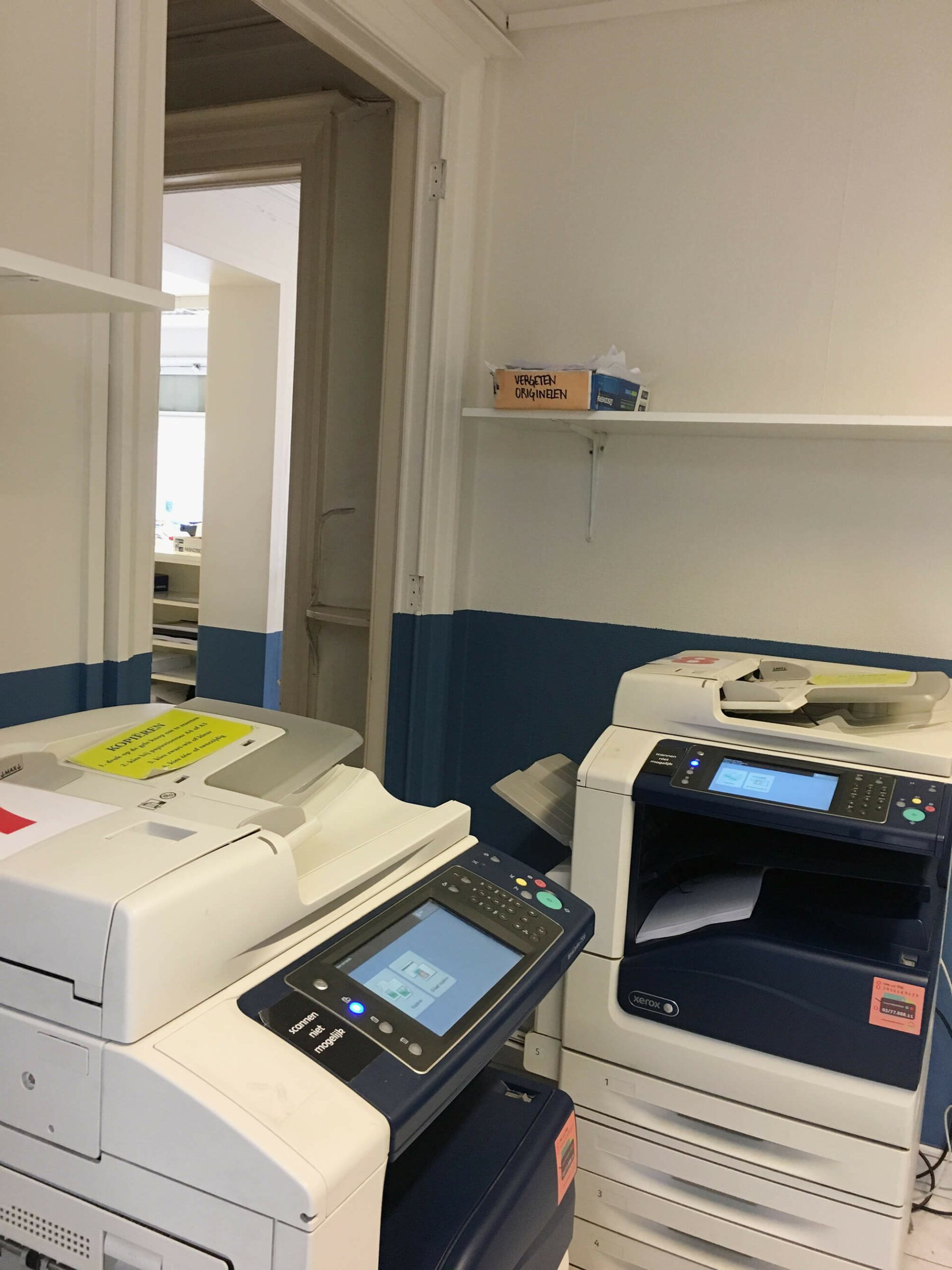
At the copyshop, on a shelf above photocopier 8, the lid of a box of paper serves as the container for ‘forgotten originals’.1
The book being copied: Didi-Huberman, G. La ressemblance par contact. Archéologie, anachronisme et modernité de l’empreinte. Paris: Les Editions de Minuit, 2008.
Shortly after crossing the Thur the couple reaches their car. They’re freezing. As the sun sets they drive through the mountainous landscape. The heating hurts their fingers.
The next day, they return, but the scene looks different. It’s warmer. The Thur appears to flow faster.

July. Our eight-month-old son has a fever. We have a hard time getting him to drink enough. The tally marks on the back of a tortellini-box keep track of the diapers he wets and the millilitres of milk and electrolytes he’s able to hold down.
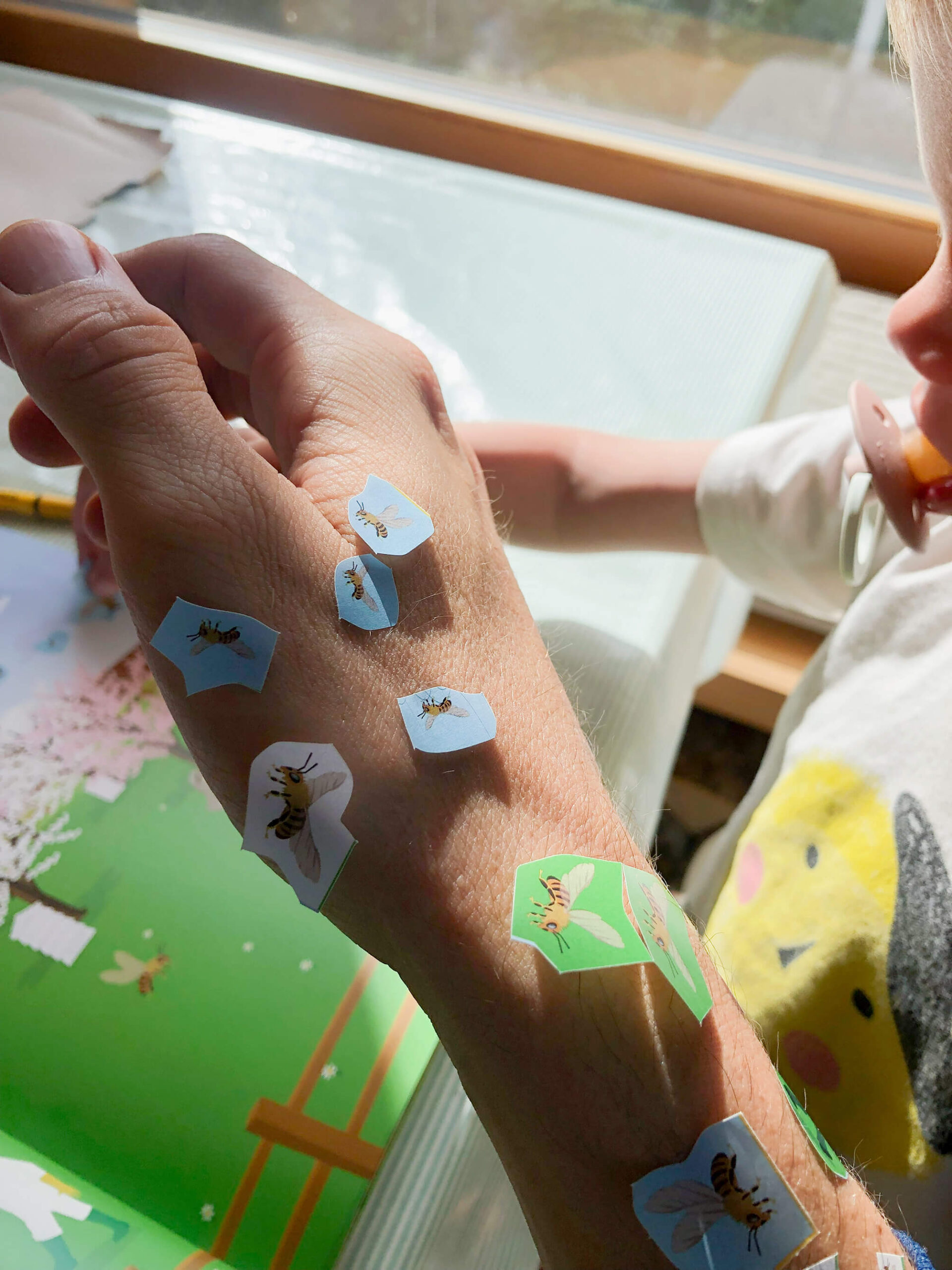
Stuck inside with worrying parents, a sticker-book about a farm is his brother’s favourite pass-time. Tired of having to go back and forth between the pastures and the sticker-filled sheets we decide to use my arm as a repository for animals that share a habitat.
The company Demuynck from Heist (B) has put the 2011 brochure of Dutch bicycle manufacturer Sparta on yumpu.com as an ePaper. According to yumpu.com, this was reportedly done on 28 September 2013. The leaflet is titled ‘Collection Overview 2011’. On pages 68 and 69, the bike is called K10, the frame says K-TEN, while a version presumably a bit older is usually for sale second-hand as K-10. The K10 is a ‘practical, compact city bike’, it is available in one unisex frame size 50 and it has an integrated cable lock. There is a loop at the back of the large tube to which the rest of the frame is mounted. This might be the end of that lock. There are optional carriers, front and rear, and there is an optional lighting kit. The recommended retail price is 299 euros.
Lars Kwakkenbos lives and works in Brussels and Ghent (B). He teaches at KASK & Conservatorium in Ghent, where he is currently working on the research project ‘On Instructing Photography’ (2023-2024), together with Michiel and Arnout De Cleene.

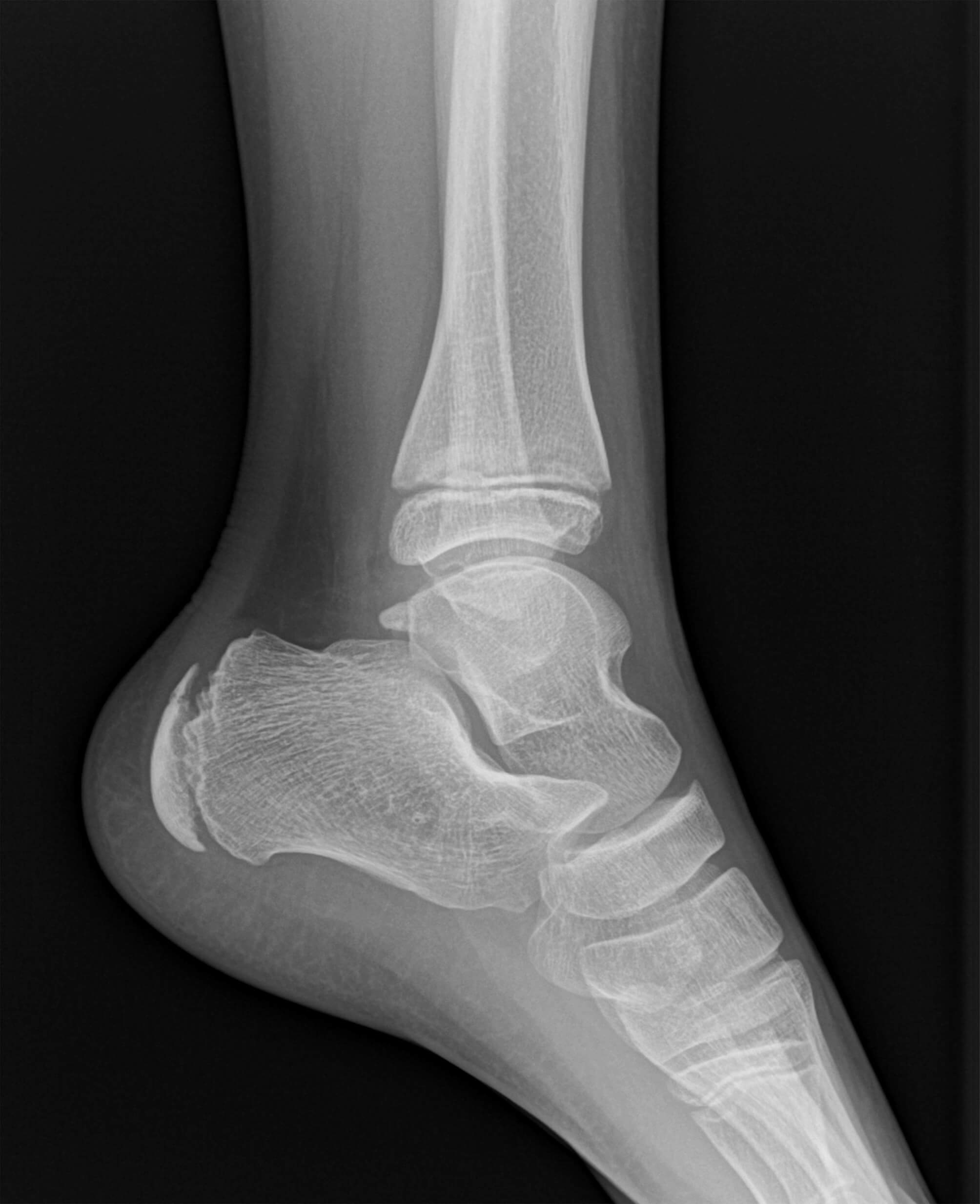
Yesterday I had my shoulder checked by a radiologist. He took an ultrasound and saw some minor inflammation of my right subscapularis. After giving me some advice – ‘we could give you a shot of cortisone in the shoulder. It would relieve you from your pain for six weeks and then, without proper exercise, you’d be back where you are now’– he walked towards the door. ‘I propose you do this exercise thirty times, three times a day.’ The radiologists put his right hand on the doorframe, his arm stretched, the weight of his body on it and then leaned forward and back again, while keeping his arm stretched. ‘This will increase the muscles around the sore subscapularis. It will take months.’ After giving me his advice, he sent me back into the dressing room. I put my shirt back on and went into the waiting room. The nurse called out my name, charged me 14,00 EUR and gave me a card. ‘This code will allow you to look at the images of the ultrasound at home’, she said.
Today I entered the code and password and – instead of my shoulder – found the röntgen-images of someone else’s broken heel.
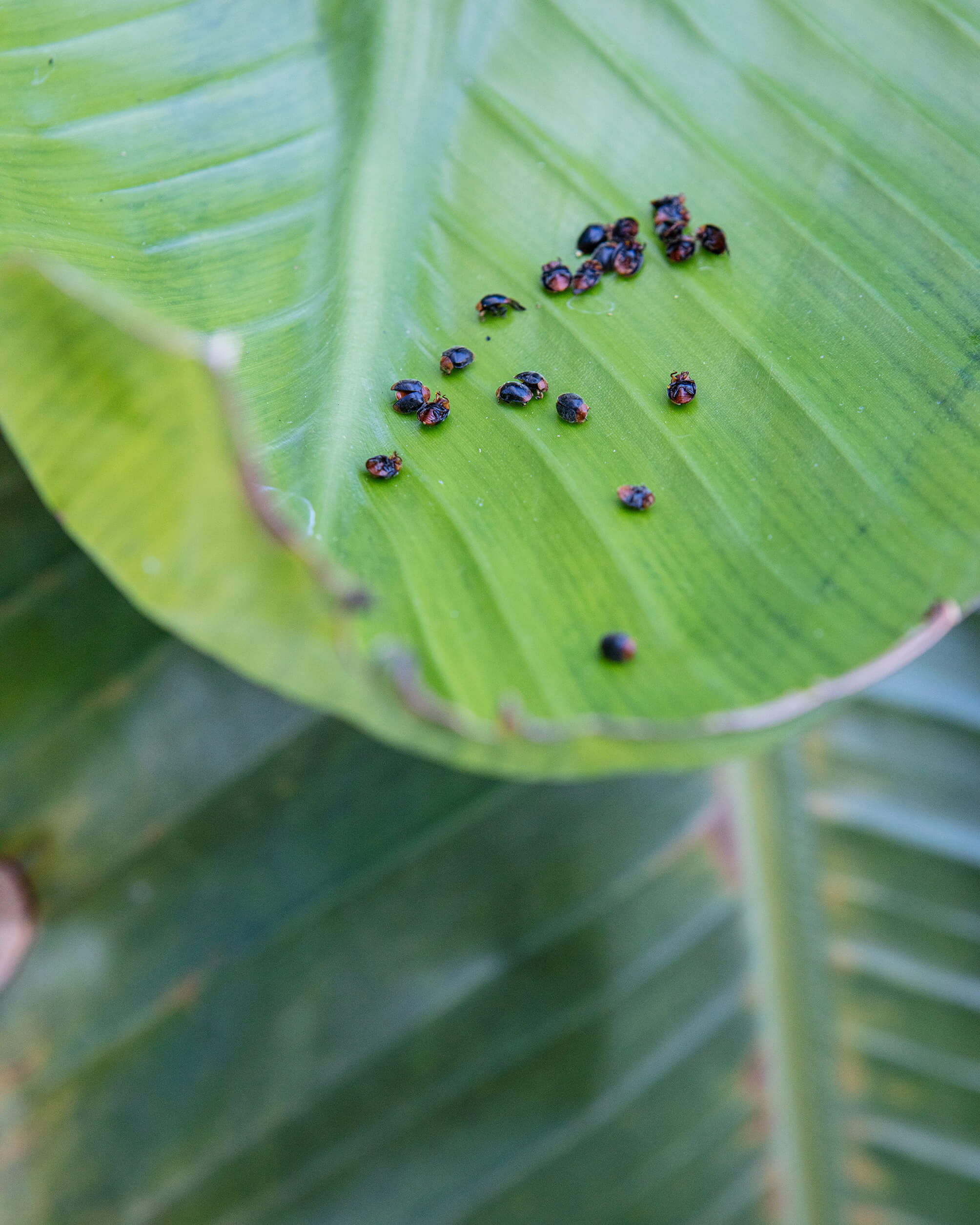
The Cryptolaemus montrouzieri is commonly known as the mealybug destroyer. This species of ladybird gets its nickname from its capacity to battle mealybugs in plantations and greenhouses.
The website waarnemingen.be that gathers observations of plants and animals in Belgium lists multiple observations in the wild of the Cryptolaemus montrouzieri. The website explains that ‘in (northern) Europe, the species is widely traded and used in greenhouses and will regularly escape from them. But this ladybird cannot survive our winters (yet?). Sightings within the Benelux must therefore be entered into the register as “escape”. However, the species is already established in the Mediterranean area.’ (our translation)
The larvae have a waxy covering that makes them look like the mealybugs they prey upon, allowing them to avoid being correctly identified by the ones they are about to devour.
In an attempt to get rid of the mealybugs on my plants, I ordered 25 adult ladybirds. They were dead on arrival.
https://waarnemingen.be/species/600135/
https://waarnemingen.be/observation/244840499/
https://en.wikipedia.org/wiki/Aggressive_mimicry
In Boarhunt, close to Winchester (UK), the fort houses the Royal Armouries’ artillery collection. It contains parts of the ‘Project Babylon’ space gun, the two part bronze Dardanelles Gun and a collection of French field guns, captured in Waterloo. On the lawn to the South of the fort two neat piles of fifteen1 36” shells flank a Mallet’s Mortar. Manufactured in 1857, the mortar remains unfired up to this day.2 In 1873, its inventor – the engineer and geophysicist Robert Mallet – publishes his translation of Luigi Palmieri’s Incendio Vesuviano. Before giving a lengthy account of his take on the present state of vulcanicity, he briefly introduces the famous Italian vulcanologist’s report: ‘The following Memoir of Signor Palmieri on the eruption of Vesuvius in April of this year (1872), brief as it is, embraces two distinct subjects, viz., his narrative as an eye-witness of the actual events of the eruption as they occurred upon the cone and slopes of the mountain, and his observations as to pulses emanating from its interior, as indicated by his Seismograph, and as to the electric conditions of the overhanging cloud of smoke (so called) and ashes, as indicated by his bifilar electrometer, both established at the Observatory.’
O
O OOO
OOO OOOOOOO
In the outskirts of East of London, along Repository road in Woolwich, the only other mortar of this type is installed. This particular one fired nineteen shells on three occasions. Each time resulting in a damaged mortar.
Screenshot taken from AbeBooks, where the first edition of The Eruption of Vesuvius in 1872 with Notes, and an Introductory Sketch on the Present State of Knowledge of Terrestrial Vulcanicity, the Cosmical Nature and Relations of Volcanoes and Earthquakes is listed for 1895,00 USD. https://www.abebooks.com/first-edition/Eruption-Vesuvius-1872.with-Notes-Introductory-Sketch/439314424/bd
Project Gutenberg’s The Eruption of Vesuvius in 1872, by Luigi Palmieri (translated by Mallet) can be found at: https://www.gutenberg.org/files/33483/33483-h/33483-h.htm
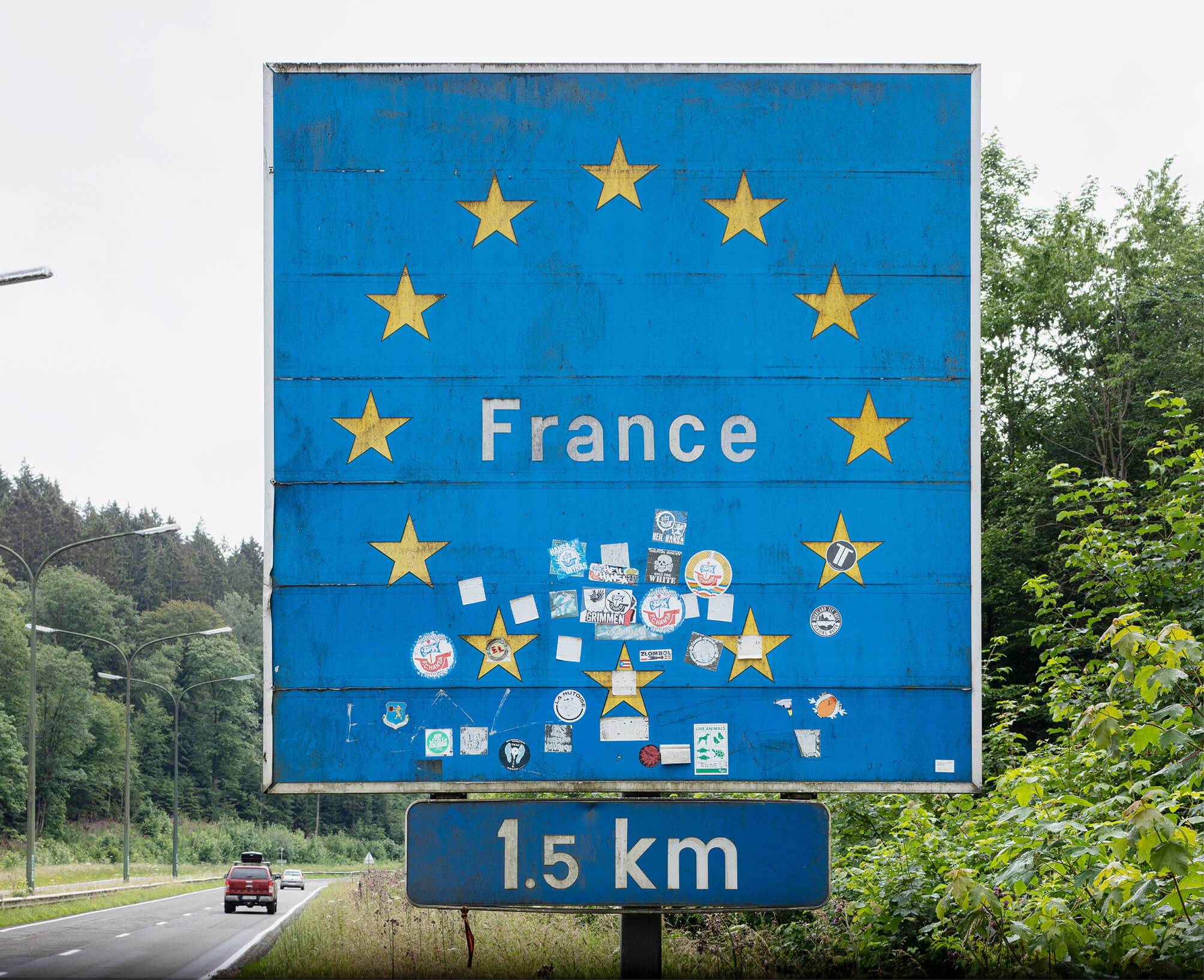
Belgium, approximately 1.5km from the French border, photograph made on 16.06.2018.
The European flag symbolises both the European Union and, more broadly, the identity and unity of Europe. It features a circle of 12 gold stars on a blue background. They stand for the ideals of unity, solidarity and harmony among the peoples of Europe. The number of stars has nothing to do with the number of member countries, though the circle is a symbol of unity.1
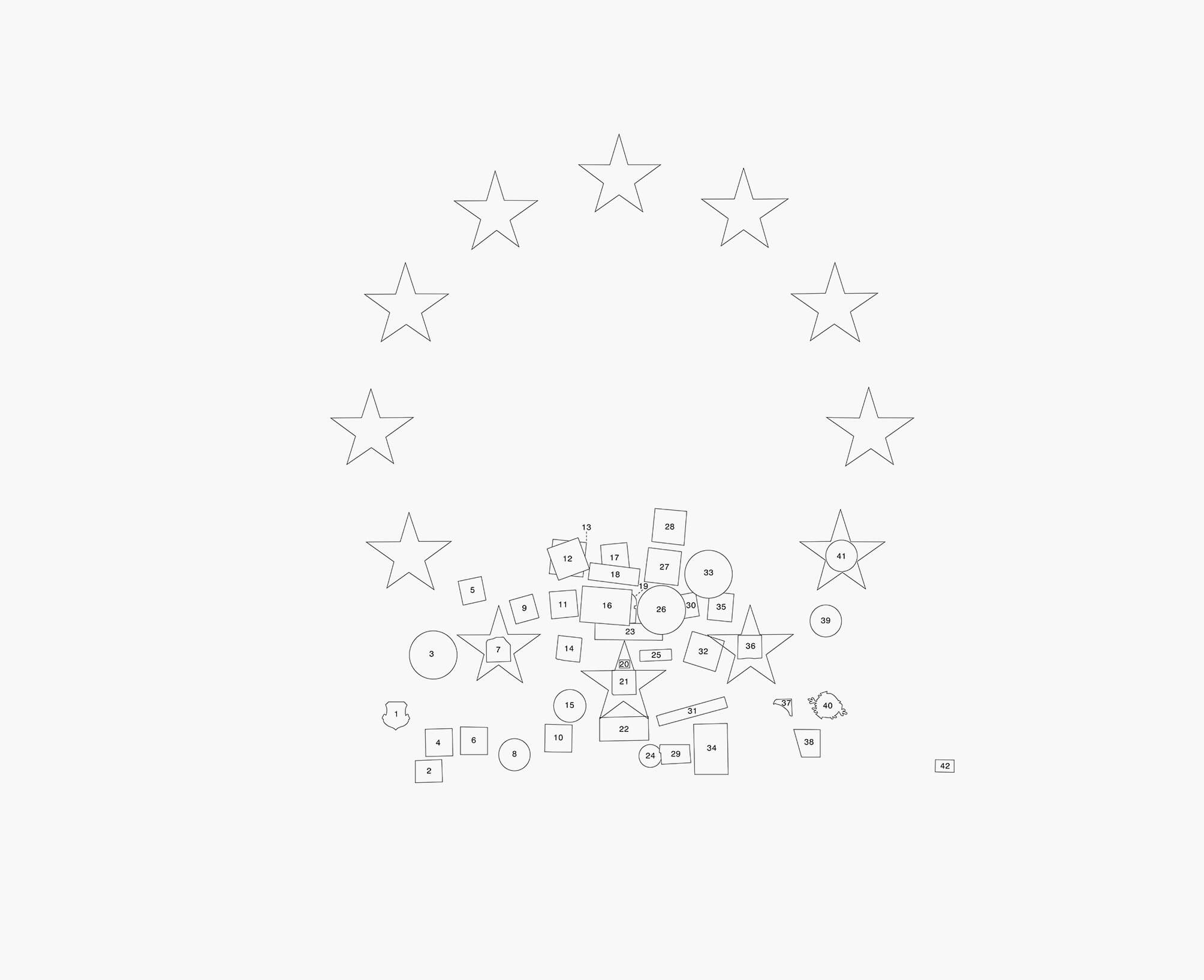
- Coat of arms of Gmina Puck, a rural district in Puck County, Pomeranian Voivodeship, in northern Poland.
- Illegible.
- F.C. Hansa, Mecklenburg, Pommern, FC Hansa Rostock is a German association football club based in the city of Rostock, Mecklenburg-Vorpommern. They have emerged as one of the most successful clubs from the former East Germany and have made several appearances in the top-flight Bundesliga. Hansa Rostock’s official anthem is “FC Hansa, wir lieben Dich total”. Hansa struggles with hooliganism, estimating up to 500 supporters to be leaning towards violence. The club’s logo consists of a red sailing ship with a blue sail showing the Rostock Griffin.
- Mon École Écologique.org is an organization for environmental conservation. On 07.01.2021 there was no website listed on this URL.
- Illegible.
- Illegible, apart from ’1962’ in the middle.
- Innocenti Bruderschaft, EL, 2018, a community of German Lambretta Innocenti riders and aficionados.
- Imag’Ink, Bretignolles Sur Mer, Tatoueur, 06 06 44 13 51, a French tattoo shop.
- Illegible.
- Hardly legible, the only word that can be made out is ‘Futbolom’: Russian for soccer.
- Kaluga on tour. Kaluga is a Russian city 150km southwest of Moscow. It is often called the cradle of space exploration thanks to the city’s most famous resident: Konstantin Tsiolkovsky.
- Hansa Ultras, F.C. Hansa. The Ultras are a group of F.C. Hansa fans (see: ‘3’).
- Illegible because ‘12’ was stuck over it.
- Illegible.
- La Hutoise is a regional student-association for higher education students from the Belgian town of Huy and its surroundings. Its aim is to bring together students from Huy in a spirit of camaraderie and to perpetuate student folklore. The logo consists of a two headed bird of prey with a cap on each head. The bird wears a scarf over one shoulder and holds a glass of beer in each paw.
- F.C. Hansa, Grimmen. The F.C. Hansa logo (see ‘3’ and ‘12’) is combined with the coat of arms of Grimmen: a griffin on a pile of 10 bricks. Grimmen is a German town in Nordvorpommern on the banks of the river Trebel.
- Illegible.
- Heil Hansa. To the left of this text the F.C. Hansa logo (see ‘3’, ‘12’ and ‘16’), on the right a logo consisting of a black bull with his tongue out and a golden crown on his head. This controversial sticker lead to several arrests in the run-up to the match between F.C. Hansa Rostock and Bayern München in February 2020. Supporters of F.C. Hansa had attached this sticker to public buildings on their way to the stadium.
- Illegible because ‘16’ was stuck over it.
- The Cuban flag.
- Illegible.
- Illegible.
- Kaluga (see ‘11’).
- De Veterinnen, a round, black sticker with a red print of a head wearing a round hat and a carnivalesque collar with a carrot for a nose. No further information found.
- Zlombol 11. Złombol is a yearly charity car rally racing event that starts in Katowice Poland. Contesters must drive a car that was built or designed during the communist era. The destination of the 2011 edition was Loch Ness.
- F.C. Hansa, Mecklenburg, Pommern, identical sticker to ‘3’, see also ‘12’, ‘16’, and ‘18’.
- Torpedo Moscow, only for white. Football club Torpedo Moscow is a Russian professional club based in Moscow, founded in 1930. Some fans of the club wave far-right symbols and banners, both during and outside of matches. Massive fan-protest ensued when the club tried to sign a black player in 2018. The player’s contract was cancelled.
- Heil Hansa. See ‘3’, ‘12’, ‘16’, ‘18’ and ‘26’.
- Illegible.
- Illegible.
- Illegible.
- Illegible.
- F.C. Hansa. Variation of ‘3’ and ‘26’ with a circle of yellow crops around the logo. See also ‘12’, ‘16’, ‘18’ and ‘28’.
- Live animals, contents: Rivne UA. These stickers are required by the International Air Transport Association for airline cargo pet travel. Rivne is a city in western Ukraine (UA) with an international airport. The sticker does not specify the transported animal but displays a dog, two birds, two fish and a turtle.
- Illegible.
- Illegible.
- Illegible.
- Illegible, apart from ‘lska’ on the bottom.
- Norrland Fly Guys, Reading Water. The sticker displays a minimal landscape with two pine trees, and a shed on a chunk of floating ice, a single four-point star shines in the sky. Norrland is the northernmost part of Sweden. No further information found. Whether the ‘fly guys’ own airplanes or are involved in fly fishing is unclear.
- This sticker displays – what appears to be – a smiling potato in front of an enlarged snow crystal. No further information found.
- Traumsucht is an artist collective from Berlin. Their website lists German rap-artists
- Illegible.
https://europa.eu/european-union/about-eu/symbols/flag_en
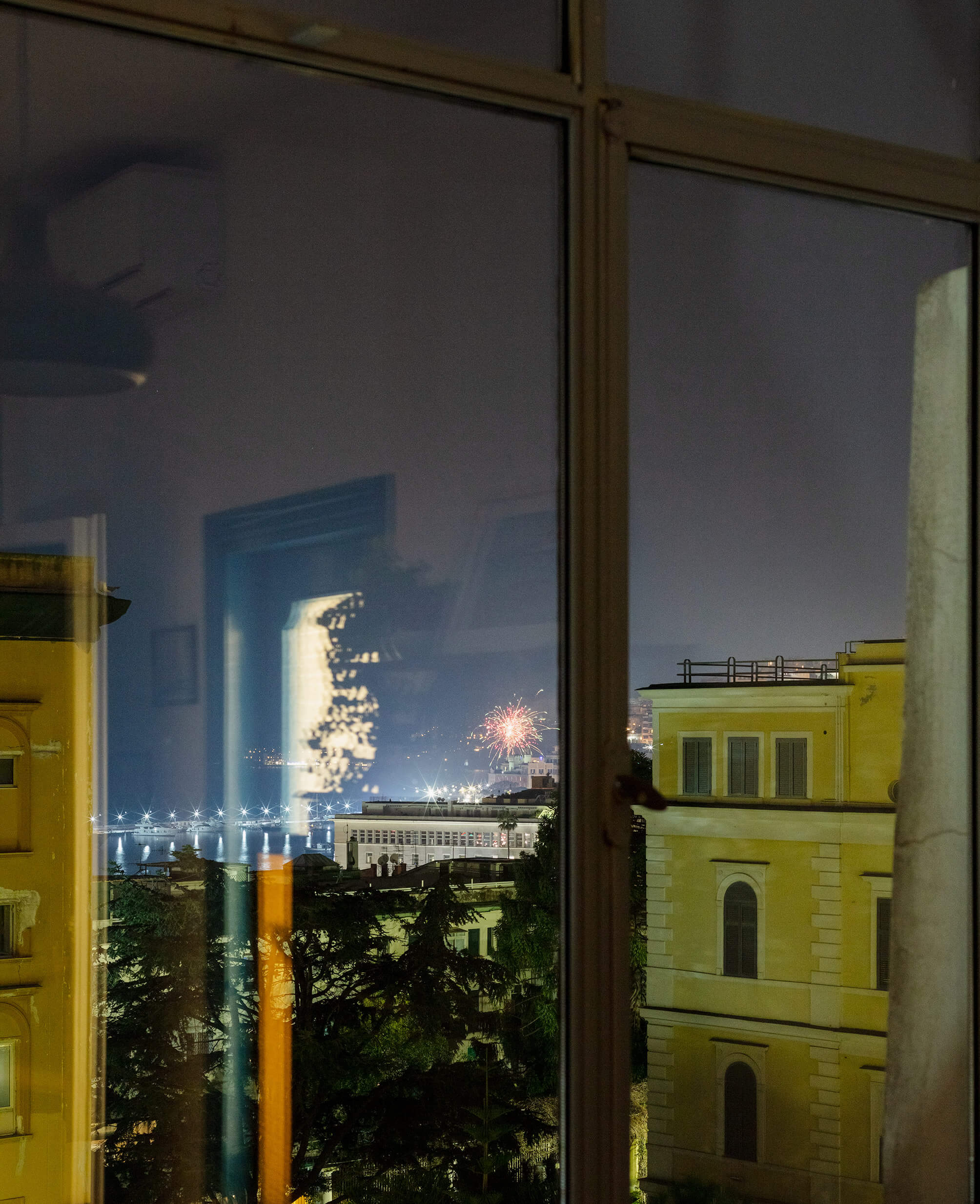
During the night, both of us get unwell. One of us is shaking, intensely and relentlessly. The windows are open. For minutes that seem to be hours, it feels like it’s freezing. We get extra blankets. Then, it gets too hot.
One of us dreams about coccodrillos. It starts out with a single animal, like the one we saw in the National Archaeological Museum, escaping from an aquarium, and ends with lots of little ones crawling all over the place. It’s impossible to know how many have escaped.
The other dreams about seismologist Luigi Palmieri’s unfortunate assistant and his family’s quest to redeem his good name. To deprive him of the burden and guilt set upon him by Luigi Palmieri’s report of the 1872 eruption of Vesuvius, the assistant’s offspring were building a monument just below the observatory in which their great-grandfather fell asleep. The monument was permanently, and continuously, unfinished.
We both dream of hearing fireworks in Naples.
In the morning, we’re slightly alarmed that we both got sick and feverish at the same instant. It’s the middle of January, and the weather has been summerlike all week. A gentle morning breeze flies in from the Neapolitan bay while we wait for the bus to take us to the airport.
First published as part of De Cleene De Cleene. ‘Amidst the Fire, I Was Not Burnt’, Trigger (Special issue: Uncertainty), 2. FOMU/Fw:Books, 25-30
Halfway March my dad started finding empty clam shells on the banks of the Zuidlede along the pasture where he used to herd sheep. He had never seen this type of clam before. There were easily seventy of them along a hundred metre stretch of riverbank.
He brought two specimens to someone he knows in the neighbouring provincial domain. She would look into it, she said, and that she would probably pass it on to someone at the educational department.
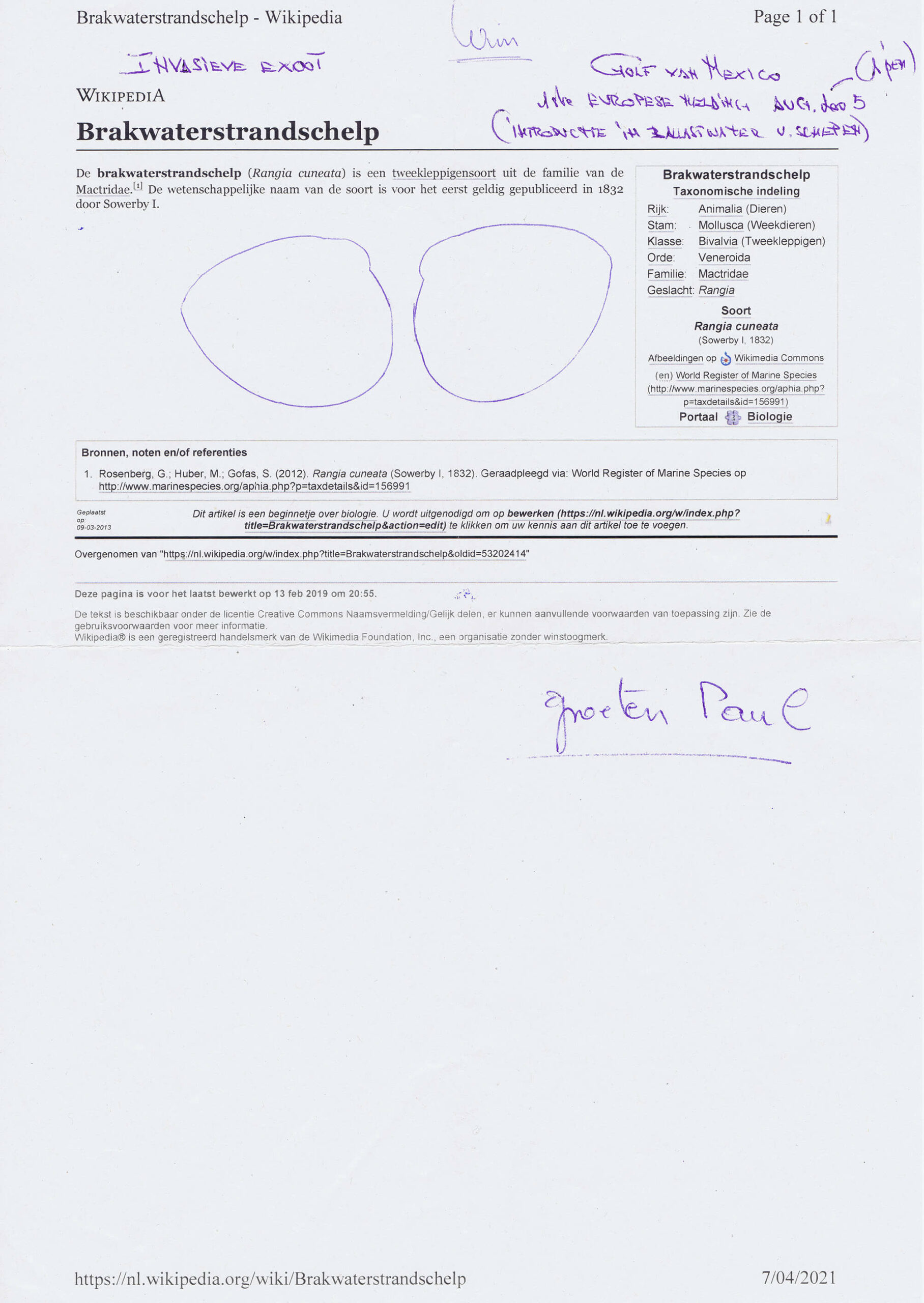
Yesterday he (my dad) received a printout of the Dutch wikipedia-page on the Brakwaterstrandschelp (Rangia Cuneata). On the page Paul (who sends his regards at the bottom of the document) traced around the scallops with a blue ballpoint pen.
My dad added in capitals – also with a blue ballpoint pen – that the Rangia Cuneata is an invasive species, native to the Gulf of Mexico. The first time it was observed in Europe was in Antwerp in August 2005, most probably they reached Europe in the ballast water tanks of large ships.
Our one year old’s favourite toy he’s not supposed to play with is the HP Officejet Pro L7590 All-in-one in my office. I have given up on forbidding him to play with it. We have a new game: he brings me one of his other toys, we put it on the flatbed, close the lid – as far as possible –, press the button ‘START COPY – COLOR’ and wait for the print to come out of the machine. When we place the original onto the copy, he laughs. So far we have copied his blue pacifier, his planet-earth-bouncy-ball and his rattling crocodile.

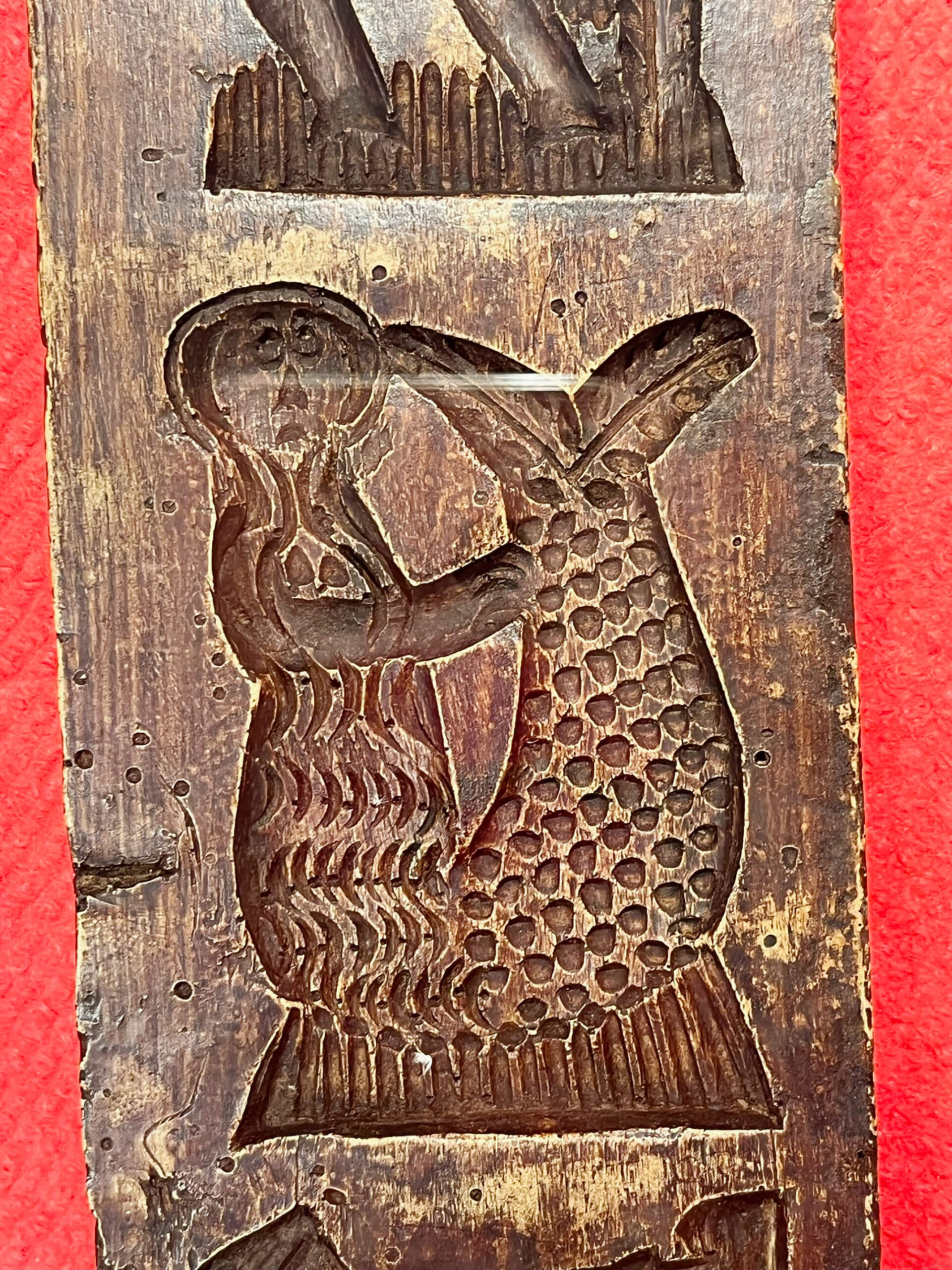
In Veurne, at the bakery museum, old speculaas moulds are presented in an almost religious fashion. Looking at these wooden blocks, they appear to be the negatives to Romanesque sculptures.
How does it feel to be conserved and showcased when your nature is to be a tool? What would it mean to re-use them, to fill those empty moulds, to shape something new without altering the matrix, to project what it would be like, to try out recipes and different baking, to learn from it and enjoy the results together? What scenes are even depicted? We lost part of their meaning, we could dig further, browse the books, ask our grandparents and collectively invent whatever narrative they might hold.
Clementine Vaultier’s interests, although trained as a ceramist, are in the warm surroundings of the fire rather than the production it engenders.
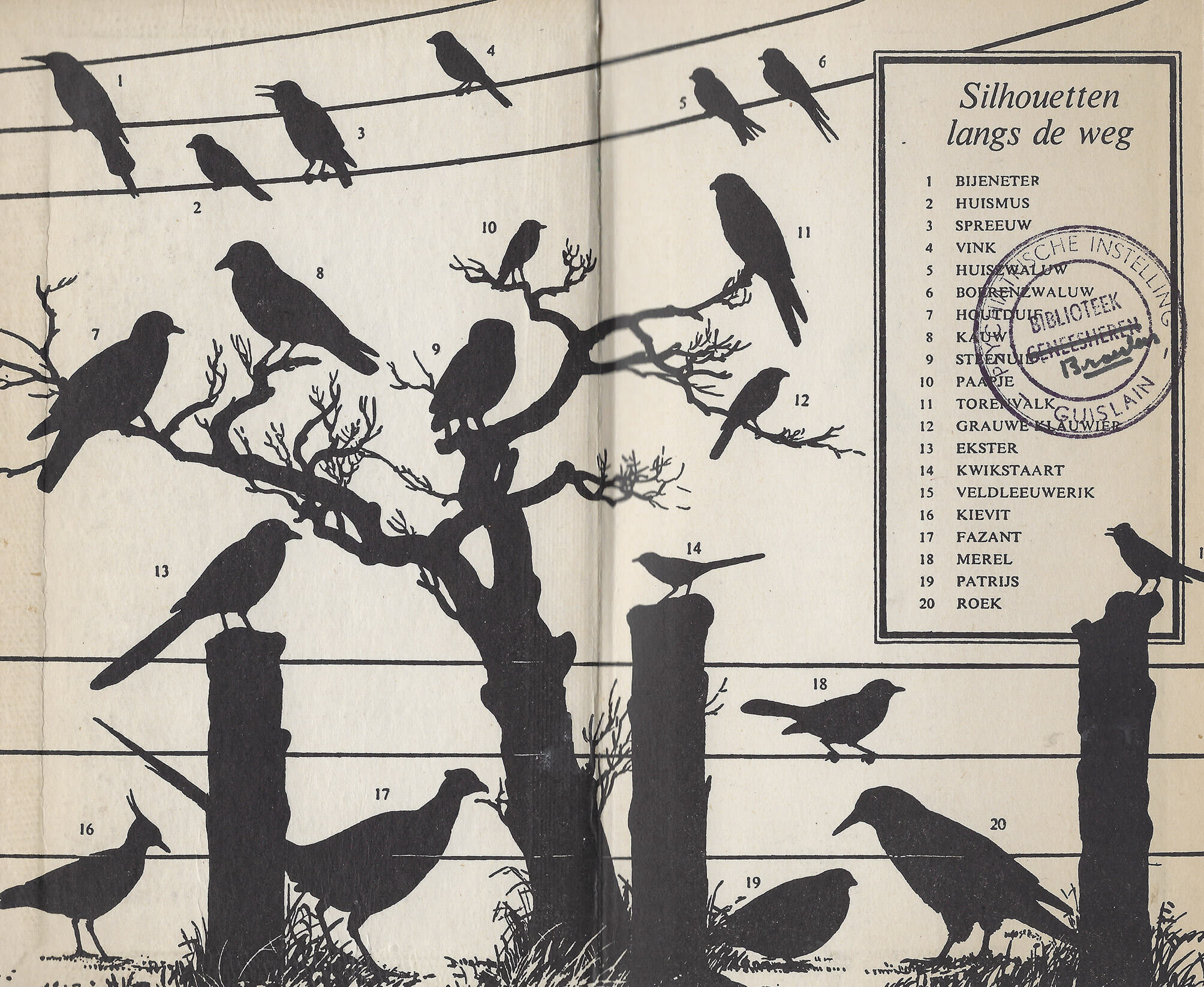
This is the spread one sees upon opening the bird field guide that once stood, as the stamp indicates, in the library of a psychiatric institution.1 It shows birds’ silhouettes, as they can be seen beside the road.
The drawing has a kind of Hitchcock feel to it.2 The birds seem to be spying on each other, as they also seem to be spying on the unsuspecting passer-by.
The composition of the scene is marvelous. The electric wires, the tree, the wire fence, the double framed list with the birds’ names, handsomely positioned in a birdless patch, at once superimposed on the telephone wires, and pushed to the background by the skylark.
Imagine seeing this scene. What are the odds: to see the silhouettes of Europe’s twenty most common species of birds in one glance, from your car’s window, as you are driving home at dusk.
Before closing the book, the last spread seems to show the birds fleeing, maybe attacking.3
The stamp indicates that, at the psychiatric institution, the book was part of the sublibrary for the Catholic Brothers of Charity. The crossed-out part indicates that there was also a separate physicians’ library, to which the book might have originally belonged.
On the web, discussions on whether Alfred Hitchcock’s The Birds (1963) was shot in colour or in black and white, abound.
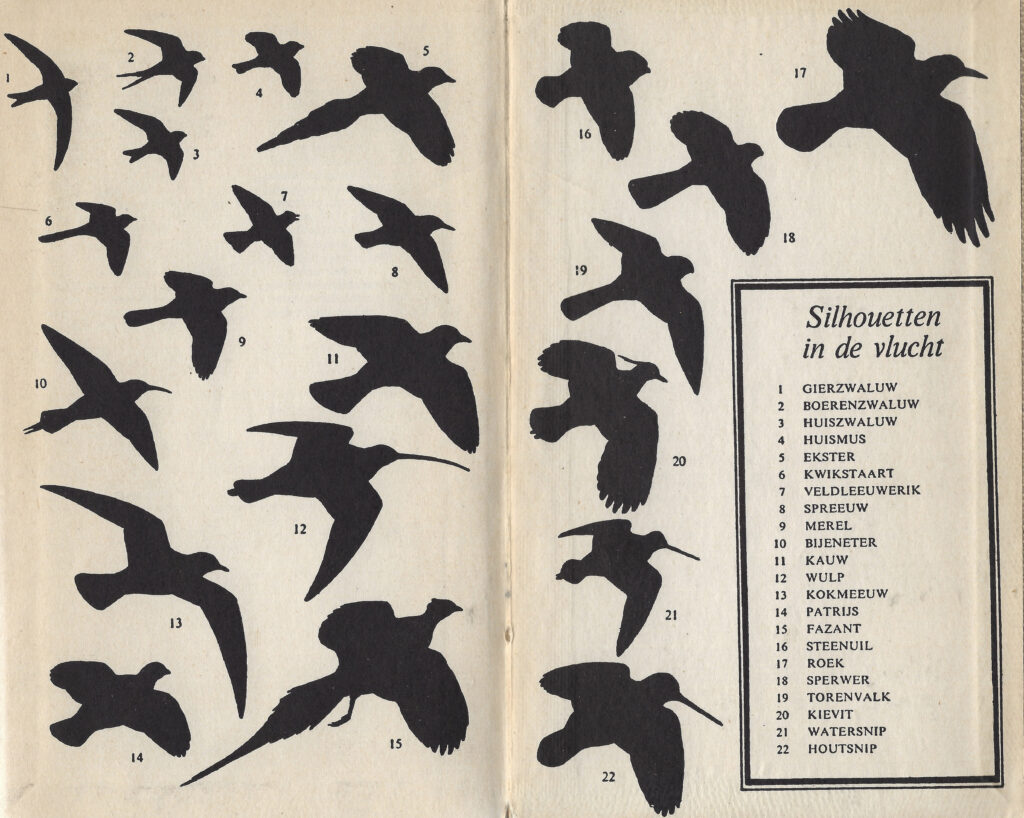
Peterson, R.T., Mountfort, G. & P.A.D. Hollom. Vogelgids voor alle in ons land en overig Europa voorkomende vogelsoorten (J. Kist, transl.). 3d ed. Amsterdam/Brussels: Elsevier, 1955.
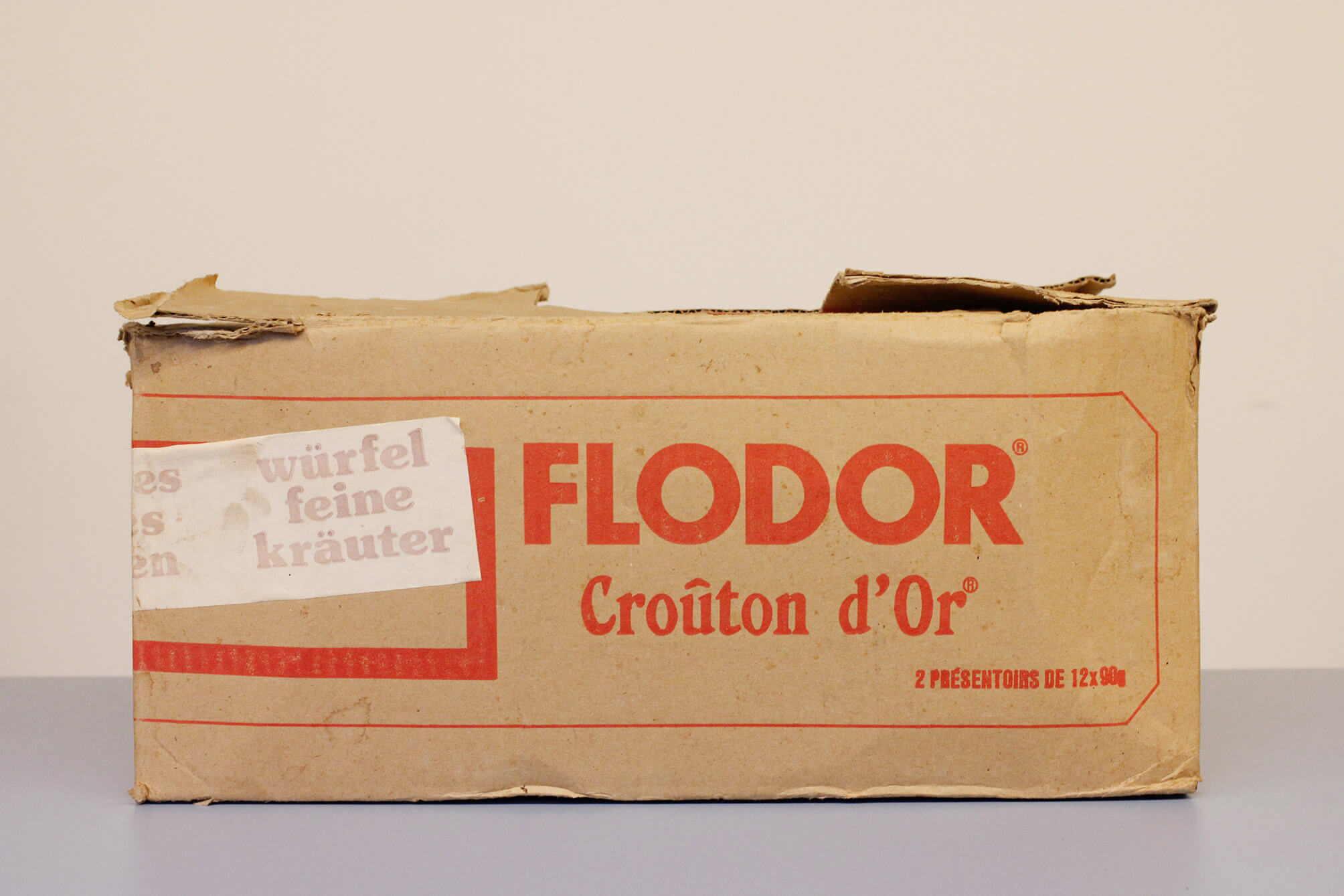
The archive of O. Clemminck, architect, was preserved in a box of croutons – by him, the historian who gave it to my father, or someone else (it contains a letter written by Clemminck’s widow asking a client to pay the bill her husband had sent). The croutons had a flavor of fine herbs and, a stamp on the box with the plans in it says, should have been consumed before April 1987.
During a two hour tour, H.V. (head of the science collection) guided us from the library to the observatory and back. Along the way, he touched upon various rarities: one hundred ninety-five volumes of the Encyclopédie Méthodique (according to H.V. the most complete copy left in the world), the severed summit of Mont Blanc (‘Actually de Saussure brought back a triangular piece of rock from just below the snow line near the summit’), an original copy of the publication on the infamous Lügensteine (‘These date back to the time before the hoax was unveiled’)…
In guiding us from room to room, H.V. piled oddity upon curiosity. He showed a particular interest in all things fish-related.
First published in: De Cleene, M. Reference Guide. Amsterdam: Roma Publications, 2019

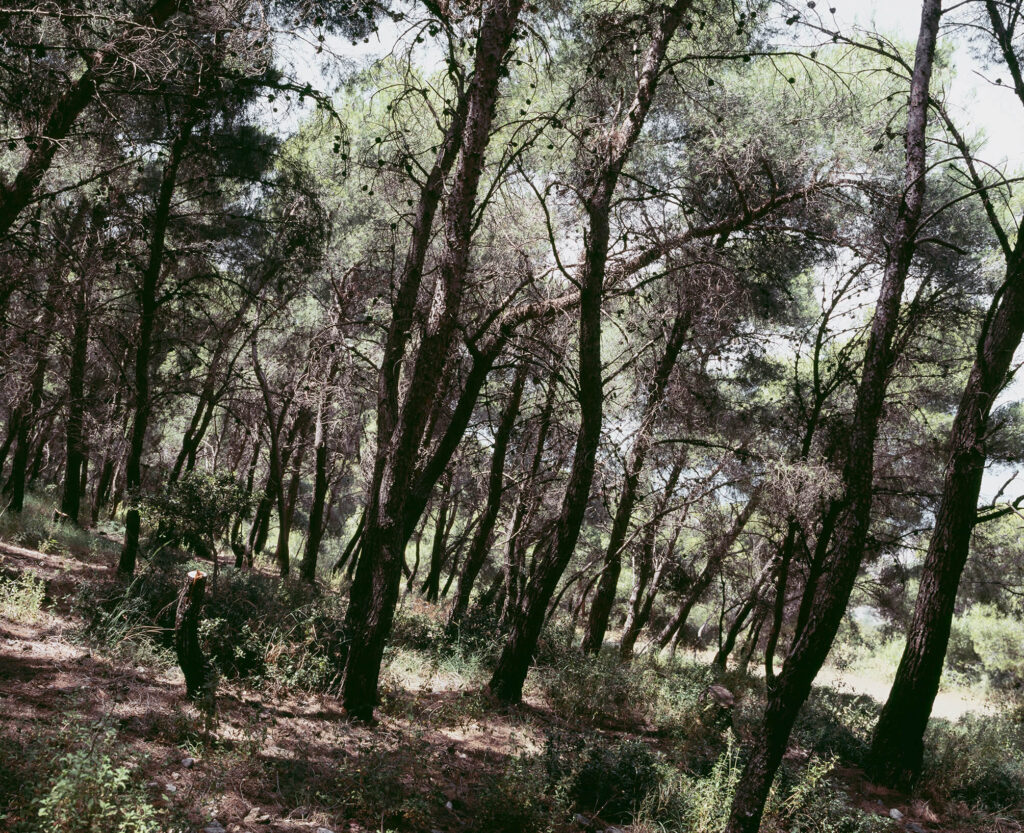
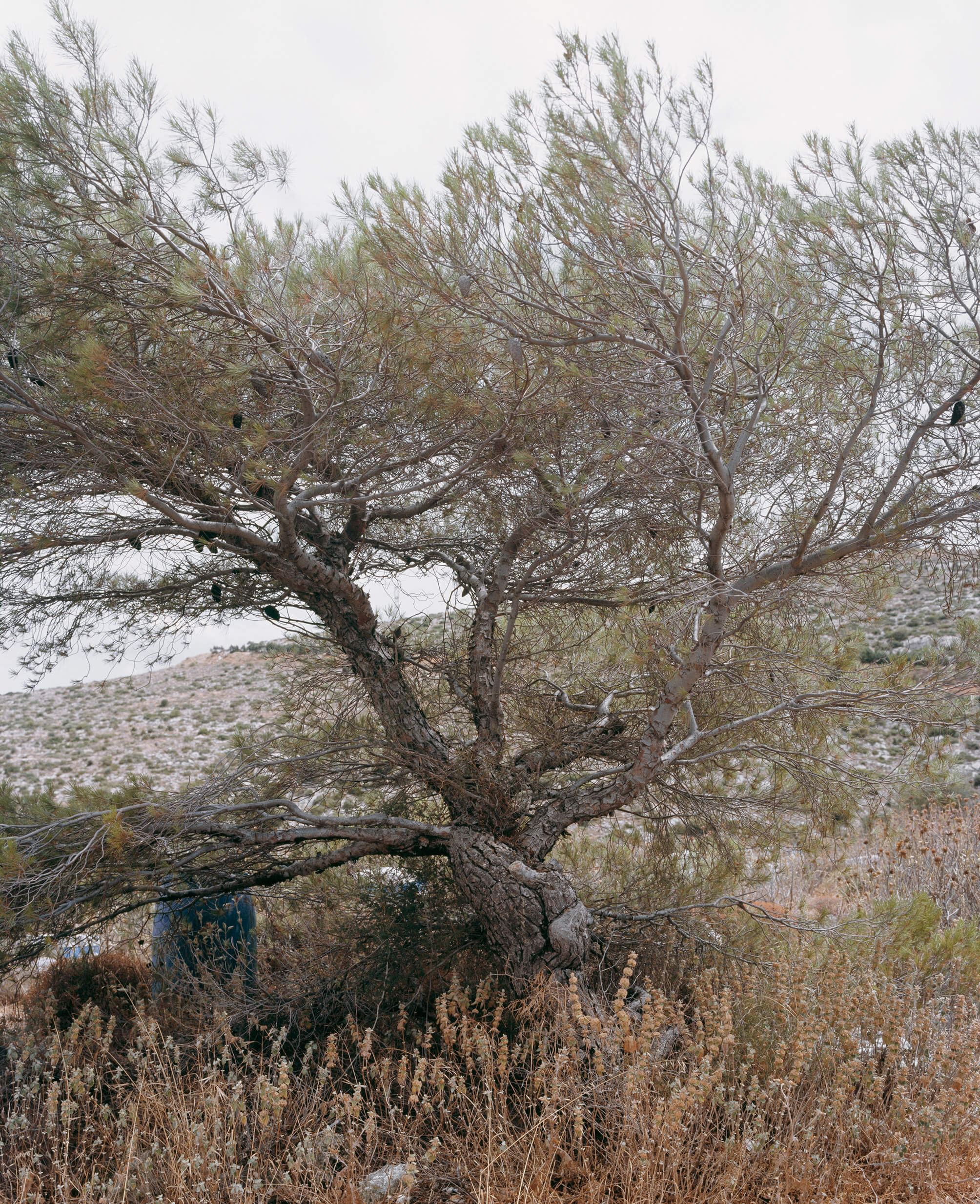
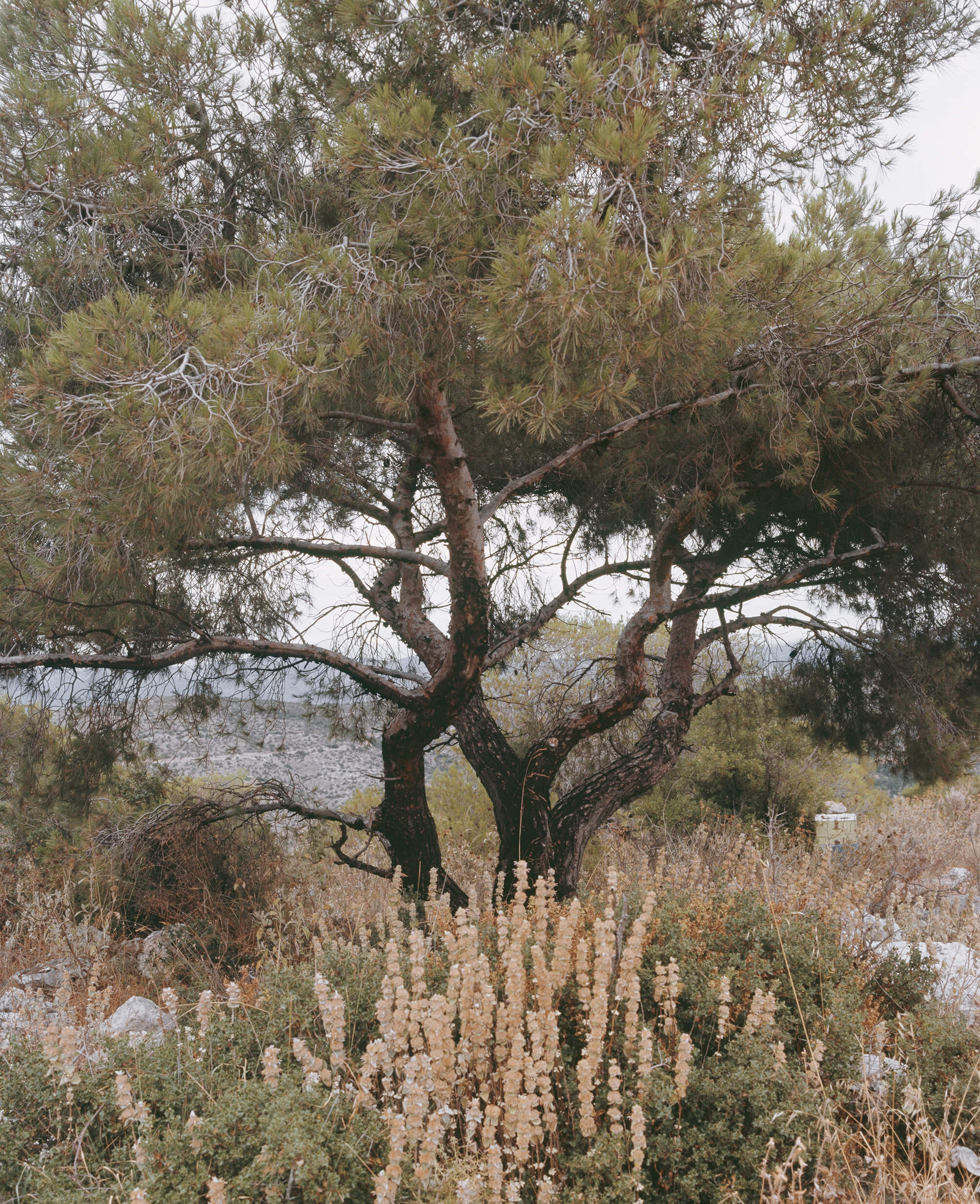
‘The saw cuts are sloppy and appear to be made in a haste.1 The cuts are situated at a height of approximately seventy centimetres from the ground. The hill’s protected woods have seen an increase in these scattered traces of illegal logging since a rise in tax on heating fuel in October 2012. Many Greeks set about logging illegally in protected woods, mostly in the colder North of the country, but also here in Egaleo, a western suburb of Athens.’
First published in: De Cleene, M. Reference Guide. Amsterdam: Roma Publications, 2019
Theory becomes the apparatus. A metonymic relation. A trope of nearness. Miniscule gravitational disturbances become known as a kilometres-long, L-shaped facility. Particle physics: a circular tunnel beneath the Geneva hinterland.
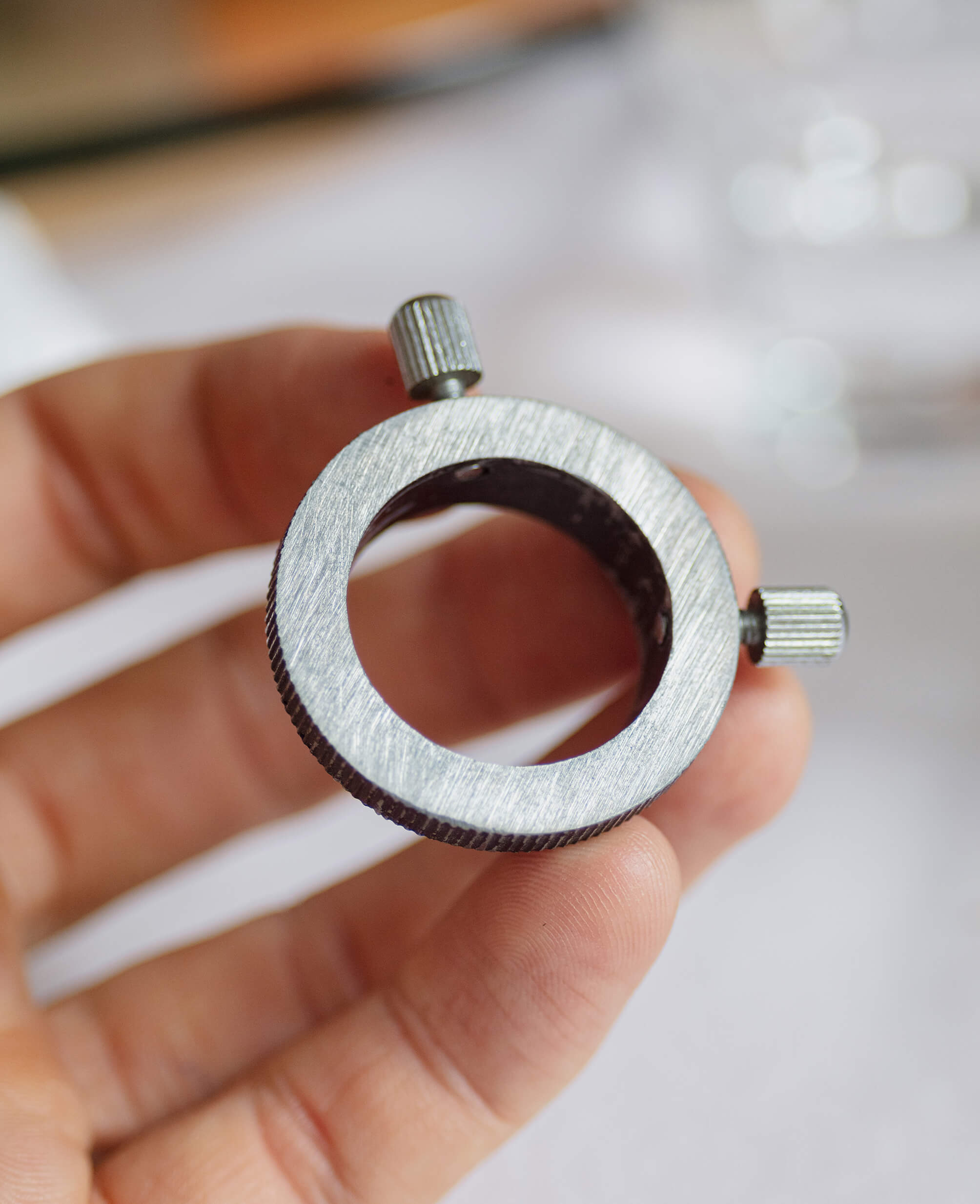
Somewhere in the early 1970s, our grandfather, a carpenter by trade, buys a telescope1,2, installs it on the lawn, and points it over the hedge. ‘I remember seeing the craters on the moon. The rings of Saturn,’ he told us.
In the shabby plywood box I made to transport the telescope lies a metal ring I ground flat to be able to attach my camera and focus it on infinity.
The hedge, now three metres in height, shields the lower part of the sky from sight and needs pruning.
Tasco / Reg. No. 83140 / 140 Power / Reflection telescope / D=3” / F=700mm / Coated optics / Model No. 3TE-R / Japan
‘It never fails to draw you in closer – the moment when you raise a pair of binoculars to your eyes. In that instant, life is magnified clearly; as if just for you. The curious bird that becomes instantly identifiable. The night sky that never looked the same after that night. The actual sweat running down the brow of a sports hero. The sun scattering light across a clear stream as you trace for signs of a Rainbow trout. These are the moments of magic that Tasco delivers. Simple, pure and honest. And for another split-second, you’re struck by the quality of experience weighed against the value you’d previously placed on “just a pair of binoculars.” Welcome to a world where, “Seeing is Believing.”’ (Tasco Manifesto).

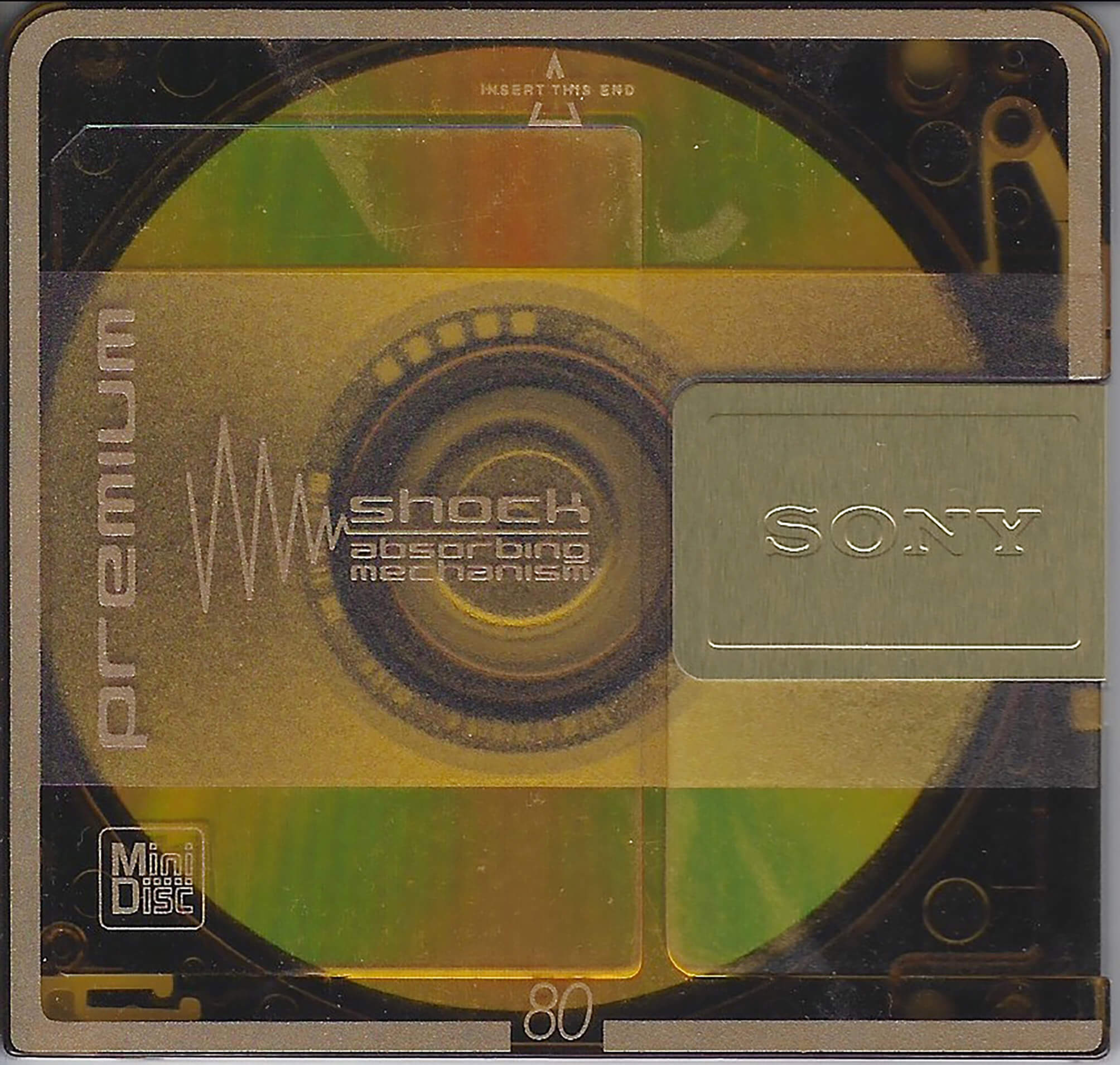
‘Because there is a kind of technological beauty to it.’
[…]
‘Yes, a perfect combination of the analogous on the one hand, and a kind of state of the art-futuristic cool on the other hand. It was elegant (unlike audio-cassettes), you could see the disc upon which your music was written (unlike the unfathomable MP3), it was less fragile than a CD(-R), and conveniently sized (you could hold it in the palm of your hand, slip it into your pocket). It had a kind of Mission Impossible-esque gadget feel to it. It had the aura of being permanently ahead of its time, but not in a far-fetched sci-fi kind of way. It was real.’
[…]
‘You mean the clicks. Yes, it had a sound of its own. A pleasant sound – the hard plastic hitting the hard plastic sleeve. The slidable, uhm, metal thing. The small read/write handle at the side. The small disc that was just a little bit loose. It – without being played – looked, felt and sounded like, like data, yes, like palpable data.’
[…]
‘Not any more.’
[…]
‘My uncle’s Elvis Costello This Year’s Model LP with way too little bass-sounds. Watching the detectives, to be precise.’
In Walter Benjamin’s The Arcades Project, Convolute Q is dedicated to the panorama. Benjamin writes: ‘Setup of the panoramas: View from a raised platform, surrounded by a balustrade, of surfaces lying round about and beneath. The painting runs along a cylindrical wall approximately a hundred meters long and twenty meters high. The principal panoramas of the great panorama painter Prévost: Paris, Toulon, Rome, Naples, Amsterdam, Tilsit, Wagram, Calais, Antwerp, London, Florence, Jerusalem, Athens. Among his pupils: Daguerre’ (Q1a, 1).
Benjamin, W. The Arcades Project (H. Eiland & K. McLaughlin, trans.). Cambridge/London: The Belknap Press of Harvard University Press, 2002, p. 528.
‘Exit at the dock and kill some rats. Go around the building to the left, killing the guard and his rats before flipping the switch. Another guard arrives kill him too, taking the medkits from both your victims. Enter the now open front door and kill the guard on the balcony and his friend who appears on the ground floor. Grab the shells from your second kill then shoot out the window and kill the Dobermans who jump through when you get too close.’
Tomb Raider II. The Complete Guide to the Dagger of Xian. Downloaded from http://www.the-spoiler.com on 4 August, 1999, at 15:03.
Fred from Zwolle offers two Sparta K-10s on Marktplaats.nl on 29 September 2022. The asking price for the two bikes is 250 euros, bids may start from 200 euros. The green bike has a front light that is powered by a rim dynamo, while in another photo we see a front light on the orange bike that is presumably battery-powered, as may be the case for the rear lights. The carrier mounted at the front of the green bike is clearly a luggage carrier, as is the one at the back. What the carrier mounted at the front of the orange bike is for, is unclear. The description of the bikes does mention the function of the loop protruding from the frame at the back of the Sparta K-10:
‘20-inch bikes that we have always used while camping. No gears but smooth and light pedalling. Ideal for running small errands close by or a quick errand in the toilet building. They are light and quite short making them easy to take on the train. Ideal as a short-distance bike between station and work. Both are, furthermore, in good condition. Each bike comes with a key for the integrated cable lock. Are listed as a ladies’ bike but I (male) get on just fine.’1
’20 inch fietsen die wij altijd tijdens het kamperen hebben gebruikt. Geen versnellingen maar soepel en licht trappend. Ideaal om kleine boodschappen dichtbij te doen of een snelle boodschap in het toilet gebouw. Ze zijn licht en vrij kort waardoor ze makkelijk mee te nemen zijn in de trein. Ideaal als korte afstandfiets tussen station en werk. Beiden zijn verder in goede staat. Van elke fiets beide sleutels aanwezig voorzien van een geïntegreerd kabelslot.Worden als damesfiets genoemd maar ik (man) kom er prima mee vooruit.’
Lars Kwakkenbos lives and works in Brussels and Ghent (B). He teaches at KASK & Conservatorium in Ghent, where he is currently working on the research project ‘On Instructing Photography’ (2023-2024), together with Michiel and Arnout De Cleene.

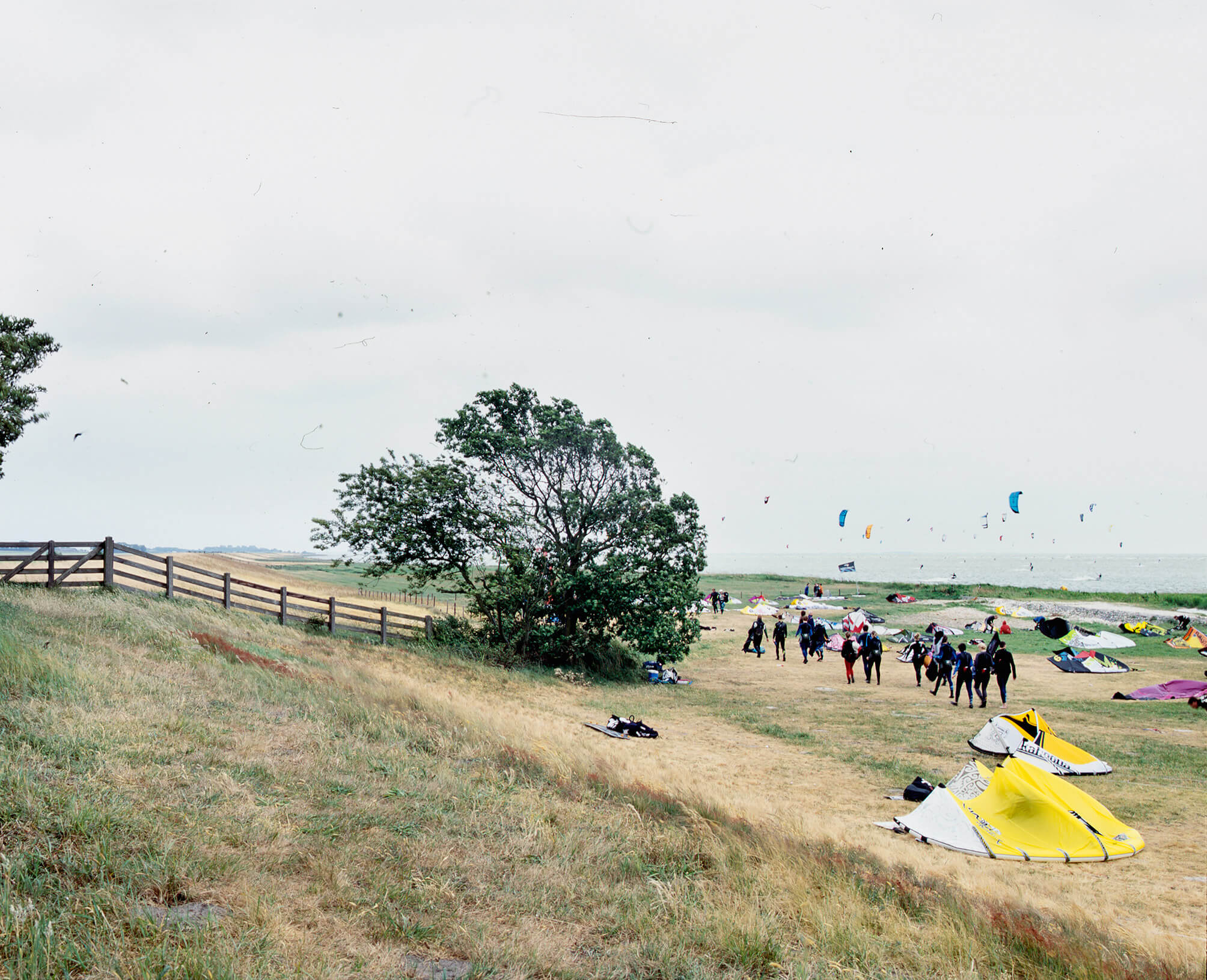
Ten years ago, in November, I drove up to Frisia – the northernmost province of The Netherlands. I was there to document the remains of air watchtowers: a network of 276 towers that were built in the fifties and sixties to warn the troops and population of possible aerial danger coming from the Soviet Union. It was very windy. The camera shook heavily. The poplars surrounding the concrete tower leaned heavily to one side.
I drove up to the seaside, a few kilometers farther. The wind was still strong when I reached the grassy dike that overlooked the kite-filled beach. I exposed the last piece of film left on the roll. Strong gusts of wind blew landwards.
Months later I didn’t bother to blow off the dust that had settled on the film before scanning it. A photograph without use, with low resolution, made for the sake of the archive’s completeness.
The dust on the film appears to be carried landwards, by the same gust of wind lifting the kites.
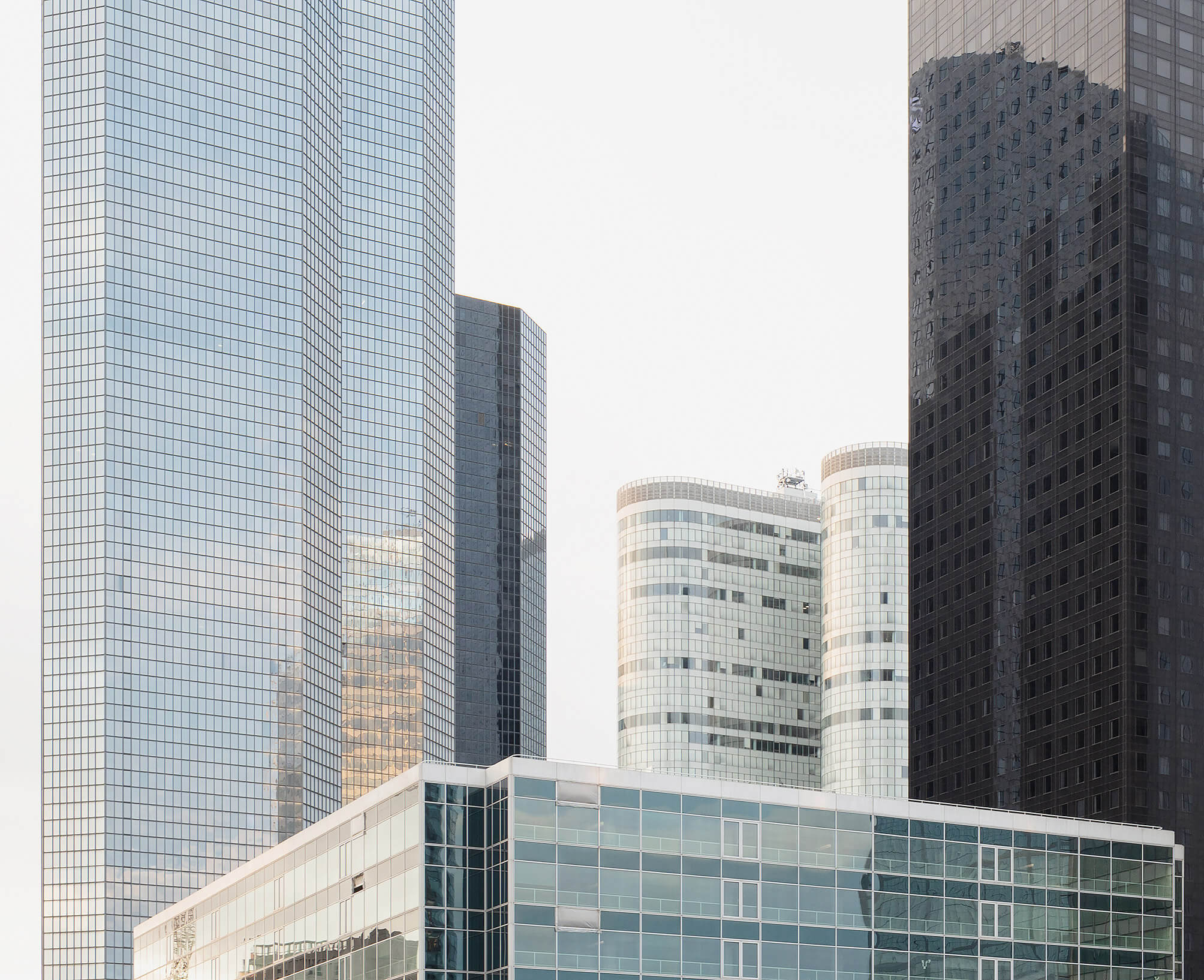
A year ago, mid-August, just before sunrise, the mostly unlit office buildings line the road that leads to the underground parking. I turn off the ignition. I’m in F36. The walls are painted pink. Looking for the exit, I take the escalator and get stuck in an empty shopping mall. The music is playing but all the shops are closed off with steel shutters. So are the exits. I’m out of place. In keeping early customers out, the mall is keeping haphazard visitors in. I’m back in the parking lot. The elevator is broken. I take the stairs and walk by a homeless man, sleeping. There’s shit on the floor. I open the door that leads out of the stairwell. It slams shut behind me. There’s no doorknob. I find myself on a dark floor between mall and parking lot. People are sleeping; some are awake. Heads turn toward me. I start walking slightly uphill towards where I think I might find an exit, or an entrance. The scale of the architecture has shifted from car (F36) and customer (the closed mall) to truck. I find myself amidst the supply-chain. It takes five minutes, maybe fifteen, maybe more to get out and see the office buildings towering over me in the first light of day.
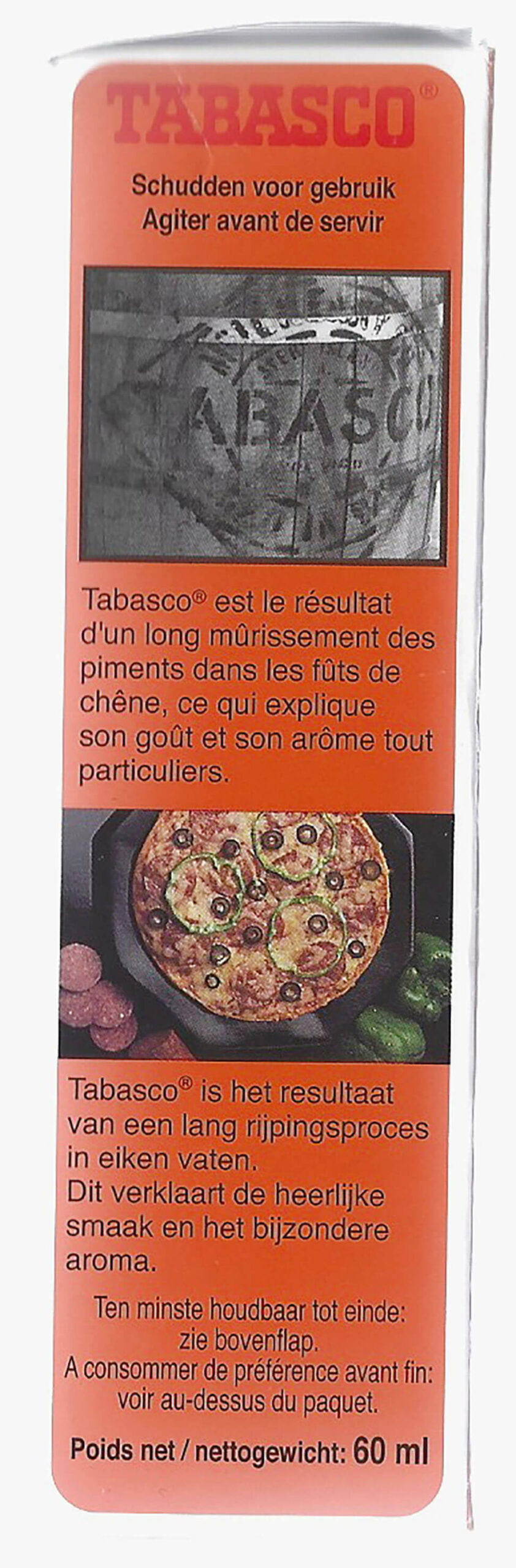
It must have been four or five years ago, that I noticed the change in Tabasco’s® up until then stable, unchanged and thus kind of unfashionable presence in supermarkets (vinegar section). On one of the box’s sides, there had always been a photograph of a man, clipboard in hand, looking upwards to a huge wooden barrel full of Tabasco®. He was inspecting something, from the outside, writing it down.
A couple of years ago, the man disappeared from the packaging. I think he was replaced by a pizza (as one of the suggestions for using Tabasco® on, besides on hashed meat (with an egg yolk, fries and lettuce) and spaghetti bolognese) or a black-and-white image of a part of an oak barrel. It is unclear who is inspecting the barrels now.
Halfway March my dad started finding empty clam shells on the banks of the Zuidlede along the pasture where he used to herd sheep. He had never seen this type of clam before. There were easily seventy of them along a hundred metre stretch of riverbank.
He brought two specimens to someone he knows in the neighbouring provincial domain. She would look into it, she said, and that she would probably pass it on to someone at the educational department.
Yesterday he (my dad) received a printout of the Dutch wikipedia-page on the Brakwaterstrandschelp (Rangia Cuneata). On the page Paul (who sends his regards at the bottom of the document) traced around the scallops with a blue ballpoint pen.
My dad added in capitals – also with a blue ballpoint pen – that the Rangia Cuneata is an invasive species, native to the Gulf of Mexico. The first time it was observed in Europe was in Antwerp in August 2005, most probably they reached Europe in the ballast water tanks of large ships.
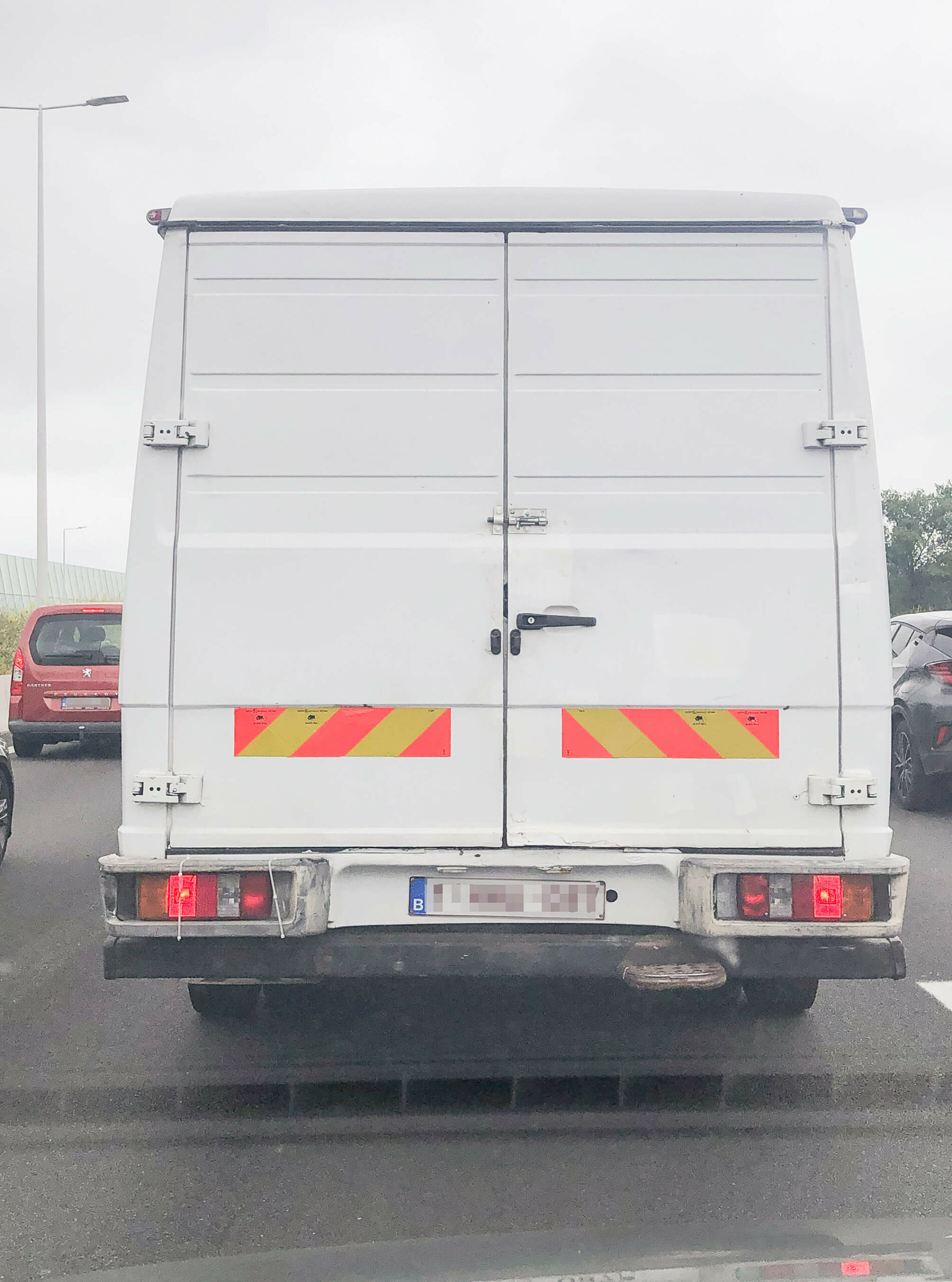
A white Mercedes van inserts in front of me in a traffic jam near Antwerp. The back of the van has been altered in several ways: a latch was added to the door,1 a footstep was bolted to the bumper, a couple of tie-wraps are holding up the lights on the left side.2 Traffic is moving slow. There is no Mercedes logo.3 Some parts have been retouched with white paint that differs slightly from the rest of the bodywork,4 not unlike a tipp-ex’ed document.
Maybe the original locking mechanism no longer functions, or, perhaps, the owner wants to add a padlock to the doors at night.
Maybe a corroded screw caused the lights to come loose, or a slight collision.
Someone might have stolen it. Mercedes stars are often stolen, although mostly from the hood.
Maybe to counter corrosion, to conceal a mark someone made on the van or to cover up a fixed dent.
Legislation concerning the publication of someone else’s licence plate on the internet and the demand to blur it, is somewhat ambiguous.
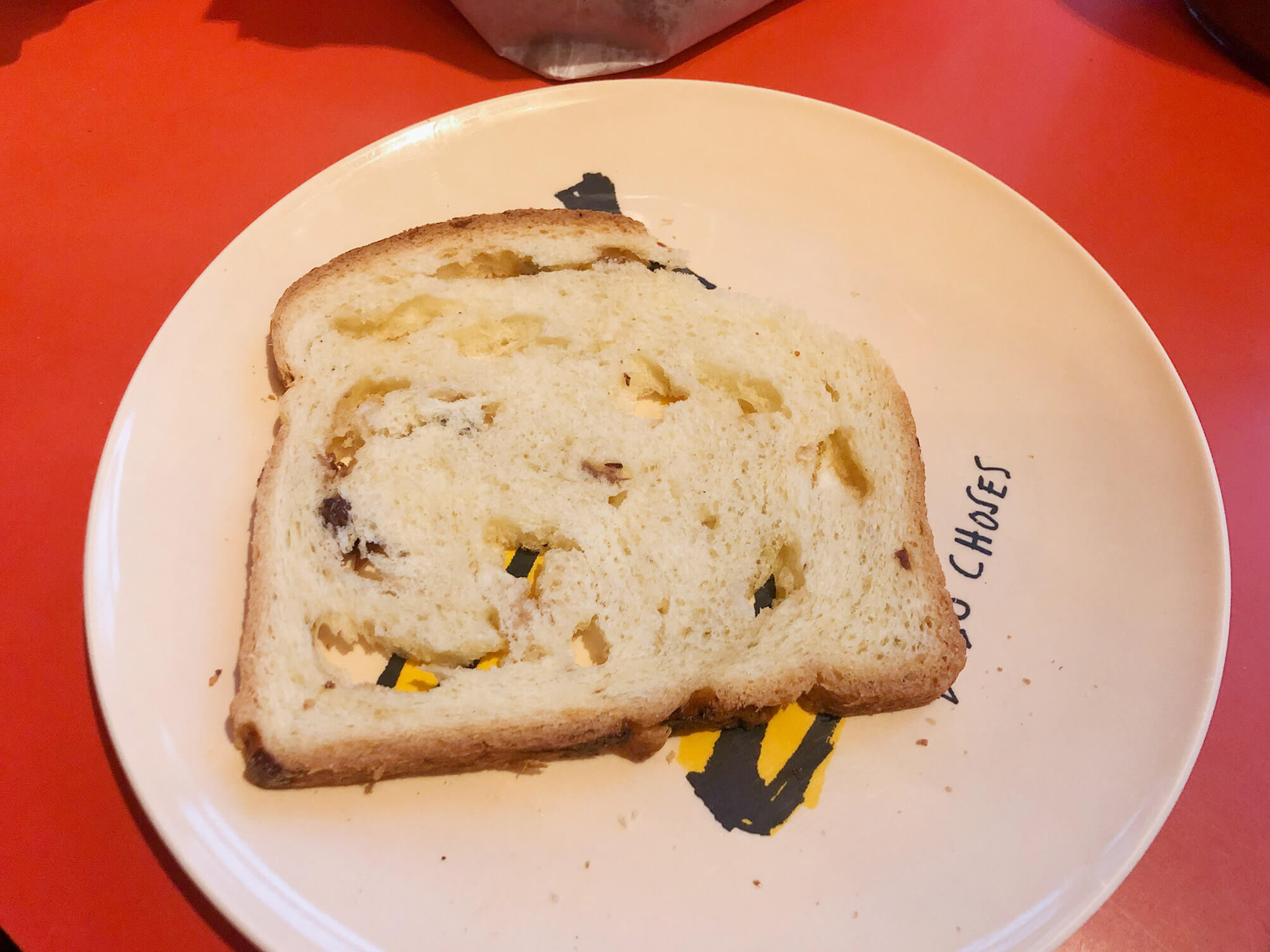
When I grew up, my parents told me that the number of raisins in the local baker’s raisin bread attested to the result of the most recent soccer match of KAA Gent. A victory was celebrated by throwing more raisins into the dough than usual, a loaf following a painful loss was hardly a raisin bread at all.
The baker retired long ago. Today my two-year-old son picked out all the raisins from his slice of bread. KAA Gent’s last game was a tie against Union.
Where once there was twelve million cubic metres of water, excavators and trucks are moving dirt and rocks that have been hidden from sight for 56 years; piling them up into a temporary dam: a batardeau.

The road down from the top of Mount Vesuvius, at Atrio Del Cavallo. The sun sets. The last tourist bus has headed down. Then the headlights of the guardian’s car swing their way down. It must be freezing. I am holding an orange-sized piece of petrified lava, probably stemming from the 1872 or 1944 eruption. A kilometer further down the road, the old Observatory is empty. Nowadays, monitoring seismic changes is done in a research centre in the city of Naples. Their seismographic registrations can be followed online, in real time. Two headlights swirling along the slopes, underneath me, are coming upwards.
