What constitutes a ‘document’ and how does it function?
According to the Oxford English Dictionary, the etymological origin is the Latin ‘documentum’, meaning ‘lesson, proof, instance, specimen’. As a verb, it is ‘to prove or support (something) by documentary evidence’, and ‘to provide with documents’. The online version of the OED includes a draft addition, whereby a document (as a noun) is ‘a collection of data in digital form that is considered a single item and typically has a unique filename by which it can be stored, retrieved, or transmitted (as a file, a spreadsheet, or a graphic)’. The current use of the noun ‘document’ is defined as ‘something written, inscribed, etc., which furnishes evidence or information upon any subject, as a manuscript, title-deed, tomb-stone, coin, picture, etc.’ (emphasis added).
Both ‘something’ and that first ‘etc.’ leave ample room for discussion. A document doubts whether it functions as something unique, or as something reproducible. A passport is a document, but a flyer equally so. Moreover, there is a circular reasoning: to document is ‘to provide with documents’. Defining (the functioning of) a document most likely involves ideas of communication, information, evidence, inscriptions, and implies notions of objectivity and neutrality – but the document is neither reducible to one of them, nor is it equal to their sum. It is hard to pinpoint it, as it disperses into and is affected by other fields: it is intrinsically tied to the history of media and to important currents in literature, photography and art; it is linked to epistemic and power structures. However ubiquitous it is, as an often tangible thing in our environment, and as a concept, a document deranges.
the-documents.org continuously gathers documents and provides them with a short textual description, explanation,
or digression, written by multiple authors. In Paper Knowledge, Lisa Gitelman paraphrases ‘documentalist’ Suzanne Briet, stating that ‘an antelope running wild would not be a document, but an antelope taken into a zoo would be one, presumably because it would then be framed – or reframed – as an example, specimen, or instance’. The gathered files are all documents – if they weren’t before publication, they now are. That is what the-documents.org, irreversibly, does. It is a zoo turning an antelope into an ‘antelope’.
As you made your way through the collection,
the-documents.org tracked the entries you viewed.
It documented your path through the website.
As such, the time spent on the-documents.org turned
into this – a new document.
This document was compiled by ____ on 13.12.2025 17:46, printed on ____ and contains 15 documents on _ pages.
(https://the-documents.org/log/13-12-2025-6703/)
the-documents.org is a project created and edited by De Cleene De Cleene; design & development by atelier Haegeman Temmerman.
the-documents.org has been online since 23.05.2021.
- De Cleene De Cleene is Michiel De Cleene and Arnout De Cleene. Together they form a research group that focusses on novel ways of approaching the everyday, by artistic means and from a cultural and critical perspective.
www.decleenedecleene.be / info@decleenedecleene.be - This project was made possible with the support of the Flemish Government and KASK & Conservatorium, the school of arts of HOGENT and Howest. It is part of the research project Documenting Objects, financed by the HOGENT Arts Research Fund.
- Briet, S. Qu’est-ce que la documentation? Paris: Edit, 1951.
- Gitelman, L. Paper Knowledge. Toward a Media History of Documents.
Durham/ London: Duke University Press, 2014. - Oxford English Dictionary Online. Accessed on 13.05.2021.

The last couple of days have been dry. Rain is expected for the weekend. The office buckets are in place and are empty, except for some residue. Dirt, sand, a few hairs. Some particles must have come along with the drops when they made their way through the roof.

It’s time to have a nap. I tilt the window over its middle axis to let the butterfly out. A breeze ruffles the drapes. Now, it sits on the glass and throws an enormous shadow on the yellow cloth.


Freely adapted from interviews with residents of Sandersleben (Saxony-Anhalt). Three-act play. The first two acts take place in the present day; the third is set in the future.
From Act 1 ‘The Town of S’, Scene 2 ‘The Past’.
Characters: MR DUNST club member I, OLIVER club member II, ANJA young mother
Stills from text animation S. Anders Leben. Eine Handlung in Gesprächen/S. Anders Leben – Living Differently: An Act in Conversations
Stephanie Kiwitt (1972) is an artist based in Halle (Saale), Germany. Utilizing a large number of images, various perspectives and also textual elements, she is known for her insightful photography that explores spaces emblematic of contemporary phenomena. Over the past three years, she has focused on evolving habitats in rural areas, photographing traces of transformation and conducting interviews in Saxony-Anhalt, the region she moved to in 2020. From 2018 to 2020, Kiwitt was a guest lecturer at the LUCA School of Arts in Brussels.
In spring 2024 the-documents.org and Trigger co-publish a series of online articles with a focus on the meeting ground between photography and the document.

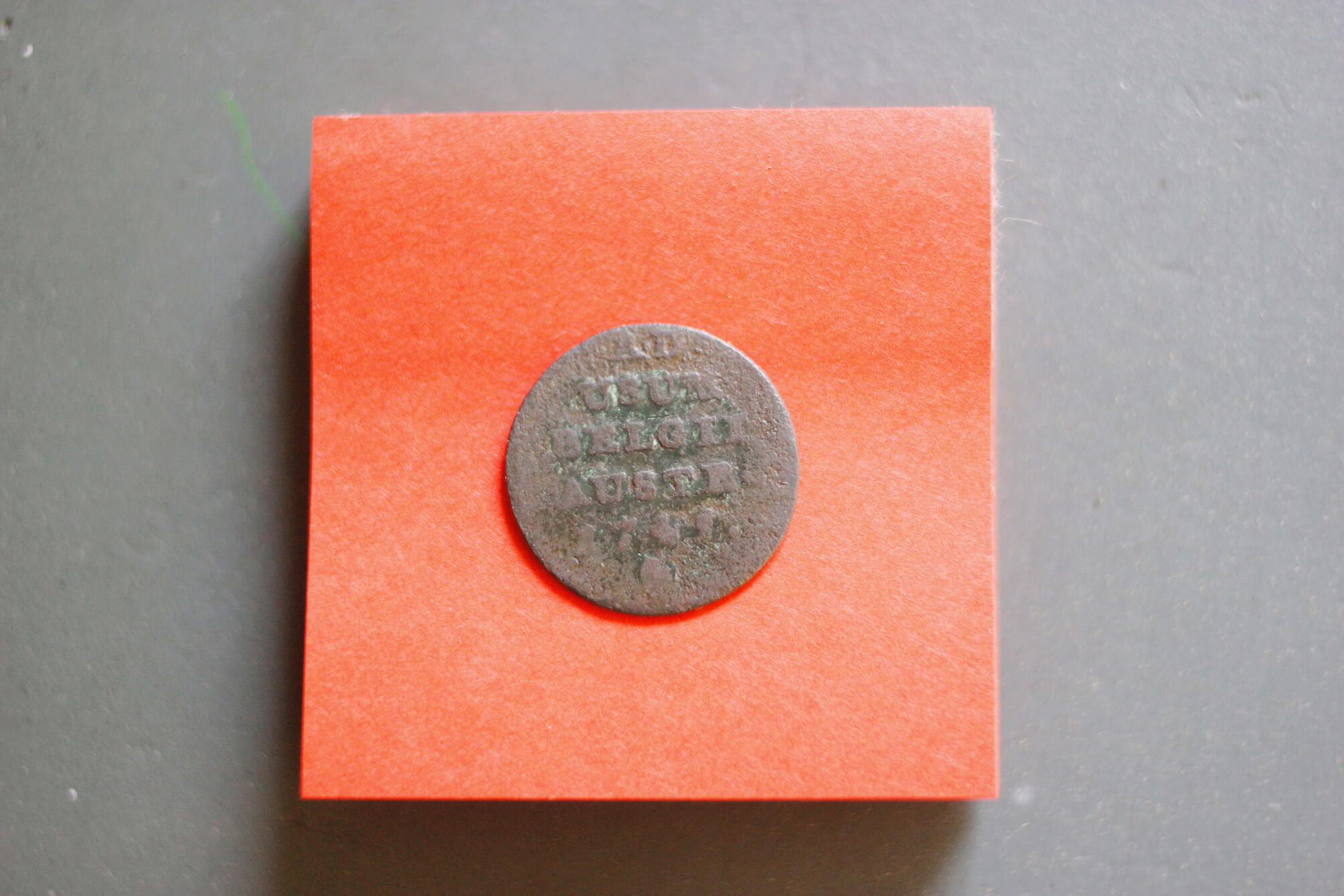
The oldest coin in the collection has darkened over time, but upon inspection, the text ‘AD USUM BELGII AUSTR’ (left) and the contours of a (female) head (right) can be discerned. A quick search learns it stems from the middle of the 18th century. The coin was made and used in the Austrian Netherlands, reigned by Maria Theresa, who is the one depicted. My mother recollects finding it in the backyard when she was a kid.
About 40 years later, the euro was introduced. The ringbinder with my mother’s coin collection was taken from the shelf. A dilemma came to the fore: we wondered if we should keep one of each existing Belgian coin and banknote and put them in the binder, alongside Maria Theresa, or if we should exchange them for the new European currency. The decision to keep a coin of five Belgian francs was not difficult to make, but as the amount raised, the answer was increasingly hard to give. This was an assessment of the old currency’s emotional and projected historical value, compared to its current financial worth. It was a decision based on investment principles.
To accentuate the value of the Maria Theresa kronenthaler of 1 liard, I put the coin on a pile of red post-it-notes when photographing it. Coins like these are sold on eBay for prices ranging from 0,70 euros to 16 euros.

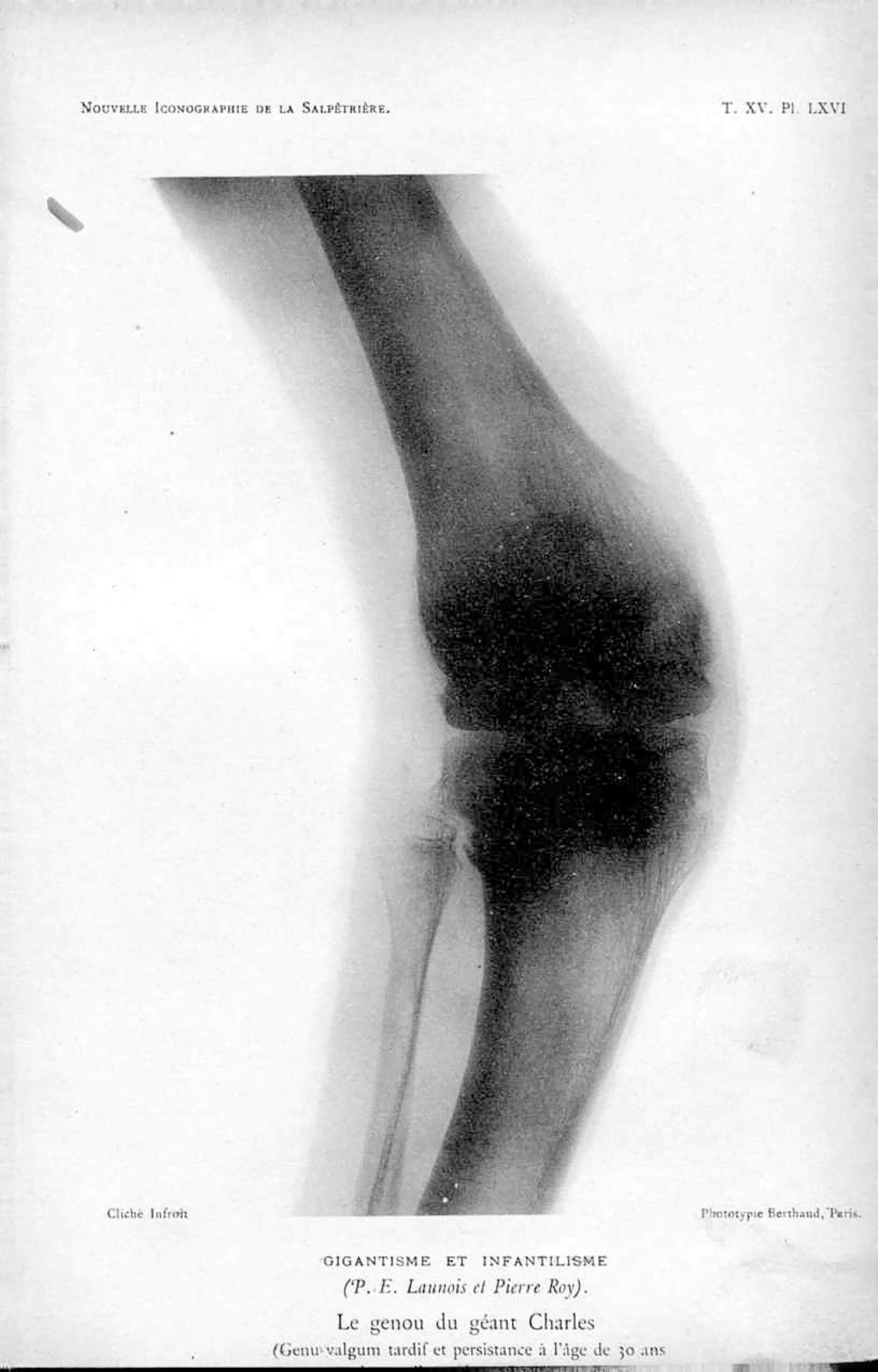
The scientific exactitude sought for in the Iconographie de la Salpêtrière and the Nouvelle Iconographie de la Salpêtrière, the (in)famous scientific publications stemming from Paris’ psychiatric hospital La Salpêtrière (1876-1918), lead to an abundance of photographic images in their pages. The photographs’ ideal: ‘Trace incontestable, incontestablement fidèle, durable, transmissible’.1 The ambition of exactitude results in cold, and often cruel depictions of patients. In the digitized version of the Sorbonne library’s copies, some photographs have left an imprint on the opposite page. The knee of Charles, ‘le géant’, adds an unwanted layer upon its measures on the opposite page, while the photograph of the knee itself loses ink.2
Didi-Huberman, G. Invention de l’hystérie. Paris: Macula, 2014, 72.
Launois, P.-E., Roy, P., ‘Gigantisme et infantilisme’, Nouvelle Iconographie de la Salpêtrière, Tome XV, 1902, 548, pl. LXVI, online: https://patrimoine.sorbonne-universite.fr/fonds/item/2613-nouvelle-iconographie-de-la-salpetriere-tome-15?offset=6

At the beach of Cap d’Antifer in Normandy one can find ‘sea glass’ between the pebbles: pieces of broken glass that have naturally weathered by being tumbled by the ocean, over and over. Sharp edges and smooth surfaces vanish. The historical origin of the glass pebbles (glass bottles, a shipwreck) erodes. Only the colour of the pebbles gives an indication of their history, be it vaguely. Varieties of green sea glass are common, but other colours, such as red (Shlitz beer bottles) or yellow (interbellum Vaseline containers), are more rare and have to be sought after attentively.
It’s 4.15 PM. The tide is pushing three people towards the cliffs.

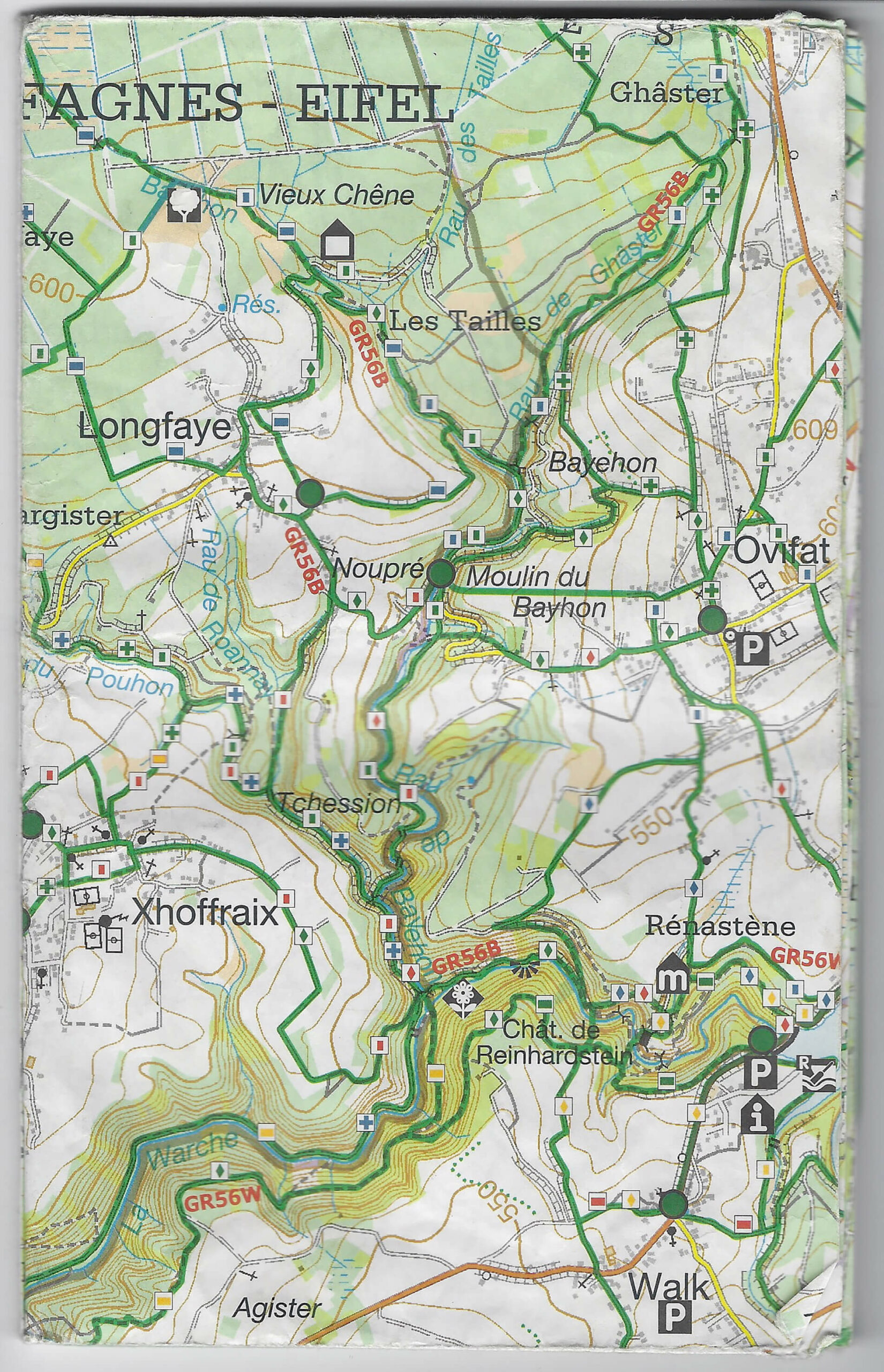
The paths in the valley of the Bayehon are covered with ice. We are making our way down towards the valley of the Ghâster. The temperature is minus 15 degrees Celsius. The water in our drinking bottles is frozen. We are betting on the shelter indicated on the map (Au Pied des Fagnes, Carte De Promenades, 1:25.000, Institut Geographique National) to pitch our tent. There is almost no wind, but every breath of air feels like we’re being hit with a thousand needles. What the map indicates as a shelter appears to be a picnic table.
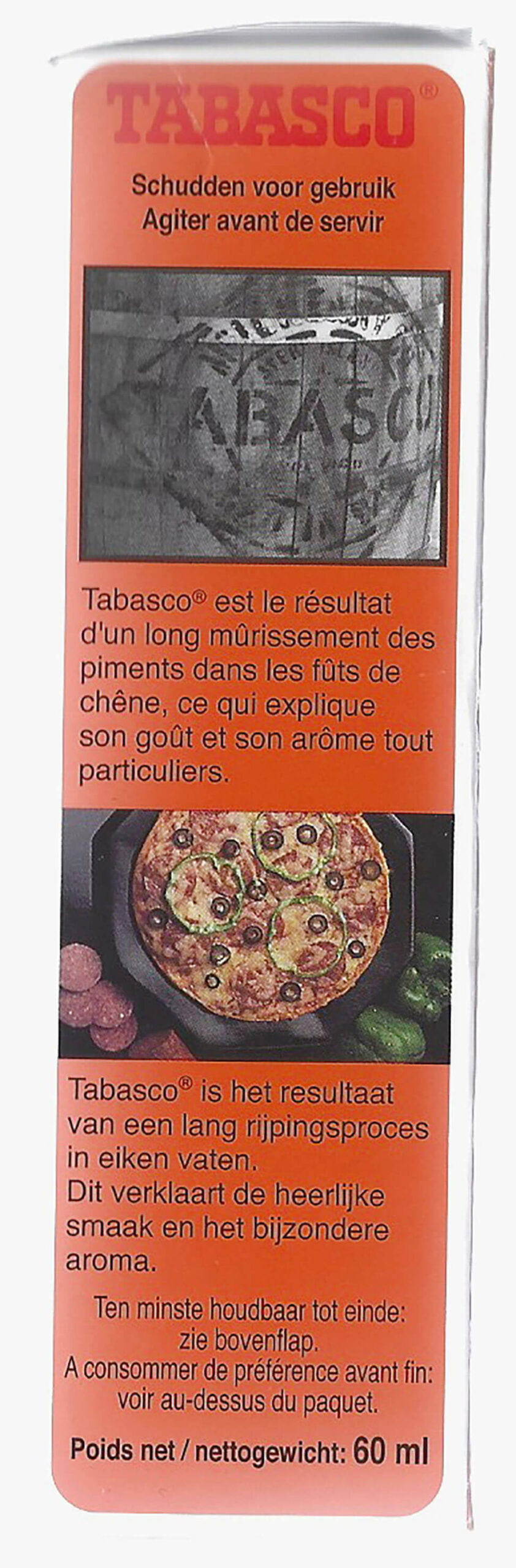
Until recently, for as long as I could remember, the packaging of Tabasco® Pepper Sauce had been unchanged. On the front of the packaging, there is a photograph of a bottle of Tabasco®, scale 1:1, against an orange background.As far as packaged goods go, this is a highly idiosyncratic and quirky example.
The background colour approximates the colour of the liquid inside the bottle, resulting in as good as no contrast. Moreover, as the image of the bottle is scale 1:1, the packaging becomes kind of unnecessary and superfluous, also because the life-sized image of the bottle is the only way information is given to the customer: there are no additional slogans, no repetition of the brand name, no props and no decor. The image of the bottle advertises the bottle. It seems to add nothing the bottle could not do by its own (like a bottle of wine does).
What makes the packaging truly stand out, however, is the fact that the image of the bottle is not positioned vertically, but is slightly askew. It seems to be the result of a design error, and has an amateur feel to it. The decision to keep it as such and not correct it up until today, is, however, a stroke of genius. The non-vertical positioning alters the relation of the image of the bottle to the bottle inside: as the box is standing on a shelf, the tilted image of the bottle undermines its representational superfluousness.

It must have been four or five years ago, that I noticed the change in Tabasco’s® up until then stable, unchanged and thus kind of unfashionable presence in supermarkets (vinegar section). On one of the box’s sides, there had always been a photograph of a man, clipboard in hand, looking upwards to a huge wooden barrel full of Tabasco®. He was inspecting something, from the outside, writing it down.
A couple of years ago, the man disappeared from the packaging. I think he was replaced by a pizza (as one of the suggestions for using Tabasco® on, besides on hashed meat (with an egg yolk, fries and lettuce) and spaghetti bolognese) or a black-and-white image of a part of an oak barrel. It is unclear who is inspecting the barrels now.
A constant, dependable presence. With the camera focused on the North Star for an extended period, the rotation of the Earth becomes visible. Nearby, in the municipality of Wiederstedt, the geologist, poet and philosopher Friedrich von Hardenberg (better known by his pen name Novalis) spent his childhood years between 1772 and 1784. A quote of his is engraved on a stone bench in the park surrounding the chateau where he was raised: “The human being does not speak alone – the universe also speaks – everything speaks – infinite languages.”
From S. Anders Leben. Eine Handlung in Gesprächen/S. Anders Leben – Living Differently: An Act in Conversations
Stephanie Kiwitt (1972) is an artist based in Halle (Saale), Germany. Utilizing a large number of images, various perspectives and also textual elements, she is known for her insightful photography that explores spaces emblematic of contemporary phenomena. Over the past three years, she has focused on evolving habitats in rural areas, photographing traces of transformation and conducting interviews in Saxony-Anhalt, the region she moved to in 2020. From 2018 to 2020, Kiwitt was a guest lecturer at the LUCA School of Arts in Brussels.
In spring 2024 the-documents.org and Trigger co-publish a series of online articles with a focus on the meeting ground between photography and the document.

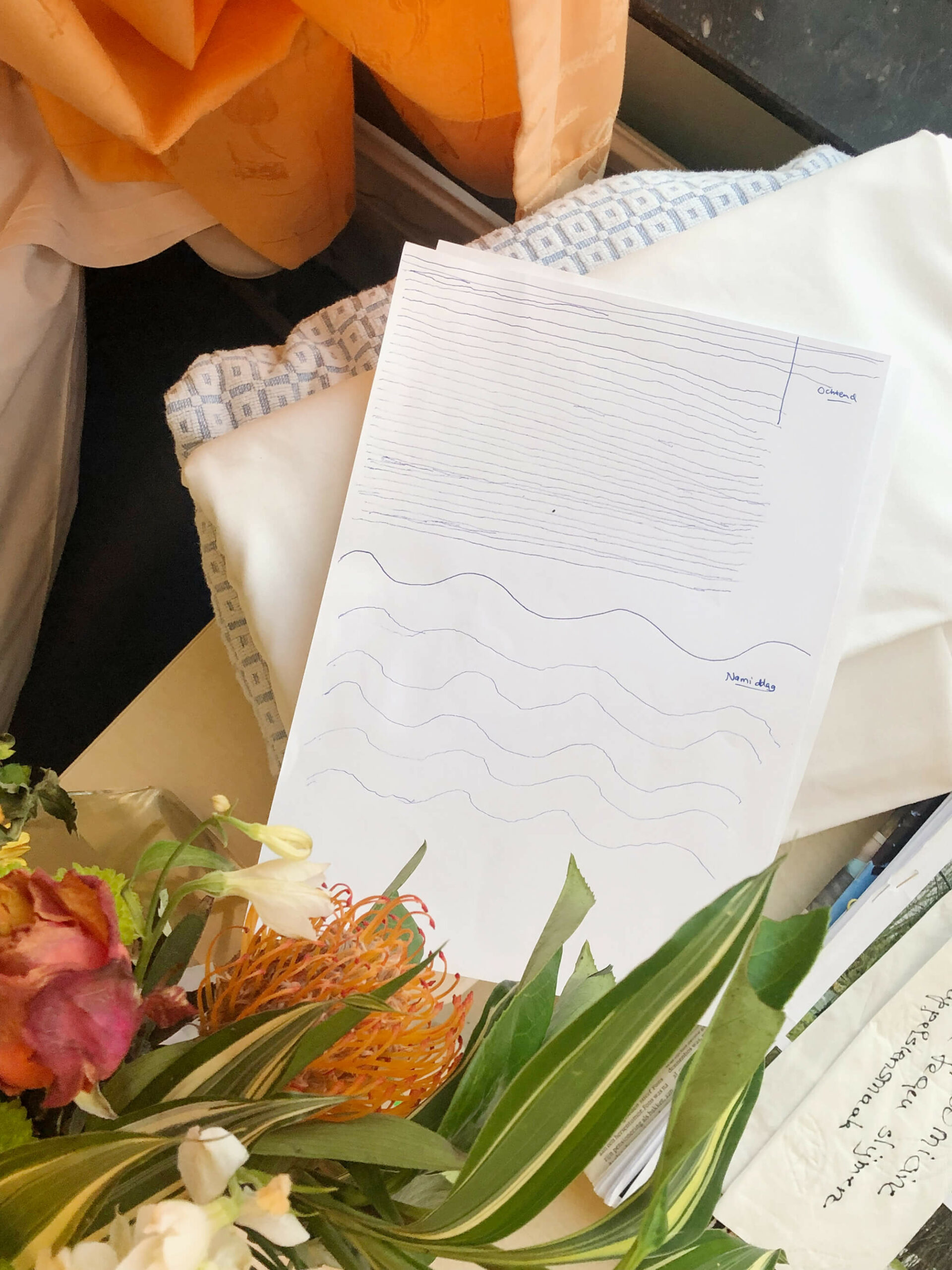
On a pile of fresh hospital sheets, near the radiator, the tangerine curtains and the black marble window sill (the window looks out over the parking lot), underneath the two-day-old bouquet of flowers and next to a pile of magazines with a handwritten note on top (about a syrup that relieves slime and tastes like oranges), lie two sheets of paper.
Earlier that day the physiotherapist had come by. Twice. Once in the morning and once in the afternoon. He had each time drawn the first line, as an example. A straight line in the morning, a curvy line in the afternoon.
With a ballpoint pen my grandfather, who is recovering from an accident, diligently copied the examples (31 in the morning, 5 in the afternoon).
‘You see?!’
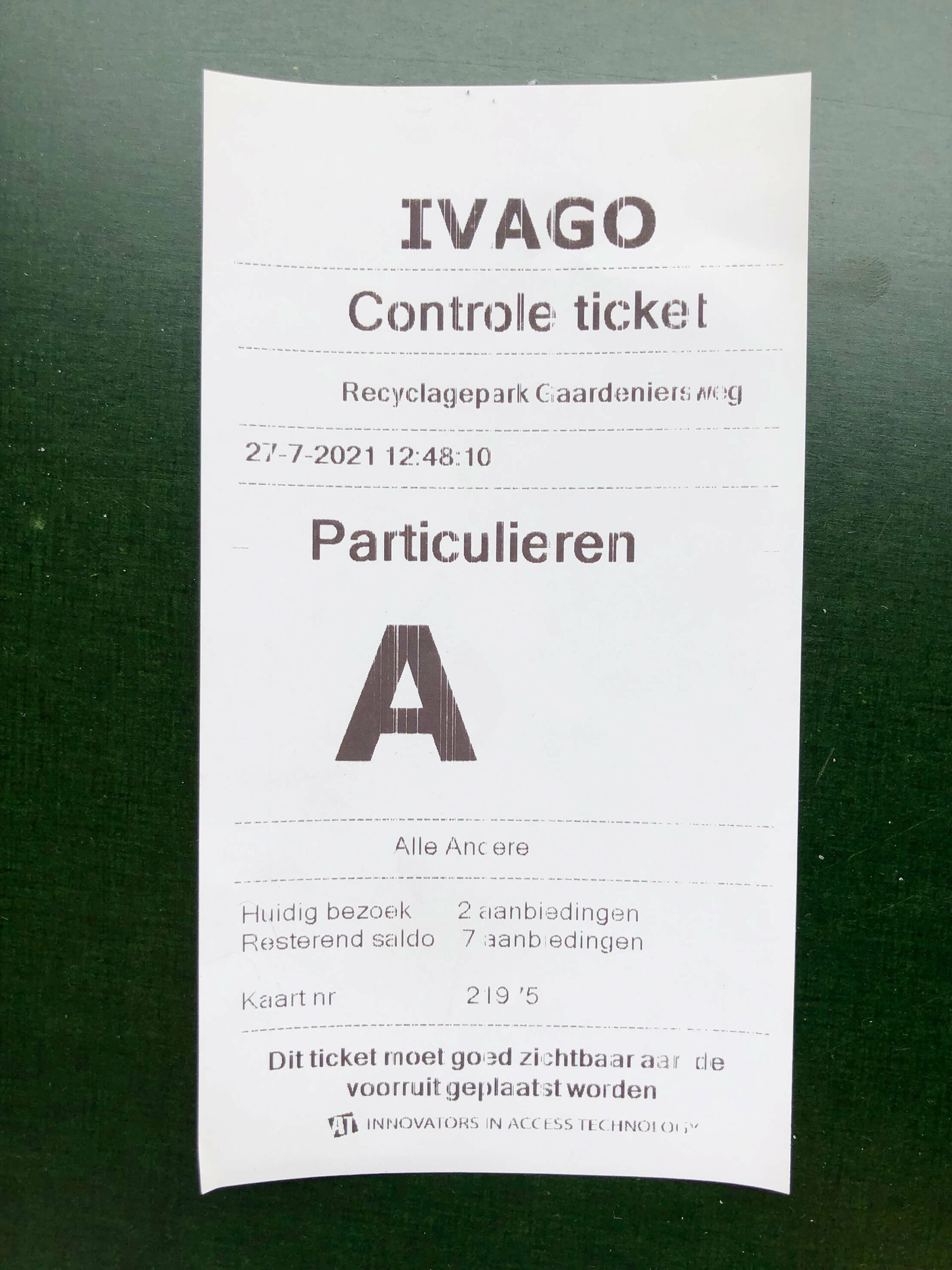
[The man points at the waybill1 on the floor behind the glass door that closes off the abandoned and dismantled hall.]
‘It used to be here, I’m sure.’
[He looks around.]
‘I’m sure.’
[He turns towards me.]
‘Are you also here for the Leen Bakker?2 This used to be a Leen Bakker. I just looked it up on their website. They are open from 9 to 6 today.’
[He points at the waybill again.]
‘It was here. I remember well. It’s been years. But it’s here.’
[He walks away.]
‘I’ll look around.’
The waybill documents the transport of a 30m3 container filled with approximately 5000 kg of waste from this branch of Leen Bakker to a scrap processing company in nearby Ninove. They take care of scrap, both ferrous and non-ferrous metals. They also have a recognized depollution center for end-of-life vehicles.
A chain of furniture and interior stores with branches in the Netherlands, Belgium and the Caribbean part of the Kingdom of the Netherlands.

Today I brought an old bedspring, the styrofoam the air-humidifier came in, a few bags of sawdust and some scrap pieces of plywood to the municipal recycling center. As I was waiting to mount the stairs to the scrap metal container, a gray-haired man wearing blue leather shoes, dark jeans and a checkered shirt was tipping – with relative ease – a weight bench over the edge of the container.
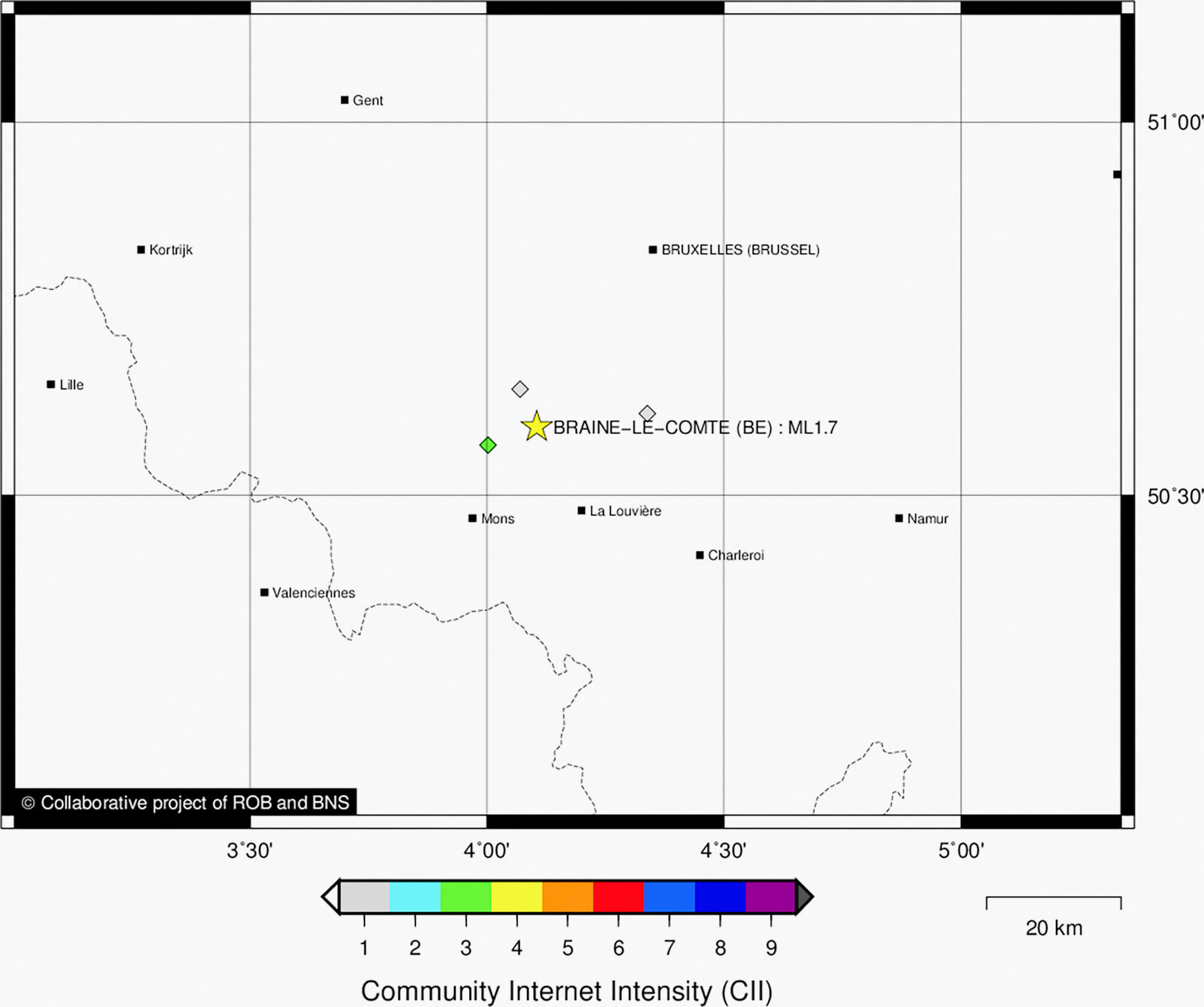
On May 6th 2020, 14h06 and 31 seconds, the Belgian Seismological Institute records an earthquake with a 1,7 magnitude in the region of Braine-Le-Compte. Three reactions from people in the neighbourhood, filed by the Institute, confirm the official seismological recordings. The Institute’s website classifies the earthquake as a ‘quarry blast’.
http://seismologie.be/nl/seismologie/aardbevingen-in-belgie/en130qj1o
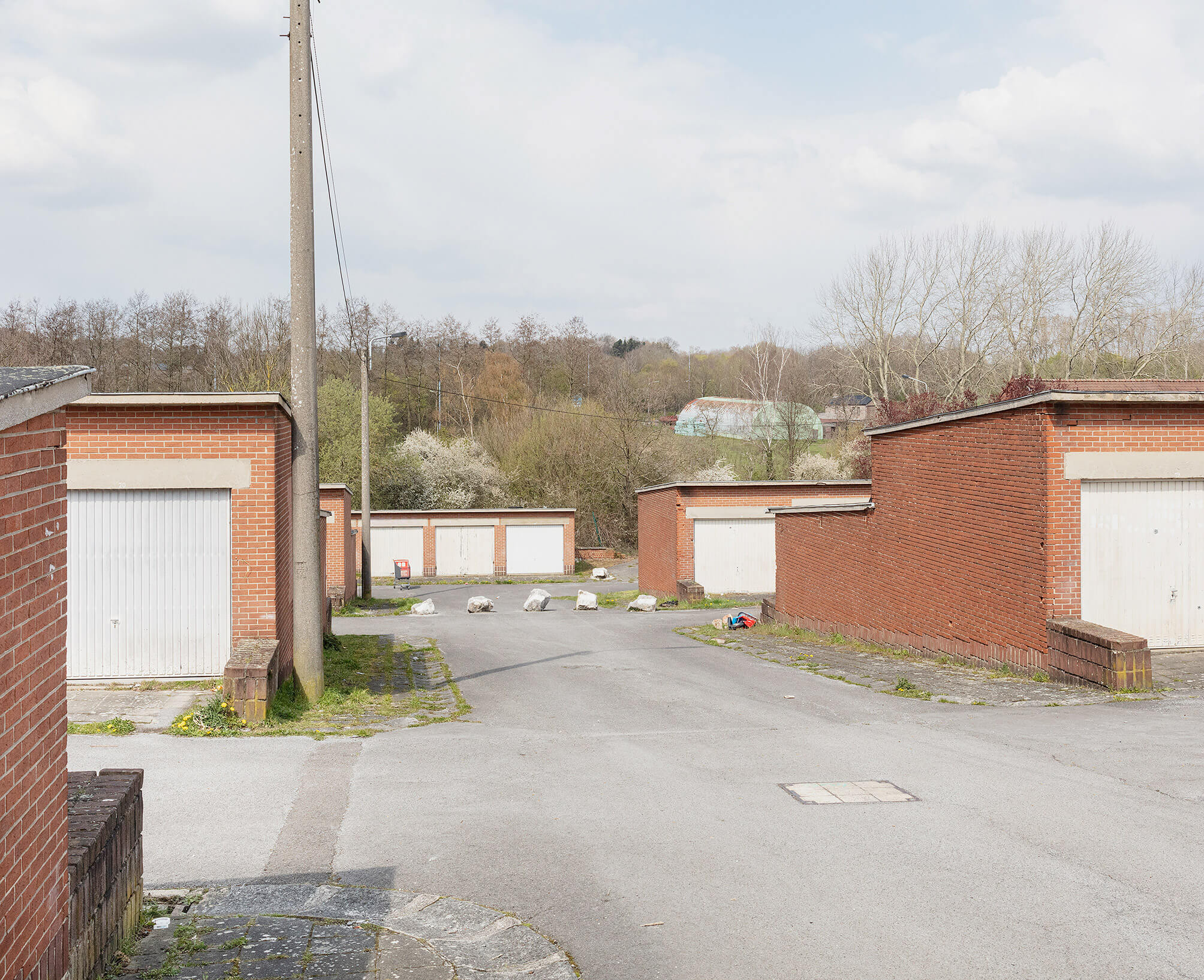
Seven very similar and rudimentary buildings take in a trapezoid plot of land in Gilly. They are located between the school on the Rue Circulaire and the houses along the Rue de l’Abbaye. The structures are built of orange brick, concrete structural elements, whitish steel gates and roofing. Every garage has its own number, hand-painted in white on the concrete lintel above each gate. In summer the roofing gets hot and soft.