What constitutes a ‘document’ and how does it function?
According to the Oxford English Dictionary, the etymological origin is the Latin ‘documentum’, meaning ‘lesson, proof, instance, specimen’. As a verb, it is ‘to prove or support (something) by documentary evidence’, and ‘to provide with documents’. The online version of the OED includes a draft addition, whereby a document (as a noun) is ‘a collection of data in digital form that is considered a single item and typically has a unique filename by which it can be stored, retrieved, or transmitted (as a file, a spreadsheet, or a graphic)’. The current use of the noun ‘document’ is defined as ‘something written, inscribed, etc., which furnishes evidence or information upon any subject, as a manuscript, title-deed, tomb-stone, coin, picture, etc.’ (emphasis added).
Both ‘something’ and that first ‘etc.’ leave ample room for discussion. A document doubts whether it functions as something unique, or as something reproducible. A passport is a document, but a flyer equally so. Moreover, there is a circular reasoning: to document is ‘to provide with documents’. Defining (the functioning of) a document most likely involves ideas of communication, information, evidence, inscriptions, and implies notions of objectivity and neutrality – but the document is neither reducible to one of them, nor is it equal to their sum. It is hard to pinpoint it, as it disperses into and is affected by other fields: it is intrinsically tied to the history of media and to important currents in literature, photography and art; it is linked to epistemic and power structures. However ubiquitous it is, as an often tangible thing in our environment, and as a concept, a document deranges.
the-documents.org continuously gathers documents and provides them with a short textual description, explanation,
or digression, written by multiple authors. In Paper Knowledge, Lisa Gitelman paraphrases ‘documentalist’ Suzanne Briet, stating that ‘an antelope running wild would not be a document, but an antelope taken into a zoo would be one, presumably because it would then be framed – or reframed – as an example, specimen, or instance’. The gathered files are all documents – if they weren’t before publication, they now are. That is what the-documents.org, irreversibly, does. It is a zoo turning an antelope into an ‘antelope’.
As you made your way through the collection,
the-documents.org tracked the entries you viewed.
It documented your path through the website.
As such, the time spent on the-documents.org turned
into this – a new document.
This document was compiled by ____ on 14.10.2026 12:11, printed on ____ and contains 29 documents on _ pages.
(https://the-documents.org/log/13-10-2026-6911/)
the-documents.org is a project created and edited by De Cleene De Cleene; design & development by atelier Haegeman Temmerman.
the-documents.org has been online since 23.05.2021.
- De Cleene De Cleene is Michiel De Cleene and Arnout De Cleene. Together they form a research group that focusses on novel ways of approaching the everyday, by artistic means and from a cultural and critical perspective.
www.decleenedecleene.be / info@decleenedecleene.be - This project was made possible with the support of the Flemish Government and KASK & Conservatorium, the school of arts of HOGENT and Howest. It is part of the research project Documenting Objects, financed by the HOGENT Arts Research Fund.
- Briet, S. Qu’est-ce que la documentation? Paris: Edit, 1951.
- Gitelman, L. Paper Knowledge. Toward a Media History of Documents.
Durham/ London: Duke University Press, 2014. - Oxford English Dictionary Online. Accessed on 13.05.2021.

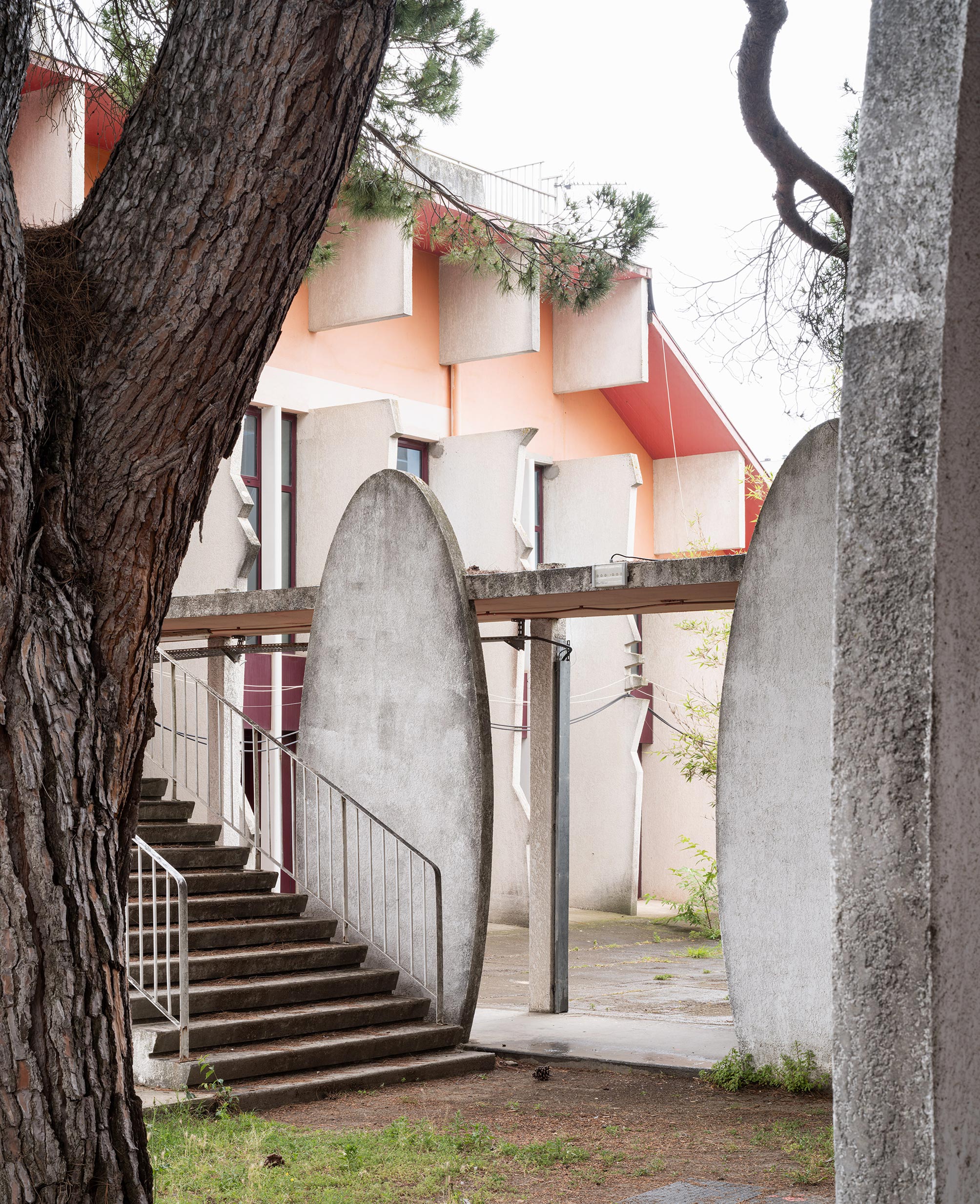
Built in 1969, the salle polyvalente1 in La Grande-Motte2 was the first venue where the residents – back when there were only 700 of them – could gather. Jean Balladur had envisioned an open-air theatre covered by a removable stretched canvas, adjacent to a single-storey multipurpose hall. The load-bearing structure, Balladur explained, consists of anthropomorphic columns sculpted by Albert Marchais: “My friend the sculptor, painter, poet and man of the theatre, Albert Marchais, devised the design for a sliding formwork that made it possible to cast the columns… they line up on either side of the hall in patterns that free them from the strict constraints of matter. This freedom is the joy of all sculpture.”3
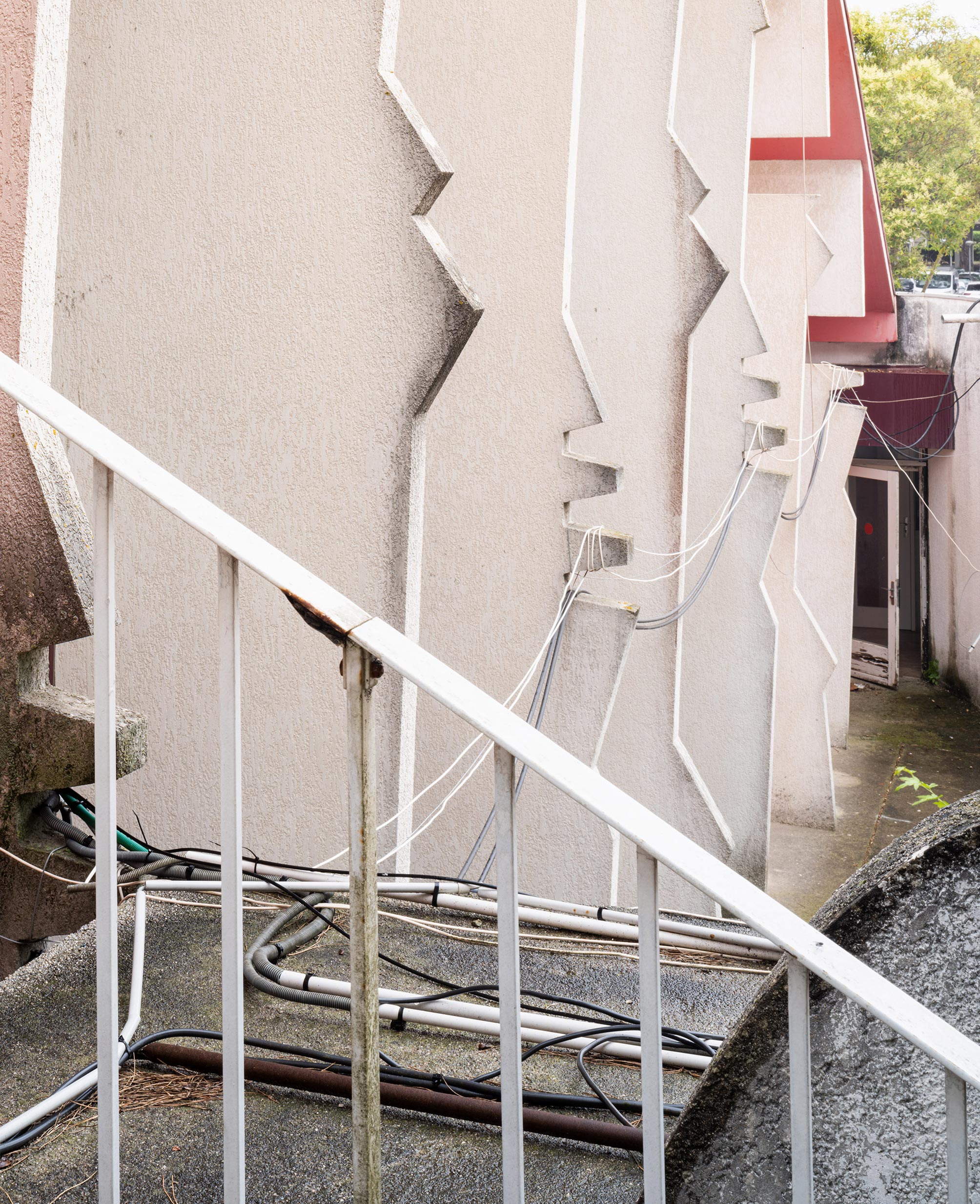
The geometric forms that make up the hands and arms of these figures are today strung with cables carrying electricity and data.
Jean Balladur was never fond of the term ‘salle polyvalente’, he preferred ‘salle commune, dédié à la fête’ – a communal hall, dedicated to parties. Since 2019 it is officially the Centre Culturel Henri Dunoyer, after a former mayor.
La Grande-Motte is a seaside resort created by the Mission Racine, the state programme for the development of the Languedoc coastline in southern France. Intended as a holiday destination for the middle class in the 1970s, it is the work of architect Jean Balladur (1924–2002), who was tasked with designing the entire urban layout and architecture of the new town. He drew inspiration from pre-Columbian pyramids and from modernist architecture in Brazil, especially the work of Oscar Niemeyer. At a time when large housing complexes were going up all over France in the form of tower blocks and slabs, Balladur’s solutions were different enough that La Grande-Motte was a success from the very beginning.
« Mon ami le sculpteur, peintre, poète, homme de théâtre, Albert Marchais, a imaginé le dessin d’un coffrage glissant qui a permis de couler les poteaux… ils s’alignent de chaque côté de la salle dans des figures qui les affranchissent des strictes contraintes de la matière. Cette liberté fait le bonheur de toute sculpture. »
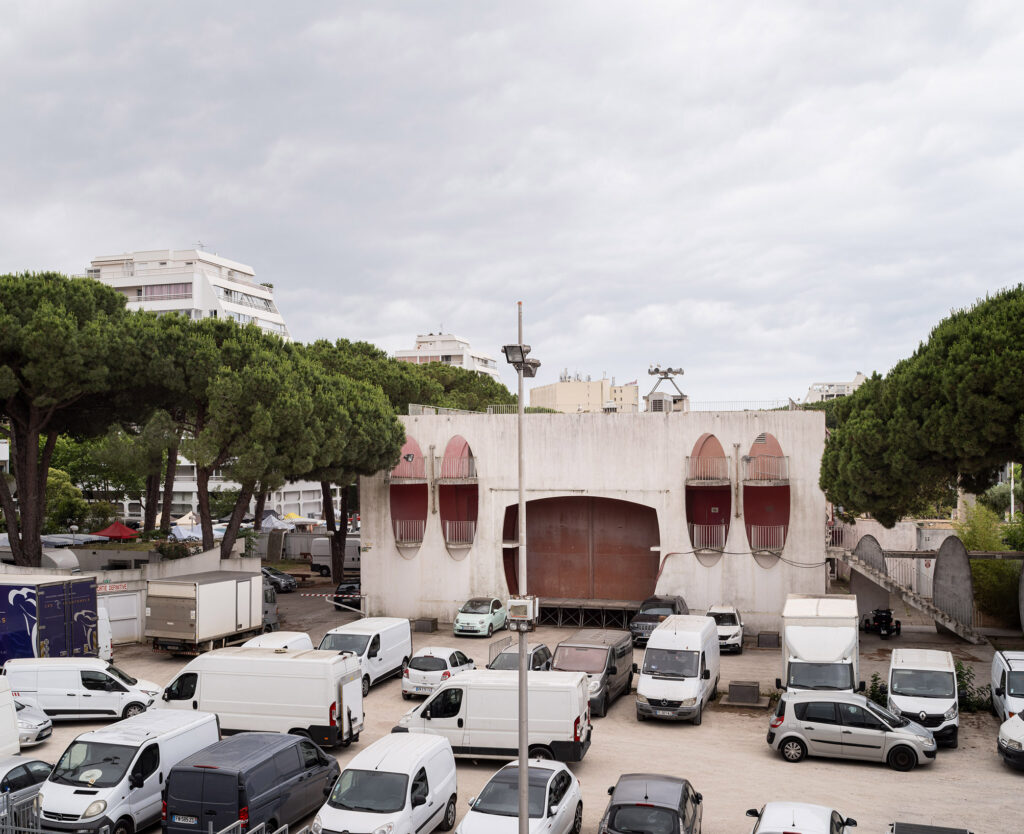
On market days, the parterre of the open-air theatre serves a a car park for the vendors’ vans and cars.
François, Michèle. Jean Balladur et la Grande-Motte: l’architecte d’une ville. Duo. Monuments historiques et objets d’art du Languedoc-Roussillon, Direction régionale des affaires culturelles, 2010, p. 41-42.
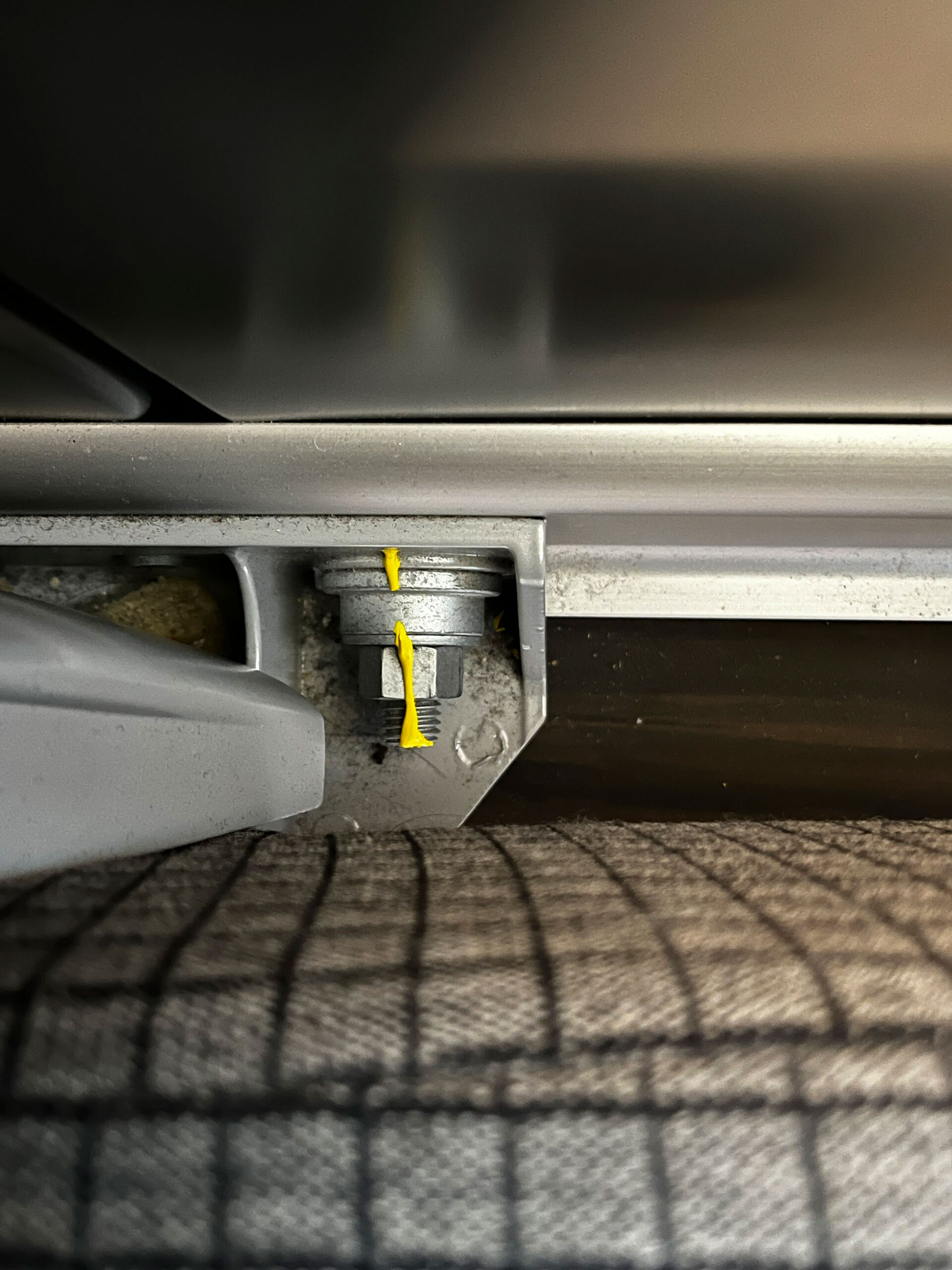
On the train between Brussels and Leuven someone appears to have spilled bright yellow mustard in a straight line onto the bolt, washer and nut that attach my seat to the structure of the carriage.
Hours later, on the train home, a similar bead. The mustard is hard and somewhat brittle1 beneath my index finger.
I search the internet for ‘lijntje verf op bout en moer’. Torque seal is a brightly colored paste applied across a tightened nut and bolt to provide a quick visual check of whether the fastener has moved or loosened due to shock, vibration or tampering. According to the same search, DIY enthusiasts often use nail polish.

The last couple of days have been dry. Rain is expected for the weekend. The office buckets are in place and are empty, except for some residue. Dirt, sand, a few hairs. Some particles must have come along with the drops when they made their way through the roof.

At the office,1 a gray and a green bucket are meticulously positioned on the floor to catch the water dripping from the ceiling.2 It has been a very wet few months.
Perpendicularly above the green bucket is the office’s smoke detector, which, when it rains, could be mistaken for a sprinkler. The gray bucket is positioned perpendicularly beneath the electric line leading to the smoke detector. The lamp doesn’t leak.
The nineteenth-century building was designed by the renowned architect Adolphe Pauli.3 The offices of my former employer were also housed in a Pauli building. Over there, it was a mop that was used to evacuate water from the recurrently flooded ground floor hallway.
the-documents.org HQ
The reason for the leaks is said to be the use of screws that cause an electrolytic reaction.
Shortly after documenting the above, the roof came down. The buckets only partly catched the plaster.


A constant, dependable presence. With the camera focused on the North Star for an extended period, the rotation of the Earth becomes visible. Nearby, in the municipality of Wiederstedt, the geologist, poet and philosopher Friedrich von Hardenberg (better known by his pen name Novalis) spent his childhood years between 1772 and 1784. A quote of his is engraved on a stone bench in the park surrounding the chateau where he was raised: “The human being does not speak alone – the universe also speaks – everything speaks – infinite languages.”
From S. Anders Leben. Eine Handlung in Gesprächen/S. Anders Leben – Living Differently: An Act in Conversations
Stephanie Kiwitt (1972) is an artist based in Halle (Saale), Germany. Utilizing a large number of images, various perspectives and also textual elements, she is known for her insightful photography that explores spaces emblematic of contemporary phenomena. Over the past three years, she has focused on evolving habitats in rural areas, photographing traces of transformation and conducting interviews in Saxony-Anhalt, the region she moved to in 2020. From 2018 to 2020, Kiwitt was a guest lecturer at the LUCA School of Arts in Brussels.
In spring 2024 the-documents.org and Trigger co-publish a series of online articles with a focus on the meeting ground between photography and the document.

“… the late-Gothic St Mary’s Church in Sandersleben … was consecrated in 1519, just two years after Martin Luther published his Ninety-five Theses. After extensive renovation, part of it is still home to Sandersleben’s Protestant community. The building spans the historical period encountered throughout this region, the various stages of which continue to resonate today. Parts of the church predate the Reformation and the Peasants’ War; its tower, for instance, was initially a city tower before its subsequent role as a watchtower. The contemporary folding glass barrier inside the church is a nod to the future. Since 2013, this feature has enabled the church to host secular events, as it separates the choir from the nave. The significance of a structure or place is derived from its function. If it ceases to serve a purpose or meet a need, it loses its societal relevance. This lack of societal meaning becomes evident in its dilapidation and, ultimately, in its decay, removal or demolition. Lesser-known structures that haven’t been captured in photographs or documented can thus vanish completely, leaving no archaeological footprint, especially when replaced by new constructions. They leave no vestiges behind, not even a trace, which is usually an indicator of the presence of nothingness …”1
Sequence of images from Flächenland/Sprawling Region
Stephanie Kiwitt (1972) is an artist based in Halle (Saale), Germany. Utilizing a large number of images, various perspectives and also textual elements, she is known for her insightful photography that explores spaces emblematic of contemporary phenomena. Over the past three years, she has focused on evolving habitats in rural areas, photographing traces of transformation and conducting interviews in Saxony-Anhalt, the region she moved to in 2020. From 2018 to 2020, Kiwitt was a guest lecturer at the LUCA School of Arts in Brussels.
In spring 2024 the-documents.org and Trigger co-publish a series of online articles with a focus on the meeting ground between photography and the document.
Jonathan Everts, ‘A Long Farewell to the Present’, Flächenland (2020–22), Stephanie Kiwitt, Spector Books, Leipzig, 2023

Set in the fictitious Shanghai-based Dafeng Cotton Mill, Red Skirt Popular on the Street (1984) follows the story of an enterprising model worker as she navigates the challenges of young adult life, from workplace conflicts to choosing what clothes to wear on her days off. In the reflection of the emerging consumer consciousness of the Reform era, many of the film’s key moments happen not on the factory floor, but in the changing room where the workers seek to express themselves through their choice of dress. To this end, the film can be regarded as a document of the fashion trends being introduced into the country at the time, as best observed in the spellbinding array of colours on display as the workers leave the factory at the end of a day’s work.
The textile mill used as the setting for Dafeng Cotton Mill is Shanghai No. 1 Cotton Mill. Originally occupied by the no. 13 and 14 mills of the Japanese-owned Naigaiwata Company, the mill was formally established as the China Textile Construction Company Shanghai No. 1 Cotton Mill after the Second World War. It was located at the T-shaped intersection on Changshou Road, with the gate facing Jiaozhou Road. At that time, the area on the north side of Changshou Road extending from No. 1 Cotton Mill formed a continuous industrial zone encompassing many other factories and warehouses, all of which have since been converted into the private residences and creative parks.
Ho Rui An is an artist and writer working in the intersections of contemporary art, cinema, performance and theory. Through lectures, essays and films, his research examines the relations between labour, technology and capital across different systems of governance in a global age.
In spring 2024 the-documents.org and Trigger co-publish a series of online articles with a focus on the meeting ground between photography and the document.

Gu Eryi’s Shanghainese opera film A Single Spark (1959) dramatises a violent confrontation between indentured labourers and their managers at the Japanese-owned Naigaiwata Company No. 7 Cotton Mill in 1925. The film’s protagonist is Yang Guiying, a peasant who moves to Shanghai to join her daughter only to find her at her last breath on the factory floor after being brutally beaten by her supervisor. The incident sparks protests among the workers at the factory, eventually resulting in one of them, Gu Zhenghong, being killed by a gunshot fired by a guard in the heat of the moment. This further escalates the unrest to a citywide scale, catalysing the May Thirtieth Movement.
The scenes of workers striking were filmed at Shenxin No. 9 Cotton Mill, also the location for another worker-themed film, United Until Tomorrow (1951). Those of Yang Guiying taking to the streets in support of anti-imperialism and patriotism were filmed at the Bund and the area surrounding Waibaidu Bridge. As for Naigaiwata Company No. 7 Cotton Mill where the events depicted in the film actually took place, the enterprise was merged with No. 5 and No. 8 Cotton Mills after the war and nationalised as Shanghai No. 2 Cotton Mill. Today, the site once occupied by the mill is a residential area where a statue of martyr Gu Zhenghong, first erected in 1959, stands before a memorial hall that was established in 2008.
Ho Rui An is an artist and writer working in the intersections of contemporary art, cinema, performance and theory. Through lectures, essays and films, his research examines the relations between labour, technology and capital across different systems of governance in a global age.
In spring 2024 the-documents.org and Trigger co-publish a series of online articles with a focus on the meeting ground between photography and the document.

Directed by Xie Jin, Huang Baomei (1958) is a docudrama based on the real-life experiences of the national model worker of the same name, who also plays herself in the film. Reflecting the economic priorities of the day following the launch of the Great Leap Forward—a far-reaching and ultimately devastating campaign that sought to replace the prevailing Soviet-style expert-managerial system with workers’ self-organisation and mass mobilisation—the film focuses on the challenges faced by machine operators as they strive for a technical breakthrough while working with their aging machines.
Located at No. 2866, Yangshupu Road, Shanghai No. 17 Cotton Mill, which had its origins in the Japanese-owned Yuho Spinning Company, was one of Shanghai’s best known cotton mills. The launch of China’s economic reforms opened a new era for the mill, as reflected cinematically in No. 17 Cotton Mill Shanghai Blues (1984), a British documentary that attests to the vibrant workers’ music scene blossoming within the factory walls. In 1992, the state-owned enterprise was restructured as one of the first batch of joint-stock companies in the Reform era and renamed as Longtou Company after the brand name of a fabric manufactured by the mill. Following the relocation of the mill’s original machinery to Jiangsu in 2007, work commenced to redesign the entire complex and relaunch it as the Shanghai International Fashion Center. In Jia Zhangke’s I Wish I Knew (2010), an elderly Huang Baomei is seen walking amidst the ruins that are all that remain of the cotton mill as it awaits refurbishment.
Ho Rui An is an artist and writer working in the intersections of contemporary art, cinema, performance and theory. Through lectures, essays and films, his research examines the relations between labour, technology and capital across different systems of governance in a global age.
In spring 2024 the-documents.org and Trigger co-publish a series of online articles with a focus on the meeting ground between photography and the document.

United Until Tomorrow (1951) is based on the real-life events that took place at Shanghai’s Shenxin No. 9 Cotton Mill where workers led a factory-wide strike in 1948 to protest salary arrears against the background of escalating inflation. Shot at the original location of the strike, the film shows the entrance of the cotton mill transformed into a literal and ideological battlefield where workers gain class consciousness and fight to reclaim their rightful place as owners of the factory. In one climactic scene, the workers even seal the factory gate from the outside to prevent the products of their labour from being expropriated by Kuomintang forces.
Located at No. 128, Aomen Road, Shanghai, Shenxin No. 9 Cotton Mill belonged to the system of mills managed by Shenxin Textile Company, a private enterprise founded in 1915 by Wuxi-bred industrialist brothers Rong Zongjing and Rong Desheng. Following the Communist takeover of Shanghai, the cotton mill was nationalised in the 1950s and placed under the management of the Shanghai Textile Industry Bureau. With the subsequent launch of the economic reforms, the bureau was restructured into a holding company in 1998 amidst the deindustrialisation of the city. While many iconic buildings in the Shanghai Bund area today can be seen in the film, little remains of the original architecture of No. 9 Cotton Mill where the Shanghai Textile Museum is now located.
Ho Rui An is an artist and writer working in the intersections of contemporary art, cinema, performance and theory. Through lectures, essays and films, his research examines the relations between labour, technology and capital across different systems of governance in a global age.
In spring 2024 the-documents.org and Trigger co-publish a series of online articles with a focus on the meeting ground between photography and the document.

A classic of Republican-era cinema, the 1926 silent film A String of Pearls follows the trials and tribulations of a middle-class Shanghai couple after a pearl necklace borrowed by the husband to please his materialistic wife is stolen. In order to pay for a replacement, the protagonist resorts to embezzling public funds and consequently ends up in prison. After working as a weaver during his sentence, he becomes a worker at Zhenhua Cotton Mill following his release. In an obvious homage to the Lumières’ seminal film, a scene in the film shows workers, including children, entering the factory to begin a day’s work.
Even though the precise location of the factory gate in the film cannot be determined, it happens that the first enterprise that attracted the investment of Rong Ruixin—a relative of cotton magnates Rong Zongjing and Rong Desheng—was called Zhenhua Cotton Mill. Established in 1905, Zhenhua Cotton Mill was not fully mechanised, which would correspond with the appearance of a hand-operated loom in the film. Today, a residential community sits on the original site of the cotton mill.
Ho Rui An is an artist and writer working in the intersections of contemporary art, cinema, performance and theory. Through lectures, essays and films, his research examines the relations between labour, technology and capital across different systems of governance in a global age.
In spring 2024 the-documents.org and Trigger co-publish a series of online articles with a focus on the meeting ground between photography and the document.

In the world of National Geographic, white people overlooking a landscape are not uncommon. “The Red Shirt School of Photography” was a label used to describe National Geographic photographers who allegedly brought red clothing and props with them on assignment to put on their subjects in order to make better photographs when working with Kodachrome film, which is famous for its capability of rendering rich colors. Overlooking a landscape wearing red, the observer asserts dominance over the land. They glorify it, seeing a country that is beautiful, rich in resources, and therefore “worth taking”.
Max Pinckers (°1988, BE) and Victoria Gonzalez-Figueras (°1988, CA) are based in Brussels, Belgium. They have been working together for the past ten years on documentary photography projects. Victoria works in the cultural field as a researcher and producer. Max is a speculative documentarian, teacher and occasional writer on photography. They are married, in love, and have a son. Victoria has consistently assisted Max in his projects as a production manager, but they have recently been making new work together as co-authors. “Double Reward” is the first such project.
In spring 2024 the-documents.org and Trigger co-publish a series of online articles with a focus on the meeting ground between photography and the document.

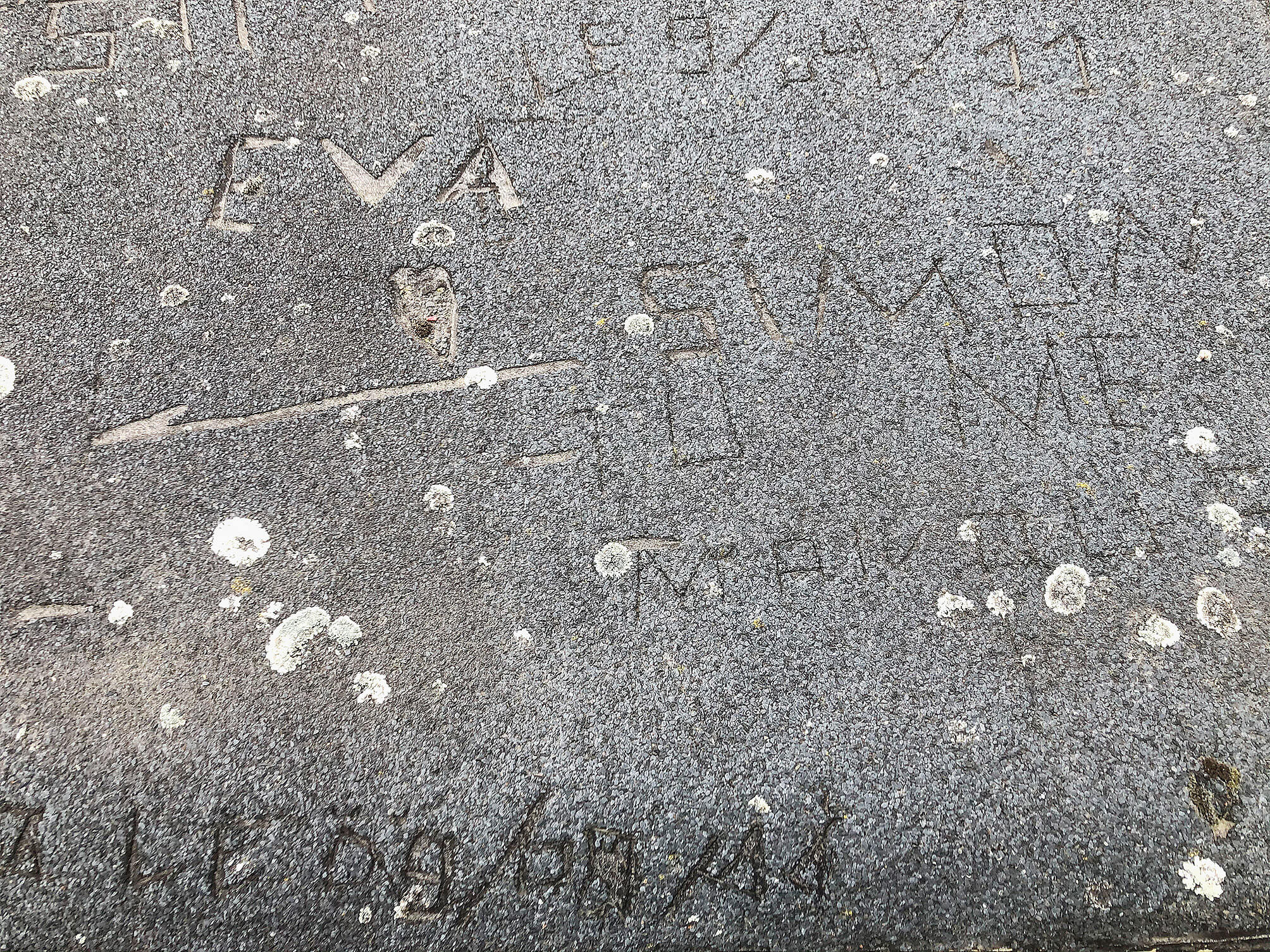
In what order and by whom the various texts and drawings were carved into the soft roofing is unclear. To the right of ‘EVA’, a heart symbol and an arrow (pointing to the left), the roofing reads ‘SIMON TU ME MANQUES’.
The short sentence usually – yet hastily – translates to ‘Simon, I miss you’. However, in French the ‘you’ (tu) is the subject and has an active role, whereas the ‘I’ (me) is the direct object. In short: by his not being there, Simon actively effectuates hurt to the one who carved this text.
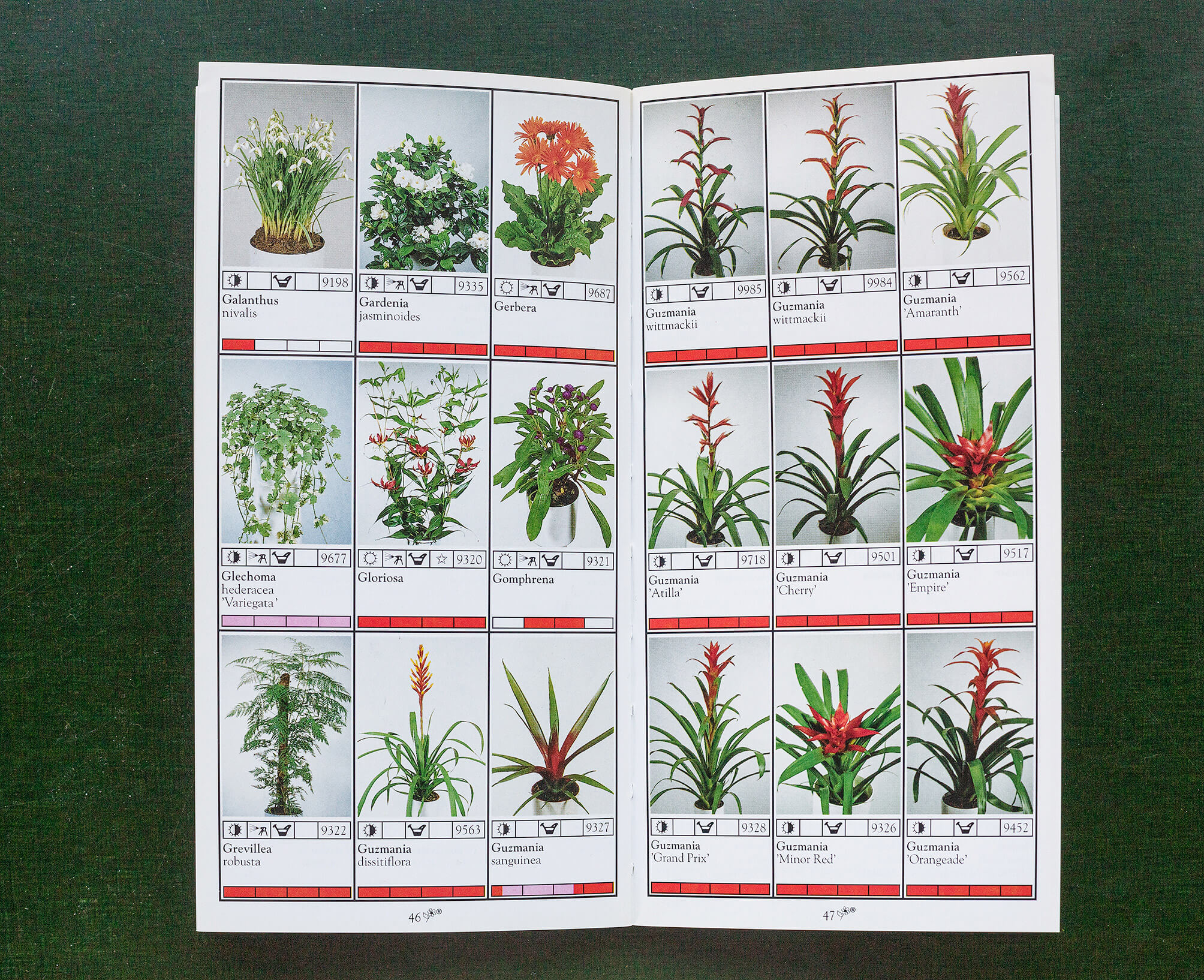
Anastasio Guzmán was a Spanish pharmacist and naturalist. He spent most of his career in South-America. He died in 1807 during an expedition in the Cordillera de Los Llanganates in Ecuador, in search of the lost treasure of the Incas. Some time after his death, his colleague Juan José Tafalla suggested naming a certain genus of plants after his friend.
Guzmanias are mainly stemless, evergreen, epiphytic perennials native to Florida, the West Indies, southern Mexico, Central America, and northern and western South America.They are found at altitudes of up to 3.500m in the Andean rainforests.
The symbols beneath the photographs indicate that these Guzmanias require full light, but it is advised to avoid bright sunlight in spring and summer (HALF WHITE, HALF BLACK SUN), the compost should be kept moderately moist during growth, allowing it to dry slightly between each watering period (HALF FILLED WATERING CAN). Unlike, for instance, the Grevillea Robusta, a Guzmania does not require being sprayed regularly (SPRAYER). The four digit code is the AUCTION CODE: ‘Every product has a code. This code is indispensable for the trade.’ The COLOURED BAR at the bottom shows the availability of a plant quarterly. RED means good, PINK means moderate and WHITE means not available.
The introduction to this booklet mentions that ‘[p]rinted colours are often not as accurate as the colours of the plants themselves, which is why it is possible that colours shown in pictures in this booklet may be a little different from the colours of the real pot plant.’
Bloemenbureau Holland. Potplanten, pot plants, topfpflanzen, plantes en pot, piante da vaso, planta en particular 1995/96. Leiden: Bloemenbureau Holland, 1995.
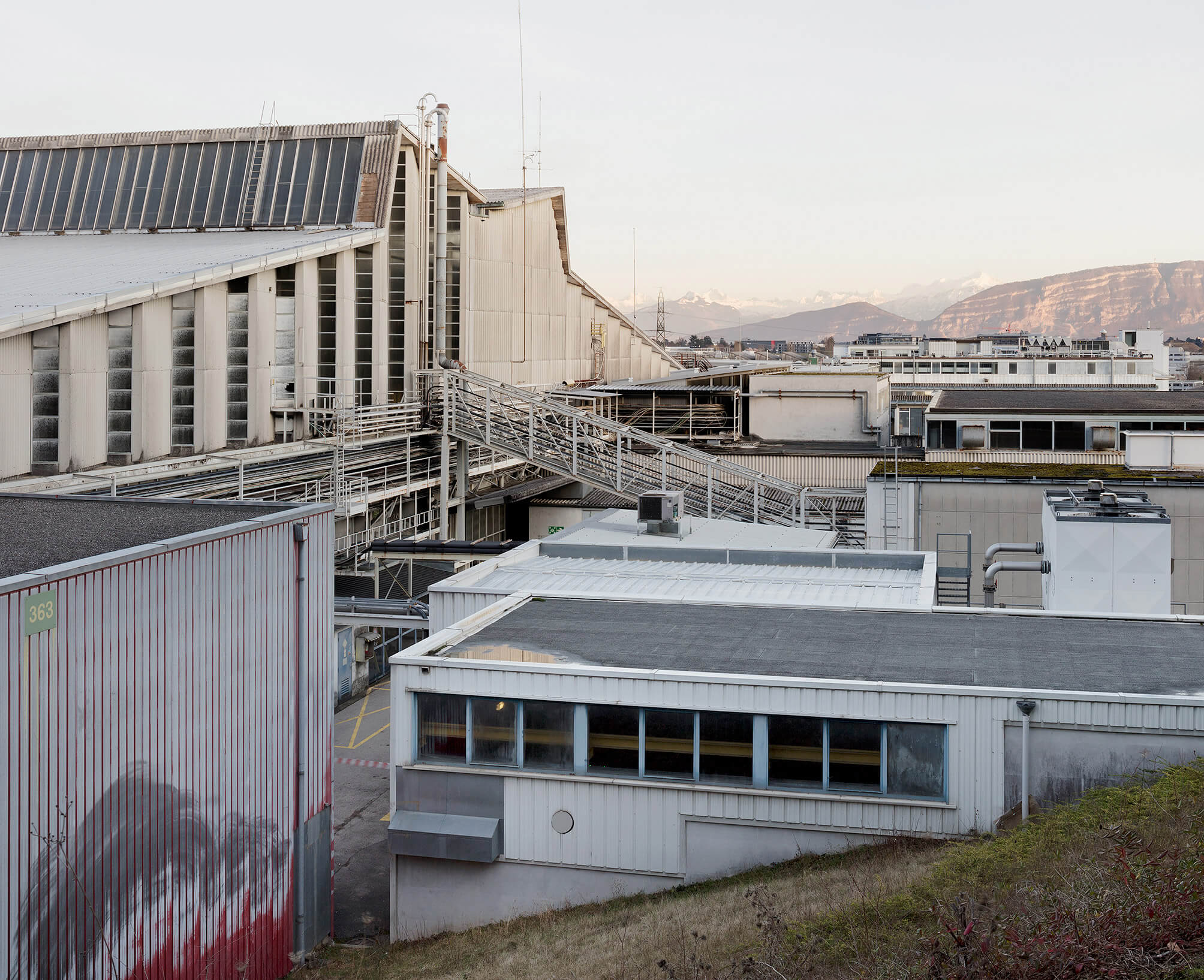
On the second to last day of a research visit at CERN, there was some spare time in the schedule. I took a long walk towards building 282 in search of some excavation samples: cylindrical pieces of rock that were preserved when the tunnel was dug, glued to a block of wood and frequently exhibited in museums over the last three decades as material evidence of the earthwork and as a witness to the depth. The route led me along the back of building 363 where the wind caused young trees – now gone – to scuff the facade over time.
First published in: De Cleene, M. Reference Guide. Amsterdam: Roma Publications, 2019, as W.569.EXC CERN, Towards Building 282, in search of excavation samples
A half a day’s walk from the Fuente Dé teleférico, there are less and less traces of passers-by. The path to Sotres suddenly runs through a lusher green. The fence between two pastures keeps the sheep from crossing and coincides with the border between two regions. A hole in the fence would change the landscape’s hue.

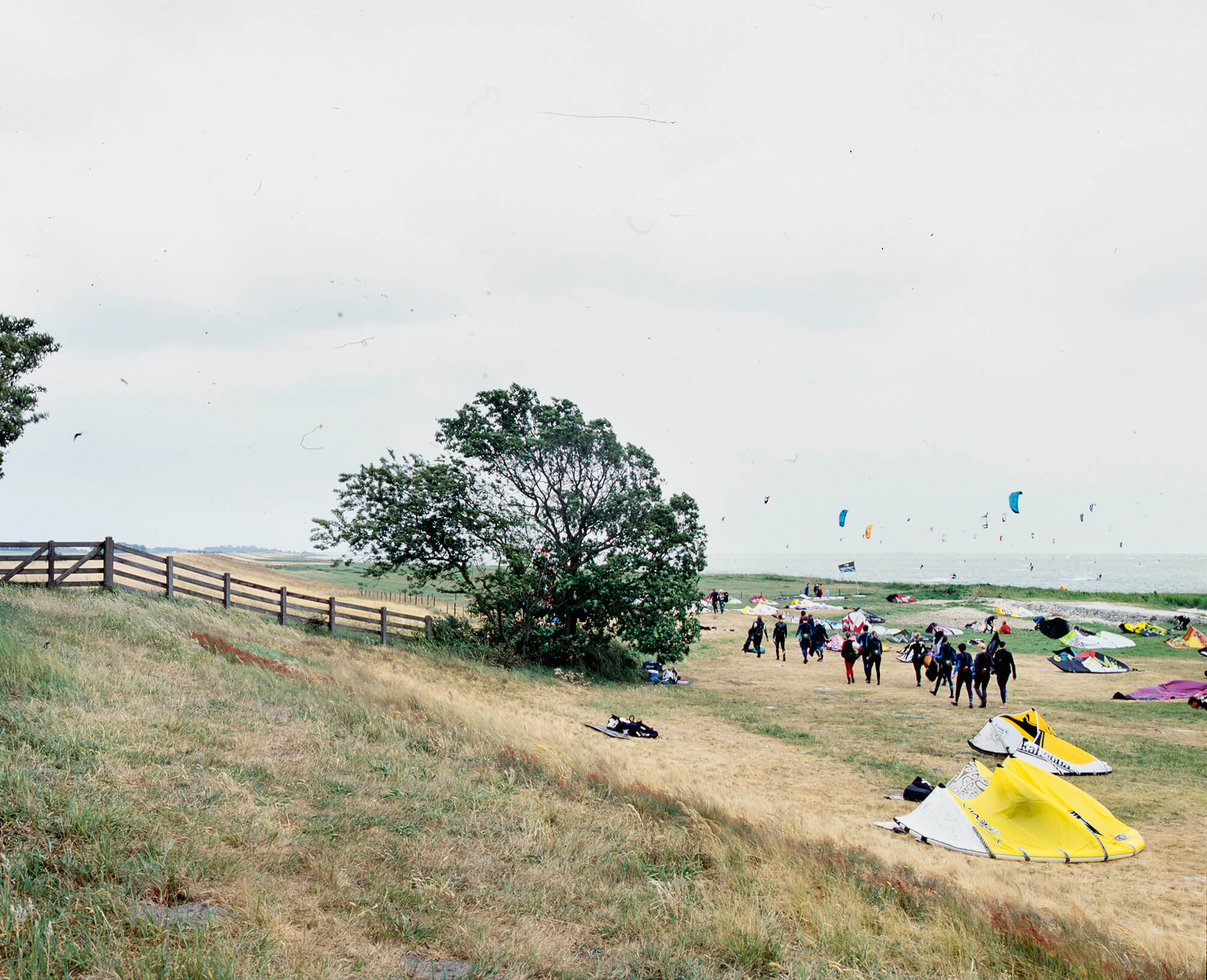
Ten years ago, in November, I drove up to Frisia – the northernmost province of The Netherlands. I was there to document the remains of air watchtowers: a network of 276 towers that were built in the fifties and sixties to warn the troops and population of possible aerial danger coming from the Soviet Union. It was very windy. The camera shook heavily. The poplars surrounding the concrete tower leaned heavily to one side.
I drove up to the seaside, a few kilometers farther. The wind was still strong when I reached the grassy dike that overlooked the kite-filled beach. I exposed the last piece of film left on the roll. Strong gusts of wind blew landwards.
Months later I didn’t bother to blow off the dust that had settled on the film before scanning it. A photograph without use, with low resolution, made for the sake of the archive’s completeness.
The dust on the film appears to be carried landwards, by the same gust of wind lifting the kites.
The river swells and eventually overflows, causing the death of six people and extensive damage: washed away bridges, damaged homes, submerged factories, destroyed food stocks, heavily eroded roads and paths.
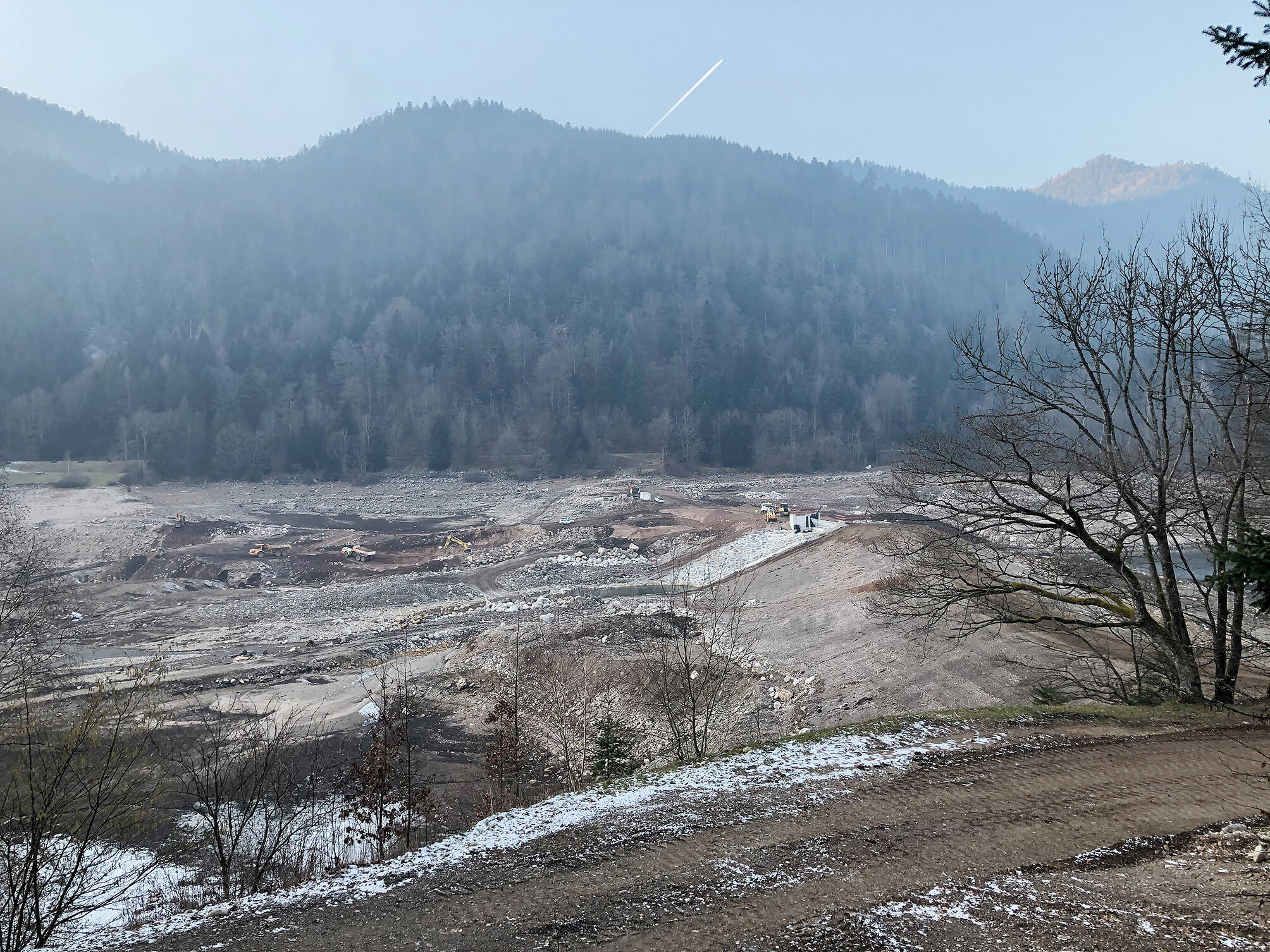
The invalidity of this official document is caused by the fact that it is produced by a machine. Unlike a photograph, the authenticity of this document relies on direct contact between hand, pen and paper.
Max Pinckers (°1988, BE) and Victoria Gonzalez-Figueras (°1988, CA) are based in Brussels, Belgium. They have been working together for the past ten years on documentary photography projects. Victoria works in the cultural field as a researcher and producer. Max is a speculative documentarian, teacher and occasional writer on photography. They are married, in love, and have a son. Victoria has consistently assisted Max in his projects as a production manager, but they have recently been making new work together as co-authors. “Double Reward” is the first such project.
In spring 2024 the-documents.org and Trigger co-publish a series of online articles with a focus on the meeting ground between photography and the document.

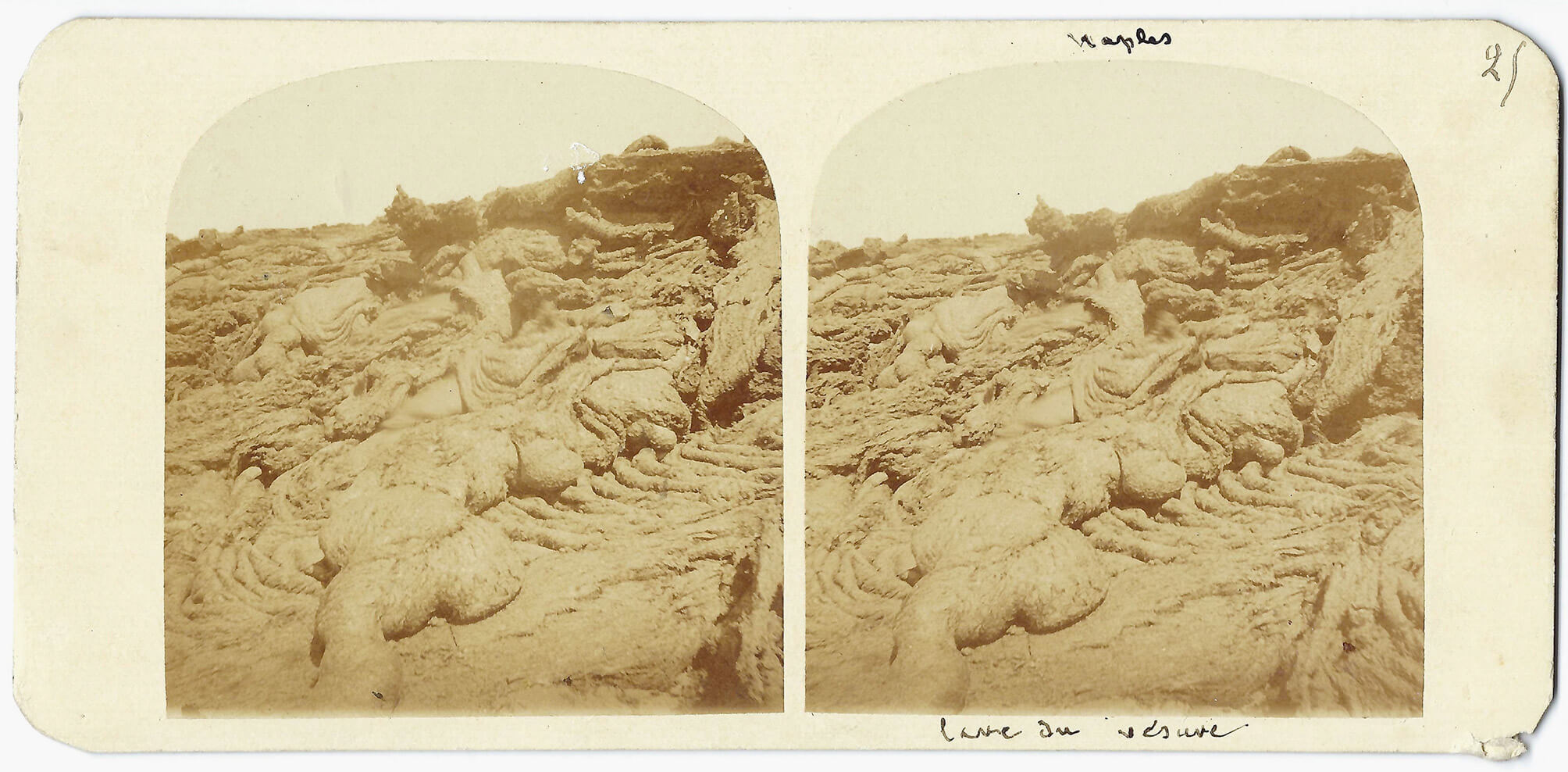
According to art critic Rosalind Krauss, nineteenth-century stereographic images presented ‘views’, not ‘landscapes’. Looking at a stereographic image through a stereoscope involves a particular experience that is altogether different from looking at other types of photographs, or paintings, as it is defined by ‘the isolation of the viewer with an image from which surrounding interference is masked out‘.1 An image of a violent and sudden eruption, higher up on the mountain, hanging next to a stereographic image of a petrified lava flow, would not be perceived.
Krauss, R. The Originality of the Avant-Garde and Other Modernist Myths. Cambridge, Mass./London: The MIT Press, 1986, 139.
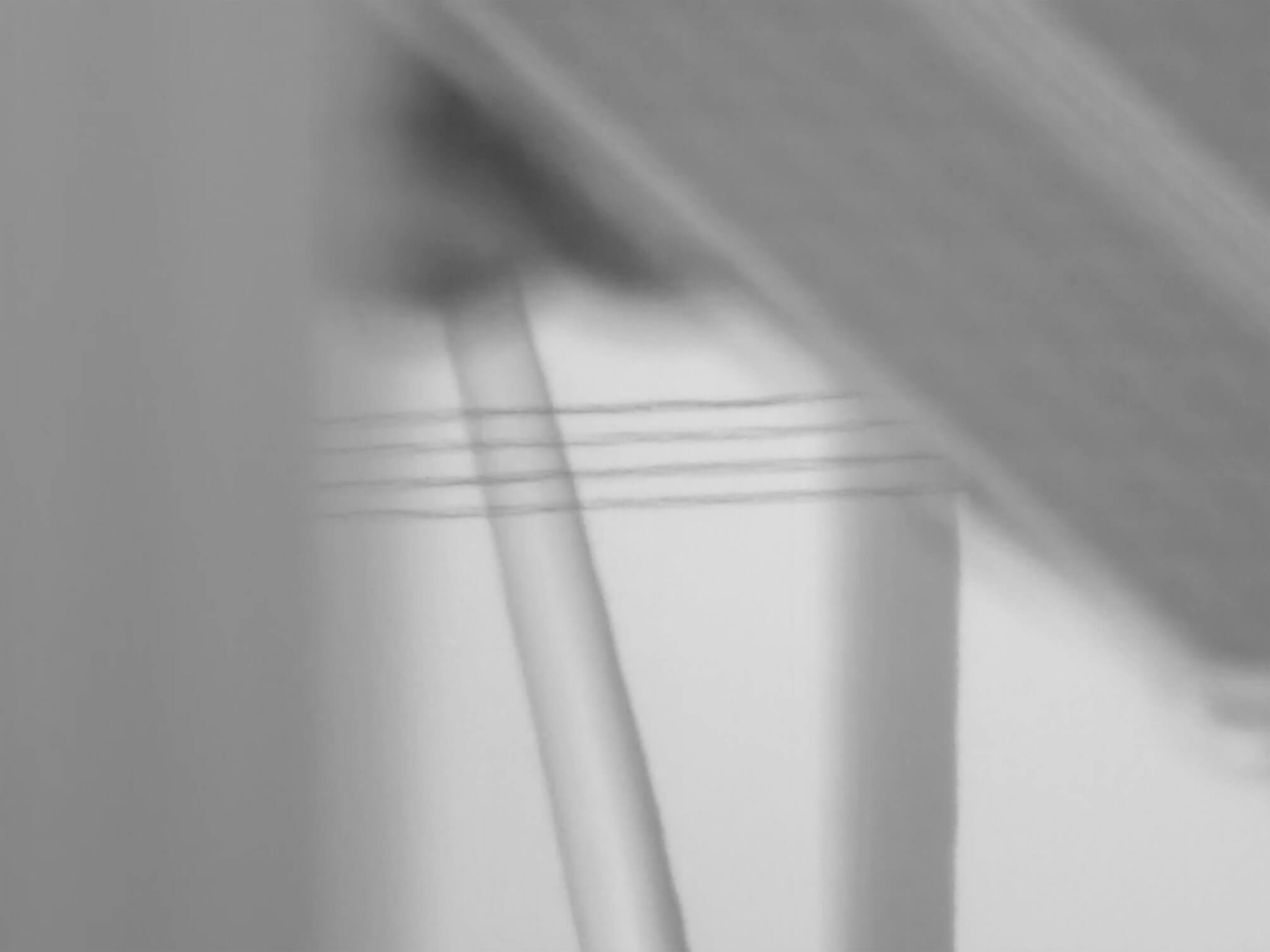
A scene in German author and director Alexander Kluge’s Die Patriotin: a half-dome opens; the protagonist, Gabi Teichert, stares into the telescope. A montage follows: the waxing crescent moon coming into focus; a night vision of a cityscape with industrial elements; archival footage of a cityscape with skyscrapers during daytime; a giant fire; a woman giving birth aided by a midwife; raindrops falling into a puddle of water; a time-lapse video of a city at sundown; a ship floating by with, in the background, on the shore, windmills; images of tanks rolling by; close-ups of a purple-lit face of someone looking into the camera; archival footage of an air raid.1, 2
In a conversation with Ben Lerner, Kluge sees himself as someone ‘creating constellations’: ‘We deal with moving bodies. “Moving reality.” […] And this is something that you cannot present in a linear way, but in the form of constellations. “Constellation” refers to cosmic matter and gravitation. There are suns, moons, planets. There are also the dust particles, tiny particles that orbit around the sun for centuries according to physical laws. And there’s no hinge, no screw that connects them. Invisible connections.’3
Kluge, A. (dir.) Die Patriotin. München: Kairos Film, 1979. https://youtu.be/ZRuQ3SUgSSk?t=449
Kluge, A. Die Patriotin. Texte/Bilder 1-6. Frankfurt am Main: Zweitausendeins, 1979, 60-64. https://monoskop.org/images/4/49/Kluge_Alexander_Die_Patriotin.pdf
Lerner, B. & Kluge, A. The Snows of Venice. The Lerner-Kluge-container. Leipzig: Spector Books, 2018, 66.
Excerpt from Towards Civil Dusk (De Cleene De Cleene, 2020)
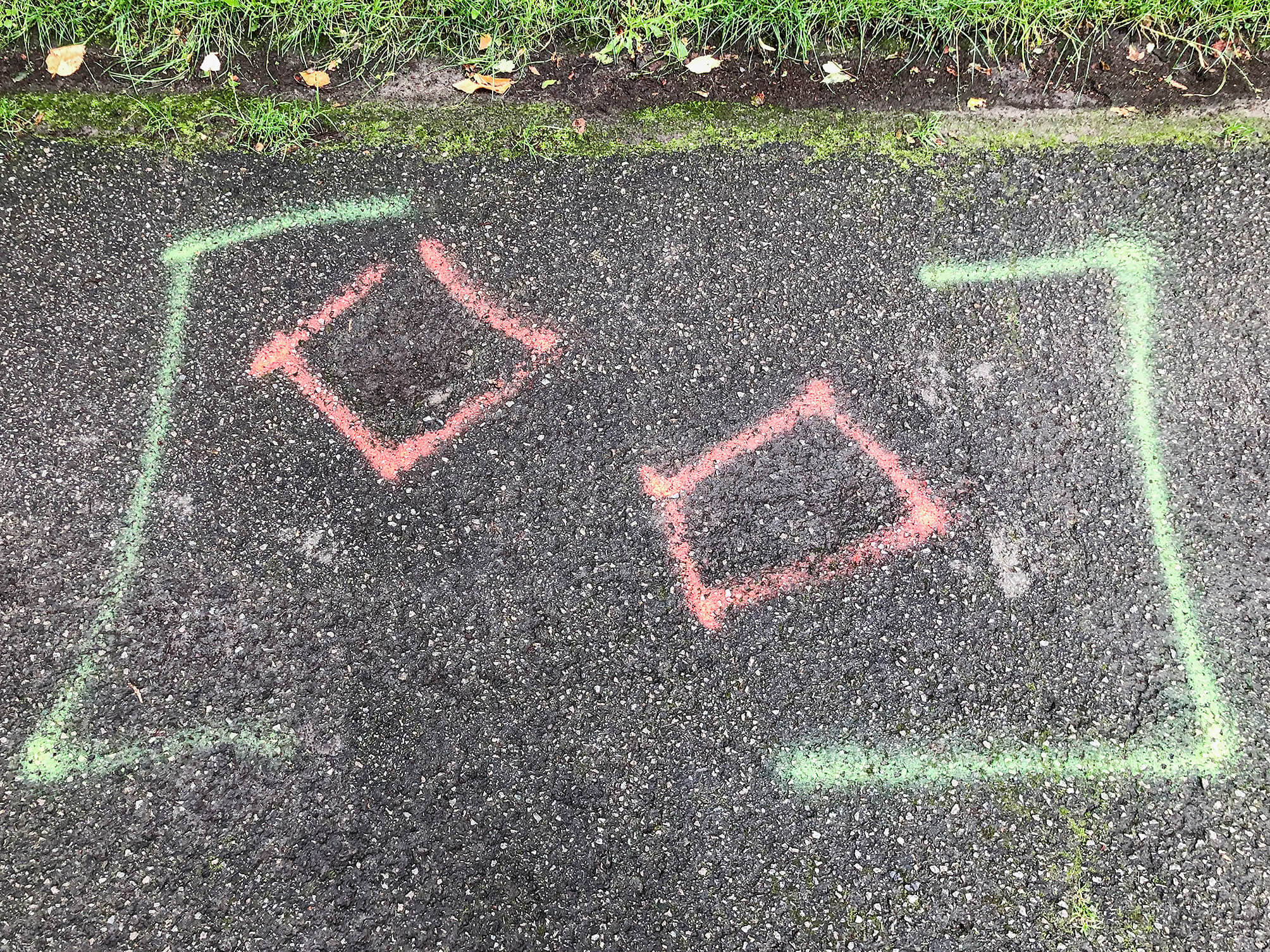
Holding two cans of spray paint, a city employee walks through a sweet chestnut grove on the graveyard. He’s looking for potholes.
Bricks and stones of various origin (aerated concrete blocks, clinker bricks, quarry stones).
From Fortlaufend/Ongoing
Stephanie Kiwitt (1972) is an artist based in Halle (Saale), Germany. Utilizing a large number of images, various perspectives and also textual elements, she is known for her insightful photography that explores spaces emblematic of contemporary phenomena. Over the past three years, she has focused on evolving habitats in rural areas, photographing traces of transformation and conducting interviews in Saxony-Anhalt, the region she moved to in 2020. From 2018 to 2020, Kiwitt was a guest lecturer at the LUCA School of Arts in Brussels.
In spring 2024 the-documents.org and Trigger co-publish a series of online articles with a focus on the meeting ground between photography and the document.

Getty Images charges a fee for the use of a 1953 image depicting Mau Mau detainees building a wall. Working together with the Bristol Archives in the case of this collection, Getty claims to sell services such as “image search tools” and “research support”. These images are public domain and in fact available for free but as long as Getty does not charge the fee as a copyright claim, there is no legal obstacle to charging money for images to which they hold no copyright.
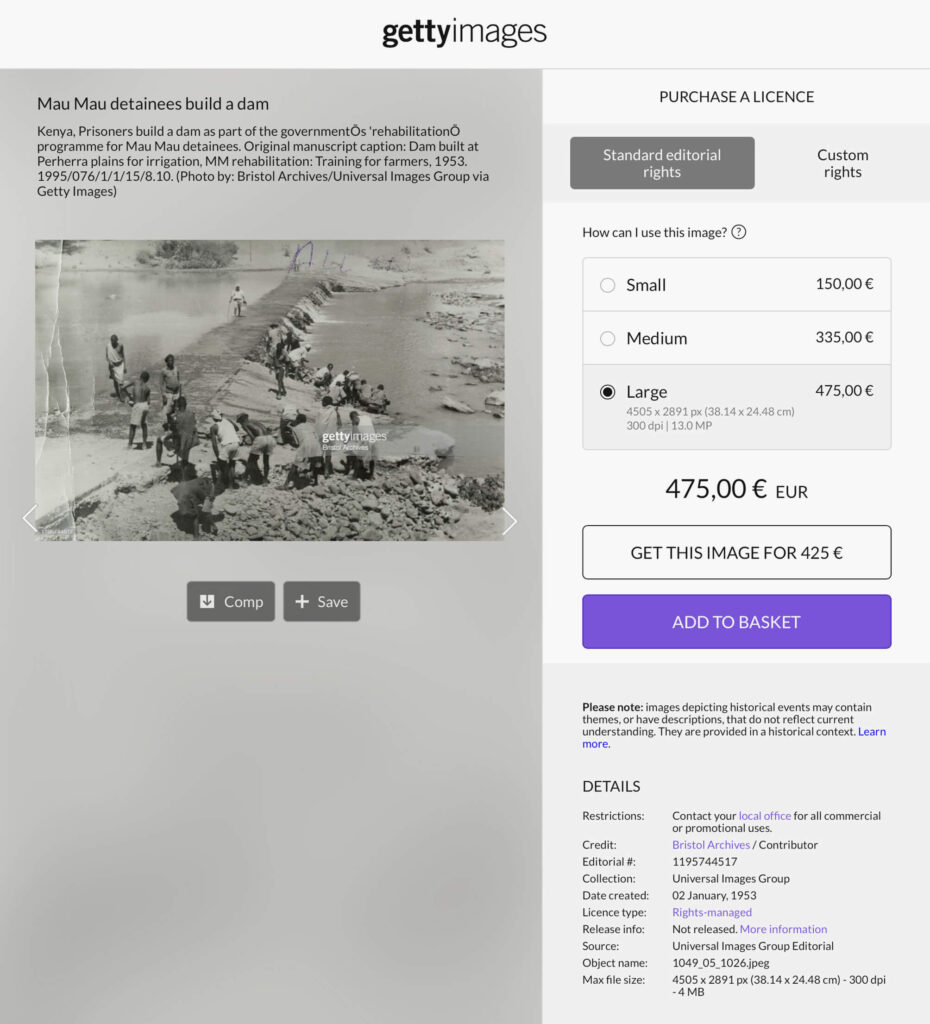
Mau Mau detainees build a dam, 1953, Elspeth Huxley (1995/076/1/1/15/8.10). British Empire & Commonwealth Collection, Bristol Archives, UK Public domain
Max Pinckers (°1988, BE) and Victoria Gonzalez-Figueras (°1988, CA) are based in Brussels, Belgium. They have been working together for the past ten years on documentary photography projects. Victoria works in the cultural field as a researcher and producer. Max is a speculative documentarian, teacher and occasional writer on photography. They are married, in love, and have a son. Victoria has consistently assisted Max in his projects as a production manager, but they have recently been making new work together as co-authors. “Double Reward” is the first such project.
In spring 2024 the-documents.org and Trigger co-publish a series of online articles with a focus on the meeting ground between photography and the document.


A first try at using the instrument for making a recording: excitement as we succeed in pointing the telescope at the brownish dot afar we just noticed on the other side of the valley. As it continues scavenging, we wait for night to set in.

When discussing the sensitivities around viewing British propaganda photographs from the 1950s with Mau Mau veterans in Kenya, it became clear that it was not the graphic photographs of atrocities that would trigger the veterans emotionally, but a series of straightforward portraits of men who had pledged allegiance to the British colonial administration. These portraits were catalogued along with the men’s names and another photograph of each one of them signing a declaration of collaboration. I was advised by the representative of the veterans’ association that it would be too dangerous to share these photographs with the veterans.
22 superimposed portraits from the file CO 1066/7: Kikuyu Loyalists at The National Archives (UK) depicting Kikuyu loyalists after signing a declaration of collaboration with the British on 27 January 1954.
From the series State of Emergency, Max Pinckers et al. (2024)
Max Pinckers (°1988, BE) and Victoria Gonzalez-Figueras (°1988, CA) are based in Brussels, Belgium. They have been working together for the past ten years on documentary photography projects. Victoria works in the cultural field as a researcher and producer. Max is a speculative documentarian, teacher and occasional writer on photography. They are married, in love, and have a son. Victoria has consistently assisted Max in his projects as a production manager, but they have recently been making new work together as co-authors. “Double Reward” is the first such project.
In spring 2024 the-documents.org and Trigger co-publish a series of online articles with a focus on the meeting ground between photography and the document.

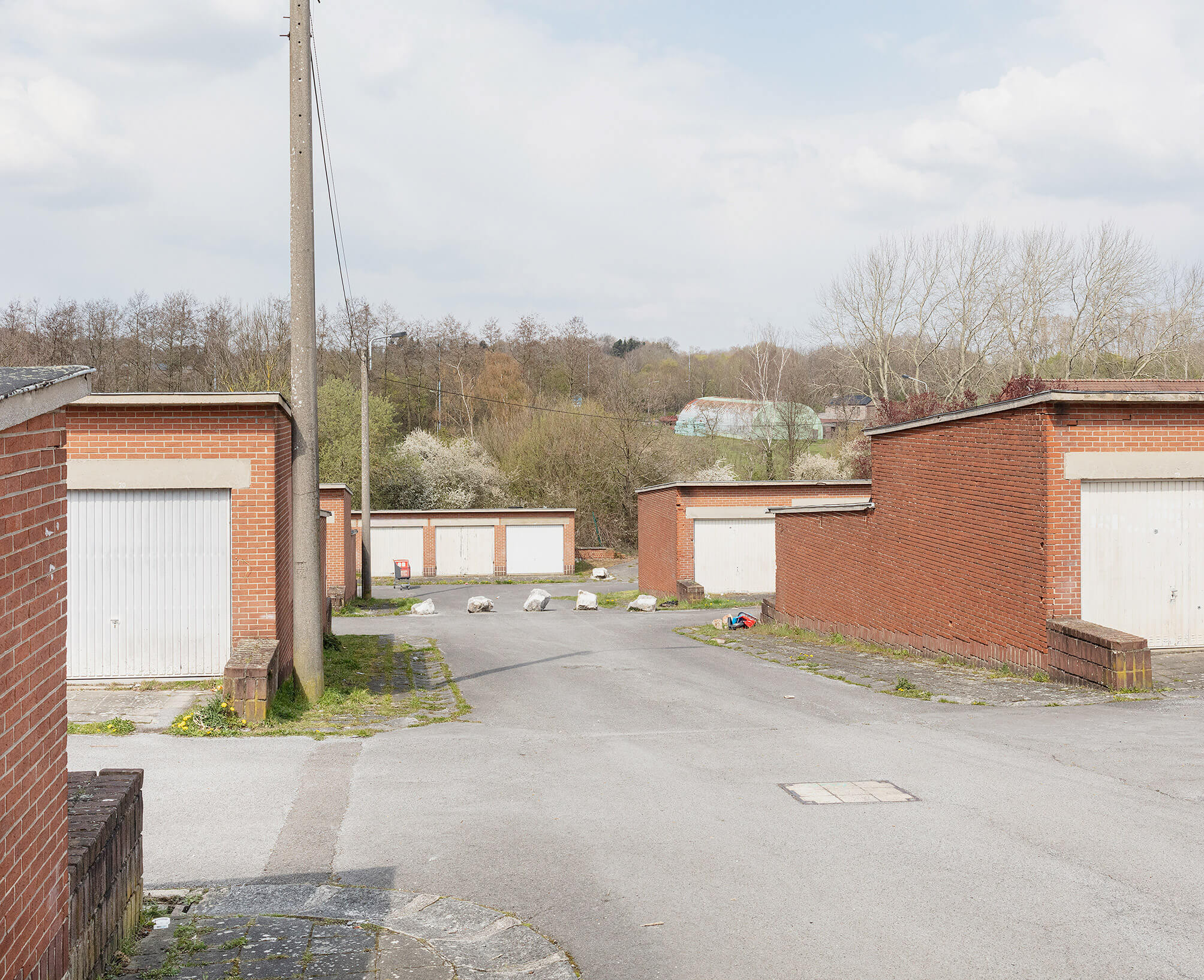
Seven very similar and rudimentary buildings take in a trapezoid plot of land in Gilly. They are located between the school on the Rue Circulaire and the houses along the Rue de l’Abbaye. The structures are built of orange brick, concrete structural elements, whitish steel gates and roofing. Every garage has its own number, hand-painted in white on the concrete lintel above each gate. In summer the roofing gets hot and soft.
Gu Eryi’s Shanghainese opera film A Single Spark (1959) dramatises a violent confrontation between indentured labourers and their managers at the Japanese-owned Naigaiwata Company No. 7 Cotton Mill in 1925. The film’s protagonist is Yang Guiying, a peasant who moves to Shanghai to join her daughter only to find her at her last breath on the factory floor after being brutally beaten by her supervisor. The incident sparks protests among the workers at the factory, eventually resulting in one of them, Gu Zhenghong, being killed by a gunshot fired by a guard in the heat of the moment. This further escalates the unrest to a citywide scale, catalysing the May Thirtieth Movement.
The scenes of workers striking were filmed at Shenxin No. 9 Cotton Mill, also the location for another worker-themed film, United Until Tomorrow (1951). Those of Yang Guiying taking to the streets in support of anti-imperialism and patriotism were filmed at the Bund and the area surrounding Waibaidu Bridge. As for Naigaiwata Company No. 7 Cotton Mill where the events depicted in the film actually took place, the enterprise was merged with No. 5 and No. 8 Cotton Mills after the war and nationalised as Shanghai No. 2 Cotton Mill. Today, the site once occupied by the mill is a residential area where a statue of martyr Gu Zhenghong, first erected in 1959, stands before a memorial hall that was established in 2008.
Ho Rui An is an artist and writer working in the intersections of contemporary art, cinema, performance and theory. Through lectures, essays and films, his research examines the relations between labour, technology and capital across different systems of governance in a global age.
In spring 2024 the-documents.org and Trigger co-publish a series of online articles with a focus on the meeting ground between photography and the document.
Photographing the house and the clearing it stood in proved difficult. During summer, the nettles and brambles slowed down the pace. Some plants stung the elbows. The clearing only became visible when the sun fell through the opening in the canopy. On cloudy days the clearing disappeared.
‘As the order of institutions follows its course, or as huts give way to villages and then to cities and finally to cosmopolitan academies, the forests move further and further away from the center of the clearing. At the center one eventually forgets that one is dwelling in a clearing. […] Yet however wide the circle may get through the inertia of civic expansion, it presumably retains an edge of opacity where history meets the earth, where the human abode reaches its limits.’
Pogue Harrison, R. ‘The Ecology of Finitude’, in: id., Forests. Chicago, 1992, 245.
