What constitutes a ‘document’ and how does it function?
According to the Oxford English Dictionary, the etymological origin is the Latin ‘documentum’, meaning ‘lesson, proof, instance, specimen’. As a verb, it is ‘to prove or support (something) by documentary evidence’, and ‘to provide with documents’. The online version of the OED includes a draft addition, whereby a document (as a noun) is ‘a collection of data in digital form that is considered a single item and typically has a unique filename by which it can be stored, retrieved, or transmitted (as a file, a spreadsheet, or a graphic)’. The current use of the noun ‘document’ is defined as ‘something written, inscribed, etc., which furnishes evidence or information upon any subject, as a manuscript, title-deed, tomb-stone, coin, picture, etc.’ (emphasis added).
Both ‘something’ and that first ‘etc.’ leave ample room for discussion. A document doubts whether it functions as something unique, or as something reproducible. A passport is a document, but a flyer equally so. Moreover, there is a circular reasoning: to document is ‘to provide with documents’. Defining (the functioning of) a document most likely involves ideas of communication, information, evidence, inscriptions, and implies notions of objectivity and neutrality – but the document is neither reducible to one of them, nor is it equal to their sum. It is hard to pinpoint it, as it disperses into and is affected by other fields: it is intrinsically tied to the history of media and to important currents in literature, photography and art; it is linked to epistemic and power structures. However ubiquitous it is, as an often tangible thing in our environment, and as a concept, a document deranges.
the-documents.org continuously gathers documents and provides them with a short textual description, explanation,
or digression, written by multiple authors. In Paper Knowledge, Lisa Gitelman paraphrases ‘documentalist’ Suzanne Briet, stating that ‘an antelope running wild would not be a document, but an antelope taken into a zoo would be one, presumably because it would then be framed – or reframed – as an example, specimen, or instance’. The gathered files are all documents – if they weren’t before publication, they now are. That is what the-documents.org, irreversibly, does. It is a zoo turning an antelope into an ‘antelope’.
As you made your way through the collection,
the-documents.org tracked the entries you viewed.
It documented your path through the website.
As such, the time spent on the-documents.org turned
into this – a new document.
This document was compiled by ____ on 13.10.2025 12:33, printed on ____ and contains 24 documents on _ pages.
(https://the-documents.org/log/13-10-2025-6679/)
the-documents.org is a project created and edited by De Cleene De Cleene; design & development by atelier Haegeman Temmerman.
the-documents.org has been online since 23.05.2021.
- De Cleene De Cleene is Michiel De Cleene and Arnout De Cleene. Together they form a research group that focusses on novel ways of approaching the everyday, by artistic means and from a cultural and critical perspective.
www.decleenedecleene.be / info@decleenedecleene.be - This project was made possible with the support of the Flemish Government and KASK & Conservatorium, the school of arts of HOGENT and Howest. It is part of the research project Documenting Objects, financed by the HOGENT Arts Research Fund.
- Briet, S. Qu’est-ce que la documentation? Paris: Edit, 1951.
- Gitelman, L. Paper Knowledge. Toward a Media History of Documents.
Durham/ London: Duke University Press, 2014. - Oxford English Dictionary Online. Accessed on 13.05.2021.

The last couple of days have been dry. Rain is expected for the weekend. The office buckets are in place and are empty, except for some residue. Dirt, sand, a few hairs. Some particles must have come along with the drops when they made their way through the roof.

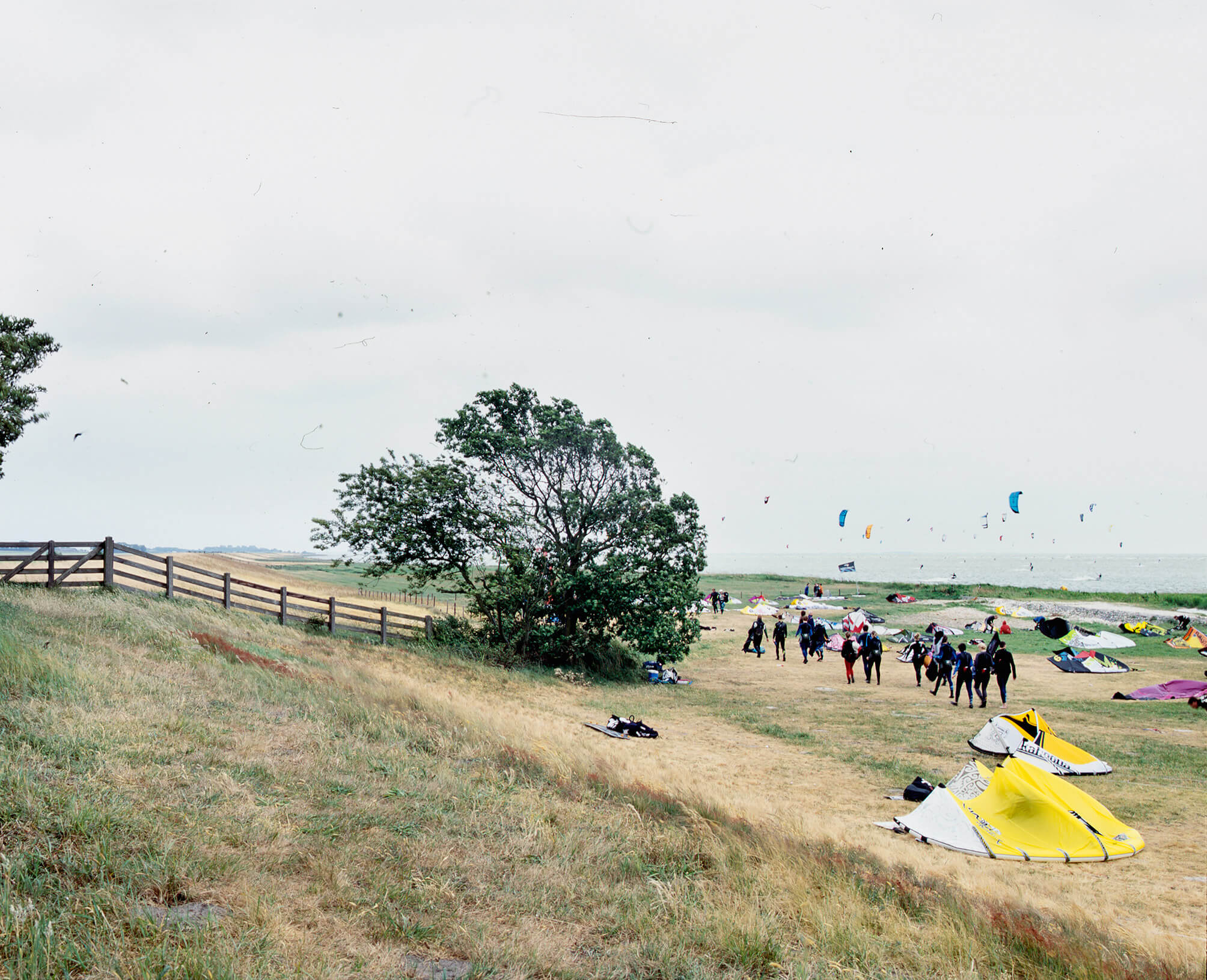
Ten years ago, in November, I drove up to Frisia – the northernmost province of The Netherlands. I was there to document the remains of air watchtowers: a network of 276 towers that were built in the fifties and sixties to warn the troops and population of possible aerial danger coming from the Soviet Union. It was very windy. The camera shook heavily. The poplars surrounding the concrete tower leaned heavily to one side.
I drove up to the seaside, a few kilometers farther. The wind was still strong when I reached the grassy dike that overlooked the kite-filled beach. I exposed the last piece of film left on the roll. Strong gusts of wind blew landwards.
Months later I didn’t bother to blow off the dust that had settled on the film before scanning it. A photograph without use, with low resolution, made for the sake of the archive’s completeness.
The dust on the film appears to be carried landwards, by the same gust of wind lifting the kites.
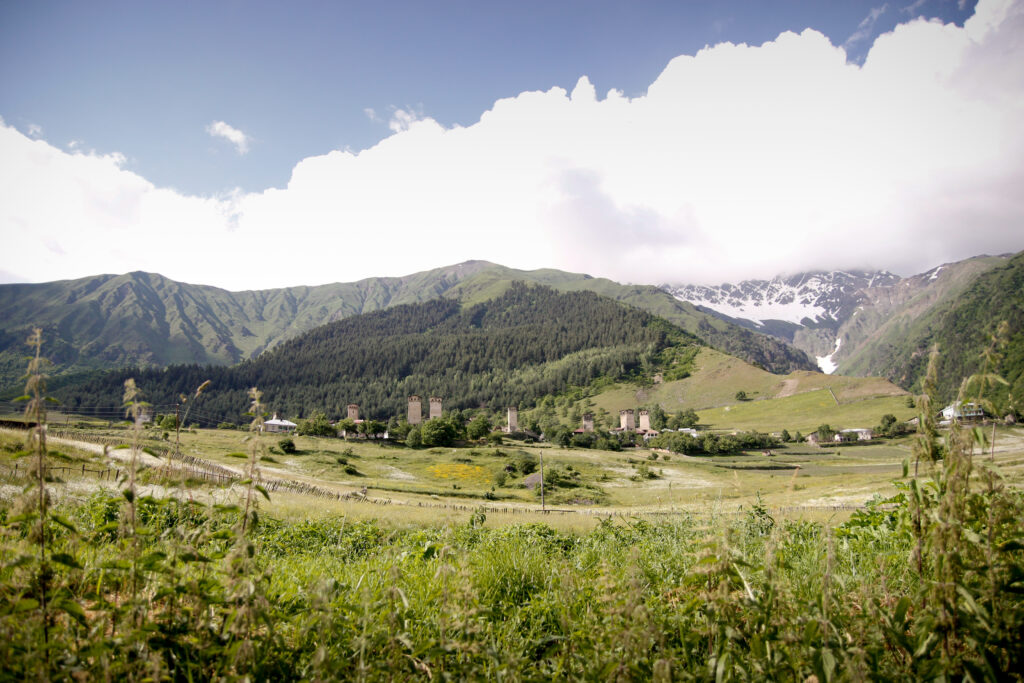
Conducting research into the effects on energy consumption of blockchain-based applications such as bitcoin, I was triggered by the fact that many of the facilities making blockchain-mining1 possible are located in Georgia. Low energy prices and a relaxed taxation policy are said to be among the reasons why companies such as Bitfury locate their plants there.
After a three-day hike in the Caucasus Mountains, on the Georgian side of the border with Chechnya, we are invited to pitch our tent in the garden of Murati, a local farmer in a small mountain village. We are overwhelmed by the scenery and Murati’s hospitality. Many of the villages, thrown on the mountain flanks, have tower-like structures of some twenty meters high, making them all look fortified. They have no windows or doors on the ground floor.2
Murati invites us into his house to drink warm milk with his family and brings us cheese-filled bread. One of us speaks Russian. He inspects our backpacks, headlights and drinking bags. He tells us a 500 kilogram pig of his did not return to the house that night. The family is saddened.
In the evening, we see him taking his granddaughter by the hand. They walk to the highest point of the gravel road in front of his house and together watch the last light of the day fall on the snow-covered triangular peak of one of the Caucasus’ highest mountains.
I’m mistrusting my memory and look the passage up in the journal we kept. The village is called Zagar. The mountain is Mount Tetnuldi. The granddaughter’s name is Anna.
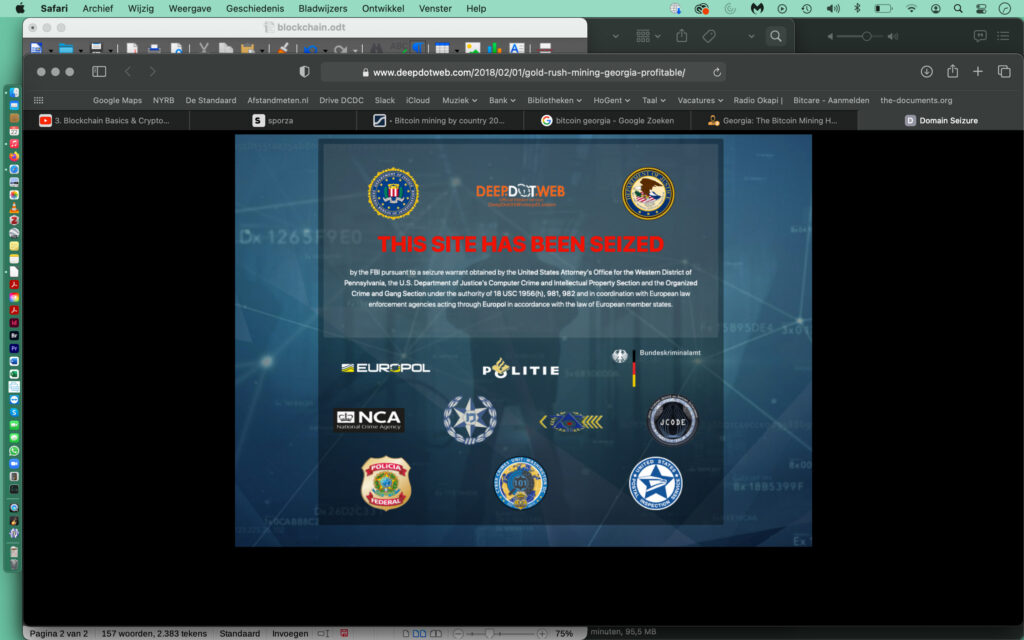
When I click through to one of the websites promising information on Georgia’s blockchain economy, I happen to stumble on a dark web-related website and access is denied.3
‘Mining’ is what is being done when data – a transaction – has to be added to the blockchain (which, in itself, is the sum of all previous transactions, added to each other as data). To do this, computers have to solve a complex mathematical puzzle, which is crucial for the trustworthiness of the system, but for which loads of energy is needed. Criticism on the effects of blockchain-mining is growing, as it has a gruesome effect on resources. In 2018, Andrew North writes, Bitfury used 28 million kilowatt-hours of electricity per month, equalling the consumption of 120,000 Georgian households.

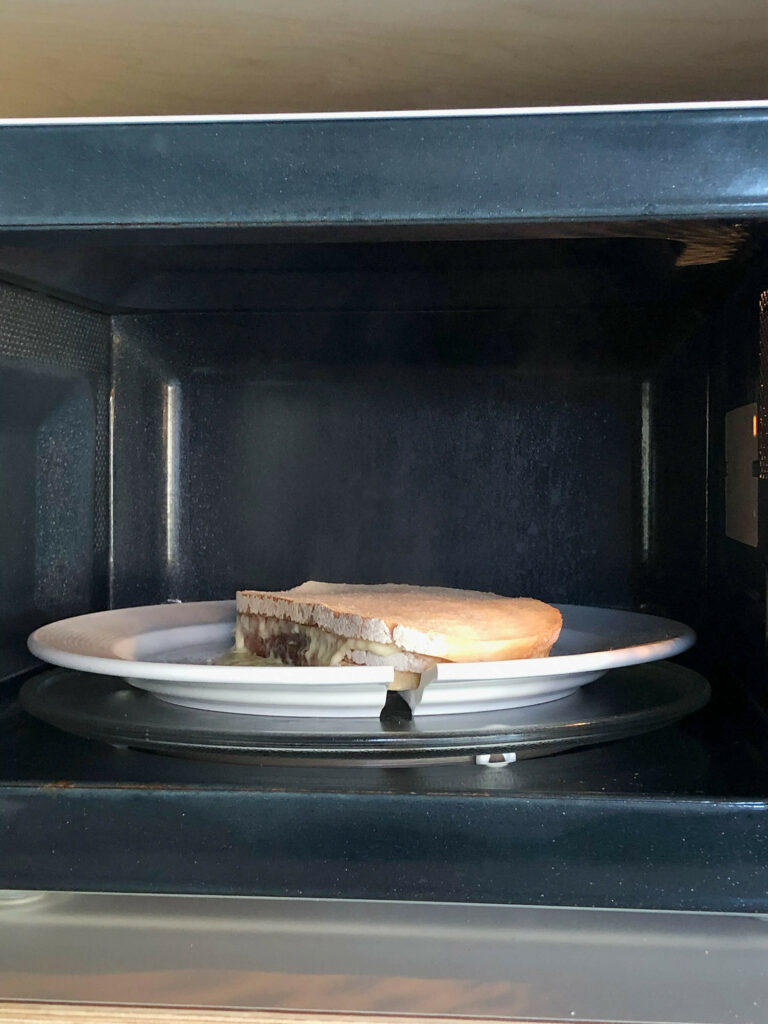
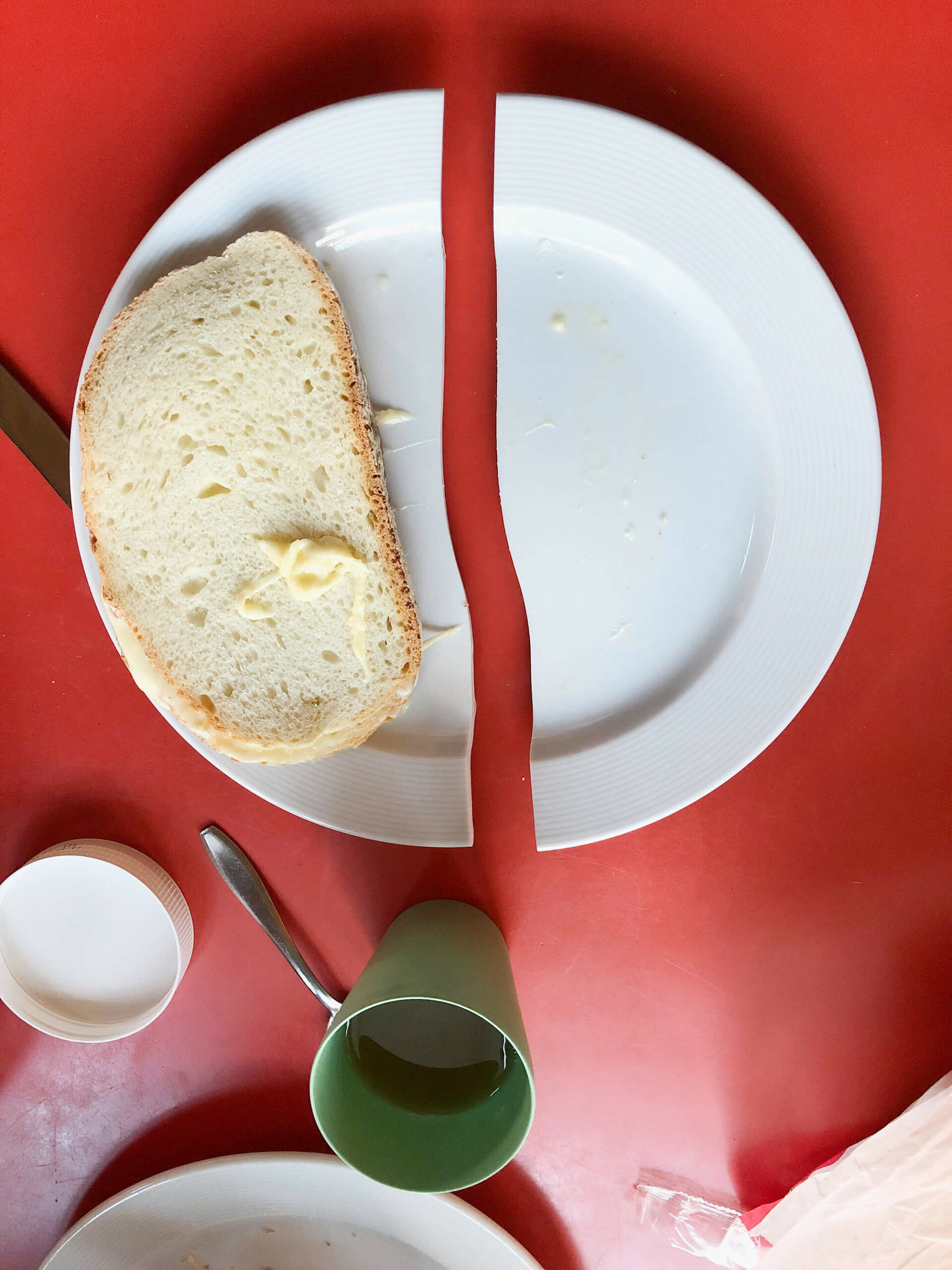
Most mornings I eat three slices of bread. I stack them. Between the highest slice and the one in the middle I put a slice of cheese (young Gouda). I put the whole in the microwave1 for 1 minute and 50 seconds. The result is what I like to call a smelteram2.
On the morning of my thirty-second birthday the plate broke in half during heating.
A contraction of smelten (Dutch for melting) and boterham (Dutch for a slice of bread).
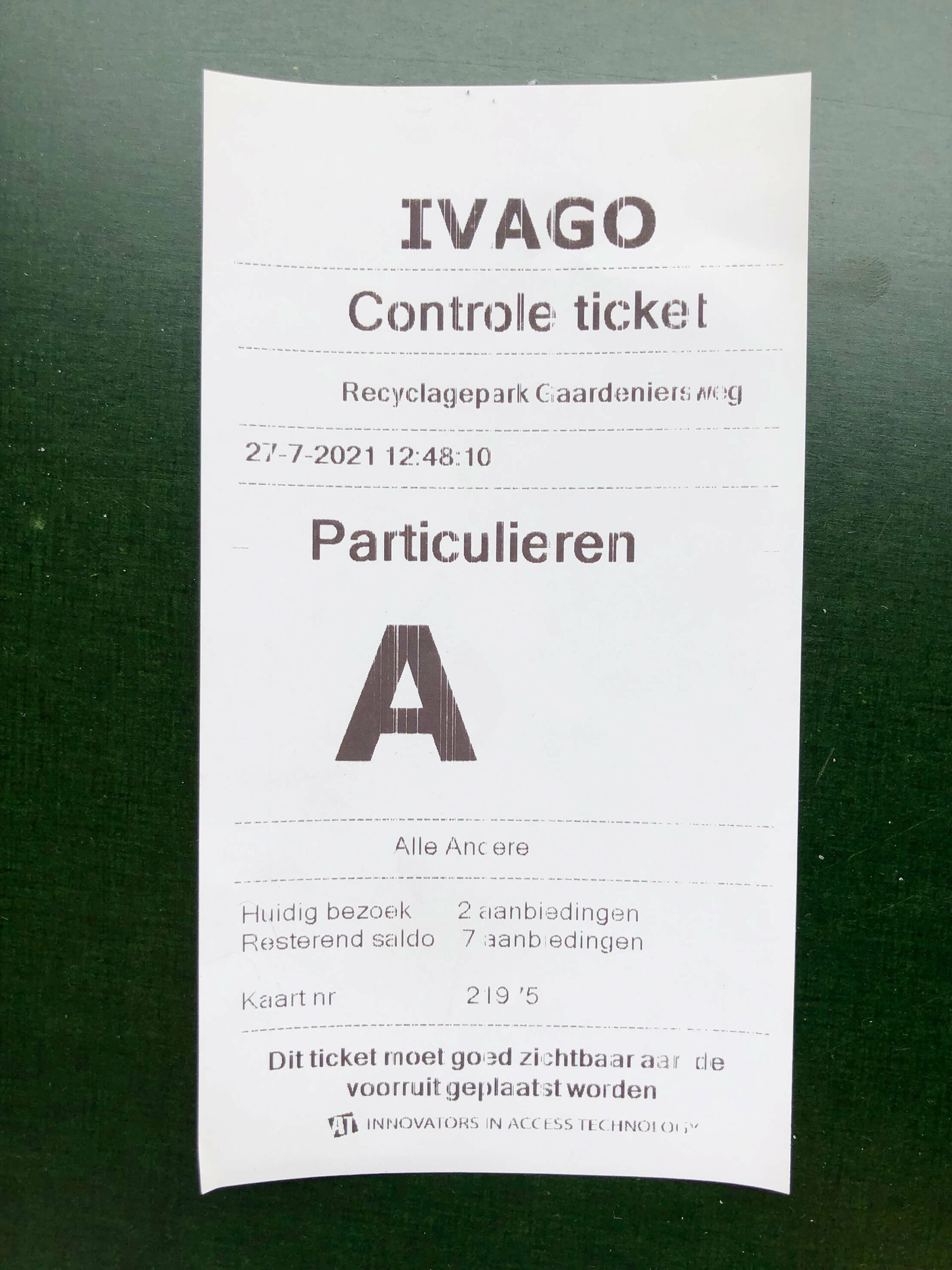
Today I brought an old bedspring, the styrofoam the air-humidifier came in, a few bags of sawdust and some scrap pieces of plywood to the municipal recycling center. As I was waiting to mount the stairs to the scrap metal container, a gray-haired man wearing blue leather shoes, dark jeans and a checkered shirt was tipping – with relative ease – a weight bench over the edge of the container.
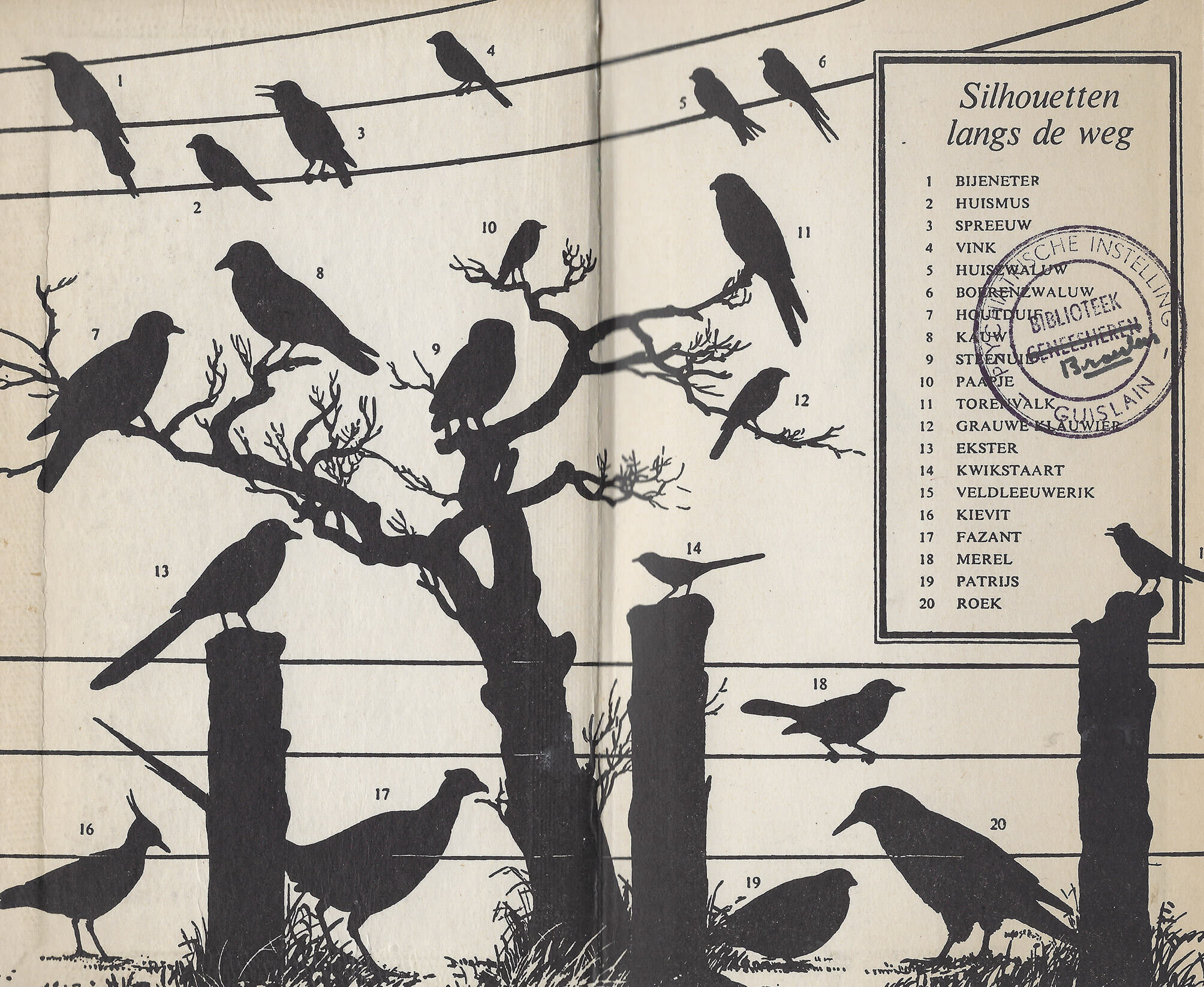
This is the spread one sees upon opening the bird field guide that once stood, as the stamp indicates, in the library of a psychiatric institution.1 It shows birds’ silhouettes, as they can be seen beside the road.
The drawing has a kind of Hitchcock feel to it.2 The birds seem to be spying on each other, as they also seem to be spying on the unsuspecting passer-by.
The composition of the scene is marvelous. The electric wires, the tree, the wire fence, the double framed list with the birds’ names, handsomely positioned in a birdless patch, at once superimposed on the telephone wires, and pushed to the background by the skylark.
Imagine seeing this scene. What are the odds: to see the silhouettes of Europe’s twenty most common species of birds in one glance, from your car’s window, as you are driving home at dusk.
Before closing the book, the last spread seems to show the birds fleeing, maybe attacking.3
The stamp indicates that, at the psychiatric institution, the book was part of the sublibrary for the Catholic Brothers of Charity. The crossed-out part indicates that there was also a separate physicians’ library, to which the book might have originally belonged.
On the web, discussions on whether Alfred Hitchcock’s The Birds (1963) was shot in colour or in black and white, abound.
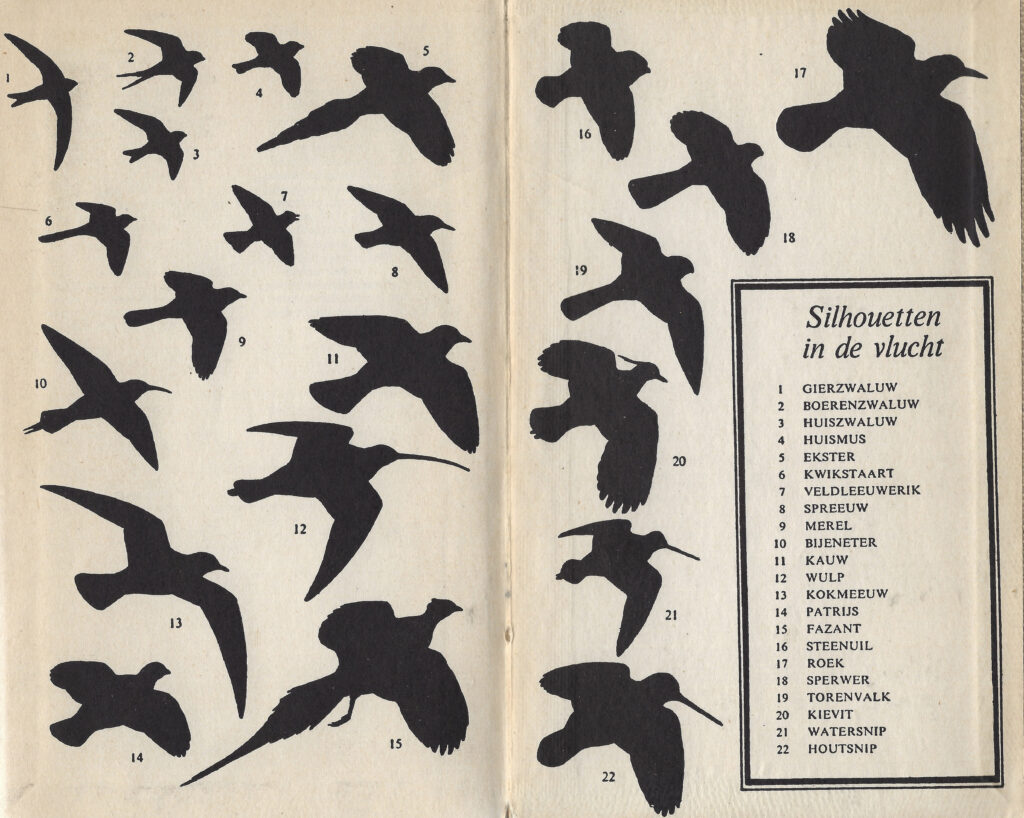
Peterson, R.T., Mountfort, G. & P.A.D. Hollom. Vogelgids voor alle in ons land en overig Europa voorkomende vogelsoorten (J. Kist, transl.). 3d ed. Amsterdam/Brussels: Elsevier, 1955.
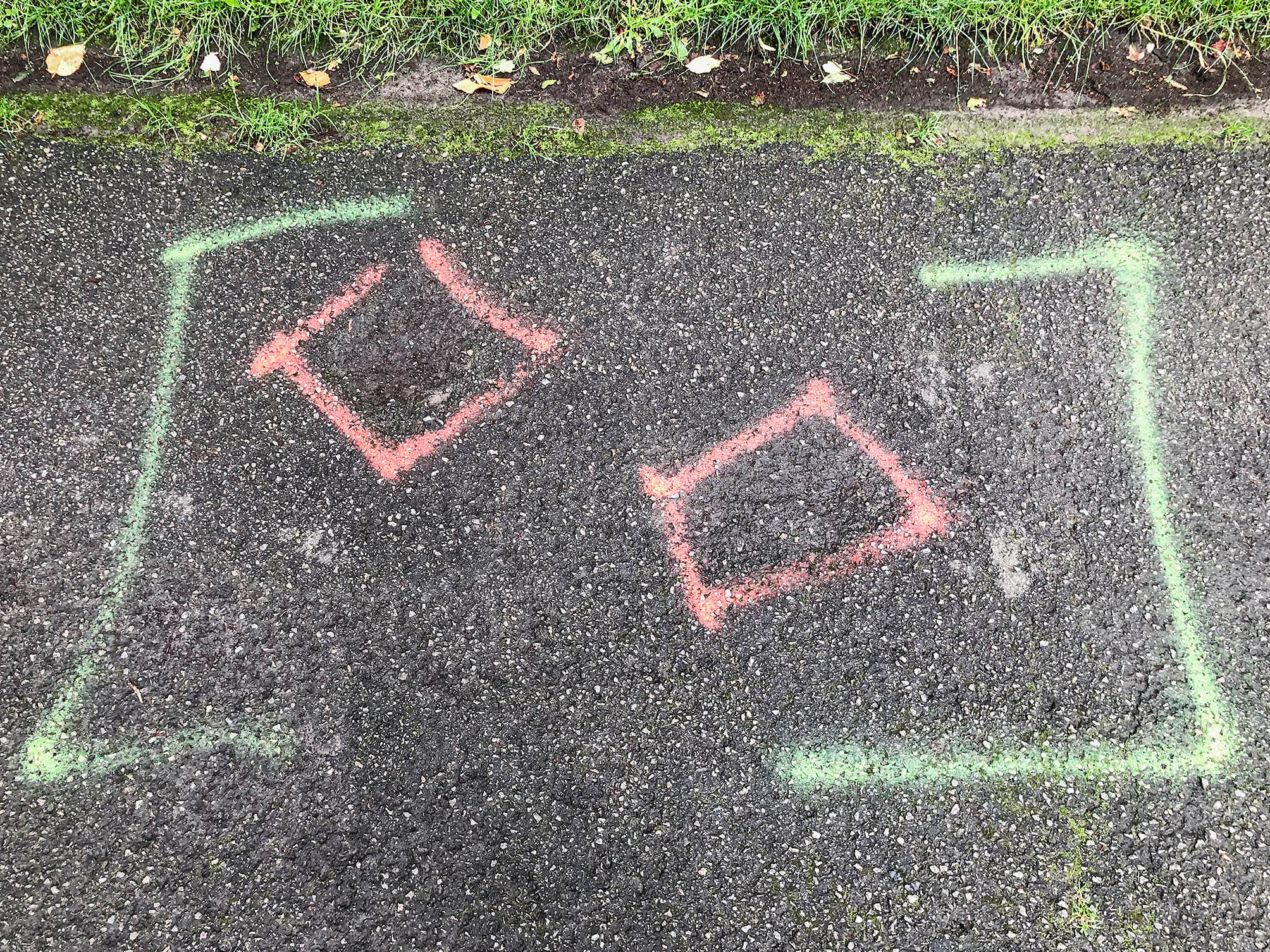
Holding two cans of spray paint, a city employee walks through a sweet chestnut grove on the graveyard. He’s looking for potholes.
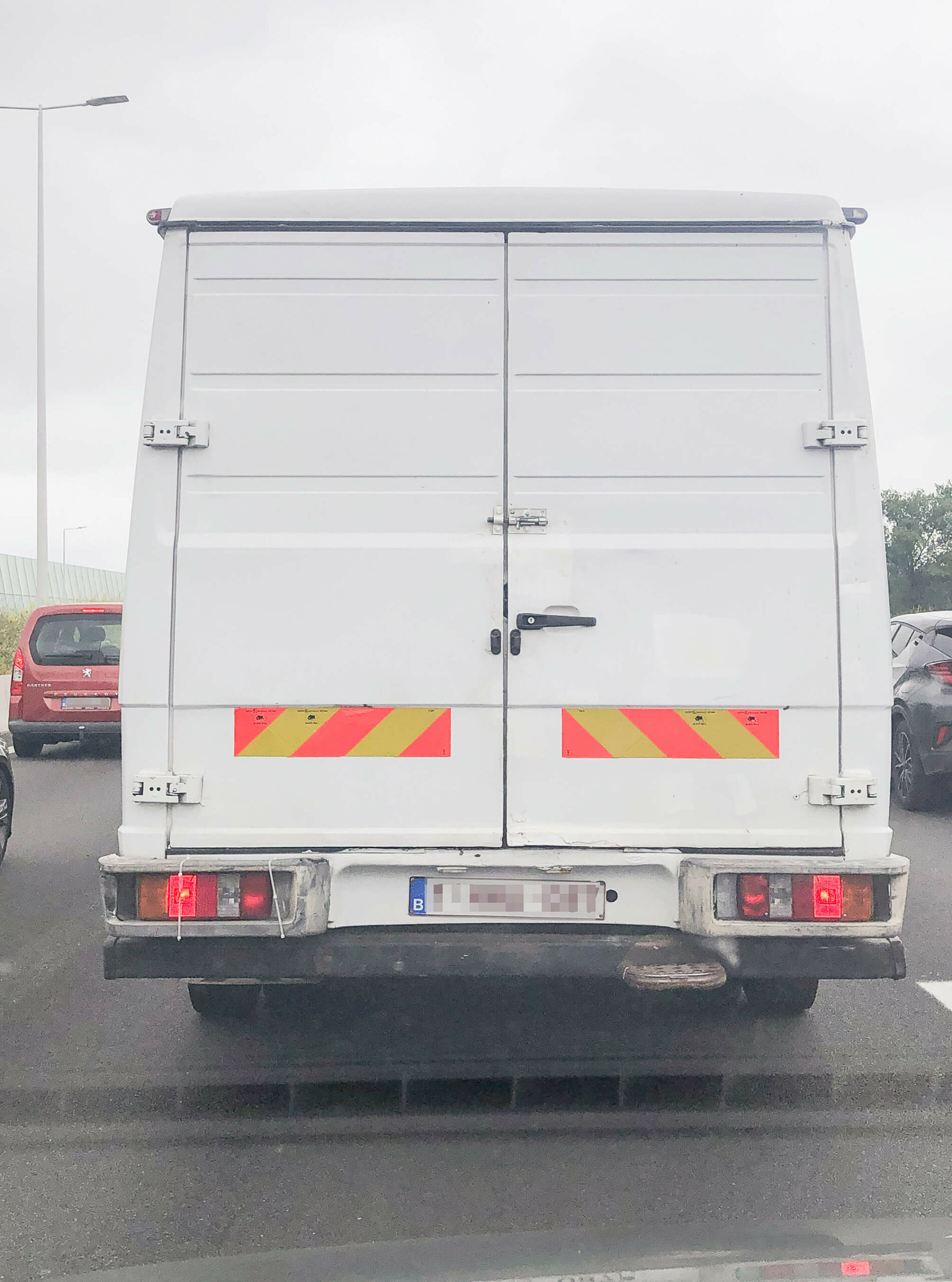
A white Mercedes van inserts in front of me in a traffic jam near Antwerp. The back of the van has been altered in several ways: a latch was added to the door,1 a footstep was bolted to the bumper, a couple of tie-wraps are holding up the lights on the left side.2 Traffic is moving slow. There is no Mercedes logo.3 Some parts have been retouched with white paint that differs slightly from the rest of the bodywork,4 not unlike a tipp-ex’ed document.
Maybe the original locking mechanism no longer functions, or, perhaps, the owner wants to add a padlock to the doors at night.
Maybe a corroded screw caused the lights to come loose, or a slight collision.
Someone might have stolen it. Mercedes stars are often stolen, although mostly from the hood.
Maybe to counter corrosion, to conceal a mark someone made on the van or to cover up a fixed dent.
Legislation concerning the publication of someone else’s licence plate on the internet and the demand to blur it, is somewhat ambiguous.
In his Handboek Varende Scheepsmodellen (Handbook Sailing Ship Models) André Veenstra explains the different classes in ship model-competitions. There’s a wide variety. For static ship models the most important one is ‘truth-to-nature’. A jury compares the model to photographs of the actual ship and brings into account categories such as amount of work, degree of difficulty, scale ratio, construction execution and painting.
The most interesting class – according to Veenstra – is F 6. In this particular class, a number of participants with different boats will form a team. Together, they will perform a certain ‘act’ with a maximum duration of ten minutes. During the act, they mimic a slice of reality. Such as, for example, ‘rescuing’ and towing a ship in distress; extinguishing a fire on a tanker or oil rig, lichen and/or tow the sunken wreckage to the harbor, stage a naval battle, etc.
Page 262 shows a photograph of such a mimicked slice of reality. The caption explains: ‘Image 14.15. The Dutch demonstration in the F 6 class during the European Championship of 1975: the oil rig is set on fire by a motorboat with terrorists. The fire is extinguished and the oil rig is quickly towed to a safe harbor by tugs. The show was performed by six people and took a very creditable fourth place.’

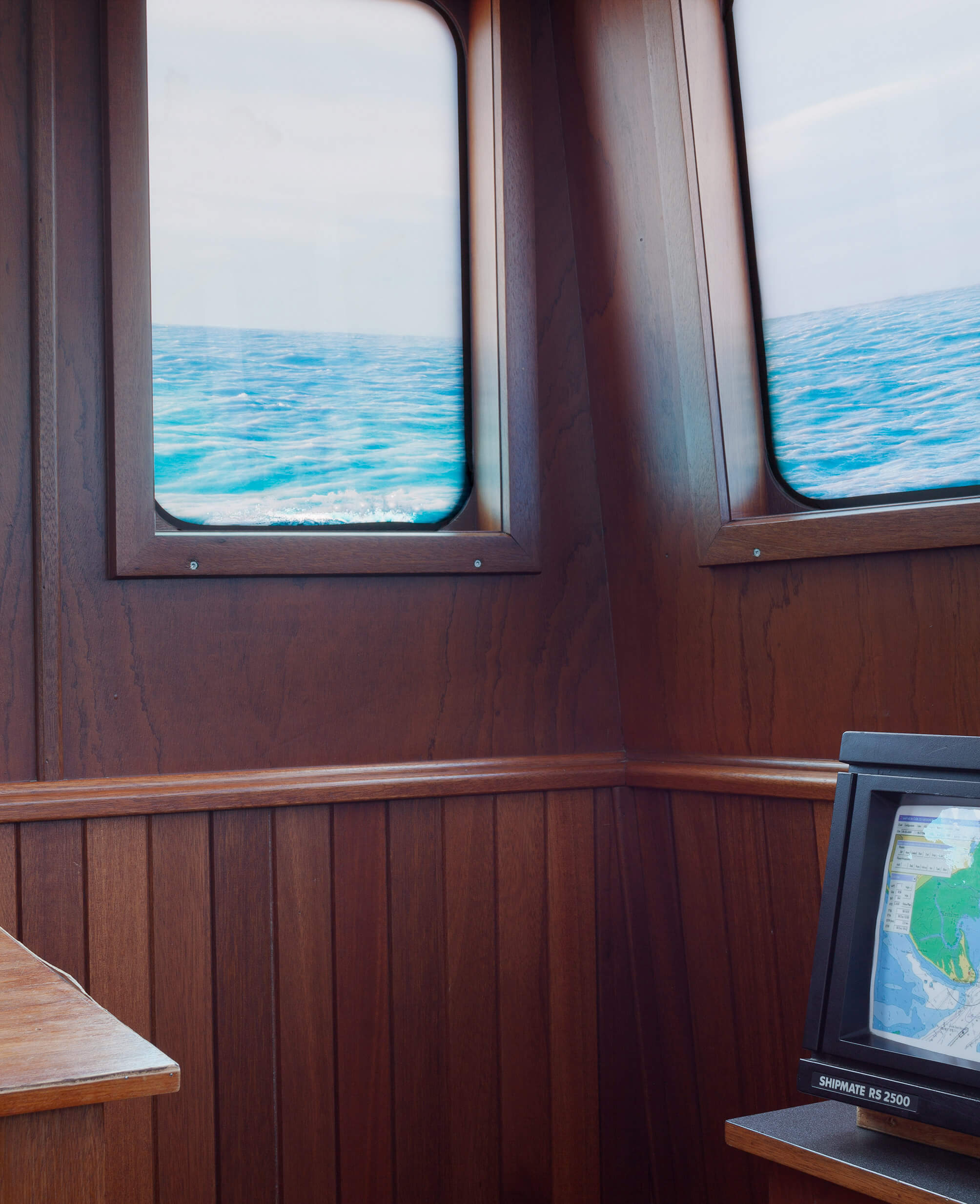
The GPS-plotter displays the ship near Keyhaven Lake, indefinitely. The sea appears calm, the horizon is level from one perspective.
In his Handboek Varende Scheepsmodellen (Handbook Sailing Ship Models) André Veenstra explains the different classes in ship model-competitions. There’s a wide variety. For static ship models the most important one is ‘truth-to-nature’. A jury compares the model to photographs of the actual ship and brings into account categories such as amount of work, degree of difficulty, scale ratio, construction execution and painting.
The most interesting class – according to Veenstra – is F 6. In this particular class, a number of participants with different boats will form a team. Together, they will perform a certain ‘act’ with a maximum duration of ten minutes. During the act, they mimic a slice of reality. Such as, for example, ‘rescuing’ and towing a ship in distress; extinguishing a fire on a tanker or oil rig, lichen and/or tow the sunken wreckage to the harbor, stage a naval battle, etc.
Page 262 shows a photograph of such a mimicked slice of reality. The caption explains: ‘Image 14.15. The Dutch demonstration in the F 6 class during the European Championship of 1975: the oil rig is set on fire by a motorboat with terrorists. The fire is extinguished and the oil rig is quickly towed to a safe harbor by tugs. The show was performed by six people and took a very creditable fourth place.’
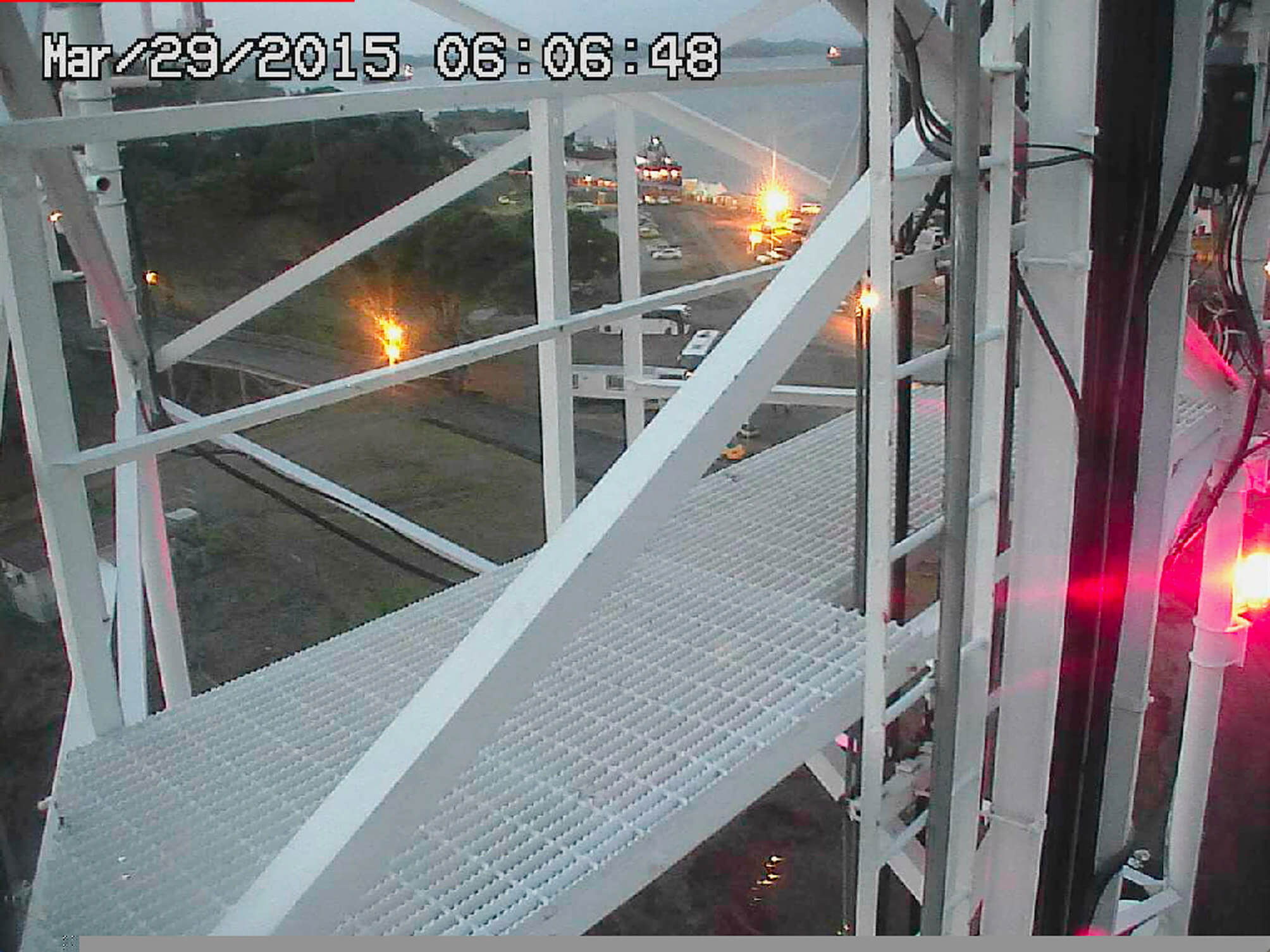
The Authenticity bunkered crude fuel in the Panama Bay. She navigated back and forth between the artificial island Isla Melones and ships leaving or waiting to enter the Panama Canal. On February 14th 2015 she had been moored for a couple of days near the Centennial bridge when the AIS-transponder momentarily signalled the ship’s position in the woods of the Bosque Protector de Arraiján. Afterwards no signal of the ship was received for 41 days, until she reappeared near the port of Bahia Las Minas, at the other side of the Panama Canal.
First published in: De Cleene, M. Reference Guide. Amsterdam: Roma Publications, 2019
Marine Traffic, Authenticity (Caribe Trader, PA), latest position, 09°01’40,71” N 79°38’18,59”W, viewed 14.02.2015, http://www.marinetraffic.com
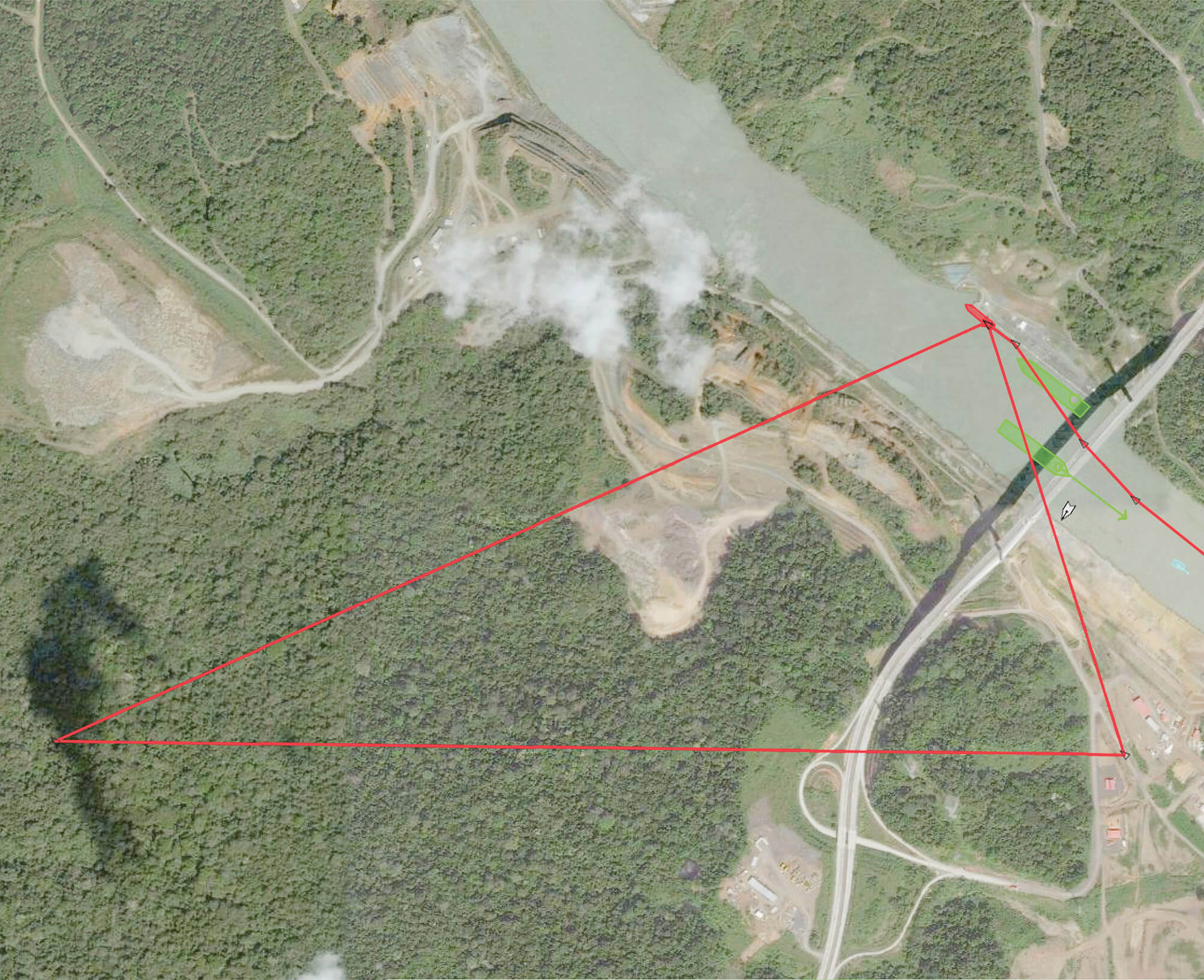
On March 23th 2015, a high pressure system above Panama Bay blew strong winds landwards. At the Gatun locks, one of the webcams overlooking the Canal neglected the traffic and briefly captured its own images. The ship’s presumed passage through the Gatun locks wasn’t recorded by this camera and the AIS-transponder did not save any data of the ship’s transit from the Pacific to the Atlantic side of the canal: the Authenticity managed to swap oceans undetected.
On February 16th 2016, the transponder still signals the ship near the port of Bahia Las Minas. The current is calm, the ship has been practically immobile for a year.
First published in: De Cleene, M. Reference Guide. Amsterdam: Roma Publications, 2019
Webcam Gatun Locks, Panama Canal, http://www.pancanal.com
The end of 2015. For hours, precipitation of all sorts had impeded a view of the Asian side of the city. Ships went out of sight before they reached the horizon. I can’t recall where exactly we were standing, or what we were visiting. I imagined it to be a place full of history. The Bosporus seemed agitated.
The Greek historian Herodotus wrote about Persian King Xerxes’ torn after a storm demolished the bridge he was building across the Dardanelles, at the other side of the Sea of Marmara: ‘When Xerxes heard of this, he was very angry and commanded that the Hellespont be whipped with three hundred lashes, and a pair of fetters be thrown into the sea. I have even heard that he sent branders with them to brand the Hellespont. He commanded them while they whipped to utter words outlandish and presumptuous, “Bitter water, our master thus punishes you, because you did him wrong though he had done you none. Xerxes the king will pass over you, whether you want it or not; in accordance with justice no one offers you sacrifice, for you are a turbid and briny river.”’1
Two days later, heavy snow delayed our flight back home. For hours, we were stuck inside the cabin, watching the tarmac. Passengers wanting to get out scorned the stewards. Trucks sprayed a fluid on our plane’s wings. We arrived at the family gathering just before midnight. Underneath the unlit fireworks hanging from the chandeliers, dessert was being served.
Herodotus. The Histories (A. D. Godley, trans.). Cambridge: Harvard University Press, 1920, book 7, chapter 35. Online: https://www.perseus.tufts.edu/hopper/text?doc=Perseus%3Atext%3A1999.01.0126%3Abook%3D7%3Achapter%3D35

At the beach of Cap d’Antifer in Normandy one can find ‘sea glass’ between the pebbles: pieces of broken glass that have naturally weathered by being tumbled by the ocean, over and over. Sharp edges and smooth surfaces vanish. The historical origin of the glass pebbles (glass bottles, a shipwreck) erodes. Only the colour of the pebbles gives an indication of their history, be it vaguely. Varieties of green sea glass are common, but other colours, such as red (Shlitz beer bottles) or yellow (interbellum Vaseline containers), are more rare and have to be sought after attentively.
It’s 4.15 PM. The tide is pushing three people towards the cliffs.

The GPS-plotter displays the ship near Keyhaven Lake, indefinitely. The sea appears calm, the horizon is level from one perspective.
In his Handboek Varende Scheepsmodellen (Handbook Sailing Ship Models) André Veenstra explains the different classes in ship model-competitions. There’s a wide variety. For static ship models the most important one is ‘truth-to-nature’. A jury compares the model to photographs of the actual ship and brings into account categories such as amount of work, degree of difficulty, scale ratio, construction execution and painting.
The most interesting class – according to Veenstra – is F 6. In this particular class, a number of participants with different boats will form a team. Together, they will perform a certain ‘act’ with a maximum duration of ten minutes. During the act, they mimic a slice of reality. Such as, for example, ‘rescuing’ and towing a ship in distress; extinguishing a fire on a tanker or oil rig, lichen and/or tow the sunken wreckage to the harbor, stage a naval battle, etc.
Page 262 shows a photograph of such a mimicked slice of reality. The caption explains: ‘Image 14.15. The Dutch demonstration in the F 6 class during the European Championship of 1975: the oil rig is set on fire by a motorboat with terrorists. The fire is extinguished and the oil rig is quickly towed to a safe harbor by tugs. The show was performed by six people and took a very creditable fourth place.’
On Mondays, before noon, I go to the supermarket with my two-year-old son. After passing the lasagnes, the loaves of bread and the fruit and vegetables, we make a short stop at the aquarium with the lobsters. Around New Year, there are two of them.
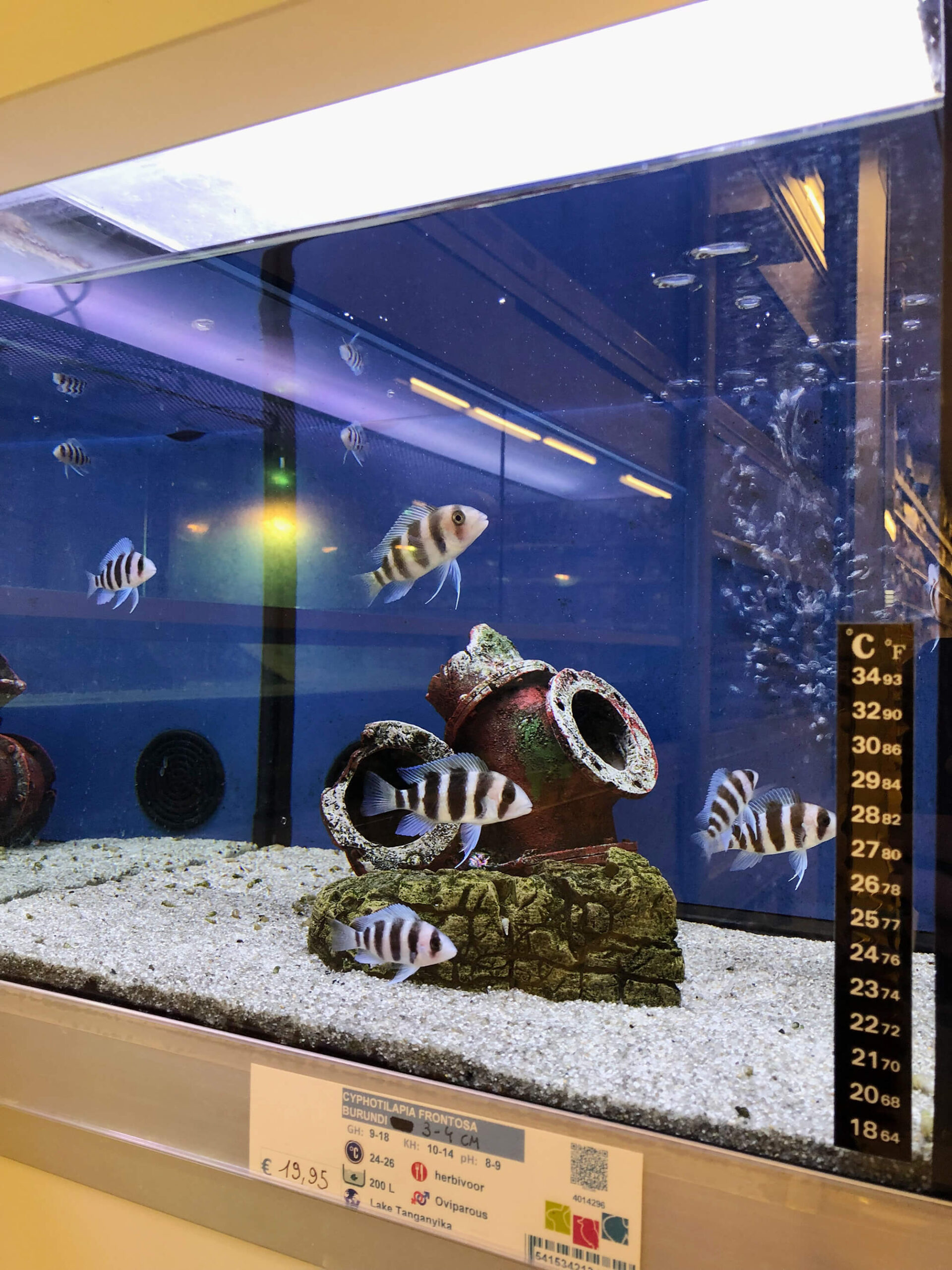
After we’ve paid for the groceries and have put them in the car, we walk into the pet shop. We look at the parrots (Jacques, Louis and Marie-José), the rabbits, the guinea pigs, the assorted caged birds and the fish and turtles. He’s very fond of the Cyphotilapia Frontosa Burundi. He calls them zebras. They hail from Lake Tanganyika, the label says. It’s the second-oldest freshwater lake, the second-largest by volume and the second-deepest. The pet shop has adorned their aquarium with a scene of ocean waste.
In an effort to avert guilt, I look for something cheap and more or less useful to buy: birdseed, a snack for the neighbour’s cat, a comb for his grandparent’s Labrador, etc.
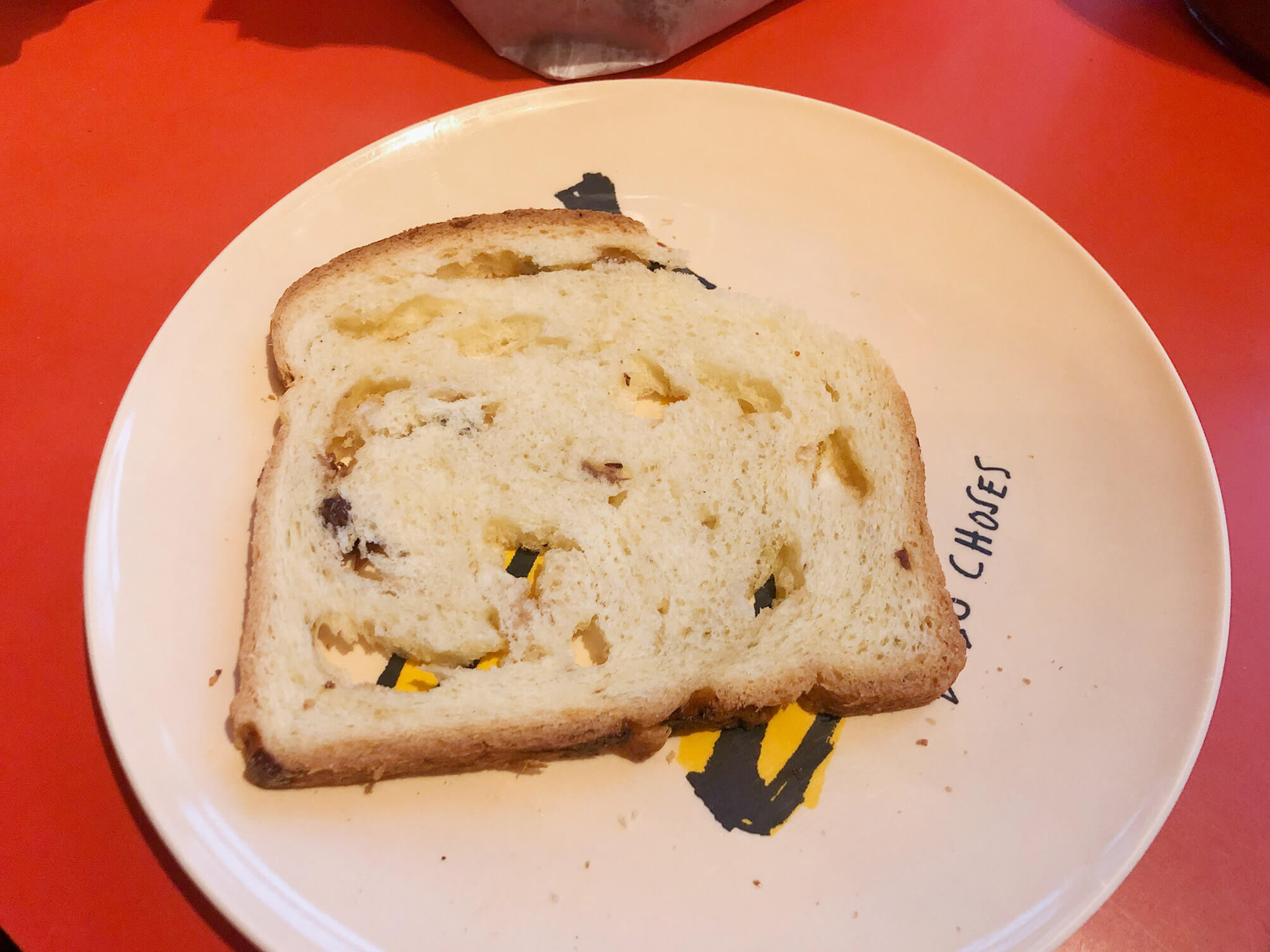
When I grew up, my parents told me that the number of raisins in the local baker’s raisin bread attested to the result of the most recent soccer match of KAA Gent. A victory was celebrated by throwing more raisins into the dough than usual, a loaf following a painful loss was hardly a raisin bread at all.
The baker retired long ago. Today my two-year-old son picked out all the raisins from his slice of bread. KAA Gent’s last game was a tie against Union.
Most mornings I eat three slices of bread. I stack them. Between the highest slice and the one in the middle I put a slice of cheese (young Gouda). I put the whole in the microwave1 for 1 minute and 50 seconds. The result is what I like to call a smelteram2.
On the morning of my thirty-second birthday the plate broke in half during heating.
A contraction of smelten (Dutch for melting) and boterham (Dutch for a slice of bread).
When I grew up, my parents told me that the number of raisins in the local baker’s raisin bread attested to the result of the most recent soccer match of KAA Gent. A victory was celebrated by throwing more raisins into the dough than usual, a loaf following a painful loss was hardly a raisin bread at all.
The baker retired long ago. Today my two-year-old son picked out all the raisins from his slice of bread. KAA Gent’s last game was a tie against Union.
On Mondays, before noon, I go to the supermarket with my two-year-old son. After passing the lasagnes, the loaves of bread and the fruit and vegetables, we make a short stop at the aquarium with the lobsters. Around New Year, there are two of them.
After we’ve paid for the groceries and have put them in the car, we walk into the pet shop. We look at the parrots (Jacques, Louis and Marie-José), the rabbits, the guinea pigs, the assorted caged birds and the fish and turtles. He’s very fond of the Cyphotilapia Frontosa Burundi. He calls them zebras. They hail from Lake Tanganyika, the label says. It’s the second-oldest freshwater lake, the second-largest by volume and the second-deepest. The pet shop has adorned their aquarium with a scene of ocean waste.
In an effort to avert guilt, I look for something cheap and more or less useful to buy: birdseed, a snack for the neighbour’s cat, a comb for his grandparent’s Labrador, etc.
December, 1947. Rapid snowmelt coincides with torrential precipitation. At the bottom of the Thur valley, in Wildenstein, the water gathers.
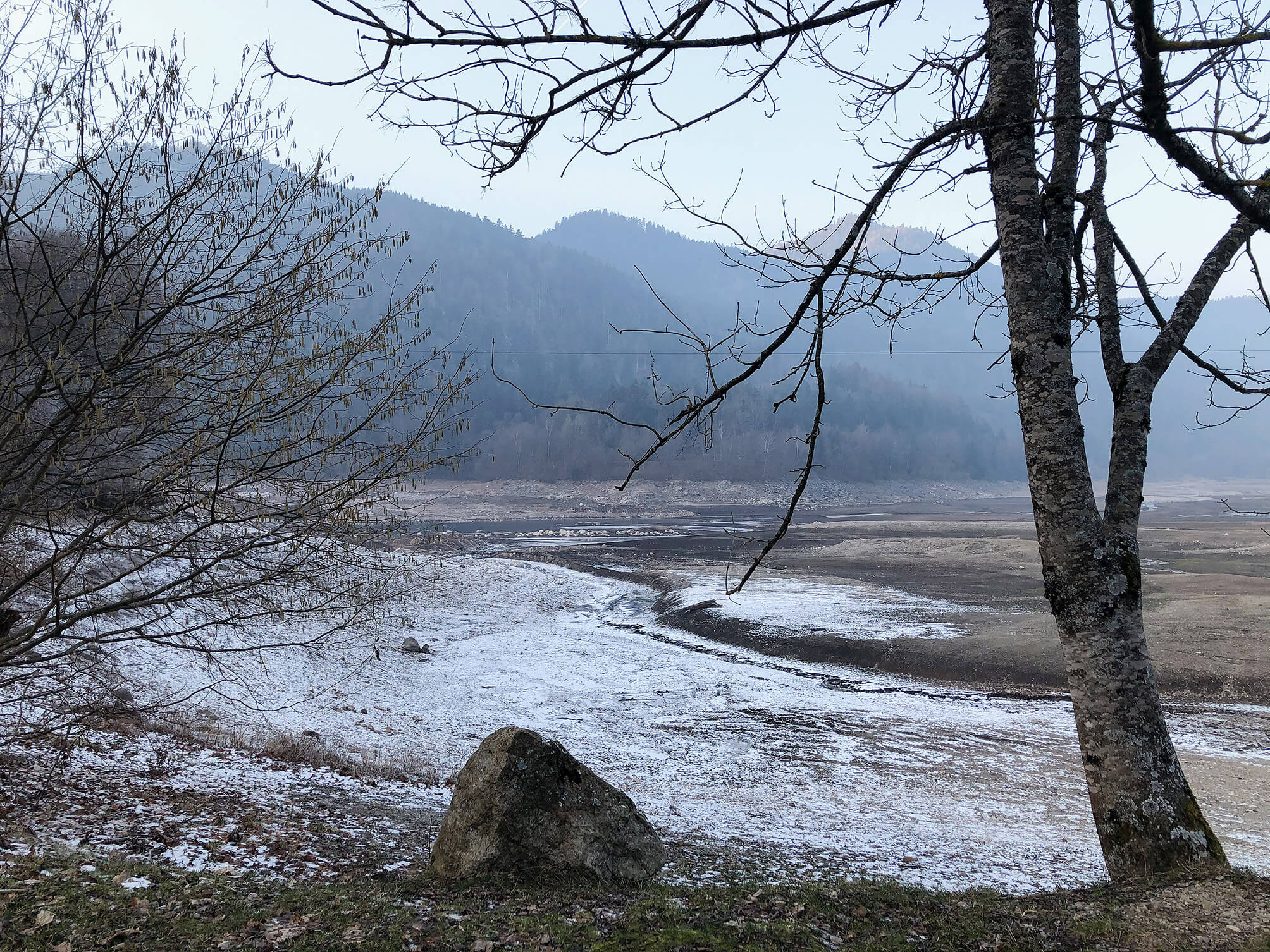
A first try at using the instrument for making a recording: excitement as we succeed in pointing the telescope at the brownish dot afar we just noticed on the other side of the valley. As it continues scavenging, we wait for night to set in.
