What constitutes a ‘document’ and how does it function?
According to the Oxford English Dictionary, the etymological origin is the Latin ‘documentum’, meaning ‘lesson, proof, instance, specimen’. As a verb, it is ‘to prove or support (something) by documentary evidence’, and ‘to provide with documents’. The online version of the OED includes a draft addition, whereby a document (as a noun) is ‘a collection of data in digital form that is considered a single item and typically has a unique filename by which it can be stored, retrieved, or transmitted (as a file, a spreadsheet, or a graphic)’. The current use of the noun ‘document’ is defined as ‘something written, inscribed, etc., which furnishes evidence or information upon any subject, as a manuscript, title-deed, tomb-stone, coin, picture, etc.’ (emphasis added).
Both ‘something’ and that first ‘etc.’ leave ample room for discussion. A document doubts whether it functions as something unique, or as something reproducible. A passport is a document, but a flyer equally so. Moreover, there is a circular reasoning: to document is ‘to provide with documents’. Defining (the functioning of) a document most likely involves ideas of communication, information, evidence, inscriptions, and implies notions of objectivity and neutrality – but the document is neither reducible to one of them, nor is it equal to their sum. It is hard to pinpoint it, as it disperses into and is affected by other fields: it is intrinsically tied to the history of media and to important currents in literature, photography and art; it is linked to epistemic and power structures. However ubiquitous it is, as an often tangible thing in our environment, and as a concept, a document deranges.
the-documents.org continuously gathers documents and provides them with a short textual description, explanation,
or digression, written by multiple authors. In Paper Knowledge, Lisa Gitelman paraphrases ‘documentalist’ Suzanne Briet, stating that ‘an antelope running wild would not be a document, but an antelope taken into a zoo would be one, presumably because it would then be framed – or reframed – as an example, specimen, or instance’. The gathered files are all documents – if they weren’t before publication, they now are. That is what the-documents.org, irreversibly, does. It is a zoo turning an antelope into an ‘antelope’.
As you made your way through the collection,
the-documents.org tracked the entries you viewed.
It documented your path through the website.
As such, the time spent on the-documents.org turned
into this – a new document.
This document was compiled by ____ on 12.04.2026 23:07, printed on ____ and contains 15 documents on _ pages.
(https://the-documents.org/log/12-04-2026-6810/)
the-documents.org is a project created and edited by De Cleene De Cleene; design & development by atelier Haegeman Temmerman.
the-documents.org has been online since 23.05.2021.
- De Cleene De Cleene is Michiel De Cleene and Arnout De Cleene. Together they form a research group that focusses on novel ways of approaching the everyday, by artistic means and from a cultural and critical perspective.
www.decleenedecleene.be / info@decleenedecleene.be - This project was made possible with the support of the Flemish Government and KASK & Conservatorium, the school of arts of HOGENT and Howest. It is part of the research project Documenting Objects, financed by the HOGENT Arts Research Fund.
- Briet, S. Qu’est-ce que la documentation? Paris: Edit, 1951.
- Gitelman, L. Paper Knowledge. Toward a Media History of Documents.
Durham/ London: Duke University Press, 2014. - Oxford English Dictionary Online. Accessed on 13.05.2021.

In Zaffelare, young men who were called for military service but could not be missed at home were advised by the local doctor to swallow a small ball of aluminium foil an hour before the examination. In the X-ray, a gastric ulcer appeared. They were rejected for service. It is uncertain whether the increased incidence of gastric ulcers among young men in Zaffelare was a cause for concern.

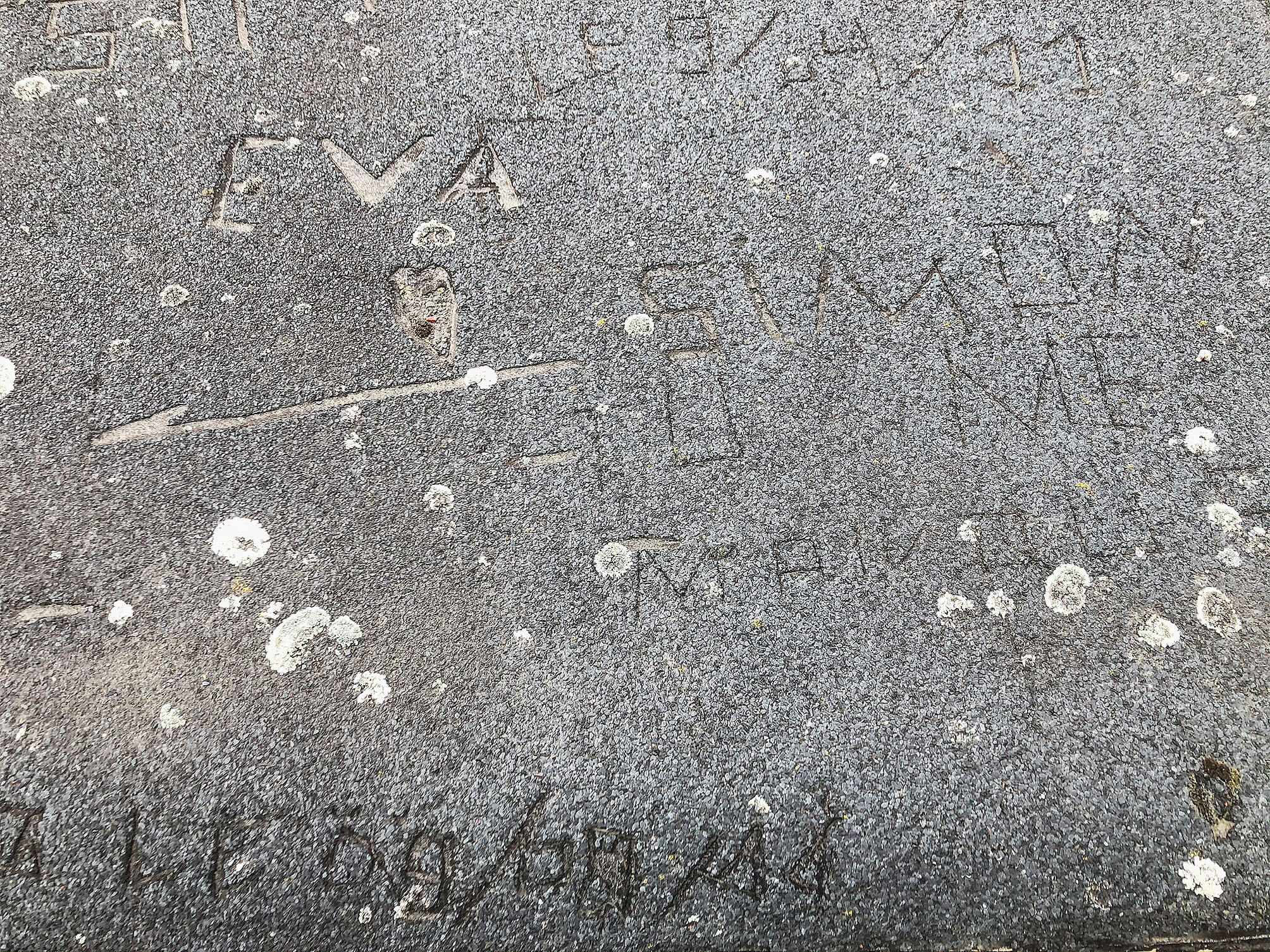
In what order and by whom the various texts and drawings were carved into the soft roofing is unclear. To the right of ‘EVA’, a heart symbol and an arrow (pointing to the left), the roofing reads ‘SIMON TU ME MANQUES’.
The short sentence usually – yet hastily – translates to ‘Simon, I miss you’. However, in French the ‘you’ (tu) is the subject and has an active role, whereas the ‘I’ (me) is the direct object. In short: by his not being there, Simon actively effectuates hurt to the one who carved this text.
In an attempt to make it his own, Gino – it might also be Dino – has taken a can of bright pink spray paint to his hard hat and – as the paint was drying – dragged his gloved finger from top to bottom. G – or D –, I, N, O. In the dust on a demolished floor tile, someone has written 12,10. Perhaps a measurement, a quantity, a position, a date, a reference.
Subtractive writing is not uncommon. With the tip of a passer-by’s index finger ‘WASH ME’ is subtracted from the dust on a dirty car. In freshly poured concrete, a name is embedded forever with a twig. In hot and soft roofing drawings and obscenities are scratched. Styrofoam lining a brand new elevator gets impressed with names, jokes and knuckles.
In the twenty-third canto of Ariosto’s Orlando Furioso (1516), Orlando comes across the name of his love and another man, carved in the bark of a tree. He doubts. But that night, a gossiping shepherd tells him he’s seen Angelica and Medoro together. Orlando returns to the forest, and in a four-day frenzy, he uproots every tree and pollutes the rivers forever.
CXXXI
For he turf, stone, and trunk, and shoot, and lop,
Cast without cease into the beauteous source;
Till, turbid from the bottom to the top,
Never again was clear the troubled course.
At length, for lack of breath, compelled to stop,
(When he is bathed in sweat, and wasted force,
Serves not his fury more) he falls, and lies
Upon the mead, and, gazing upward, sighs.1
Ariosto, L. Orlando Furioso. Translated by William Stewart Rose, Echo Library, 2006, p. 267.

A constant, dependable presence. With the camera focused on the North Star for an extended period, the rotation of the Earth becomes visible. Nearby, in the municipality of Wiederstedt, the geologist, poet and philosopher Friedrich von Hardenberg (better known by his pen name Novalis) spent his childhood years between 1772 and 1784. A quote of his is engraved on a stone bench in the park surrounding the chateau where he was raised: “The human being does not speak alone – the universe also speaks – everything speaks – infinite languages.”
From S. Anders Leben. Eine Handlung in Gesprächen/S. Anders Leben – Living Differently: An Act in Conversations
Stephanie Kiwitt (1972) is an artist based in Halle (Saale), Germany. Utilizing a large number of images, various perspectives and also textual elements, she is known for her insightful photography that explores spaces emblematic of contemporary phenomena. Over the past three years, she has focused on evolving habitats in rural areas, photographing traces of transformation and conducting interviews in Saxony-Anhalt, the region she moved to in 2020. From 2018 to 2020, Kiwitt was a guest lecturer at the LUCA School of Arts in Brussels.
In spring 2024 the-documents.org and Trigger co-publish a series of online articles with a focus on the meeting ground between photography and the document.

Bricks and stones of various origin (aerated concrete blocks, clinker bricks, quarry stones).
From Fortlaufend/Ongoing
Stephanie Kiwitt (1972) is an artist based in Halle (Saale), Germany. Utilizing a large number of images, various perspectives and also textual elements, she is known for her insightful photography that explores spaces emblematic of contemporary phenomena. Over the past three years, she has focused on evolving habitats in rural areas, photographing traces of transformation and conducting interviews in Saxony-Anhalt, the region she moved to in 2020. From 2018 to 2020, Kiwitt was a guest lecturer at the LUCA School of Arts in Brussels.
In spring 2024 the-documents.org and Trigger co-publish a series of online articles with a focus on the meeting ground between photography and the document.

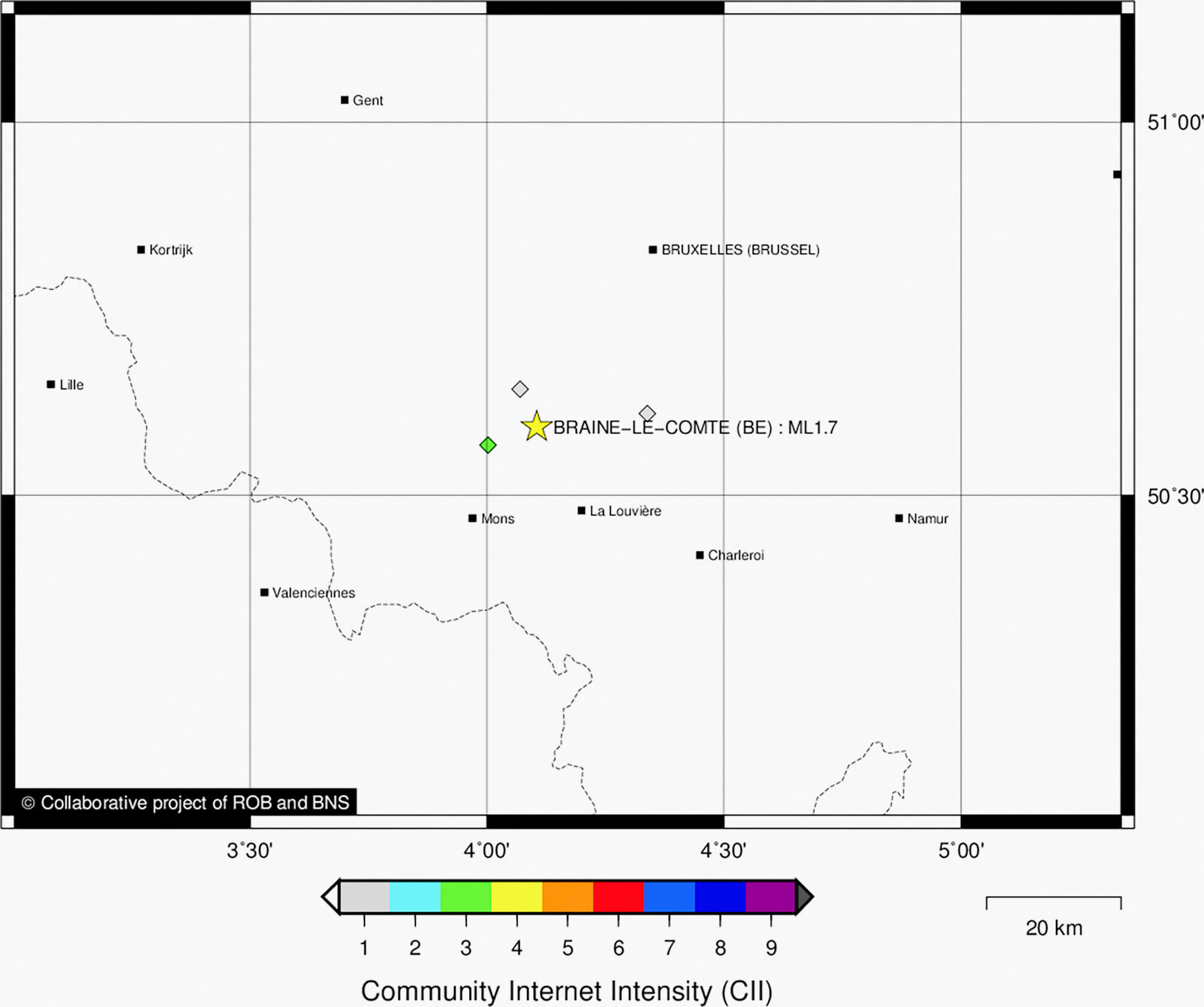
On May 6th 2020, 14h06 and 31 seconds, the Belgian Seismological Institute records an earthquake with a 1,7 magnitude in the region of Braine-Le-Compte. Three reactions from people in the neighbourhood, filed by the Institute, confirm the official seismological recordings. The Institute’s website classifies the earthquake as a ‘quarry blast’.
http://seismologie.be/nl/seismologie/aardbevingen-in-belgie/en130qj1o
The road down from the top of Mount Vesuvius, at Atrio Del Cavallo. The sun sets. The last tourist bus has headed down. Then the headlights of the guardian’s car swing their way down. It must be freezing. I am holding an orange-sized piece of petrified lava, probably stemming from the 1872 or 1944 eruption. A kilometer further down the road, the old Observatory is empty. Nowadays, monitoring seismic changes is done in a research centre in the city of Naples. Their seismographic registrations can be followed online, in real time. Two headlights swirling along the slopes, underneath me, are coming upwards.

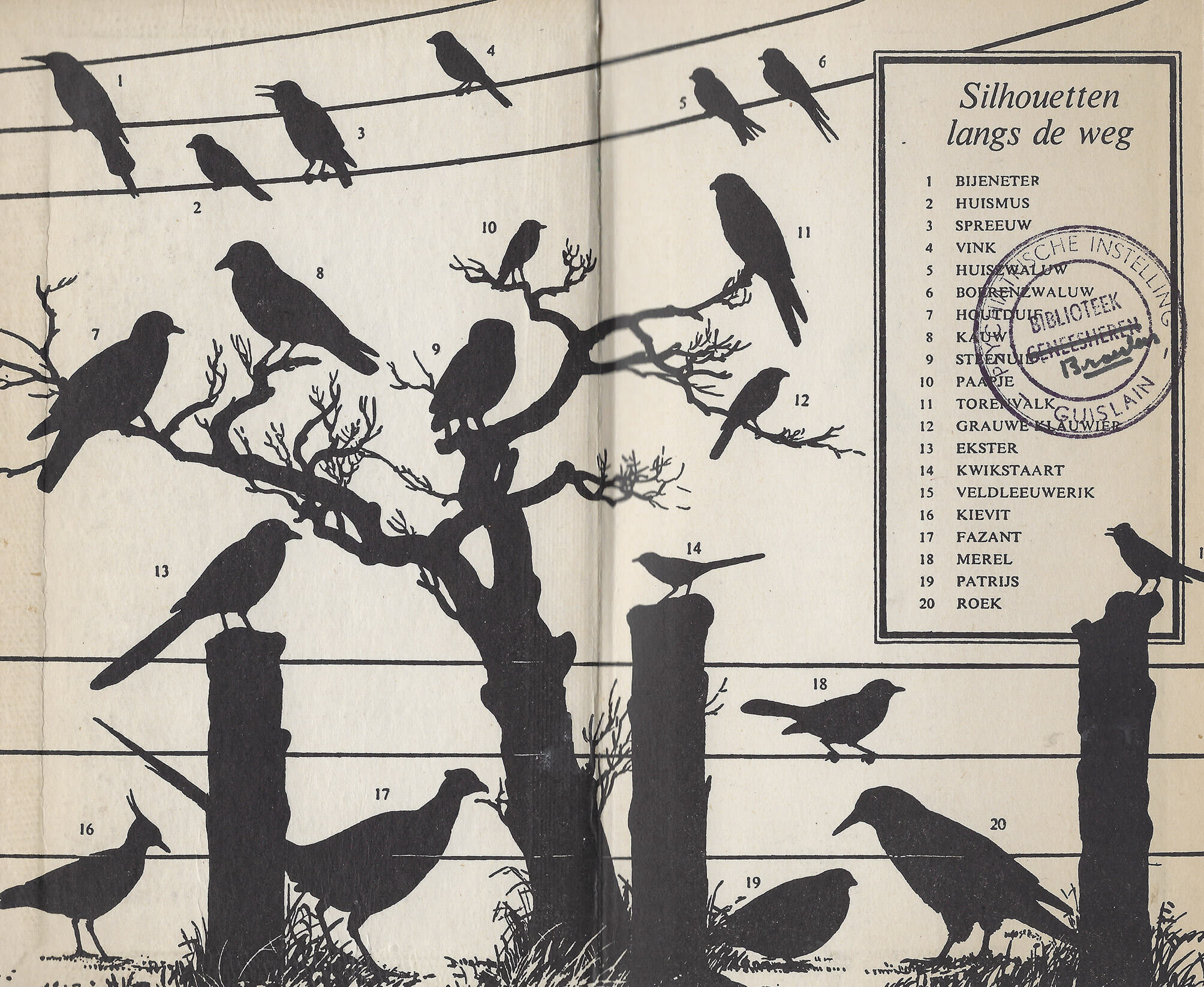
This is the spread one sees upon opening the bird field guide that once stood, as the stamp indicates, in the library of a psychiatric institution.1 It shows birds’ silhouettes, as they can be seen beside the road.
The drawing has a kind of Hitchcock feel to it.2 The birds seem to be spying on each other, as they also seem to be spying on the unsuspecting passer-by.
The composition of the scene is marvelous. The electric wires, the tree, the wire fence, the double framed list with the birds’ names, handsomely positioned in a birdless patch, at once superimposed on the telephone wires, and pushed to the background by the skylark.
Imagine seeing this scene. What are the odds: to see the silhouettes of Europe’s twenty most common species of birds in one glance, from your car’s window, as you are driving home at dusk.
Before closing the book, the last spread seems to show the birds fleeing, maybe attacking.3
The stamp indicates that, at the psychiatric institution, the book was part of the sublibrary for the Catholic Brothers of Charity. The crossed-out part indicates that there was also a separate physicians’ library, to which the book might have originally belonged.
On the web, discussions on whether Alfred Hitchcock’s The Birds (1963) was shot in colour or in black and white, abound.
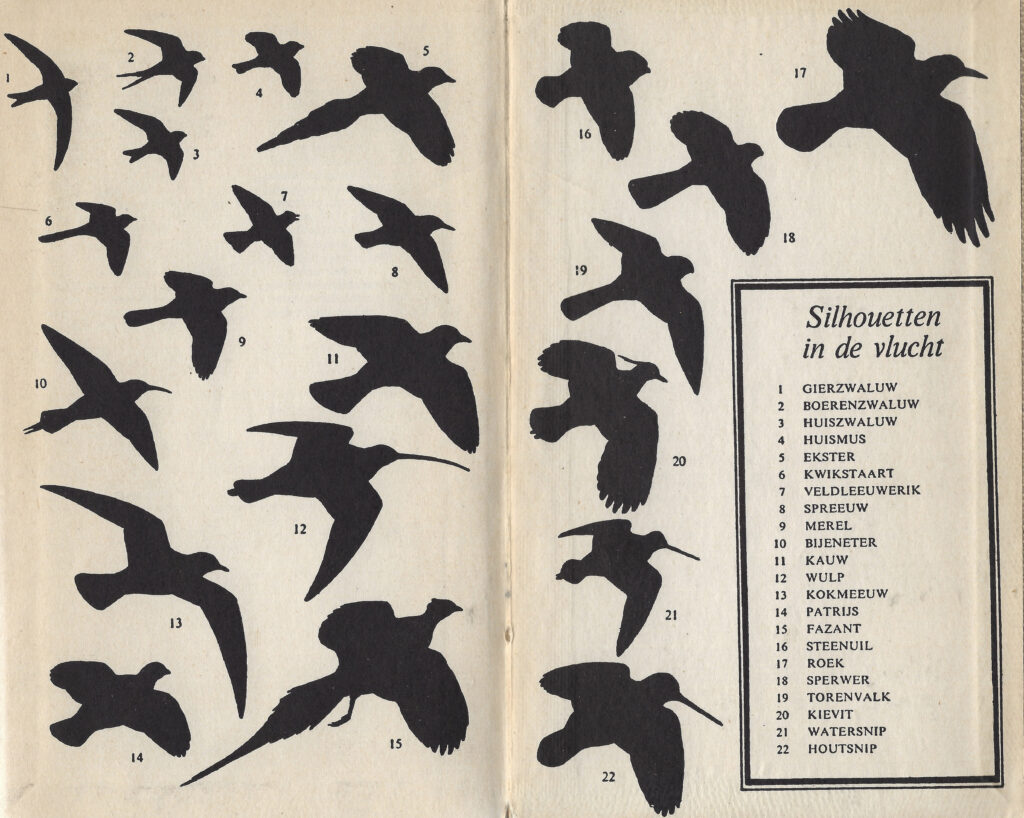
Peterson, R.T., Mountfort, G. & P.A.D. Hollom. Vogelgids voor alle in ons land en overig Europa voorkomende vogelsoorten (J. Kist, transl.). 3d ed. Amsterdam/Brussels: Elsevier, 1955.
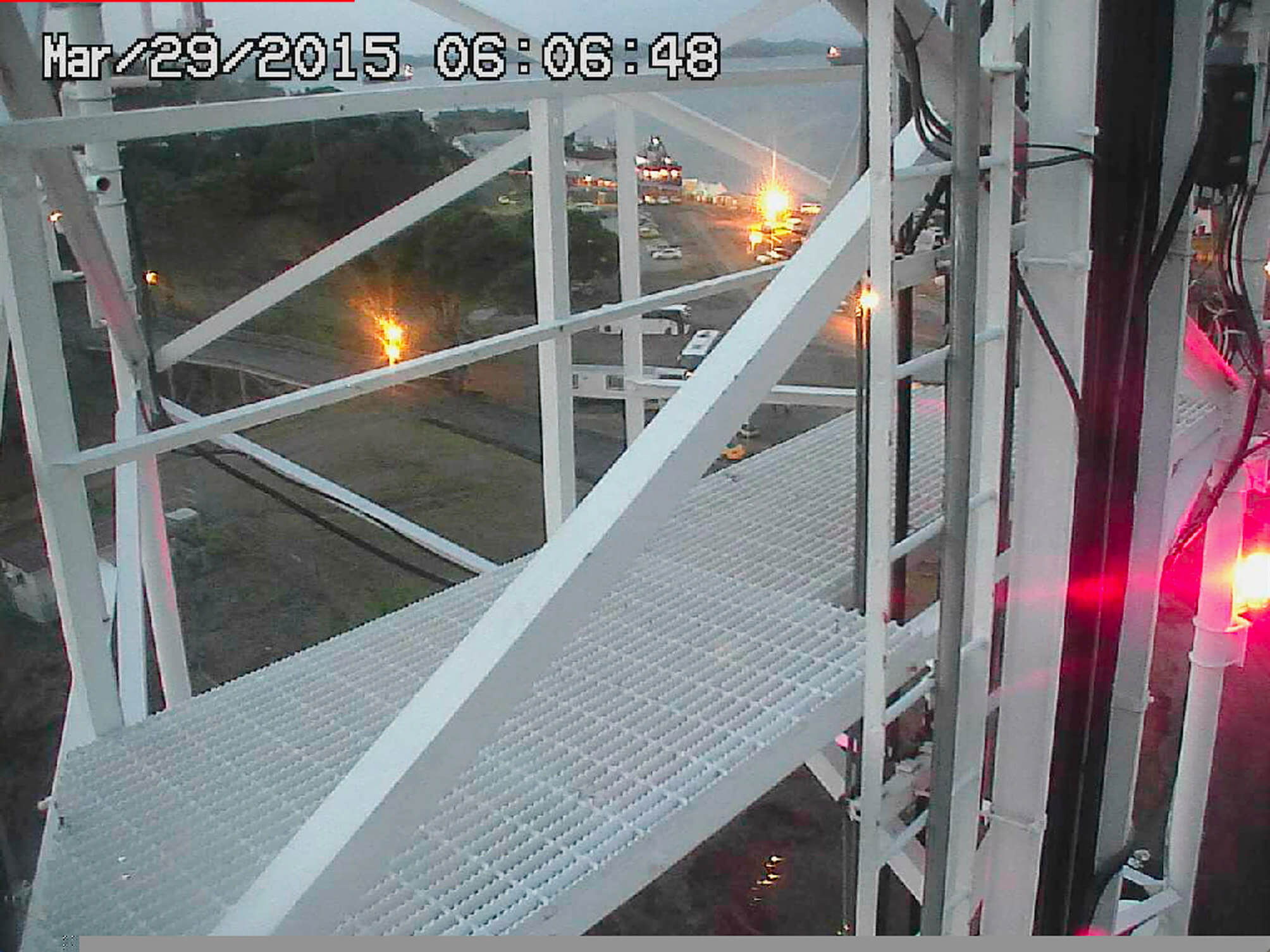
On March 23th 2015, a high pressure system above Panama Bay blew strong winds landwards. At the Gatun locks, one of the webcams overlooking the Canal neglected the traffic and briefly captured its own images. The ship’s presumed passage through the Gatun locks wasn’t recorded by this camera and the AIS-transponder did not save any data of the ship’s transit from the Pacific to the Atlantic side of the canal: the Authenticity managed to swap oceans undetected.
On February 16th 2016, the transponder still signals the ship near the port of Bahia Las Minas. The current is calm, the ship has been practically immobile for a year.
First published in: De Cleene, M. Reference Guide. Amsterdam: Roma Publications, 2019
Webcam Gatun Locks, Panama Canal, http://www.pancanal.com
It’s time to have a nap. I tilt the window over its middle axis to let the butterfly out. A breeze ruffles the drapes. Now, it sits on the glass and throws an enormous shadow on the yellow cloth.


It’s early spring. The pool is covered with a sheet of plastic. The deciduous trees are just leafing out. A tree stump serves as a placeholder for the diving board’s foot – it was customary to take it indoors for winter – and keeps people from kicking its threaded rods sticking up from the silex tiles that line the pool.
The upper right corner of the plastic frame is missing. It’s probably where the insect – now dead, dry and yellowish – got in. The frame was left behind in the laundry room overlooking the garden, the pool and the pool house. At the time it hadn’t been used for quite a while. Half empty, the water green.
In summer, when the wind dropped, horse-flies came. You could shake them off temporarily by swimming a few meters underwater.

Halfway March my dad started finding empty clam shells on the banks of the Zuidlede along the pasture where he used to herd sheep. He had never seen this type of clam before. There were easily seventy of them along a hundred metre stretch of riverbank.
He brought two specimens to someone he knows in the neighbouring provincial domain. She would look into it, she said, and that she would probably pass it on to someone at the educational department.
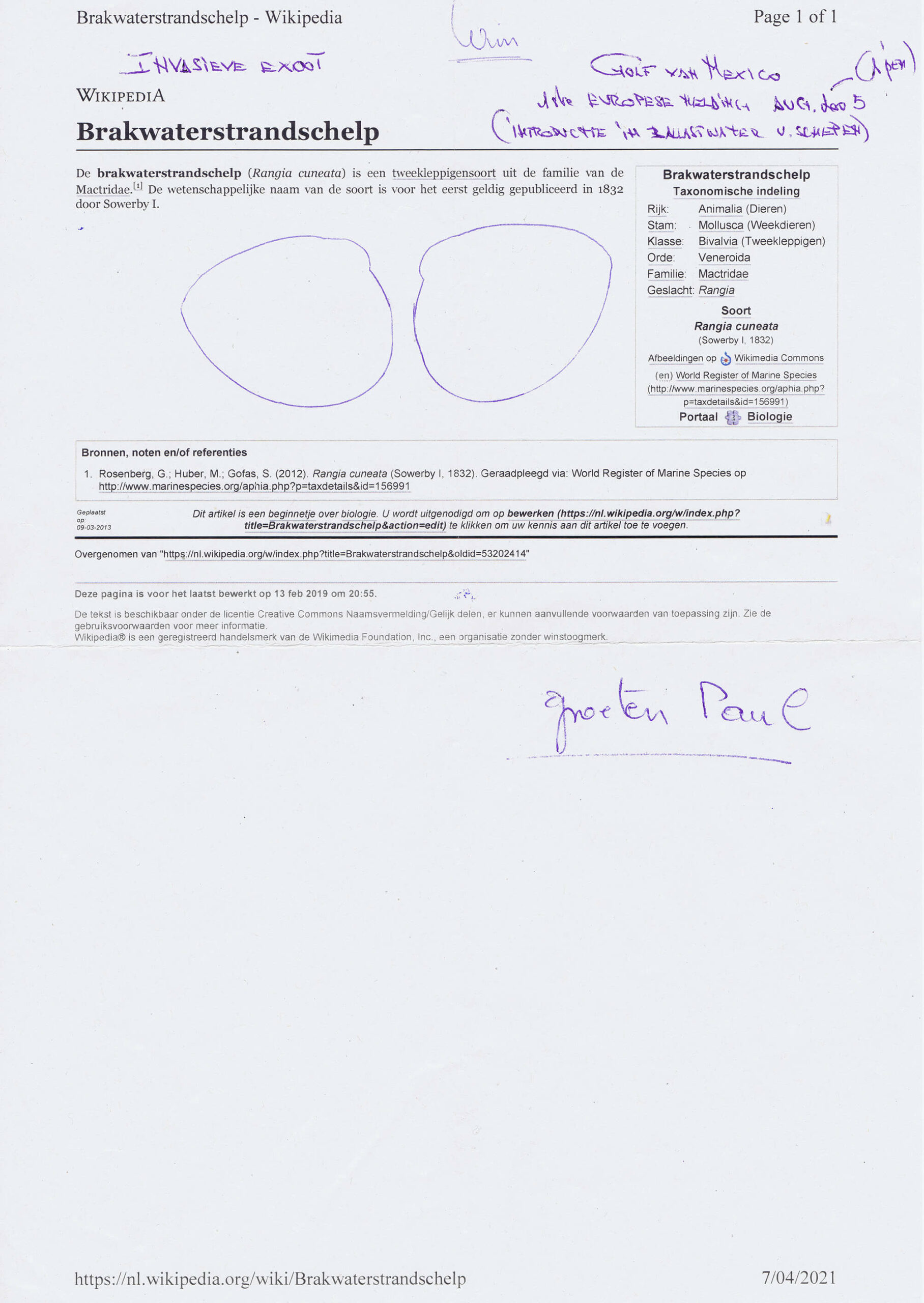
Yesterday he (my dad) received a printout of the Dutch wikipedia-page on the Brakwaterstrandschelp (Rangia Cuneata). On the page Paul (who sends his regards at the bottom of the document) traced around the scallops with a blue ballpoint pen.
My dad added in capitals – also with a blue ballpoint pen – that the Rangia Cuneata is an invasive species, native to the Gulf of Mexico. The first time it was observed in Europe was in Antwerp in August 2005, most probably they reached Europe in the ballast water tanks of large ships.
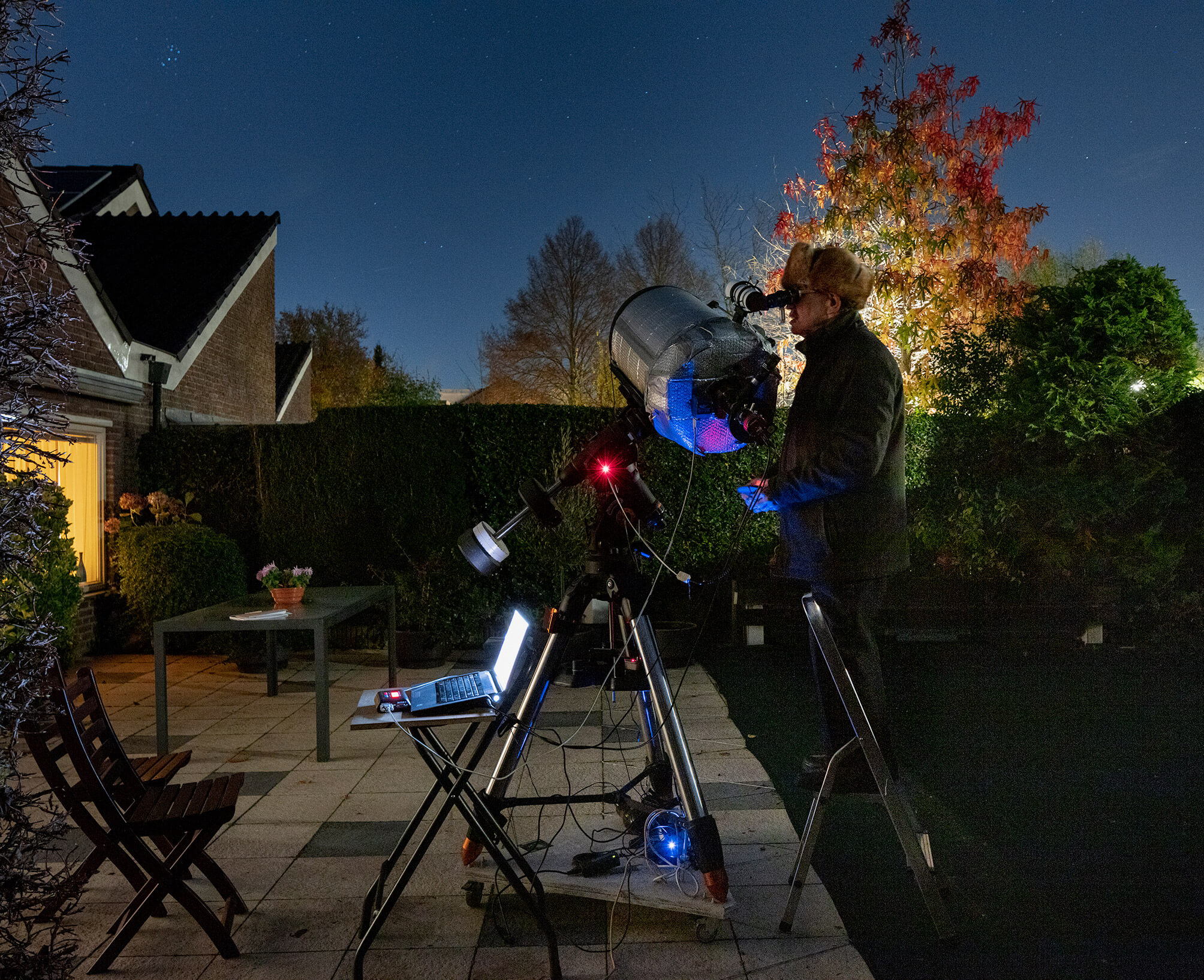
Each night a plethora of amateur-astronomers gazes into the sky. Their instruments and locations are often inferior to the means available to professionals. Yet, what they lack in terms of technology and location, darkness and mirror surface, they make up for in the collectivity of their observations. They are patient observers, spread around the globe, not bound to the strict schedules and limited availability of the large telescopes in the Atacama Desert.
When amateur astronomy became fashionable, it led to a surge of information stemming from a large group of distinct observers: seafarers, physicians, typists, masons. Theirs were valuable data, but if they were to be put to scientific use, they needed to be standardised. How to overcome the subjective element inherent in every empirical observation? The amateurs had to be instructed to recognize patterns, by means of visual examples. They had to be trained to use the right terms to describe their observations. They had to turn chaos into order. Recognize what they were looking at. A nebula. A red giant. Neptune’s faint blue-greenish colour resembling the flame of the gas stove.
Hueso, R. e.a., ‘Neptune long-lived atmospheric features in 2013-2015 from small (28-cm) to large (10-m) telescopes’, Icarus, 295, 2017, 89-109.
Lorenz, R.D. e.a. ‘Backyard spectroscopy and photometry of Titan, Uranus and Neptune’, Planetary and Space Science, 51, 2003, 113-125.
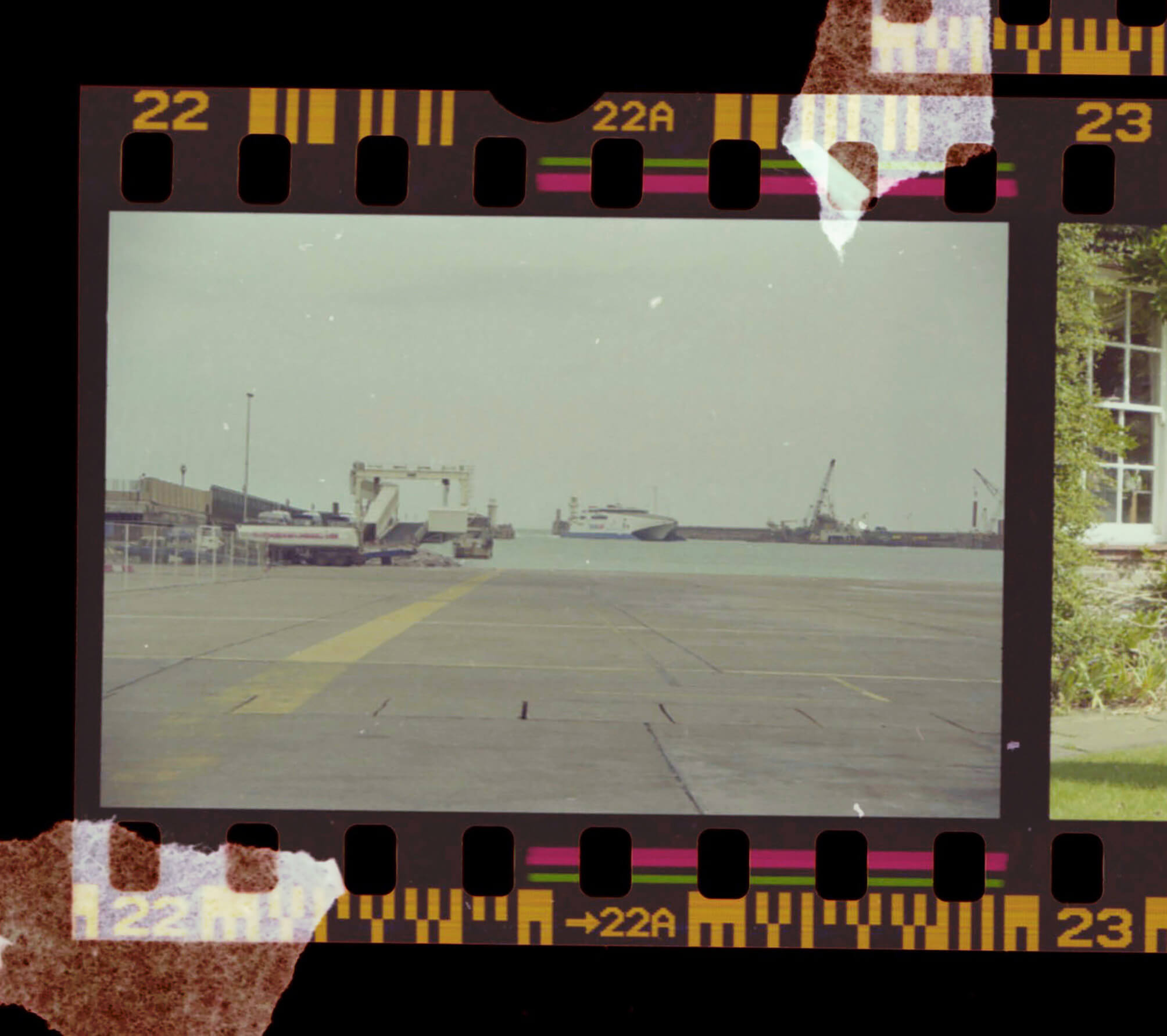
Coming back from holidays, we were waiting for the ferry to take us from Ramsgate to Ostend. We were well on time. As the ship entered the harbour, I asked my parents if I could take a photograph. It’s the first photograph I recall taking. I remember my dad telling me to wait long enough for the ship to get closer. I didn’t. I only got one try.1
It took a while before the film was developed. I couldn’t stop imagining what the photograph would look like: some picturesque waves in the foreground, the shining white ship, the red and blue text on the side, and a cloud filled sky.
Following every holiday, when we got home, the garden and our house would be photographed with the remaining exposures on the roll of film in the camera.
December, 1947. Rapid snowmelt coincides with torrential precipitation. At the bottom of the Thur valley, in Wildenstein, the water gathers.