What constitutes a ‘document’ and how does it function?
According to the Oxford English Dictionary, the etymological origin is the Latin ‘documentum’, meaning ‘lesson, proof, instance, specimen’. As a verb, it is ‘to prove or support (something) by documentary evidence’, and ‘to provide with documents’. The online version of the OED includes a draft addition, whereby a document (as a noun) is ‘a collection of data in digital form that is considered a single item and typically has a unique filename by which it can be stored, retrieved, or transmitted (as a file, a spreadsheet, or a graphic)’. The current use of the noun ‘document’ is defined as ‘something written, inscribed, etc., which furnishes evidence or information upon any subject, as a manuscript, title-deed, tomb-stone, coin, picture, etc.’ (emphasis added).
Both ‘something’ and that first ‘etc.’ leave ample room for discussion. A document doubts whether it functions as something unique, or as something reproducible. A passport is a document, but a flyer equally so. Moreover, there is a circular reasoning: to document is ‘to provide with documents’. Defining (the functioning of) a document most likely involves ideas of communication, information, evidence, inscriptions, and implies notions of objectivity and neutrality – but the document is neither reducible to one of them, nor is it equal to their sum. It is hard to pinpoint it, as it disperses into and is affected by other fields: it is intrinsically tied to the history of media and to important currents in literature, photography and art; it is linked to epistemic and power structures. However ubiquitous it is, as an often tangible thing in our environment, and as a concept, a document deranges.
the-documents.org continuously gathers documents and provides them with a short textual description, explanation,
or digression, written by multiple authors. In Paper Knowledge, Lisa Gitelman paraphrases ‘documentalist’ Suzanne Briet, stating that ‘an antelope running wild would not be a document, but an antelope taken into a zoo would be one, presumably because it would then be framed – or reframed – as an example, specimen, or instance’. The gathered files are all documents – if they weren’t before publication, they now are. That is what the-documents.org, irreversibly, does. It is a zoo turning an antelope into an ‘antelope’.
As you made your way through the collection,
the-documents.org tracked the entries you viewed.
It documented your path through the website.
As such, the time spent on the-documents.org turned
into this – a new document.
This document was compiled by ____ on 06.08.2025 14:52, printed on ____ and contains 24 documents on _ pages.
(https://the-documents.org/log/06-08-2025-6565/)
the-documents.org is a project created and edited by De Cleene De Cleene; design & development by atelier Haegeman Temmerman.
the-documents.org has been online since 23.05.2021.
- De Cleene De Cleene is Michiel De Cleene and Arnout De Cleene. Together they form a research group that focusses on novel ways of approaching the everyday, by artistic means and from a cultural and critical perspective.
www.decleenedecleene.be / info@decleenedecleene.be - This project was made possible with the support of the Flemish Government and KASK & Conservatorium, the school of arts of HOGENT and Howest. It is part of the research project Documenting Objects, financed by the HOGENT Arts Research Fund.
- Briet, S. Qu’est-ce que la documentation? Paris: Edit, 1951.
- Gitelman, L. Paper Knowledge. Toward a Media History of Documents.
Durham/ London: Duke University Press, 2014. - Oxford English Dictionary Online. Accessed on 13.05.2021.

In an attempt to make it his own, Gino – it might also be Dino – has taken a can of bright pink spray paint to his hard hat and – as the paint was drying – dragged his gloved finger from top to bottom. G – or D –, I, N, O. In the dust on a demolished floor tile, someone has written 12,10. Perhaps a measurement, a quantity, a position, a date, a reference.
Subtractive writing is not uncommon. With the tip of a passer-by’s index finger ‘WASH ME’ is subtracted from the dust on a dirty car. In freshly poured concrete, a name is embedded forever with a twig. In hot and soft roofing drawings and obscenities are scratched. Styrofoam lining a brand new elevator gets impressed with names, jokes and knuckles.
In the twenty-third canto of Ariosto’s Orlando Furioso (1516), Orlando comes across the name of his love and another man, carved in the bark of a tree. He doubts. But that night, a gossiping shepherd tells him he’s seen Angelica and Medoro together. Orlando returns to the forest, and in a four-day frenzy, he uproots every tree and pollutes the rivers forever.
CXXXI
For he turf, stone, and trunk, and shoot, and lop,
Cast without cease into the beauteous source;
Till, turbid from the bottom to the top,
Never again was clear the troubled course.
At length, for lack of breath, compelled to stop,
(When he is bathed in sweat, and wasted force,
Serves not his fury more) he falls, and lies
Upon the mead, and, gazing upward, sighs.1
Ariosto, L. Orlando Furioso. Translated by William Stewart Rose, Echo Library, 2006, p. 267.

It’s time to have a nap. I tilt the window over its middle axis to let the butterfly out. A breeze ruffles the drapes. Now, it sits on the glass and throws an enormous shadow on the yellow cloth.


Freely adapted from interviews with residents of Sandersleben (Saxony-Anhalt). Three-act play. The first two acts take place in the present day; the third is set in the future.
From Act 2 ‘The Inhabitants’, Scene 5, ‘Living Differently’.
Characters: MR DUNST club member I, MR WINDORF amateur astronomer
Stills from text animation S. Anders Leben. Eine Handlung in Gesprächen/S. Anders Leben – Living Differently: An Act in Conversations
Stephanie Kiwitt (1972) is an artist based in Halle (Saale), Germany. Utilizing a large number of images, various perspectives and also textual elements, she is known for her insightful photography that explores spaces emblematic of contemporary phenomena. Over the past three years, she has focused on evolving habitats in rural areas, photographing traces of transformation and conducting interviews in Saxony-Anhalt, the region she moved to in 2020. From 2018 to 2020, Kiwitt was a guest lecturer at the LUCA School of Arts in Brussels.
In spring 2024 the-documents.org and Trigger co-publish a series of online articles with a focus on the meeting ground between photography and the document.

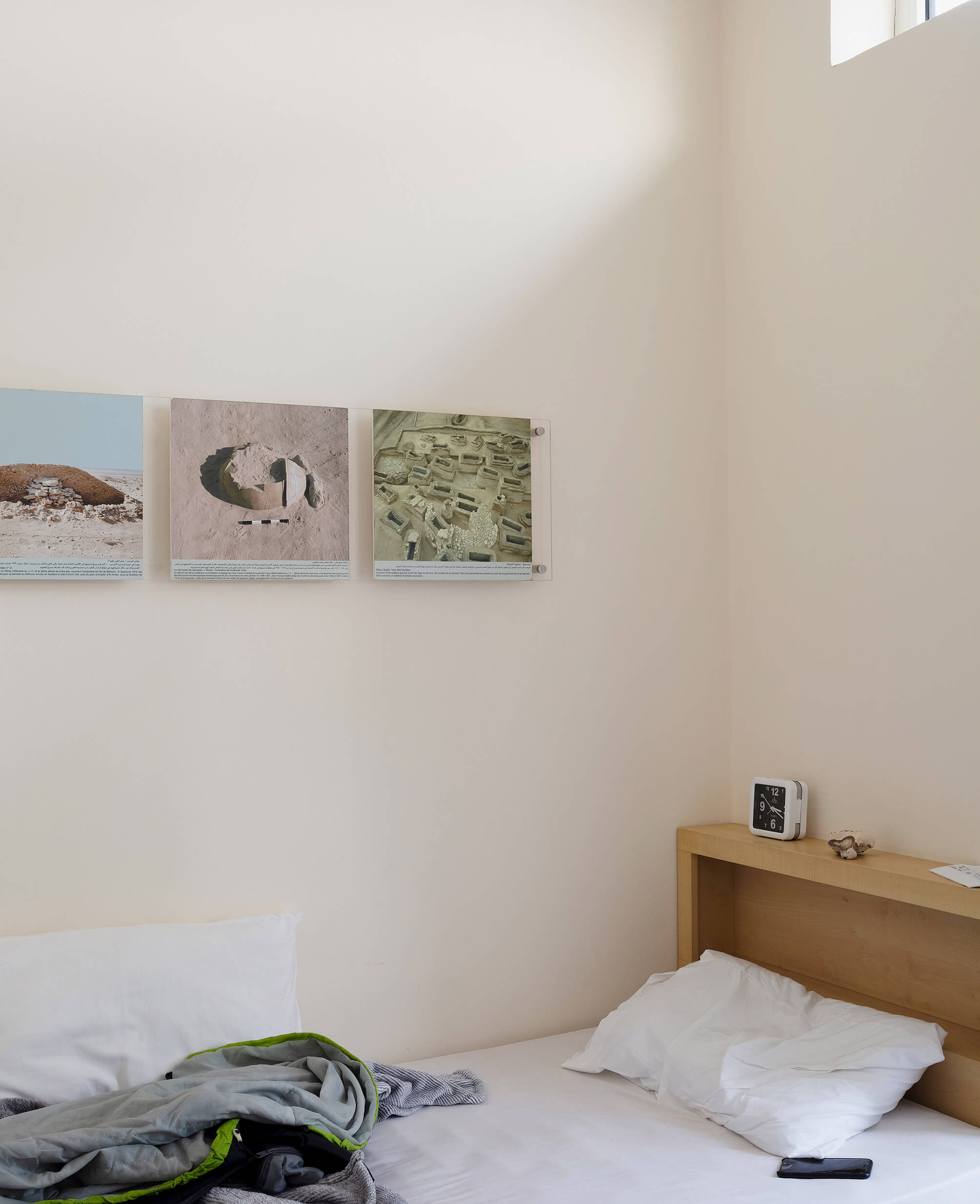
A square photograph with an Arabic and French text underneath it is mounted on a foam board, in turn mounted on a sheet of plexiglass. The picture in the middle is flanked by a photograph of and a text about the tumuli of Umm Jidr (left) and the excavations at Abou Saybi (right). They are mounted on the West wall of Guest Room 3 at the Qual’at Al-Bahrain Site Museum, Seef, Bahrain.
Necropolises make up the main archaeological testimonies of the Tylos period (4th century BC – 3rd century AD). The urn in the photograph contains the remains of several babies. They most likely fell victim to an epidemic. The size of the ruler next to the urn remains unspecified.
The photograph of Room 3 was made while in mandatory self-isolation after flying to Bahrain from Frankfurt and waiting for the result of a Covid-19 test.
Halfway March my dad started finding empty clam shells on the banks of the Zuidlede along the pasture where he used to herd sheep. He had never seen this type of clam before. There were easily seventy of them along a hundred metre stretch of riverbank.
He brought two specimens to someone he knows in the neighbouring provincial domain. She would look into it, she said, and that she would probably pass it on to someone at the educational department.
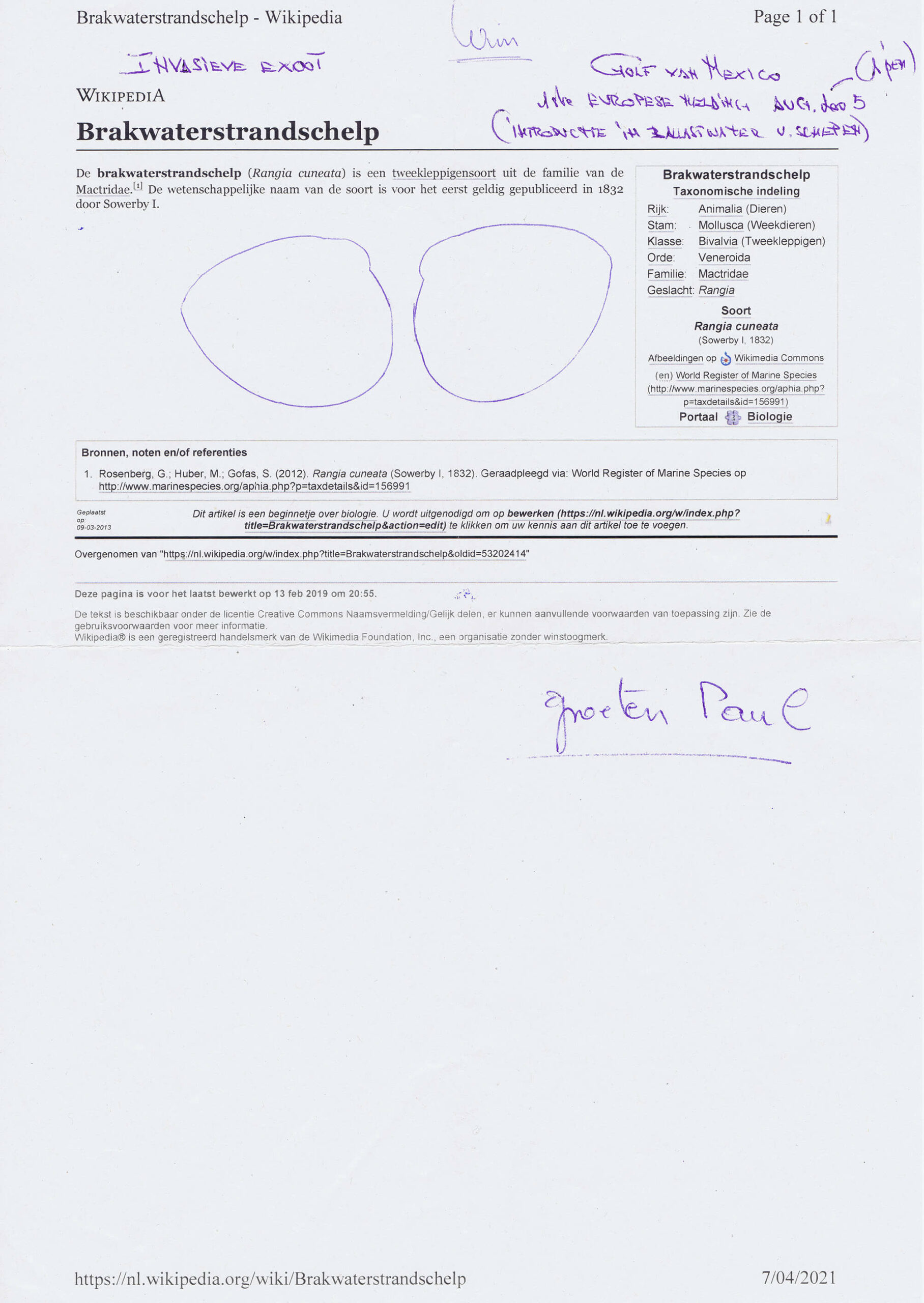
Yesterday he (my dad) received a printout of the Dutch wikipedia-page on the Brakwaterstrandschelp (Rangia Cuneata). On the page Paul (who sends his regards at the bottom of the document) traced around the scallops with a blue ballpoint pen.
My dad added in capitals – also with a blue ballpoint pen – that the Rangia Cuneata is an invasive species, native to the Gulf of Mexico. The first time it was observed in Europe was in Antwerp in August 2005, most probably they reached Europe in the ballast water tanks of large ships.
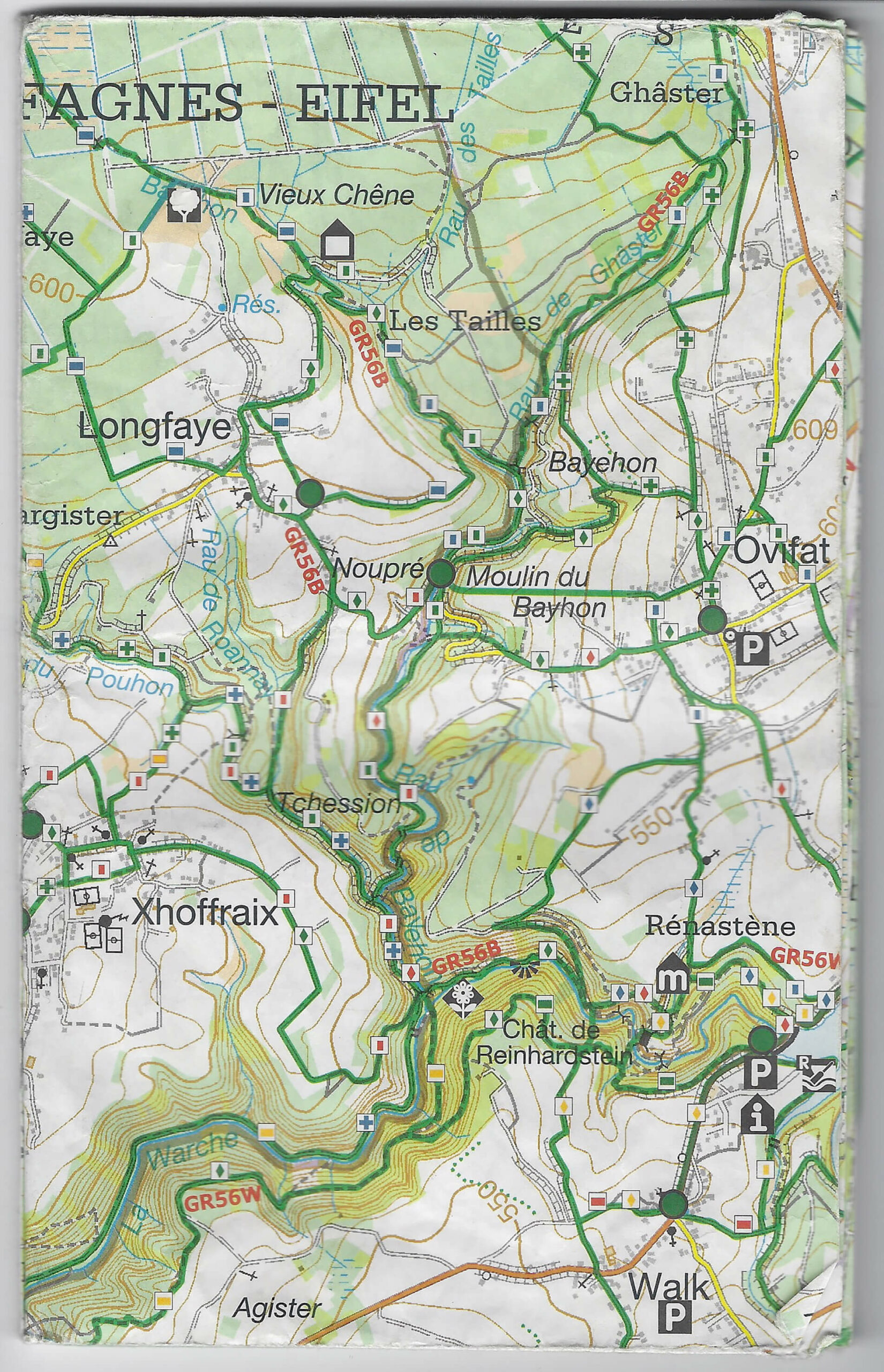
The paths in the valley of the Bayehon are covered with ice. We are making our way down towards the valley of the Ghâster. The temperature is minus 15 degrees Celsius. The water in our drinking bottles is frozen. We are betting on the shelter indicated on the map (Au Pied des Fagnes, Carte De Promenades, 1:25.000, Institut Geographique National) to pitch our tent. There is almost no wind, but every breath of air feels like we’re being hit with a thousand needles. What the map indicates as a shelter appears to be a picnic table.
Until recently, for as long as I could remember, the packaging of Tabasco® Pepper Sauce had been unchanged. On the front of the packaging, there is a photograph of a bottle of Tabasco®, scale 1:1, against an orange background.As far as packaged goods go, this is a highly idiosyncratic and quirky example.
The background colour approximates the colour of the liquid inside the bottle, resulting in as good as no contrast. Moreover, as the image of the bottle is scale 1:1, the packaging becomes kind of unnecessary and superfluous, also because the life-sized image of the bottle is the only way information is given to the customer: there are no additional slogans, no repetition of the brand name, no props and no decor. The image of the bottle advertises the bottle. It seems to add nothing the bottle could not do by its own (like a bottle of wine does).
What makes the packaging truly stand out, however, is the fact that the image of the bottle is not positioned vertically, but is slightly askew. It seems to be the result of a design error, and has an amateur feel to it. The decision to keep it as such and not correct it up until today, is, however, a stroke of genius. The non-vertical positioning alters the relation of the image of the bottle to the bottle inside: as the box is standing on a shelf, the tilted image of the bottle undermines its representational superfluousness.

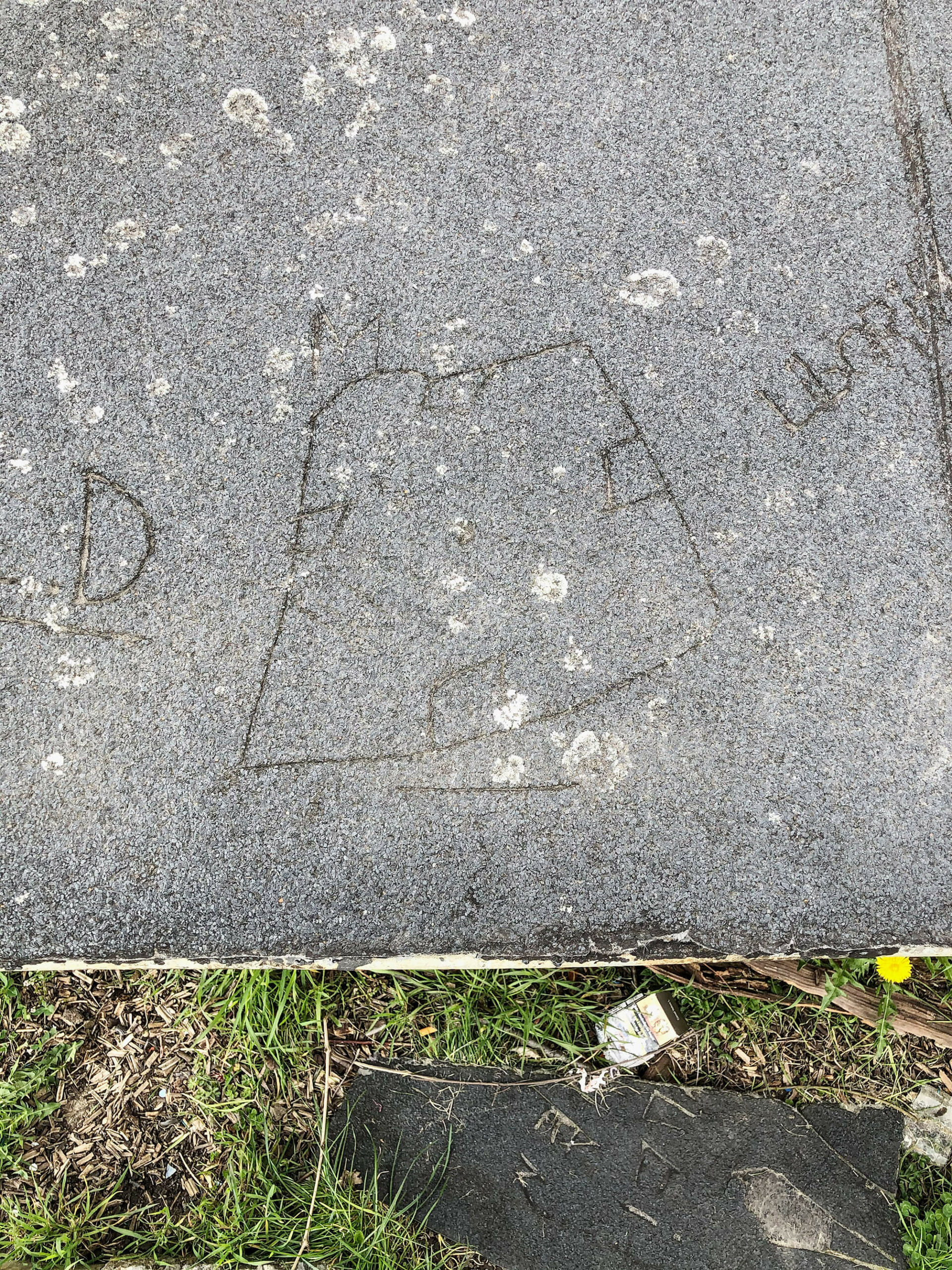
The torn off section of roofing on the grass has part of a text carved in it: ‘UDI’ and ‘EN’ are still legible. It must have come from another roof; the one shown in the photograph has no missing sections, nor visible repairs.
The roofing that is still on the garage shows a drawing of some kind. A floorplan for a squarish building with a supporting column along each side, or the layout for a tactical explanation, perhaps.
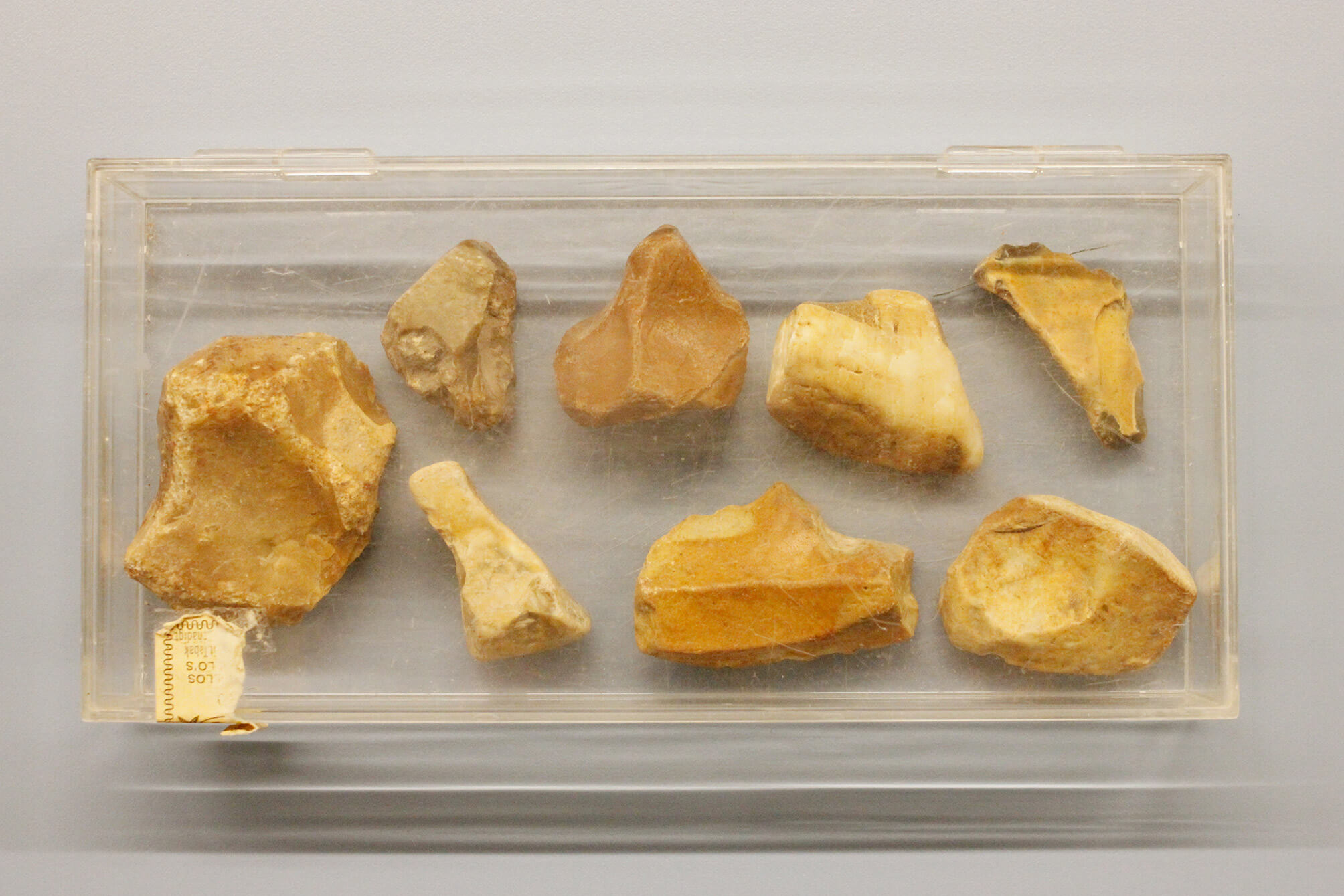
A cigar box, standing at the back of a shelf next to the heating installation, with in it silex-like stones with what seem to be traces of prehistoric usage.
In the garage, there were papers (the archive of O. Clemminck) and objects (stones, tiles) left to us by a man who had worked at the city archive. He was an acclaimed expert on our village’s history.1
A recent study by professor Philippe Crombé at Ghent University states that during the last Ice Age, in the region where I grew up, there was once a great lake, with, at the shores, proven presence of prehistoric man. As a kid, we dug up shells with a toothbrush, and set a perimeter with plastic tape. The former presence of a tavern where my parents now live, and the restaurant which still serves seafood at the other side of the road, prevented accurate dating.
In an attempt to make it his own, Gino – it might also be Dino – has taken a can of bright pink spray paint to his hard hat and – as the paint was drying – dragged his gloved finger from top to bottom. G – or D –, I, N, O. In the dust on a demolished floor tile, someone has written 12,10. Perhaps a measurement, a quantity, a position, a date, a reference.
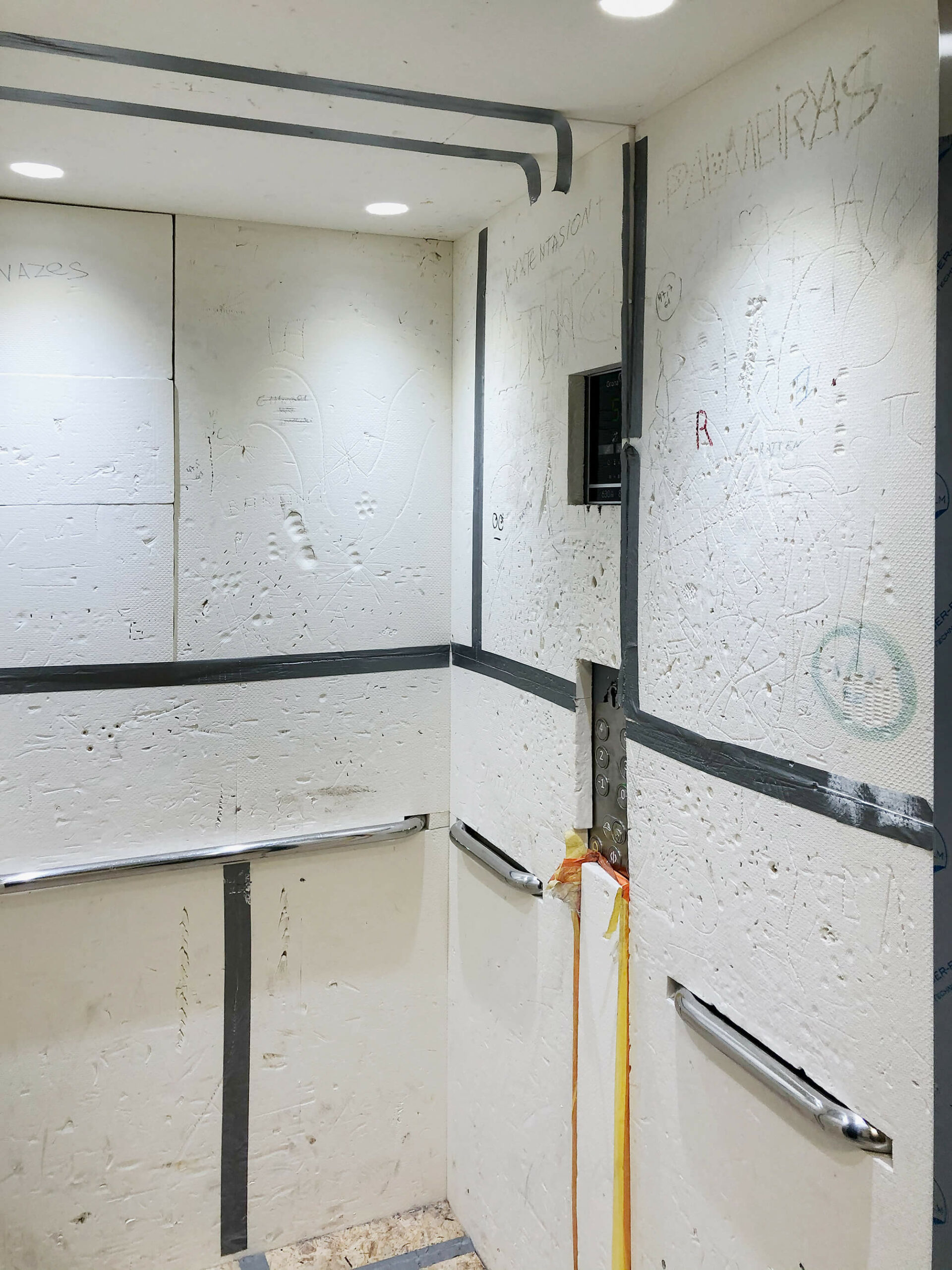
Subtractive writing is not uncommon. With the tip of a passer-by’s index finger ‘WASH ME’ is subtracted from the dust on a dirty car. In freshly poured concrete, a name is embedded forever with a twig. In hot and soft roofing drawings and obscenities are scratched. Styrofoam lining a brand new elevator gets impressed with names, jokes and knuckles.
In the twenty-third canto of Ariosto’s Orlando Furioso (1516), Orlando comes across the name of his love and another man, carved in the bark of a tree. He doubts. But that night, a gossiping shepherd tells him he’s seen Angelica and Medoro together. Orlando returns to the forest, and in a four-day frenzy, he uproots every tree and pollutes the rivers forever.
CXXXI
For he turf, stone, and trunk, and shoot, and lop,
Cast without cease into the beauteous source;
Till, turbid from the bottom to the top,
Never again was clear the troubled course.
At length, for lack of breath, compelled to stop,
(When he is bathed in sweat, and wasted force,
Serves not his fury more) he falls, and lies
Upon the mead, and, gazing upward, sighs.1
Ariosto, L. Orlando Furioso. Translated by William Stewart Rose, Echo Library, 2006, p. 267.
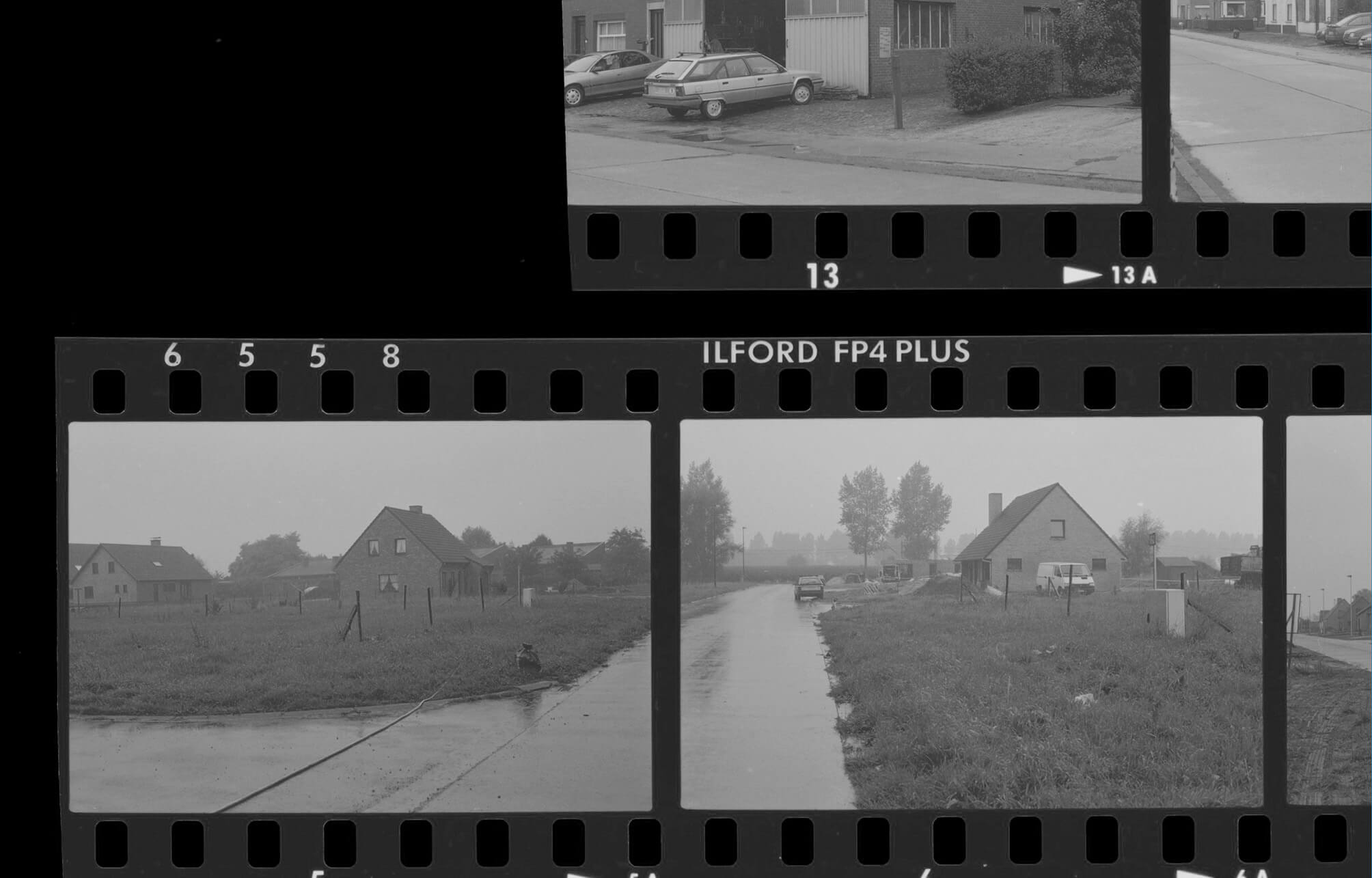
The architect’s photographic archive contains seven images that can be labelled as panoramic pictures. However, they only appear as such when the photographs are viewed in the archive, as strips of negatives. In order to see the panoramic construct, the viewer needs to be presented with two consecutive negatives.
There are two kinds of panorama in the archive: the kind that can only be attributed to a kind of laziness or a need for efficiency on behalf of the architect, and another that originates from frugality.
The former type of panorama is created when the architect is documenting the situation as it is: it is compulsory to document the context of the building or lot, as part of a building application. He simply pivots from left to right, capturing the first and second photograph consecutively. On the filmstrip a panorama appears.
The other kind of panoramic picture only appears at the end of the film role. The last negative on the film has been exposed (the twenty-fourth or thirty-sixth), after which he exerts force onto the lever to move the film forward anyway. Some films are known to have, by accident, a twenty-fifth or a thirty-seventh negative. The plastic between the sprocket holes tears and the film does not advance enough. The result differs fundamentally from the other kind of panorama: there is no separation, no void between the negatives. Rather, there is a slight overlap. A thin, vertical strip of film that has been exposed twice, suggesting contiguity that might not be there. The two exposures might be from altogether different sites, creating a new situation.
Based on De Cleene, M. & De Cleene, A. The Situation as it Is. A Photonovel in Three Movements. Gent: APE, 2022
It has been snowing. A black BMW is parked on the other side of the street and is cut in half by the separation between negatives 4 and 5. Apart from a slight kink in the landscape, the negative on the right is a perfect continuation of the one on the left. The fence around the orchard, the branches of the apple tree and the power lines connect implicitly in the void between the negatives.
Based on De Cleene De Cleene, The Situation as it Is. A Photonovel in Three Movements (APE, 2022).

Conducting research into the effects on energy consumption of blockchain-based applications such as bitcoin, I was triggered by the fact that many of the facilities making blockchain-mining1 possible are located in Georgia. Low energy prices and a relaxed taxation policy are said to be among the reasons why companies such as Bitfury locate their plants there.
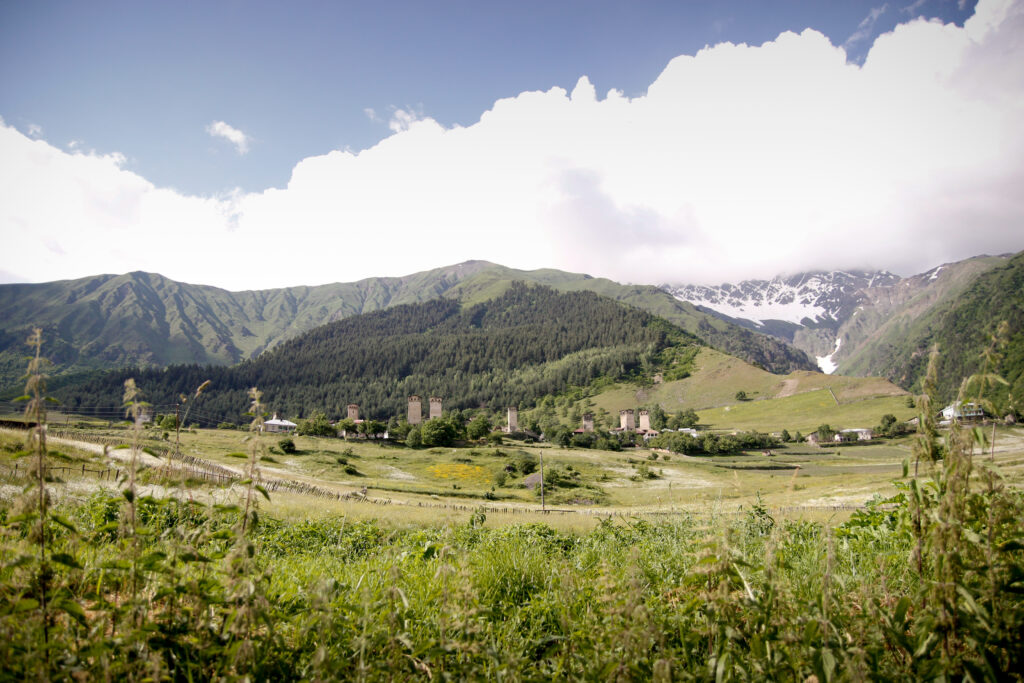
After a three-day hike in the Caucasus Mountains, on the Georgian side of the border with Chechnya, we are invited to pitch our tent in the garden of Murati, a local farmer in a small mountain village. We are overwhelmed by the scenery and Murati’s hospitality. Many of the villages, thrown on the mountain flanks, have tower-like structures of some twenty meters high, making them all look fortified. They have no windows or doors on the ground floor.2
Murati invites us into his house to drink warm milk with his family and brings us cheese-filled bread. One of us speaks Russian. He inspects our backpacks, headlights and drinking bags. He tells us a 500 kilogram pig of his did not return to the house that night. The family is saddened.
In the evening, we see him taking his granddaughter by the hand. They walk to the highest point of the gravel road in front of his house and together watch the last light of the day fall on the snow-covered triangular peak of one of the Caucasus’ highest mountains.
I’m mistrusting my memory and look the passage up in the journal we kept. The village is called Zagar. The mountain is Mount Tetnuldi. The granddaughter’s name is Anna.
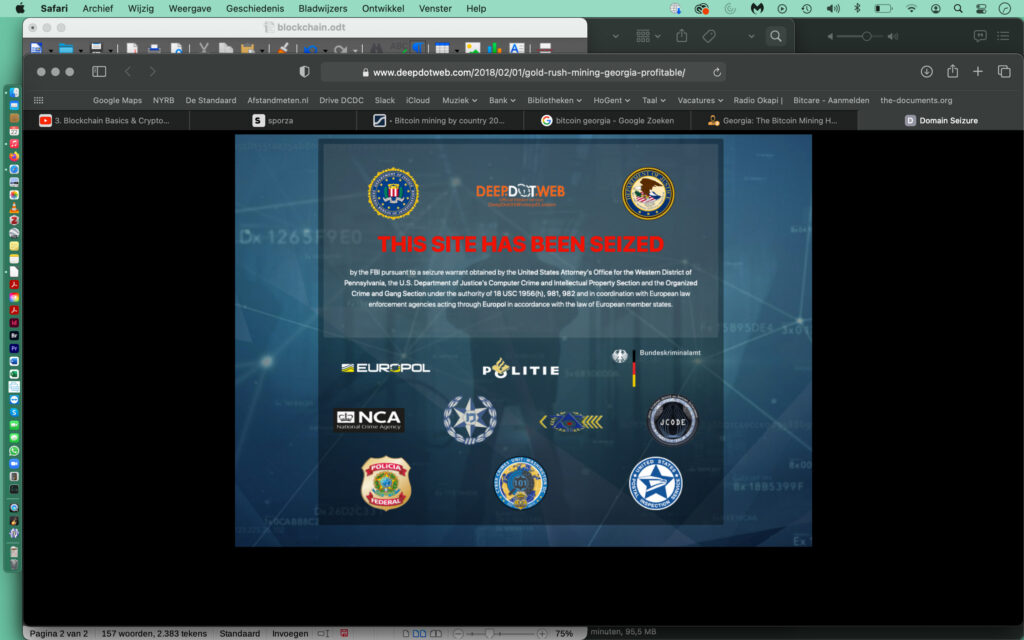
When I click through to one of the websites promising information on Georgia’s blockchain economy, I happen to stumble on a dark web-related website and access is denied.3
‘Mining’ is what is being done when data – a transaction – has to be added to the blockchain (which, in itself, is the sum of all previous transactions, added to each other as data). To do this, computers have to solve a complex mathematical puzzle, which is crucial for the trustworthiness of the system, but for which loads of energy is needed. Criticism on the effects of blockchain-mining is growing, as it has a gruesome effect on resources. In 2018, Andrew North writes, Bitfury used 28 million kilowatt-hours of electricity per month, equalling the consumption of 120,000 Georgian households.

The building is almost finished. One apartment is still up for sale, on the top floor. The contractor is finishing up. There’s a long list of comments and deficiencies that need to be addressed before the building can be handed over definitively to the owner. The elevator’s walls are protected by styrofoam to prevent squares, levels, measures, drills, air compressors, chairs, bird cages, etc. from making scratches on the brand new wooden panelling.
In 1932 Brassaï began taking photographs of graffiti scratched into walls of Parisian buildings. On his long walks he was often accompanied by the author Raymond Queneau, who lived in the same building but on a different floor. Brassaï published a small collection of the photographs in Minotaure, illustrating an article titled ‘Du mur des cavernes au mur d’usine’ [‘From cave wall to factory wall’].
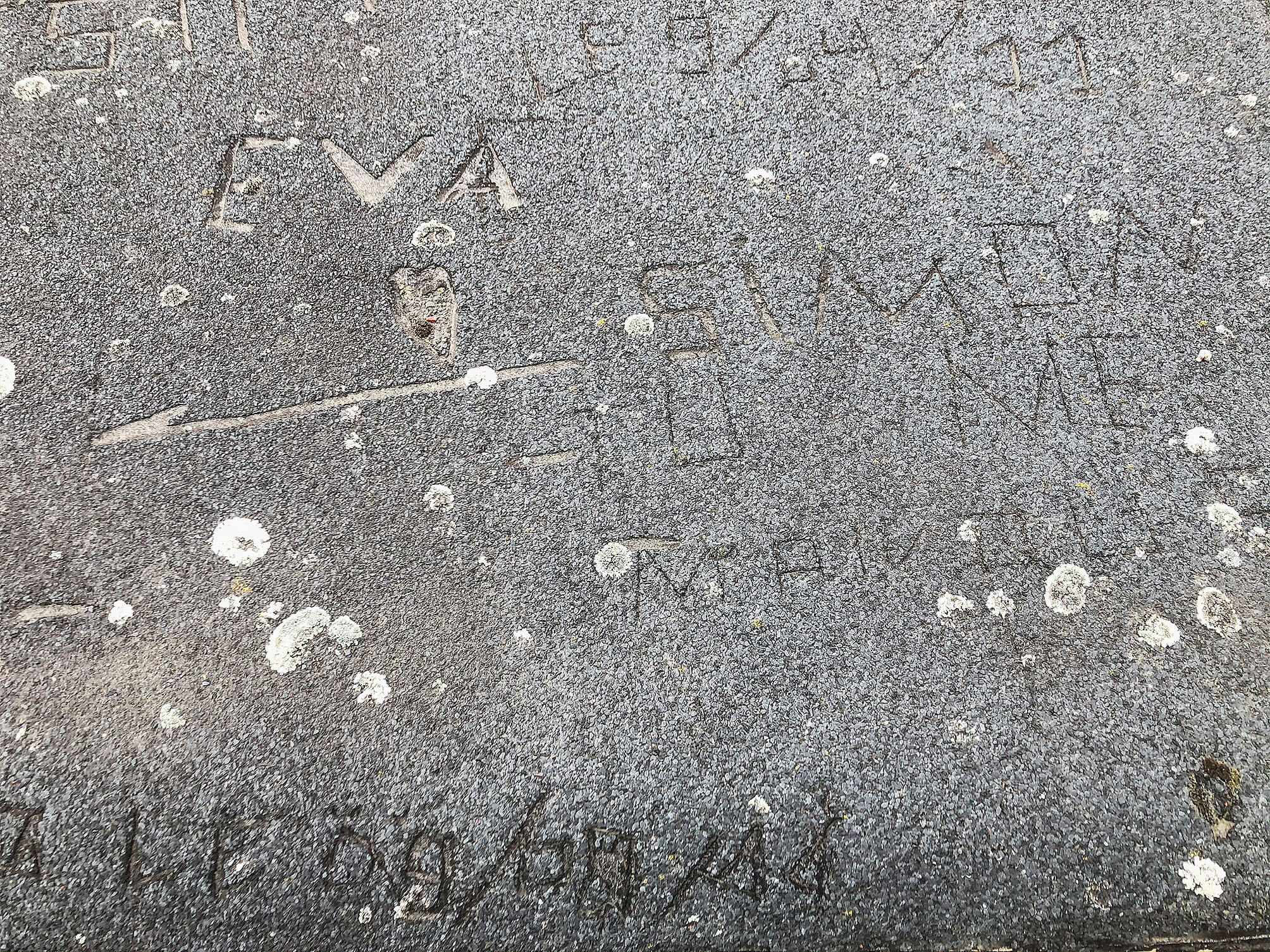
In what order and by whom the various texts and drawings were carved into the soft roofing is unclear. To the right of ‘EVA’, a heart symbol and an arrow (pointing to the left), the roofing reads ‘SIMON TU ME MANQUES’.
The short sentence usually – yet hastily – translates to ‘Simon, I miss you’. However, in French the ‘you’ (tu) is the subject and has an active role, whereas the ‘I’ (me) is the direct object. In short: by his not being there, Simon actively effectuates hurt to the one who carved this text.
It has been snowing. A black BMW is parked on the other side of the street and is cut in half by the separation between negatives 4 and 5. Apart from a slight kink in the landscape, the negative on the right is a perfect continuation of the one on the left. The fence around the orchard, the branches of the apple tree and the power lines connect implicitly in the void between the negatives.
Based on De Cleene De Cleene, The Situation as it Is. A Photonovel in Three Movements (APE, 2022).
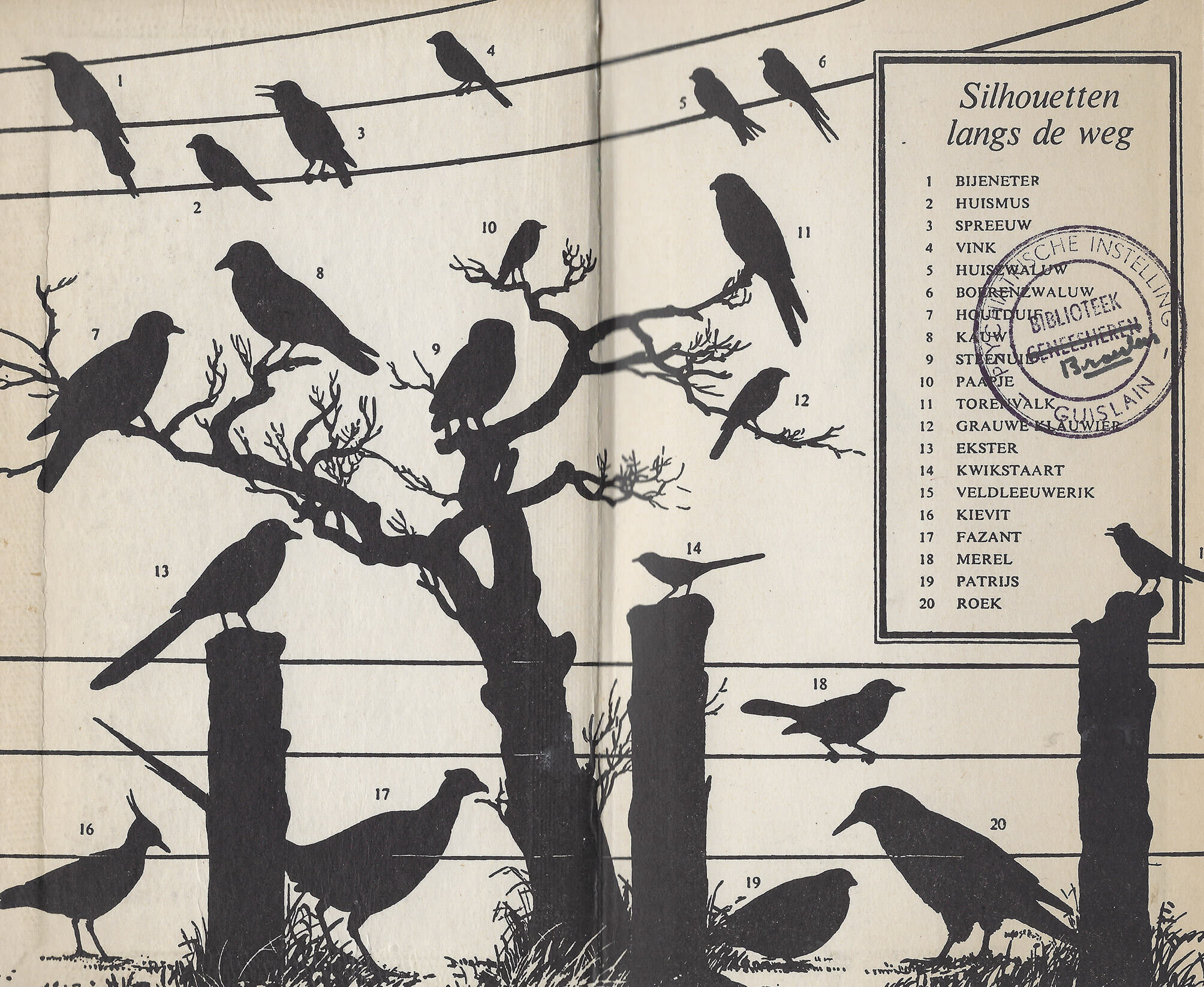
This is the spread one sees upon opening the bird field guide that once stood, as the stamp indicates, in the library of a psychiatric institution.1 It shows birds’ silhouettes, as they can be seen beside the road.
The drawing has a kind of Hitchcock feel to it.2 The birds seem to be spying on each other, as they also seem to be spying on the unsuspecting passer-by.
The composition of the scene is marvelous. The electric wires, the tree, the wire fence, the double framed list with the birds’ names, handsomely positioned in a birdless patch, at once superimposed on the telephone wires, and pushed to the background by the skylark.
Imagine seeing this scene. What are the odds: to see the silhouettes of Europe’s twenty most common species of birds in one glance, from your car’s window, as you are driving home at dusk.
Before closing the book, the last spread seems to show the birds fleeing, maybe attacking.3
The stamp indicates that, at the psychiatric institution, the book was part of the sublibrary for the Catholic Brothers of Charity. The crossed-out part indicates that there was also a separate physicians’ library, to which the book might have originally belonged.
On the web, discussions on whether Alfred Hitchcock’s The Birds (1963) was shot in colour or in black and white, abound.
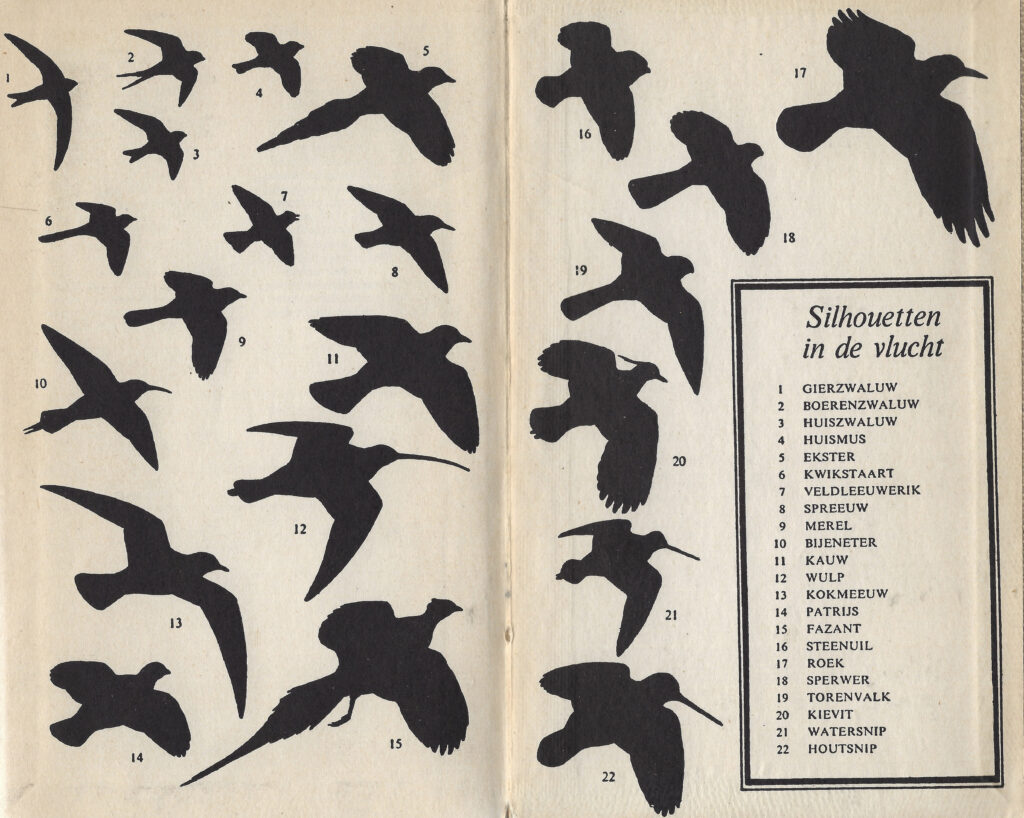
Peterson, R.T., Mountfort, G. & P.A.D. Hollom. Vogelgids voor alle in ons land en overig Europa voorkomende vogelsoorten (J. Kist, transl.). 3d ed. Amsterdam/Brussels: Elsevier, 1955.
Getty Images charges a fee for the use of a 1953 image depicting Mau Mau detainees building a wall. Working together with the Bristol Archives in the case of this collection, Getty claims to sell services such as “image search tools” and “research support”. These images are public domain and in fact available for free but as long as Getty does not charge the fee as a copyright claim, there is no legal obstacle to charging money for images to which they hold no copyright.
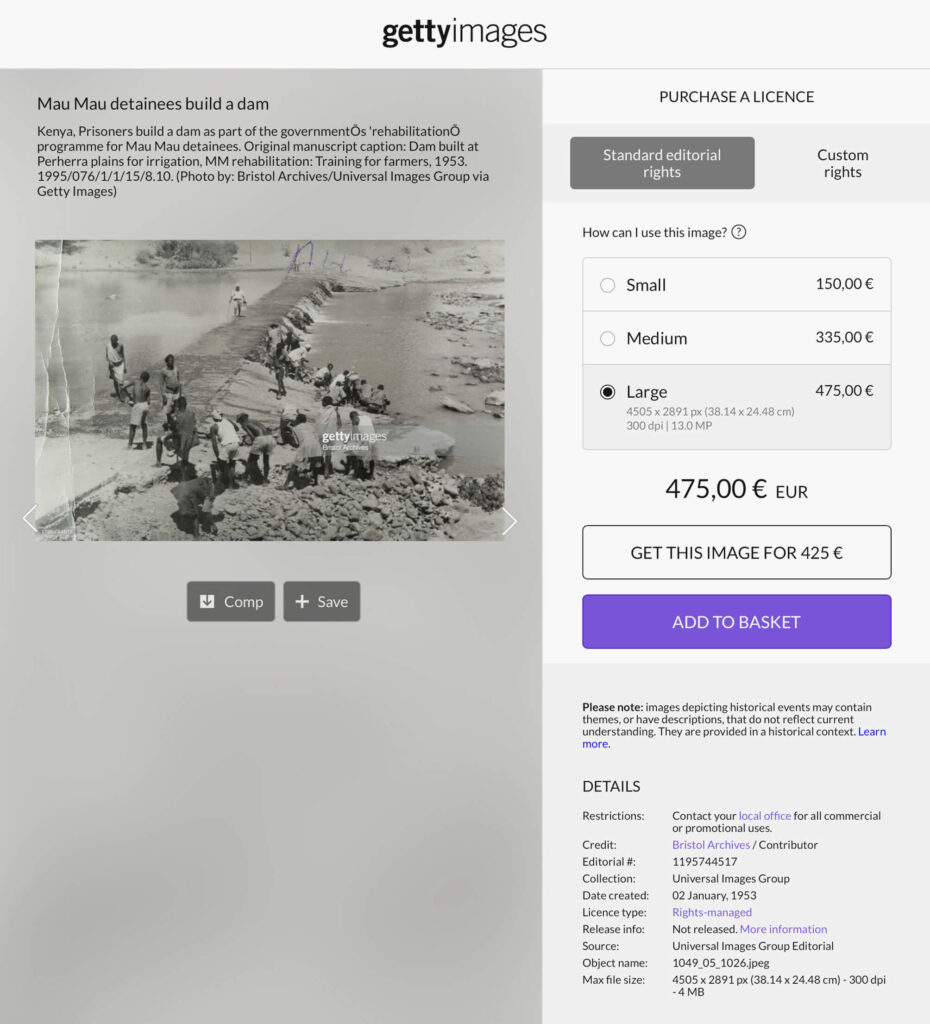
Mau Mau detainees build a dam, 1953, Elspeth Huxley (1995/076/1/1/15/8.10). British Empire & Commonwealth Collection, Bristol Archives, UK Public domain
Max Pinckers (°1988, BE) and Victoria Gonzalez-Figueras (°1988, CA) are based in Brussels, Belgium. They have been working together for the past ten years on documentary photography projects. Victoria works in the cultural field as a researcher and producer. Max is a speculative documentarian, teacher and occasional writer on photography. They are married, in love, and have a son. Victoria has consistently assisted Max in his projects as a production manager, but they have recently been making new work together as co-authors. “Double Reward” is the first such project.
In spring 2024 the-documents.org and Trigger co-publish a series of online articles with a focus on the meeting ground between photography and the document.


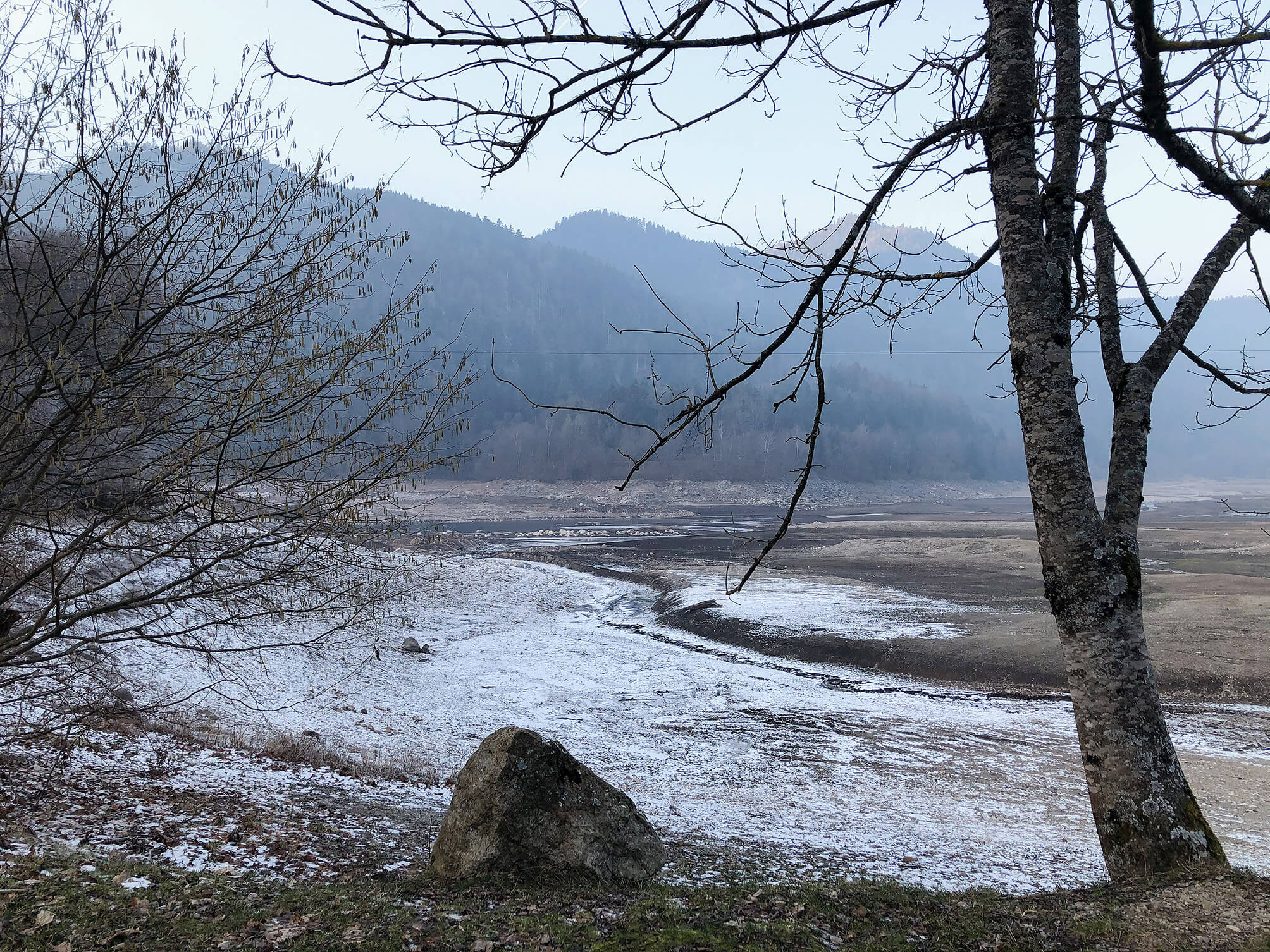
December, 1947. Rapid snowmelt coincides with torrential precipitation. At the bottom of the Thur valley, in Wildenstein, the water gathers.
On the second to last evening before we head home, we go for dinner at Suzanne’s house. She has invited a friend, a national deputy for the region where she grew up. We eat fish and patates douces. We drink beer. The deputy’s secretaries – there are three of them – closely inspect the worn manuscript we hand them. In blue ink: proverbs of their region, written by my girlfriend’s grandfather in local Kikongo language. In red: a Dutch translation. They laugh. A month later, the deputy will become Vice-minister of Internal affairs. The proverbs get marked by fresh grease stains.

The paths in the valley of the Bayehon are covered with ice. We are making our way down towards the valley of the Ghâster. The temperature is minus 15 degrees Celsius. The water in our drinking bottles is frozen. We are betting on the shelter indicated on the map (Au Pied des Fagnes, Carte De Promenades, 1:25.000, Institut Geographique National) to pitch our tent. There is almost no wind, but every breath of air feels like we’re being hit with a thousand needles. What the map indicates as a shelter appears to be a picnic table.
It snows on December 19, but the situation changes on the 22nd with the arrival of an Atlantic low-pressure area, bringing masses of hot and humid air. Thaw follows.
And then, it snows again on December 26 and 27, before the arrival of a new warm front on the same day. A significant and brutal rise in temperature ensues: at Lac Noir, at 920 m, the temperature shoots up from 0,3 °C on December 27 at 7 AM to 7,4 ° C on the 28th at 9 PM.

The paths in the valley of the Bayehon are covered with ice. We are making our way down towards the valley of the Ghâster. The temperature is minus 15 degrees Celsius. The water in our drinking bottles is frozen. We are betting on the shelter indicated on the map (Au Pied des Fagnes, Carte De Promenades, 1:25.000, Institut Geographique National) to pitch our tent. There is almost no wind, but every breath of air feels like we’re being hit with a thousand needles. What the map indicates as a shelter appears to be a picnic table.
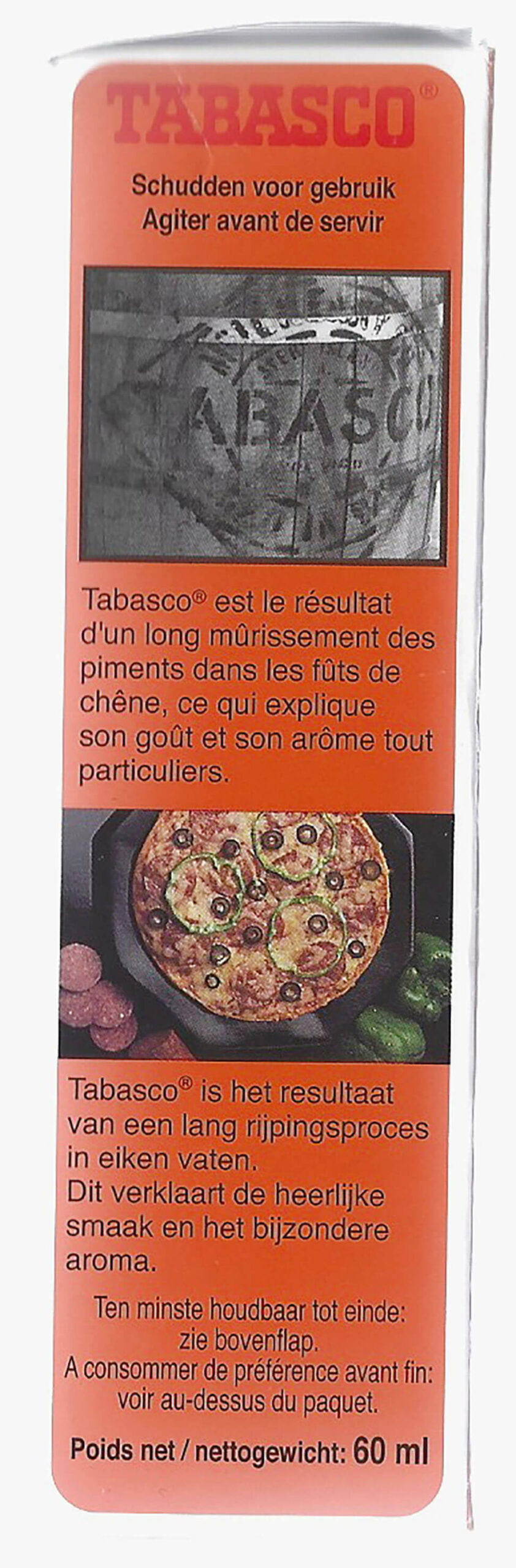
It must have been four or five years ago, that I noticed the change in Tabasco’s® up until then stable, unchanged and thus kind of unfashionable presence in supermarkets (vinegar section). On one of the box’s sides, there had always been a photograph of a man, clipboard in hand, looking upwards to a huge wooden barrel full of Tabasco®. He was inspecting something, from the outside, writing it down.
A couple of years ago, the man disappeared from the packaging. I think he was replaced by a pizza (as one of the suggestions for using Tabasco® on, besides on hashed meat (with an egg yolk, fries and lettuce) and spaghetti bolognese) or a black-and-white image of a part of an oak barrel. It is unclear who is inspecting the barrels now.